
RF

Rahat Fateh Ali Khan
Qawwali Singer · Kotkapura
À propos
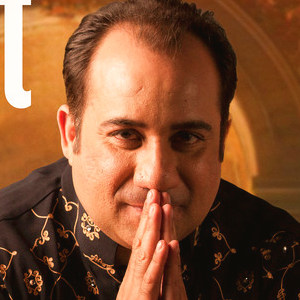
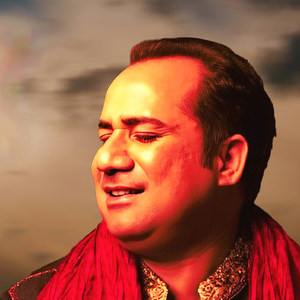
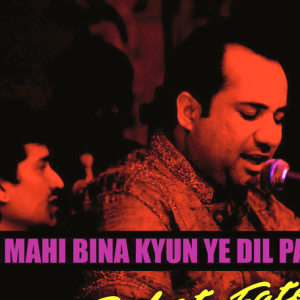
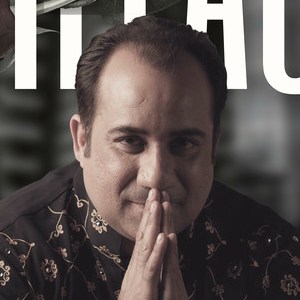
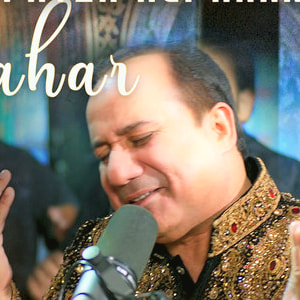
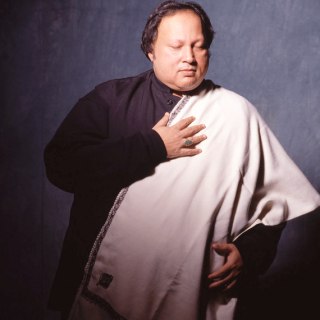
Rahat Fateh Ali Khan is a legendary Pakistani singer who commands one of the most powerful voices in qawwali and Sufi music.
Rahat Fateh Ali Khan is a legendary Pakistani singer who commands one of the most powerful voices in qawwali and Sufi music.
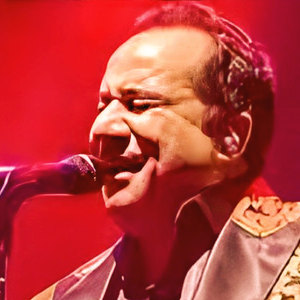
Carrying forward the mystical vocal traditions of his lineage, he mesmerizes audiences with soaring, emotionally intense performances that blend classical devotional music with contemporary arrangements.
His signature style—marked by virtuosic improvisation and deeply spiritual resonance—has made him a global ambassador for South Asian music.

Lineage & Inspiration
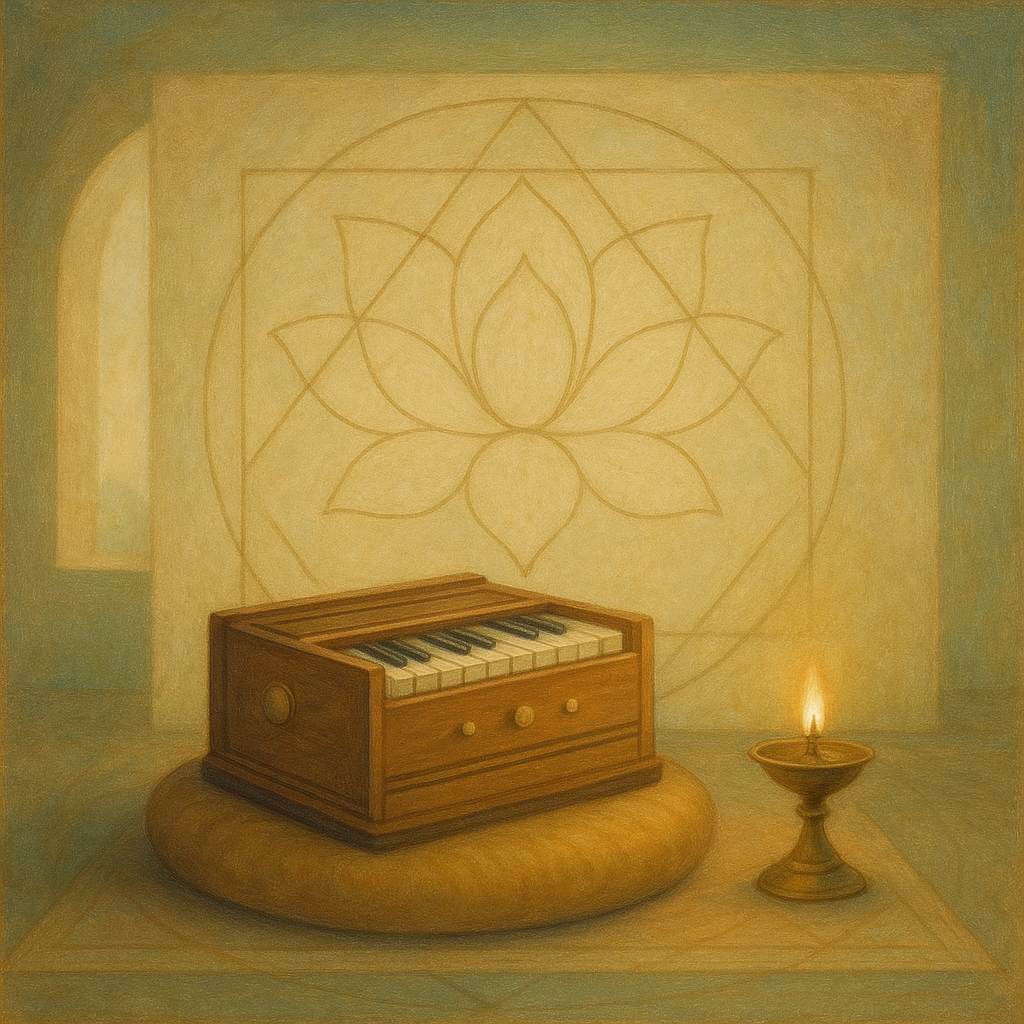
Spiritual Influences
The teachers, lineages, and practices that shape Rahat Fateh Ali Khan's path.
Questions
Rahat Fateh Ali Khan is a master of Qawwali, the centuries-old devotional music tradition of South Asia, known for a soaring, soulful voice that carries the spiritual intensity of Sufi mysticism to contemporary audiences worldwide. Born in 1974 in Faisalabad, Pakistan, he is the nephew of the legendary Nusrat Fateh Ali Khan and grandson of Fateh Ali Khan, positioning him within one of South Asia's most revered musical dynasties. His appeal lies in his ability to bridge traditional Sufi forms—forms rooted in Persian and South Asian mystical practice—with modern sensibility, making devotional singing accessible to listeners across continents and cultures. With nearly 30 million Spotify followers and a popularity score of 77, he ranks among the most streamed artists in the qawwali and sufi genres. What distinguishes him is not novelty but authenticity: his performances are marked by the kind of vocal virtuosity and emotional transcendence that have defined the tradition for generations, yet delivered with arrangements and contexts that speak to contemporary listeners seeking spiritual connection.
Rahat Fateh Ali Khan carries forward the Fateh Ali Khan family lineage, one of the most storied dynasties in Qawwali history, a form of ecstatic Sufi devotional singing that emerged in medieval Persia and flourished across South Asia. His grandfather, Fateh Ali Khan, established the family's reputation as master practitioners of this high-intensity vocal art; his father, Farrukh Fateh Ali Khan, continued that legacy; and his uncle, Nusrat Fateh Ali Khan, became a global ambassador for the form in the late 20th century. Qawwali itself is rooted in Sufi mysticism—the inner, experiential dimension of Islam—and uses repetitive, escalating vocal phrases, rhythmic poetry in Urdu and Persian, and call-and-response structures to induce states of spiritual transcendence in both singer and listener. The tradition prizes vocal virtuosity as a spiritual discipline, not merely as technical skill; the voice itself becomes an instrument of devotion and a pathway to divine union. By carrying this lineage into the 21st century, Rahat connects listeners to centuries of South Asian spiritual music while maintaining the living, evolving character that has always defined Qawwali practice.
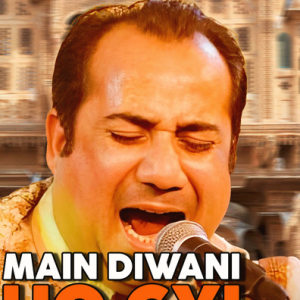
For listeners entirely new to Rahat Fateh Ali Khan, the most direct entry point is his Spotify catalog, which contains both pure qawwali recordings and more contemporary arrangements that blend traditional devotional singing with modern production. Albums like Sahar (2023) and the Qawwali Collection (2026) present his core artistry in focused formats—Sahar at just three tracks, it allows for deep listening without overwhelming; the Qawwali Collection, with ten tracks, offers a broader survey of repertoire and emotional terrain. A first listen reveals his signature vocal approach: phrases that begin restrained and build into soaring, almost otherworldly crescendos, often layered with harmonium and traditional percussion that anchor the spiritual intensity in lived tradition rather than studio artifice. Listeners unfamiliar with Sufi music should expect an aesthetic of restraint and depth rather than bombast—Qawwali is not about volume for its own sake but about precision, repetition, and the gradual dissolution of boundaries between singer and listener. For those drawn to his more recent work, albums like Main Diwani Ho Gyi (2025) and Nazar Se Nazar Tum Milany Se Pehle (2025) show how he continues to record devotional material while expanding into new compositional territory, making them good stepping stones into deeper exploration of his catalog.
Rahat Fateh Ali Khan's distinction rests on three convergences: his lineage authority within one of Qawwali's most prestigious families, his technical command of vocal virtuosity that rivals his most celebrated predecessors, and his willingness to embed traditional qawwali within contemporary production contexts without diluting its spiritual core. Where some artists approach tradition as museum piece, Rahat treats it as a living practice—his recent albums from 2024 and 2025 (Dillagi, Abhi, Sahar, Main Diwani Ho Gyi) demonstrate an artist actively recording new material in the form rather than endlessly recycling catalogs of older work. His voice itself carries a particular tonal quality: cleaner and less heavily ornamented than some classical qawwal singers, which makes his work more immediately accessible to listeners unfamiliar with the tradition's vocal conventions, while his phrasing retains the devotional intensity that prevents accessibility from becoming dilution. Unlike many contemporary world music artists who flatten traditional forms into ambient or electronic contexts, Rahat's arrangements—particularly evident in the Reloaded remix series (2023)—experiment with production while keeping the human voice, the harmonium, and rhythmic tradition as anchors. His 29+ million Spotify followers suggest he has achieved something rare: genuine popularity with both heritage listeners (Pakistani, South Asian diaspora audiences) and secular, global listeners seeking spiritual music outside their own cultural traditions.
Rahat Fateh Ali Khan's sound is built on the human voice as the primary instrument, supported by the harmonium (a hand-pumped keyboard instrument central to South Asian devotional music), traditional percussion like tabla or dholak, and increasingly, in his recent work, subtle modern production elements that never overshadow the acoustic core. His voice is characterized by a clean, almost crystalline tone in the upper registers that shifts into deeper, more resonant tones in lower phrases—a range that allows him to move fluidly between intimate, whispered passages and soaring, nearly falsetto climaxes that seem to exceed normal vocal capacity. The pacing of a typical qawwali track is deceptive: the first minute or two may move slowly, with repetitive phrases and minimal harmonic movement, but as the piece develops, repetitions tighten, rhythmic intensity builds, and the vocal line begins to spiral upward in increasingly elaborate patterns, creating a sense of acceleration that is emotional and spiritual rather than merely rhythmic. The lyrical content draws from Urdu and Persian Sufi poetry, often exploring themes of divine love, longing, intoxication through spiritual union, and the paradoxes of mystical experience—phrases like those in his recent albums (Nazar Se Nazar Tum Milany Se Pehle, Aap Iss Tarha To Hosh Uraya Na Kijiye) are chosen not for narrative clarity but for their capacity to be repeated, fragmented, and reassembled in ways that dissolve rational thought. Listeners accustomed to Western song structures—verse-chorus-bridge—will find qawwali utterly different: it is a form of repetitive, escalating meditation set to music, closer in spirit to raga than to pop song.
Rahat Fateh Ali Khan's work is not suited for listeners seeking high-energy, rhythmically propulsive music—Qawwali is deliberately paced, often meditative, and demands patience with repetition in ways that will frustrate anyone accustomed to EDM, high-BPM electronic music, or pop structures built on constant novelty and frequent harmonic change. Those seeking purely instrumental music will find his albums frustrating because the voice is not simply one instrument among others but the central focus; the lyrics and their Sufi devotional content are inseparable from the music itself, and listeners indifferent to or alienated by spiritual/devotional framing will likely find the work overwrought. Listeners uncomfortable with non-Western vocal techniques—microtones, ornaments that shift pitch outside equal temperament, the use of vocal breaks and inhalations as expressive rather than merely technical elements—may hear his voice as strange or unpolished rather than virtuosic. Similarly, anyone seeking music as background or ambient wallpaper should look elsewhere; Qawwali demands active, present listening and emotional availability; it is not music that tolerates inattention. Those who approach spiritual music only through the lens of New Age soft-focus aesthetics may be unprepared for qawwali's intensity and ecstatic dimension, which can feel overwhelming or emotionally demanding on first encounter. Finally, listeners skeptical of or opposed to Sufi Islam and its philosophical premises will find little entry point here, as the tradition is inseparable from its Islamic mystical context.
The harmonium is the foundational instrument in Rahat Fateh Ali Khan's qawwali practice—a hand-pumped keyboard instrument that provides both harmonic and rhythmic anchoring, its sustained tones creating a meditative base over which his voice unfolds in elaborate patterns. Traditional South Asian percussion, typically tabla (a paired drum with precise melodic and rhythmic capabilities) or dholak (a larger, deeper two-headed drum), provides the rhythmic pulse; the tabla in particular allows for sophisticated interplay with the vocalist, responding to and anticipating vocal phrases in ways that deepen the musical conversation. The human voice itself functions as the primary melodic and spiritual instrument, trained through years of practice in the techniques of qawwali: breath control that sustains phrases across multiple repetitions, the ability to modulate tone and register fluidly, ornamentation that includes microtones and slides that exist outside Western equal temperament, and the capacity to build intensity through vocal layering and call-and-response patterns. Beyond instrumental tradition, the practice itself—the actual performance of qawwali—is rooted in Sufi devotional ritual; historically, these were performances within shrine contexts, designed to induce states of spiritual ecstasy (wajd) in both performers and listeners. In his recent work (2023-2026), Rahat has occasionally introduced subtle modern production—layered vocals, reverb, electronic textures in tracks from the Reloaded series—but these sit atop rather than replace the acoustic tradition, functioning as contemporary reinterpretations rather than fundamental reconceptions of the form.
While Rahat Fateh Ali Khan's entire catalog is rooted in Sufi devotional practice—making it inherently spiritual rather than secular—the pacing and emotional arc of individual pieces vary considerably, affecting their suitability for different contexts. Sahar (2023), with its three extended pieces, leans toward the meditative end of the spectrum; the album's title suggests dawn or spiritual awakening, and the restrained, spacious arrangements make it more suitable for contemplative listening or as a backdrop to personal spiritual practice than the more intense, ecstatic recordings elsewhere in his catalog. Albums like Main Diwani Ho Gyi and Nazar Se Nazar Tum Milany Se Pehle (both 2025) appear to favor more intimate, introspective devotional registers based on their titles and recent listener response, though without detailed track-by-track analysis, it's difficult to specify which pieces are optimally suited for meditation versus ceremonial intensity. For yoga practitioners specifically, Rahat's work requires caution: traditional Qawwali is designed not to accompany physical practice but to induce altered states through intense listening, and its emotional and spiritual demands may conflict with the goal-oriented, body-focused aspects of most Western yoga classes. Listeners interested in using his music for spiritual ceremony or personal practice should begin with Sahar or individual tracks from Qawwali Collection, listening without other activity first to understand the emotional journey of each piece, then determining whether that particular recording suits their intended context. His official website (rahatfatehalikhantour.com) may provide contextual guidance on specific pieces, though this information is not yet widely documented in public sources.
Rahat Fateh Ali Khan's involvement with Bollywood and Hindi pop—evident in the Abhi (Original Motion Picture Soundtrack) from 2024 and references to film work in his recent output—reflects a broader trajectory in which Qawwali artists navigate the tension between devotional purity and commercial reach in the Indian film industry. Bollywood has a decades-long history of incorporating qawwali and Sufi music into film narratives, and Rahat's lineage (his uncle Nusrat Fateh Ali Khan was a pioneer in this crossover) positions him naturally within that space. However, his participation in film soundtracks does not signal a departure from qawwali tradition; rather, it reflects how the tradition itself has evolved and adapted while maintaining its core devotional character. The albums from 2024-2025 (Dillagi, Main Diwani Ho Gyi, Aap Iss Tarha To Hosh Uraya Na Kijiye, Mahi Bina Kyunye Dil Par Chawa) suggest he is simultaneously maintaining parallel creative tracks: pure qawwali recordings and film-adjacent work, each serving different audiences and contexts. Listeners approaching Rahat through Bollywood soundtracks may find his pure qawwali work more austere, less immediately melodic, and more devotionally demanding than film compositions designed for narrative and emotional clarity within a two-hour story. The distinction matters: his qawwali albums are not diluted film versions but full-strength spiritual music, while his Bollywood contributions are sophisticated adaptations that honor the form within different constraints. This dual practice is not uncommon among Qawwali artists and reflects the form's capacity to serve both sacred and secular contexts without losing spiritual integrity.
Rahat Fateh Ali Khan's music is most readily available on Spotify, where he maintains a substantial presence with nearly 30 million followers and a full discography spanning from his recent 2026 Qawwali Collection down through his earlier releases; his artist profile includes curated playlists that can orient newcomers to his work. YouTube also hosts a significant archive of his performances and official releases; the link provided (youtube.com/watch?v=enI3eoa7hgY) offers a starting point, though users should search his full name to locate the breadth of available video content. His official website, rahatfatehalikhantour.com, may provide information on purchasing options, exclusive releases, or direct artist support, though the site's full functionality and current offerings are not detailed in available data. Apple Music is not currently listed as an active platform, though this may change; listeners with Apple Music subscriptions should check their platform directly, as metadata can lag behind artist uploads. Purchasing options (digital downloads via iTunes, physical CDs, or vinyl if available) may be accessible through his official website or through standard music retailers like Amazon or Bandcamp, though specific purchasing links and formats are not documented in the current data. For those seeking comprehensive access, a Spotify subscription represents the most complete and current option, as the platform receives regular album uploads and maintains the full range of his recent work from 2023 forward.


There's more where this came from.
BrightStar is the global directory of artists, teachers, and healers in the wellness and spiritual movement. Find your next experience — or add yourself.
Discover More Artists
Browse 14,000+ curated profiles across kirtan, yoga, meditation, and beyond.
Explore directory →Find an Event Near You
Kirtan, retreats, sound baths, breathwork, ceremonies — happening this week.
Browse events →Add Your Profile
Are you an artist, teacher, or healer? Get listed — free, AI-assisted, live in minutes.
Get started →