Écouter
Écouter
Listening Journey

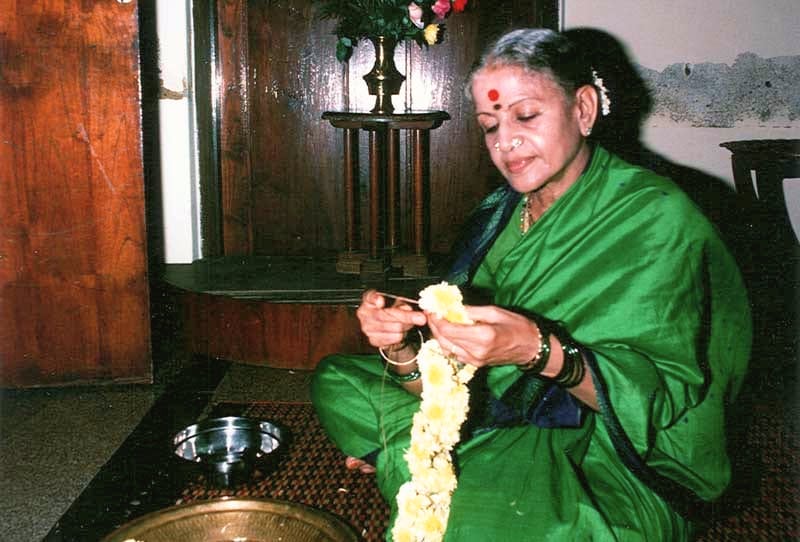

Musician
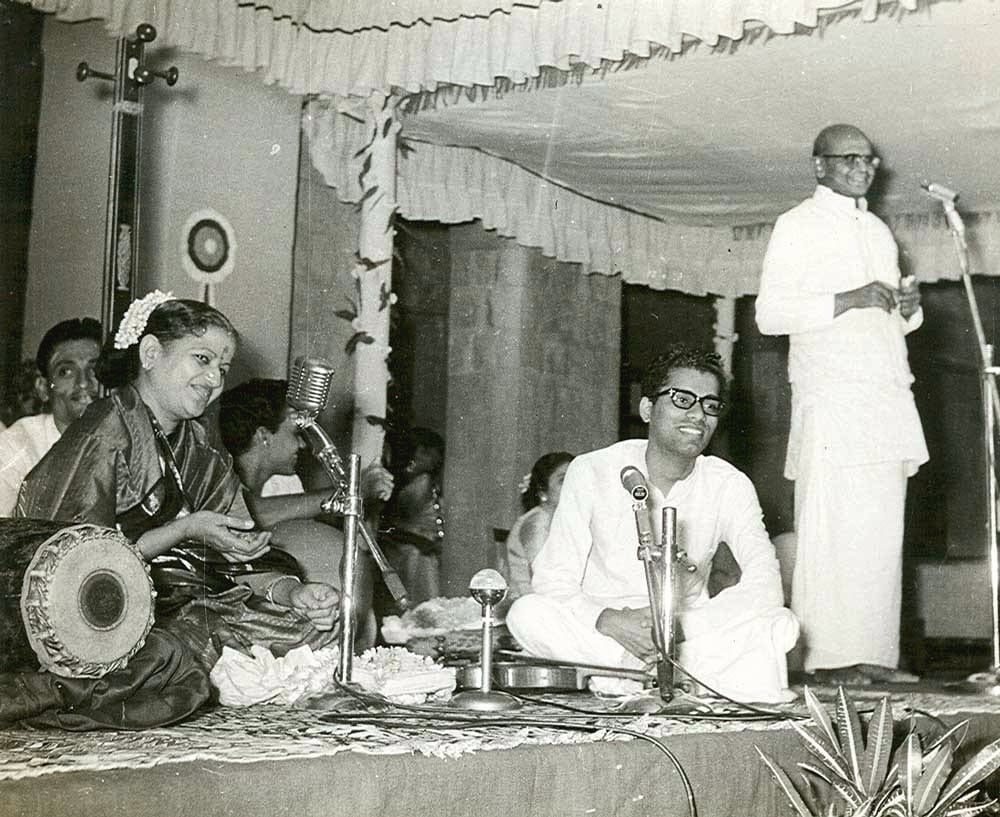
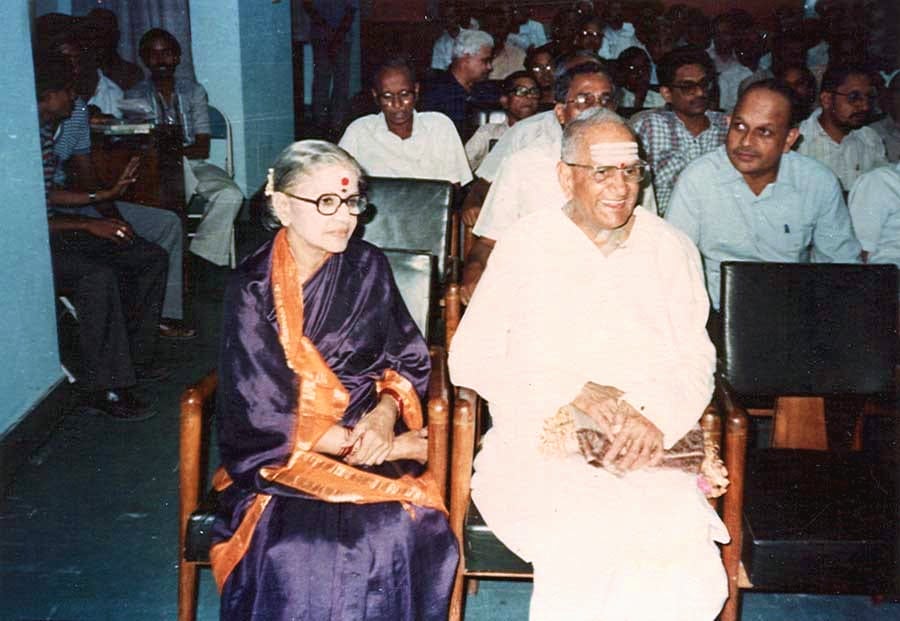
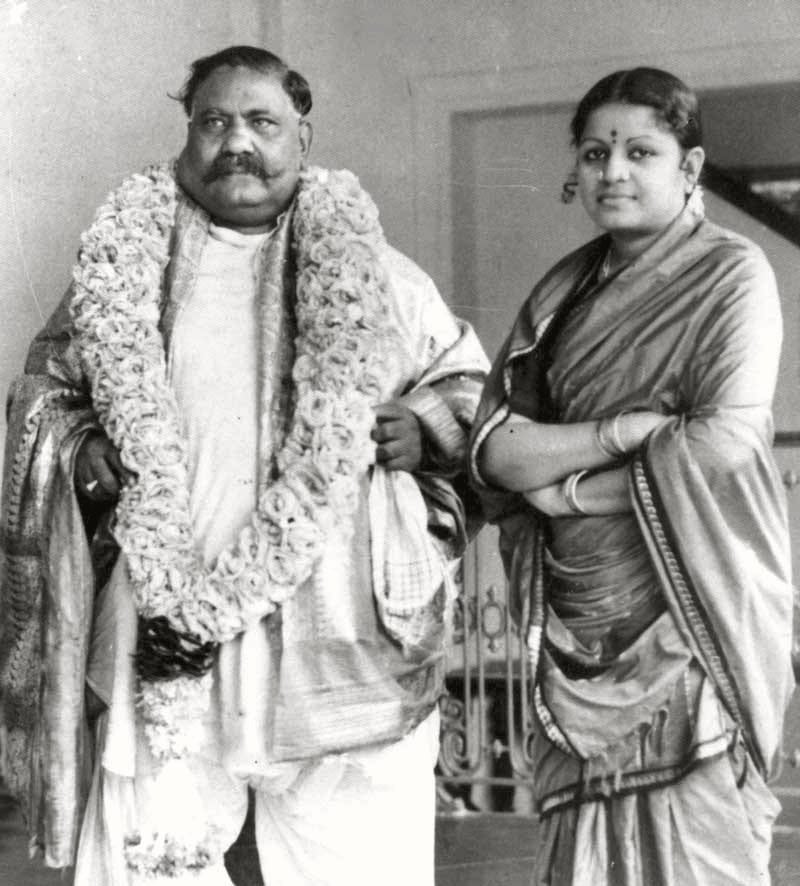
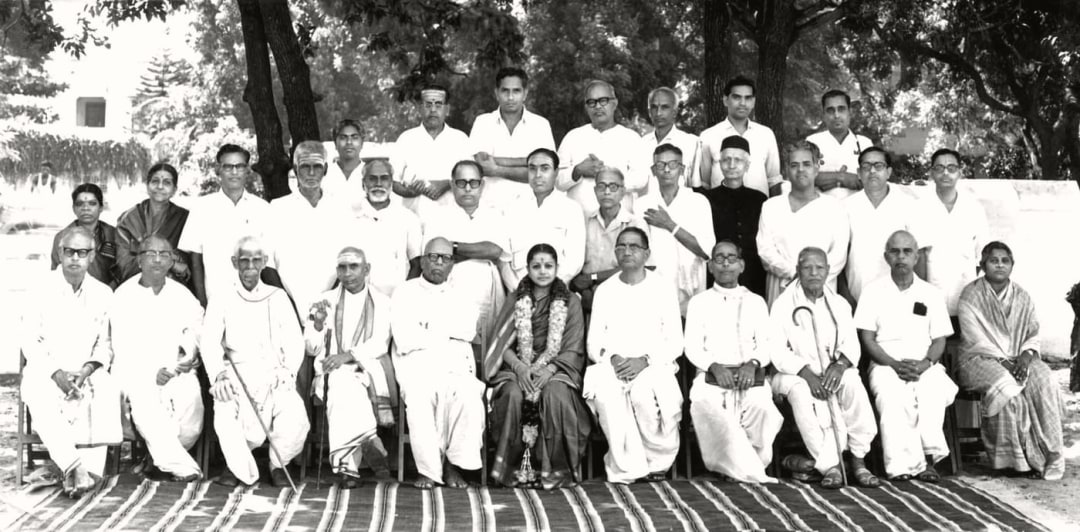
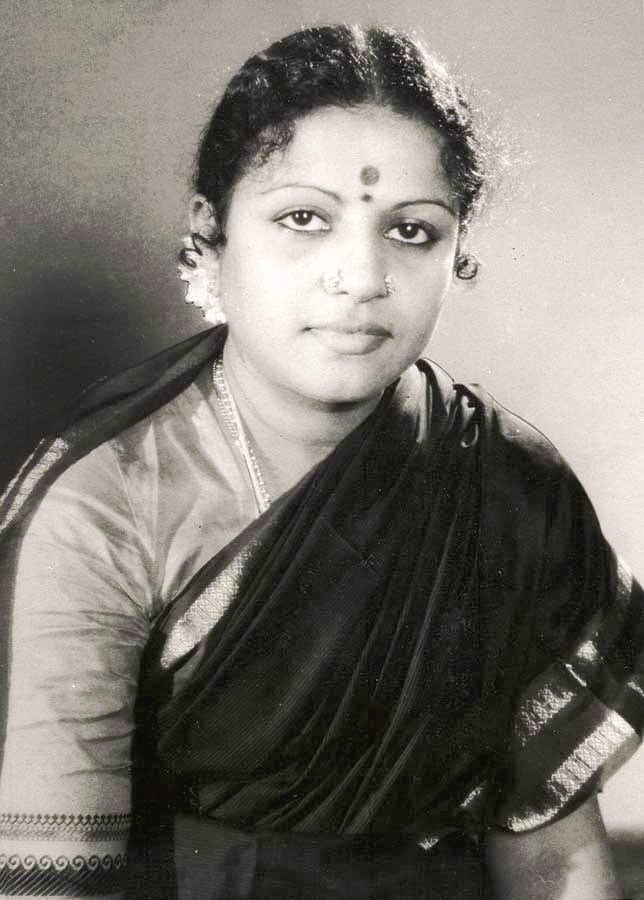
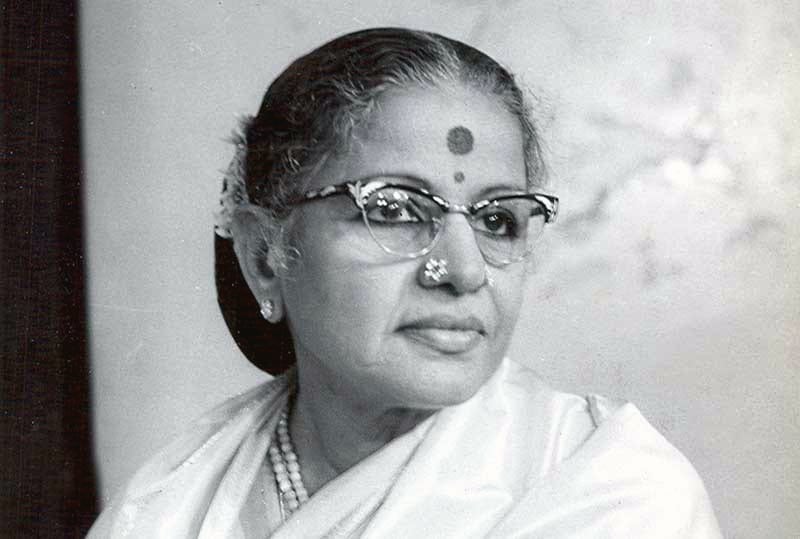
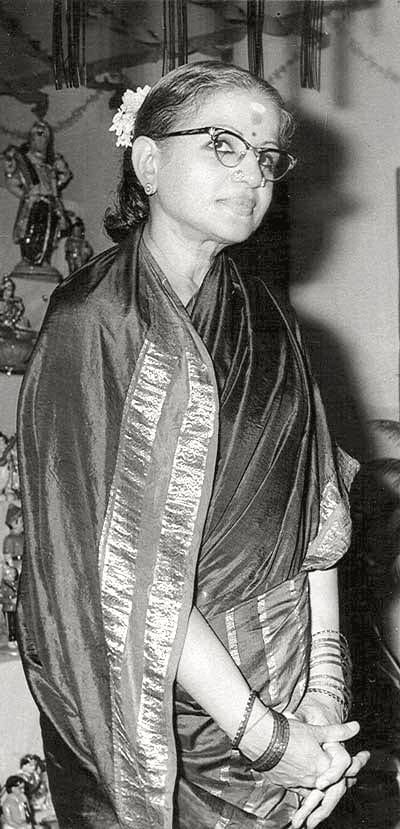
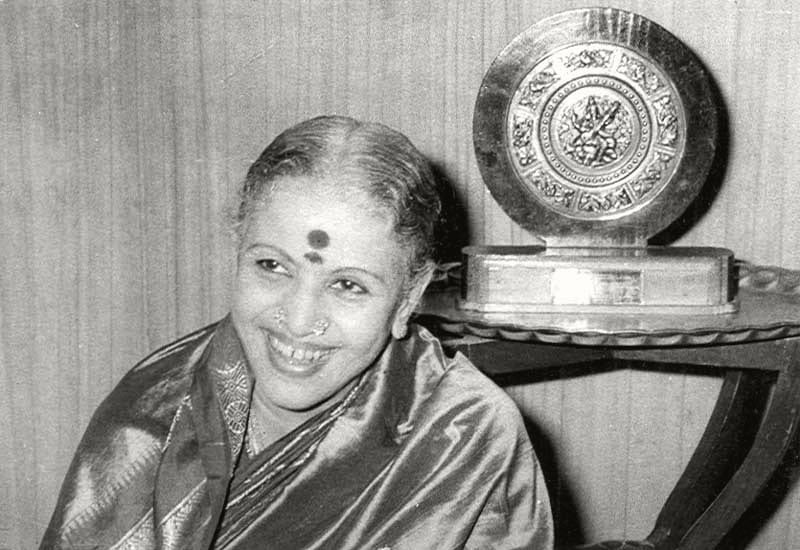
Madurai Shanmugavadivu Subbulakshmi (1916–2004) was a Carnatic vocalist and philanthropist, known to those close to her as Kunjamma, MS Amma or Ammu Patti. In 1968 she became the first woman musician to receive the Sangita Kalanidhi title from the Music Academy in Chennai. Her voice was prized by figures such as Mahatma Gandhi, Jawaharlal Nehru and Sarojini Naidu, and she sang in support of the nationalist cause.
Madurai Shanmugavadivu Subbulakshmi (1916–2004) was a Carnatic vocalist and philanthropist, known to those close to her as Kunjamma, MS Amma or Ammu Patti. In 1968 she became the first woman musician to receive the Sangita Kalanidhi title from the Music Academy in Chennai. Her voice was prized by figures such as Mahatma Gandhi, Jawaharlal Nehru and Sarojini Naidu, and she sang in support of the nationalist cause.
Her music reached well beyond Carnatic circles. She performed at the Edinburgh Festival, Carnegie Hall and the United Nations, drew admiration from Yehudi Menuhin and Zubin Mehta, and won the respect of Hindustani musicians including Ravi Shankar, Bade Ghulam Ali Khan, Siddheshwari Devi and Vilayat Khan. In the 1940s she also became a film star, best loved for her portrayal of the bhakti poet-saint Meera.
Her recitals of the Sri Venkatesa Suprabhatam and the Vishnu Sahasranamam are heard at the start of the day by Hindus around the world. She was the first female recording artist to recite verses traditionally left to brahmin male exponents. Bhajans by Surdas and Mirabai, nationalist hymns and Tamil songs such as Katrinile Varum Gitam became widely known through her singing. Those who write about her describe a fidelity to musical and multilingual lyrical traditions, together with a lifetime of careful vocal training.
With her husband, Thiagarajan Sadasivam, she gave the proceeds of her concerts to charitable endowments over a lifetime. Friends remember a gentle, modest woman who greeted every visitor to her home with the same courtesy.
Worth Knowing
M. S. Subbulakshmi (1916–2004) was a Carnatic vocalist whose voice became synonymous with devotional music across India and the diaspora—she was the first woman musician ever to receive the Sangita Kalanidhi, Carnatic music's highest honor, in 1968. Her singing commanded respect across traditions: Gandhi and Jawaharlal Nehru sought her voice for nationalist causes, while Western maestros like Yehudi Menuhin and conductor Zubin Mehta heard in her work a mastery that transcended cultural boundaries. She broke gender barriers that had locked women out of sacred recitations—the Sri Venkatesa Suprabhatam and the Vishnu Sahasranamam were traditionally the province of brahmin men, but her interpretations became the recordings Hindus worldwide wake up to. Her bhajans, drawn from poets like Surdas and Mirabai, carry spiritual depth alongside technical brilliance. Late in life, she and her husband Thiagarajan Sadasivam gave their concert earnings entirely to charitable endowments, embodying the devotional principle of seva (service). Listeners today encounter a musician whose fidelity to Sanskrit lyrical traditions and Carnatic vocal technique remains unmatched, grounded in decades of rigorous training and unwavering spiritual commitment.
M. S. Subbulakshmi worked within the Carnatic musical tradition of South India, drawing on centuries of Hindu devotional practice known as bhakti—a framework that treats singing and chanting as pathways to spiritual communion. Her repertoire centers on sacred chant, particularly the recitation of Sanskrit hymns and bhajans dedicated to Vishnu and other deities, grounded in Vedantic philosophy and Vedic textual traditions. What distinguishes her approach is its methodical fidelity: she trained intensively in Carnatic vocal technique, meaning her rendering of mantra and devotional song carries both spiritual intention and rigorous musical precision—each phrase shaped with attention to raga, tala, and lyrical meaning. The bhakti devotional lineage she represents emphasizes the personal, intimate relationship between singer and divine, expressed through mantra, prayer, and sacred song. Her work sits at the intersection of this ancient devotional heritage and modern concert life, bringing temple music to concert halls and making Vedic and Sanskrit traditions accessible beyond brahmin priestly circles. The Carnatic tradition itself prizes fidelity to compositional accuracy and improvisational depth, and M. S. Subbulakshmi exemplified both.
The most accessible entry point is the Sri Venkatesa Suprabhatam, a Sanskrit hymn of morning praise to Lord Venkatesa traditionally chanted at dawn in temples—her rendition, recorded countless times, is the version most Hindus encounter first. Another foundational recording is her interpretation of the Vishnu Sahasranamam (the thousand names of Vishnu), a sacred chant that combines meditative depth with the intricate melodic elaboration characteristic of Carnatic singing. For listeners drawn to bhajan and devotional melody, her recordings of poets like Surdas and Mirabai offer accessible emotional entry—these are less austere than pure Sanskrit chant, with clearer narrative and melodic hooks, yet maintain the same spiritual sincerity. Many newcomers also connect with her nationalist hymns and Tamil devotional songs like Katrinile Varum Gitam, which blend patriotic sentiment with devotional feeling and showcase her command of multiple language traditions. Her film role in the 1940s as the bhakti poet-saint Meera also draws many to her work—the cultural resonance of that portrayal opened her music to audiences beyond purely devotional circles. Start with whichever resonates: sacred chant if you're drawn to mantra and meditation, bhajan if you want melody and emotional accessibility, film music if you approach through cinema and culture.
Her most radical distinctiveness was gender-based: she was the first woman to publicly perform and record sacred verses like the Suprabhatam and Sahasranamam that were exclusively male, brahmin priestly domain. This wasn't merely symbolic—it shifted the entire landscape of Carnatic sacred music, making these recitations available through her voice to millions who would never hear a male brahmin priest. Her breadth across musical languages and traditions was also uncommon—she sang Sanskrit, Tamil, Telugu, and Kannada with equal authority, traversing devotional, nationalist, and folk idioms rather than specializing narrowly. The textural quality of her voice and her interpretive restraint set her apart: where some Carnatic vocalists emphasize ornamental elaboration and vocal pyrotechnics, her approach favored clarity, reverence, and letting the lyrical meaning shine through. She commanded respect across silos—not only did Carnatic musicians regard her as a peer, but Hindustani maestros including Ravi Shankar and Vilayat Khan acknowledged her as a serious artist. Her dual career as both concert musician and film actress was unusual at her level, yet she brought the same disciplined artistry to both domains. Fundamentally, what made her distinctive was a combination of technical mastery, spiritual conviction, gender pioneering, and the rare ability to move between high-art classical concert settings and popular devotional accessibility without diluting either.
Her music will not serve listeners drawn to rhythmic complexity, high-energy percussion, or modern production; if you're seeking the percussive drive and beat-focused architecture of contemporary devotional music, M. S. Subbulakshmi's work will feel sparse and introspective by comparison. The devotional chant tradition she represents asks for patience—these are often long, unmetered pieces that unfold in a contemplative time-space quite different from Western musical pacing expectations, so listeners accustomed to verse-chorus pop structures may find the structure opaque on first listening. Her work is almost entirely acoustic and accompanied only by simple harmonium, which means there's nowhere for the ear to rest on production detail or instrumental color—all attention goes to voice and text. For those seeking a teacher or guide through explicit spiritual instruction, her recorded work is not a teaching platform; she does not explain philosophy or guide listeners through meditation techniques—you receive her voice and spiritual conviction, but not her pedagogical voice. Her nationalist hymns and Tamil songs, while moving, may feel culturally specific in ways that require familiarity with Indian independence struggle or Tamil literary tradition to fully land. Finally, she passed away in 2004, so there is no new work, no live performances, no evolving artistic practice—you encounter a completed legacy, not an ongoing relationship with an active artist. This is not a drawback for archival or historical engagement, but it differs from following a living musician.
M. S. Subbulakshmi's work is widely available on Spotify (https://open.spotify.com/artist/35NVYJXOwkjY8bpul6OBQl) where she has over 312,000 followers, making it the most convenient starting point for streaming her extensive catalog of recordings spanning decades. The M. S. Subbulakshmi Tribute website (https://msstribute.org/) is an excellent resource for biographical information, discography details, and sometimes links to recordings and performances. Many of her recordings, particularly the Sri Venkatesa Suprabhatam and Vishnu Sahasranamam, are available through Amazon Music, Apple Music, and other major streaming platforms, often released through various record labels that have preserved her archive. For deeper dives into her film work, particularly her role as Meera, those films are sometimes available through Indian cinema streaming services or physical media. Devotional music specialists and Indian classical music retailers often carry her recordings on vinyl, CD, or digital download, accessible through online retailers focused on world music and Indian classical traditions. The Wikipedia article on M. S. Subbulakshmi provides substantial biographical detail and can point to additional scholarly and archival resources for those interested in her historical impact and musical evolution.
Her voice was a trained alto capable of both intimate clarity and expansive vocal projection, but what distinguished her was not virtuosic ornamentation but rather crystalline precision and devotional depth—listeners often describe her sound as austere in the best sense, clearing away embellishment to let Sanskrit texts and bhakti emotion resonate unobstructed. The Carnatic tradition demands complex rhythmic and melodic improvisation within strict frameworks, and her mastery of that language is evident in the way she navigates tala (rhythmic cycles) and raga (melodic modes) with apparent effortlessness, never drawing attention to technique itself. Her recordings of the Suprabhatam exemplify this: she sustains long, unadorned phrases that allow the sacred text to breathe, supported by the gentle drone and rhythmic anchoring of harmonium and percussion, creating a meditative acoustic space rather than a virtuosic display. The bhajans she recorded carry melodic warmth and emotional directness—these are devotional songs meant to stir the heart, and her interpretation honors both the emotional content and the strict melodic structure of the composition. There is a quality of restraint throughout her work: tempos are neither rushed nor excessively slow, dynamics are controlled, and vocal ornamentation serves the text rather than overwhelming it. What emerges is a sound that prioritizes spiritual intention over technical showmanship—the music asks you to listen inward, to hear the meaning of Sanskrit words, to feel the devotional impulse, rather than to marvel at vocal gymnastics.
Her Sri Venkatesa Suprabhatam is explicitly designed as a morning devotional recitation and is used by Hindu practitioners worldwide as a dawn chant—many wake to her recorded version as an alternative to or supplement to temple ritual, making it both a meditation anchor and a ceremonial practice tool. The Vishnu Sahasranamam serves a similar function: this thousand-name chant of Vishnu is recited in temples during worship and is traditionally used as spiritual practice; her rendering is meditative in pace and creates a contemplative soundscape ideal for focused chanting or quiet reflection. Her bhajans—particularly those drawn from Surdas and Mirabai, poets central to Hindu bhakti devotion—carry explicit spiritual content and are frequently used in kirtan (group chanting) contexts and personal practice by seekers. For yoga and meditation practitioners, any of her devotional chant recordings can serve as soundtrack to practice: the acoustic, unhurried quality, the Sanskrit language, and the spiritual depth create a non-distracting yet spiritually resonant background. Her nationalist hymns and Tamil songs, while not explicitly ceremonial, carry similar devotional intention and can anchor personal or collective spiritual practice for those drawn to the intersection of patriotic and religious feeling. It's worth noting that her recordings are not designed as guided meditations or teaching tools—they are performances of sacred text and devotional song, offered for direct encounter rather than instructional scaffolding.
In the 1940s, at the height of her concert fame, M. S. Subbulakshmi transitioned into Indian cinema and became a film star—a relatively uncommon move for a serious classical musician, yet she brought the same artistic discipline to cinema as she brought to the concert stage. Her most celebrated film role was her portrayal of the medieval bhakti poet-saint Meera, a figure whose life and devotional poetry centered on her beloved relationship with Krishna—this role resonated deeply in Indian culture and consolidated her public prominence. The Meera film introduced her work to audiences far beyond classical music circles and created lasting cultural association between her voice and the archetypal female devotee, bridging popular culture and sacred tradition. Her film work demonstrated her versatility: she could carry a narrative, act with nuance, and deliver songs that functioned both as cinematically compelling moments and as devotional music in their own right. This film career was neither a departure from her spiritual work nor a compromise of it; rather, it extended her reach and allowed her to embody the devotional ideals her music expressed. For many listeners discovering her today, the Meera film remains a compelling gateway into her artistry, offering both visual context and the emotional dimension of her vocal presence.
The apex of her recognition was receiving the Sangita Kalanidhi title from the Music Academy in Chennai in 1968, making her the first woman musician ever to receive Carnatic music's highest civilian honor—a distinction that acknowledged decades of artistic mastery while also marking a watershed moment for women in Indian classical music. Her voice and artistry earned her international acclaim: she performed at Carnegie Hall and the Edinburgh Festival, venues rarely accessible to Indian classical musicians in that era, and commanded the respect of Western musicians including conductor Zubin Mehta and virtuoso violinist Yehudi Menuhin. She was invited to perform at the United Nations, an unusual distinction for an Indian classical musician and a testament to the universality of her artistry beyond Indian cultural contexts. Her nationalist work during India's independence struggle brought her recognition from political leaders including Gandhi, Jawaharlal Nehru, and poet Sarojini Naidu, embedding her in the cultural memory of that historical moment. She also won the Ramon Magsaysay Award, a major international honor further confirming her status as a figure of subcontinental significance. Perhaps most tellingly, she earned the respect and admiration of peers across musical traditions—Hindustani vocalists like Ravi Shankar, Bade Ghulam Ali Khan, Vilayat Khan, and Siddheshwari Devi all acknowledged her as a serious and significant artist, transcending the often-siloed boundaries of Indian classical music traditions.
C’est vous ? Revendiquer cette page ›
Continue your journey
BrightStar is the global directory of artists, teachers, and healers in the wellness and spiritual movement. Find your next experience — or add yourself.
Browse 14,000+ curated profiles across kirtan, yoga, meditation, and beyond.
Explore directory →Kirtan, retreats, sound baths, breathwork, ceremonies — happening this week.
Browse events →Are you an artist, teacher, or healer? Get listed — free, AI-assisted, live in minutes.
Get started →


