Écouter
Écouter

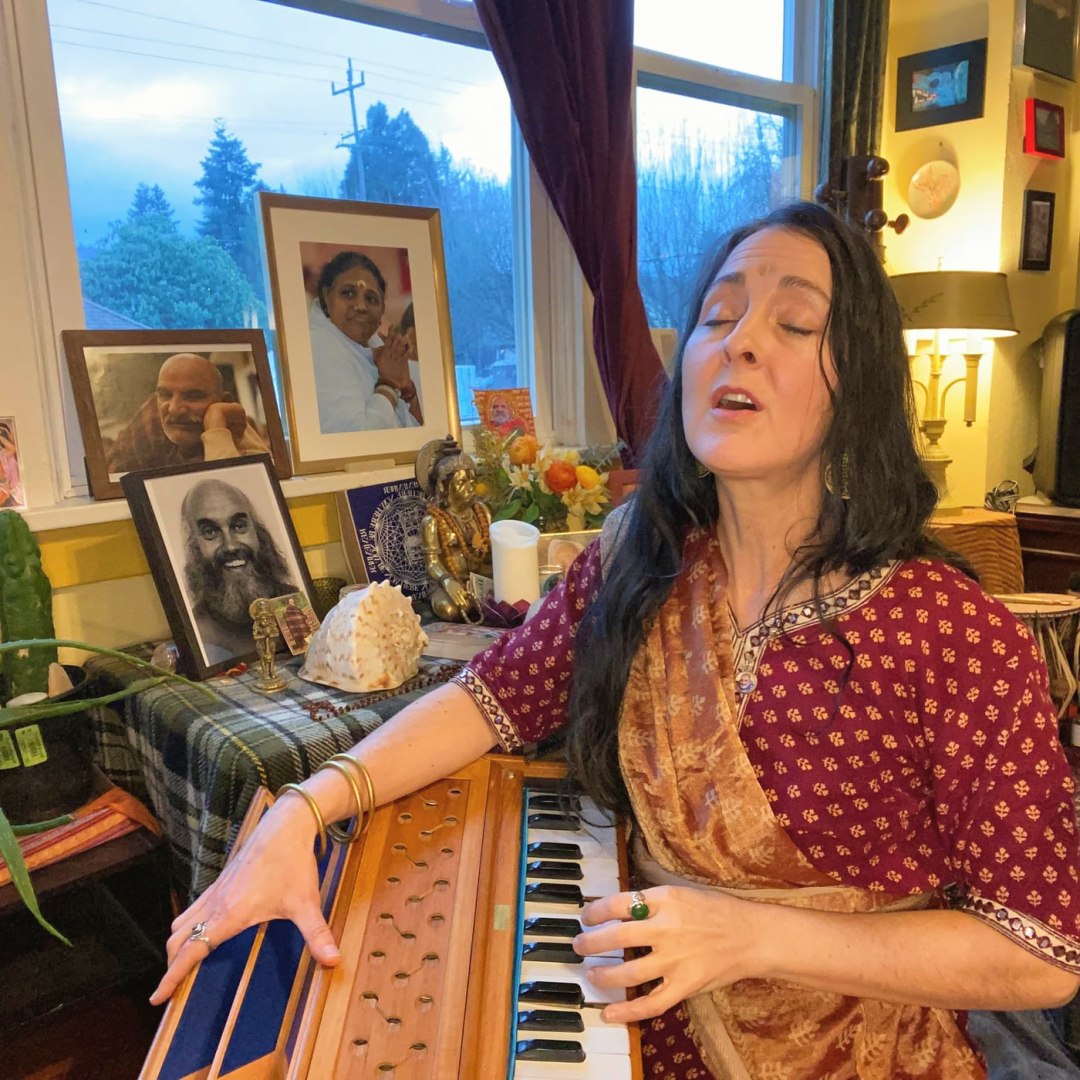
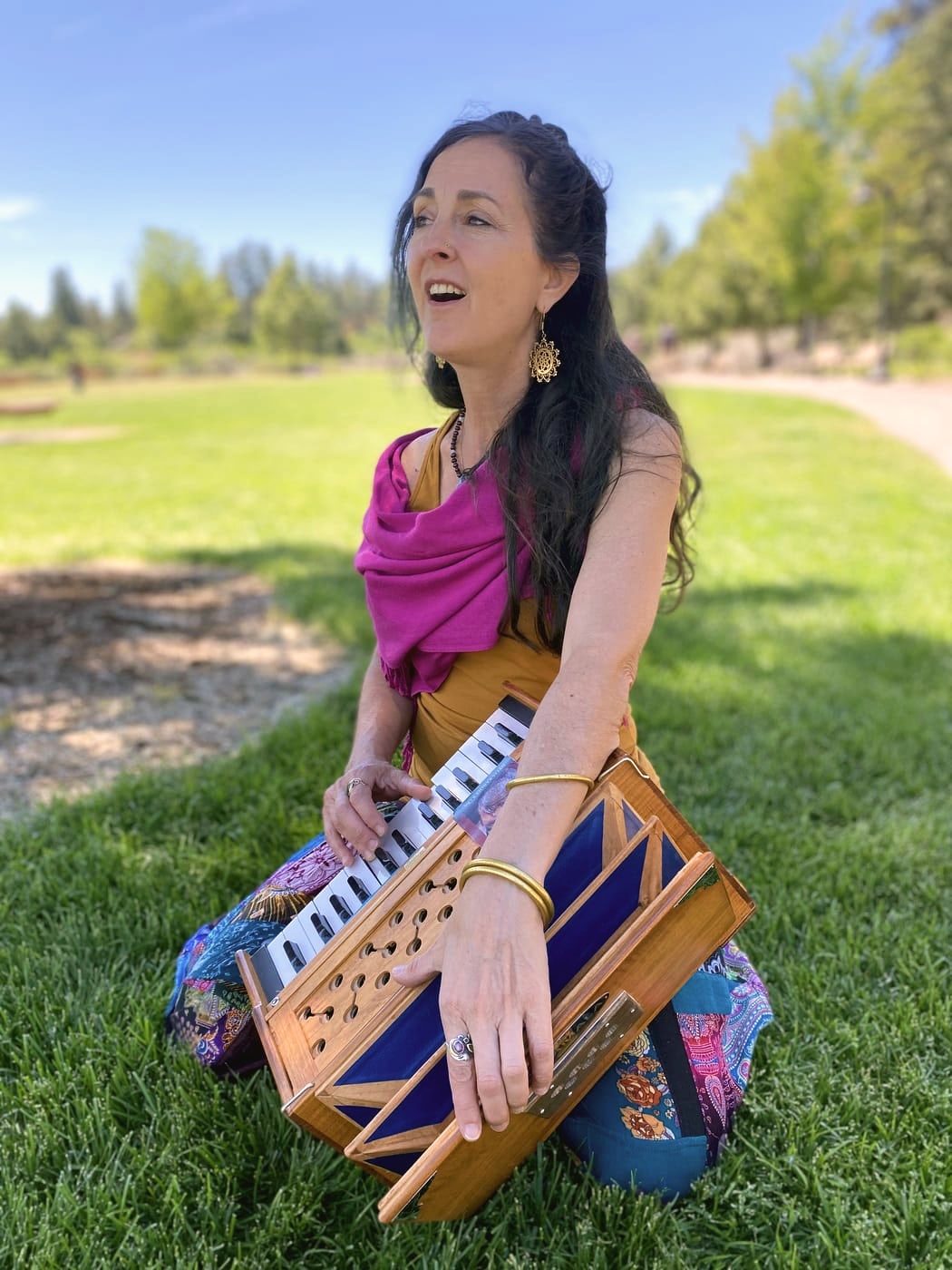

Musician
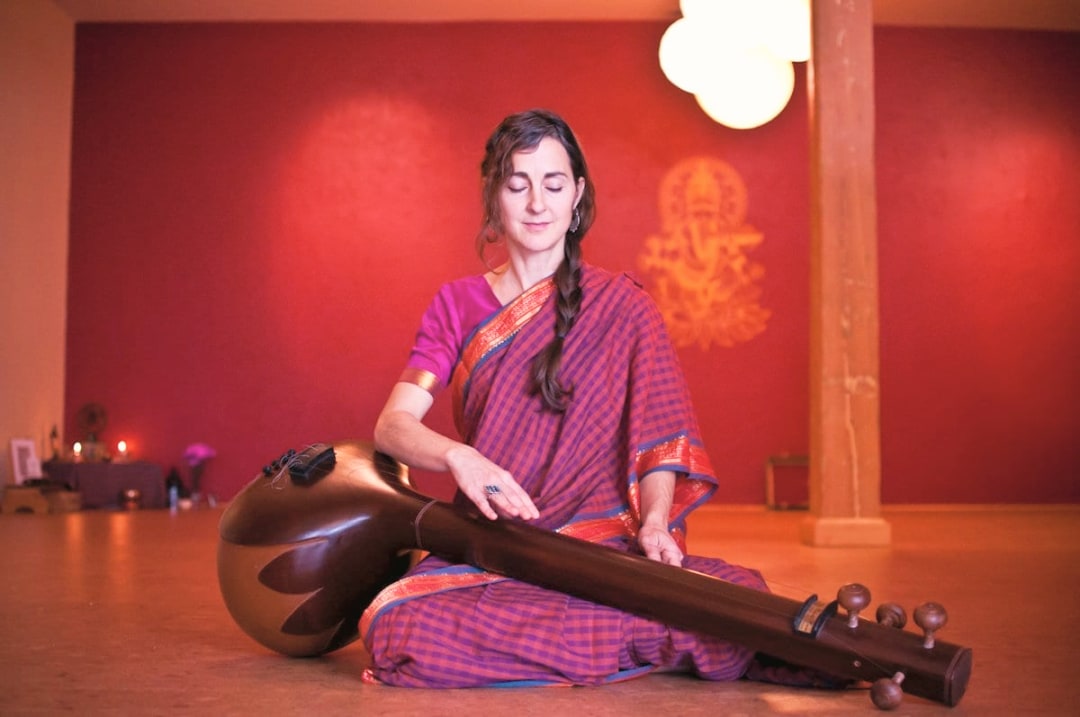
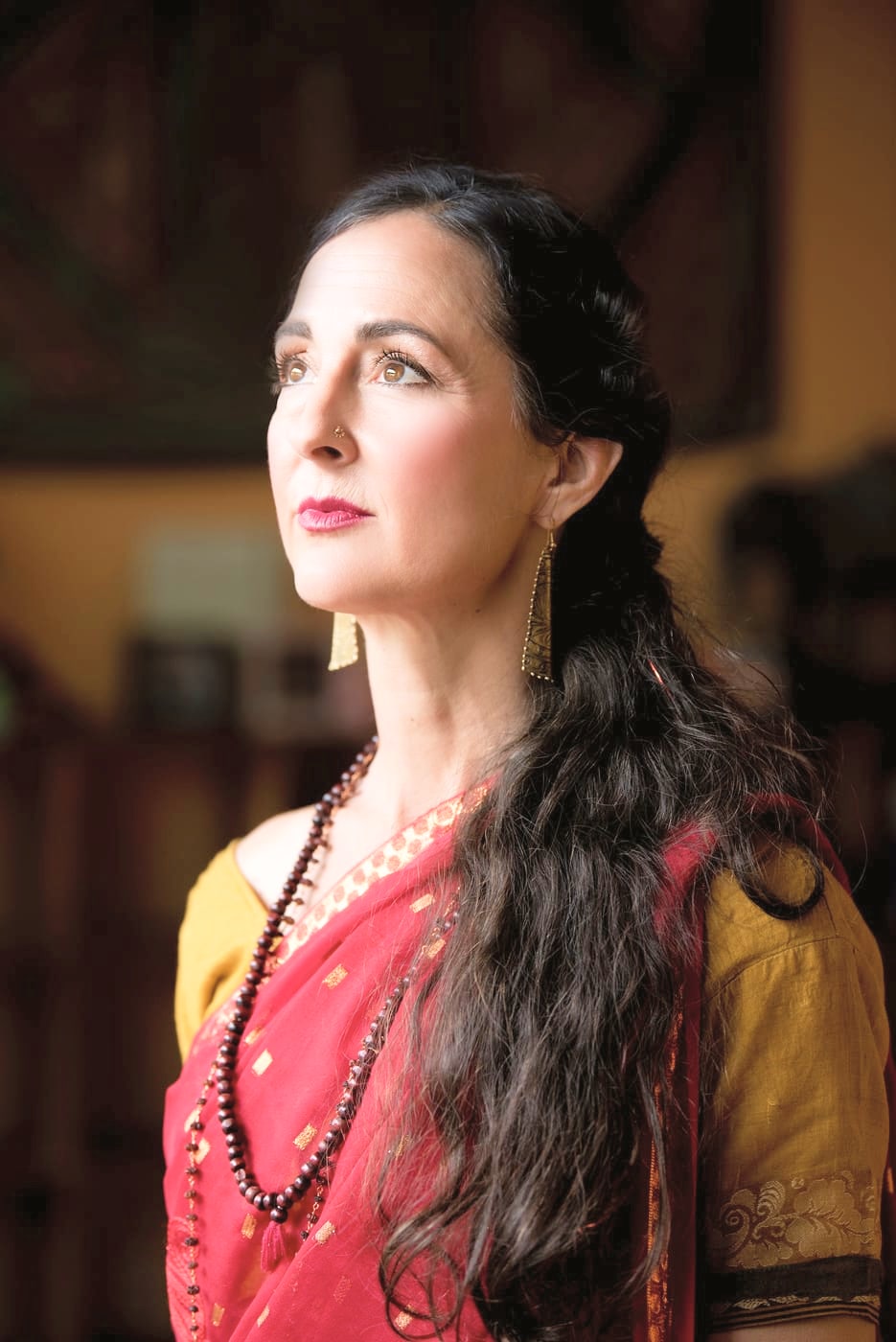
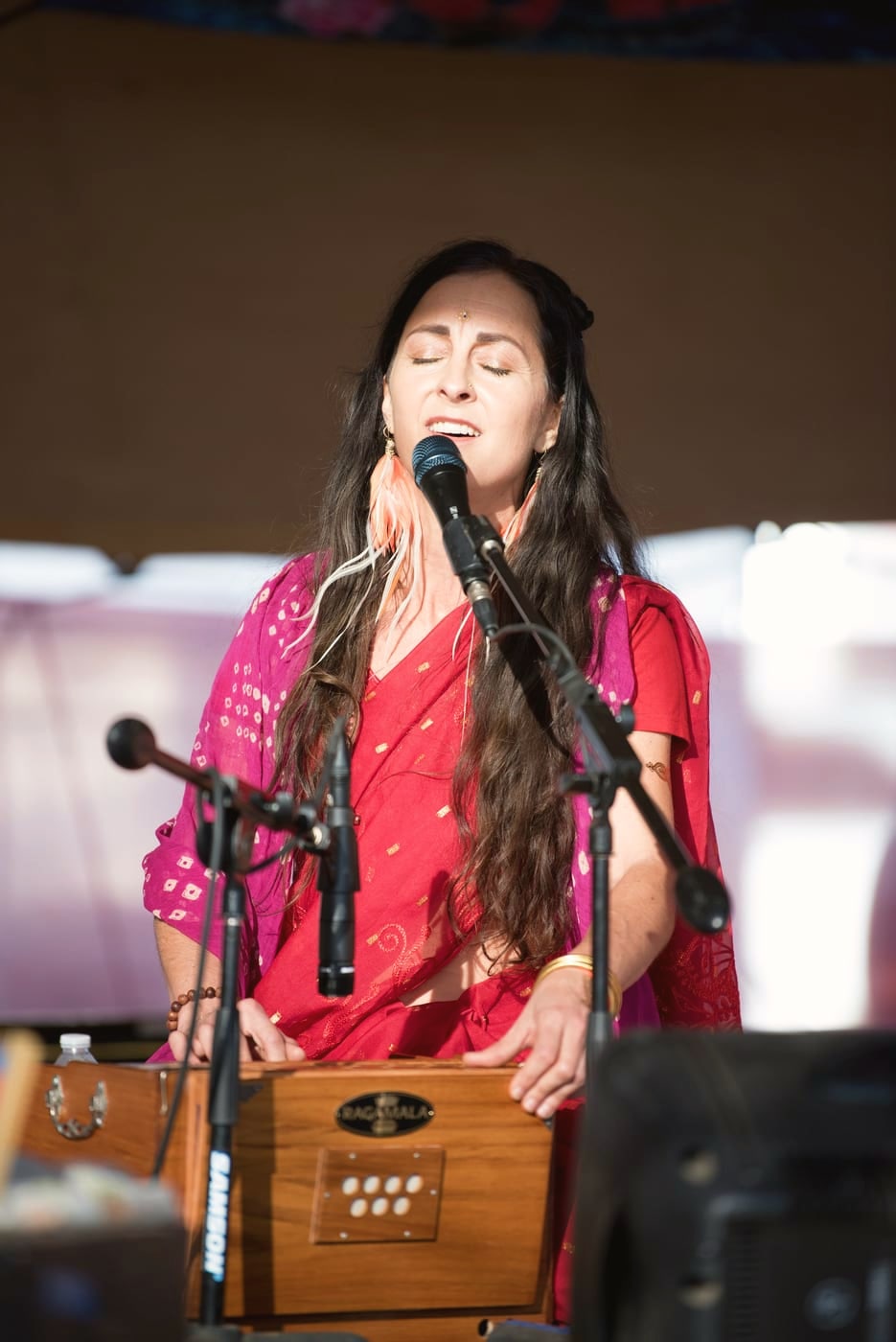
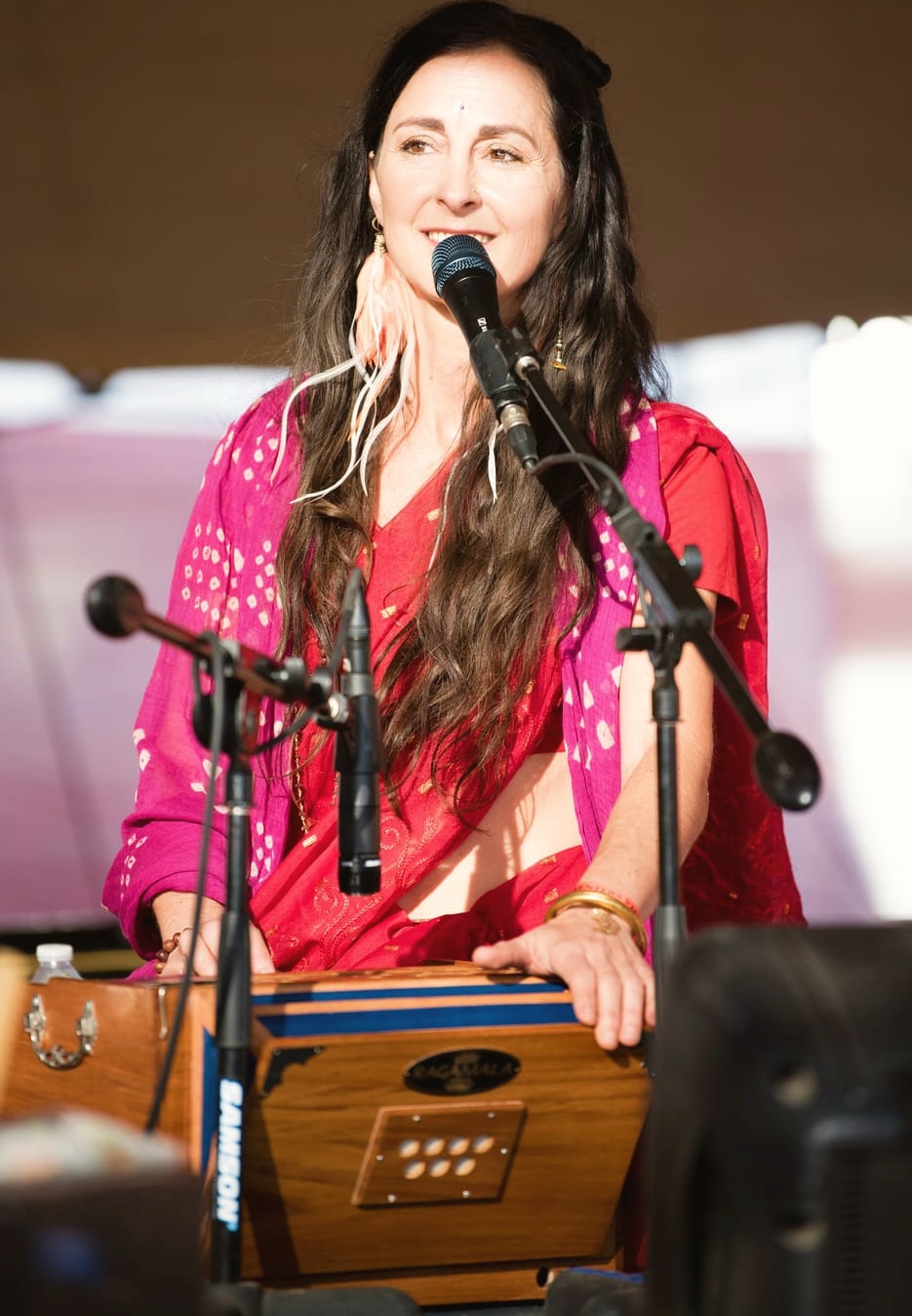
Kavita Kat Macmillan is a devotional musician and transformational creative guide whose work bridges yoga, somatic practice, devotional singing and creative awakening. She brings over 20 years of teaching, sharing kirtan, and studying naad (sound) yoga and Hindustani vocal practice. Her Open Heart Kirtan presents traditional mantras in original compositions with Western and Indian influences.
Kavita Kat Macmillan is a devotional musician and transformational creative guide whose work bridges yoga, somatic practice, devotional singing and creative awakening. She brings over 20 years of teaching, sharing kirtan, and studying naad (sound) yoga and Hindustani vocal practice. Her Open Heart Kirtan presents traditional mantras in original compositions with Western and Indian influences.
Her name, which means "poetess" or "muse," was given to her by her music teacher Sri Karunamayee, a spiritual musician from India. While training in yoga in New York City, Kavita began studying with composer Michael Harrison, a western disciple of Pandit Pran Nath. He led her to other senior disciples of that lineage, including Karunamayee, whom she travelled to India to study with. Other teachers include the Kirana Gharana master singer Ustad Mashkoor Ali Khan and Rik Masterson. She currently studies music with Warren Senders, and naad yoga and chakra energetics with Sri Shyamji Bhatnagar. Her study of Sacred Sound, sound as a path to union with the divine, shapes both her compositions and the way she teaches voice and harmonium.
Her background also includes theater, which she began training in as a child, and Butoh dance, which she took up after meeting Vangeline in New York.
Kavita guides people through mentorship, retreats, workshops, and private and group classes, and at spiritual festivals. Her Art of Sound & Mantra Mentorship supports aspiring kirtan artists and anyone drawn to a personal Sacred Sound practice. She teaches in Portland, Oregon and online. Her approach holds that finding your voice is not necessarily loud. It is a softening, a quieting of noise so you can listen within.
She has shared the stage with Jai Uttal, Krishna Das, Gina Sala, Benjy and Heather Wertheimer, David Newman, Dave Stringer, Daniel Paul, Steve Gorn and others. Her album The Beloved Lives Inside features Jai Uttal, Daniel Paul, Steve Gorn, Hans Christian, Will Marsh and Ram Dass Khalsa. Her "Sweet Sri Hanuman Chalisa" appears on the Bhaktimala for Ram Dass, and her "Guru Kripa Hanuman Chalisa" is on the Gods and Goddesses compilation for the Know Thyself as Soul organization.
Worth Knowing
Kavita Kat MacMillan is a Portland-based kirtan artist and vocal instructor who has spent more than two decades cultivating a distinctive approach to devotional singing rooted in Hindustani vocal practice, naad yoga, and lineage study with senior teachers in the Pandit Pran Nath tradition. What draws listeners and students to her work is her refusal of kitsch—her kirtan performances and teaching place equal weight on precise vocal technique, Sanskrit pronunciation, and the meditative stillness of sound itself, rather than emotional catharsis or sentimentality. Her "Open Heart Kirtan" framework threads traditional mantras through original compositions that deliberately blend Western harmonic sensibility with Indian classical music sensibility, creating a sound that feels neither purely Indian nor borrowed. She teaches voice and harmonium with the explicit aim of helping students find their own authentic voice, whether they arrive with years of training or no musical background whatsoever. Her work appeals particularly to practitioners who want rigor alongside devotion—people looking for genuine lineage transmission rather than a yoga-studio chant accompaniment.
Kavita Kat MacMillan's primary lineage traces to Pandit Pran Nath, a legendary figure in North Indian classical music and a teacher of sound as spiritual practice, through the composer and sound artist Michael Harrison, who studied extensively with Pandit Pran Nath and remains one of the most respected Western practitioners of his teachings. Her teacher Sri Karunamayee, who gave her the name Kavita (meaning "poet" or "muse"), was formerly of the Sri Aurobindo ashram in Delhi and represents the Sri Aurobindo tradition's deep engagement with sound and consciousness. She has also studied formally with Ustad Mashkoor Ali Khan in the Hindustani vocal tradition and with Rik Masterson, and currently studies with Warren Senders and Sri Shyamji Bhatnagar. This convergence—Pandit Pran Nath's naad yoga philosophy, Sri Aurobindo's integration of sound with spiritual practice, and classical Hindustani technique—forms the backbone of her teaching and performing. She is not simply a contemporary kirtan adapter; she is embedded in a lineage of Western students who have committed to serious study of Indian classical music and its spiritual dimensions.
The most accessible entry point is her album "The Beloved Lives Inside," co-produced with Grammy-winning instrumentalist Hans Christian and featuring collaborators including Jai Uttal, Daniel Paul, Steve Gorn, and Will Marsh. This album showcases her voice and her philosophy in a production-conscious context; listeners will hear how her vocal line sits within carefully arranged harmonic and instrumental textures rather than dominating. For a sense of her teaching orientation and how she thinks about mantra and sound, visiting her website at openheartkirtan.com provides her description of the Art of Sound & Mantra Mentorship, her year-long program for developing voice and devotional practice, which gives a window into her pedagogical approach. Those who want to hear her in a devotional context can find "Sweet Sri Hanuman Chalisa" on the "Bhaktimala" compilation assembled for Ram Dass, which exemplifies her Hanuman devotion and her approach to the Chalisa form. Her YouTube channel (kavitakatmacmillan) will have live kirtan performances if you want to experience the real-time, responsive quality of her leading a group in chant. Starting with the album is recommended; it requires no background and demonstrates both her musicality and her commitment to traditional form.
Where many contemporary kirtan artists prioritize emotional accessibility or a pop-inflected ease, Kavita Kat MacMillan foregrounds exactitude—she is as interested in the grammar of Sanskrit vowel sounds, Hindustani vocal ornament, and harmonic sophistication as she is in devotional feeling. Her training is not primarily in yoga communities but in dance (including Butoh), theater, and classical music study under living masters of the Indian traditions; this gives her performances a spatial and embodied quality that distinguishes them from singer-songwriter-adjacent kirtan. She works with first-rate instrumentalists (Hans Christian in particular is a serious musician, not a yoga-world session player) and composes original pieces that sit squarely within the harmonic language of Western contemporary music without pretending to be Indian classical music—her Open Heart Kirtan framework is honest about its hybridity. Most distinctively, she teaches; many kirtan artists do not. Her mentorship program is for people serious about developing their own voice and practice, not casual learners, and that rigor extends to her public performances as well. She appeals to listeners tired of kirtan that feels decorative or emotionally manipulative—those seeking something architecturally sound and spiritually grounded in real lineage.
Her music and teaching are not suited to listeners seeking high-energy, emotionally cathartic, or rhythmically driving kirtan experiences; her sound is spare, meditative, and often quite slow, favoring the resonance of individual mantras over infectious melodic hooks. If you arrive expecting a yoga-class vibe or the social-gathering energy of group chanting in a kirtan circle, you may find her approach austere or even isolating—she is teaching toward internal listening and vocal precision, not communal ecstasy. Her teaching requires genuine commitment; she is not offering drop-in classes or a casual introduction to mantras. For students who want a chakra-focused or heavily therapeutic framing of sound work, her approach will feel non-aligned; she emphasizes technique, tradition, and the autonomy of the voice itself rather than mapped energetic outcomes. Those new to any form of Indian classical music may find the timbral language unfamiliar and initially disorienting—she does not simplify or "Westernize" the vocal textures themselves, only the compositional framework around them. In short, she is for the serious listener and the serious student, not the casual explorer or the devotional-lite dabbler.
Her primary web presence is openheartkirtan.com, where you can find her schedule, offerings (including her Art of Sound & Mantra Mentorship program, workshops, and retreat dates), and contact information for private sessions. She maintains a YouTube channel (kavitakatmacmillan) where performances and potentially announcements appear. Streaming platforms—Spotify, Apple Music, and YouTube Music—allow you to follow her on those services and receive notifications of new releases. Spotify (where she has 1,771 followers) is a reasonable secondary check, though her Spotify popularity score of 5 suggests she is not in algorithmic rotation; you'll need to actively track her rather than expect discovery through playlists. She has a presence on Instagram, which is a typical vector for tour announcements and event news in the kirtan community, though this should be verified on her website. For workshop and retreat information, her website listing should be the primary source. No major touring calendar was available at the time of this writing, so your best route is to visit openheartkirtan.com directly and explore the sessions and mentorship offerings, which are available both in-person in Portland and online.
Her voice is a clean, controlled alto with a light, precise timbre; she does not deploy vocal power or dramatic vibrato, instead favoring clarity of Sanskrit diction and the subtle ornamental vocabulary of Hindustani singing. Musically, her work is remarkably restrained: spare arrangements, often built around harmonium (which she plays), guest instrumentalists contributing single-voice lines rather than lush backgrounds, and strategic use of silence. Pacing is deliberately slow; there is no sense of forward momentum or rhythmic drive, even when percussion appears. The overall aesthetic is meditative and architectural—each composition is assembled with attention to space, resonance, and how individual sounds sit in relation to one another. Her album "The Beloved Lives Inside," featuring producer Hans Christian, demonstrates this clearly: strings, winds, and harmonium function more like ambient supports than traditional musical accompaniment, allowing the mantra and her voice to remain the gravitational center. Where a typical kirtan recording might layer voices, drums, and instrumentation to create energetic uplift, Kavita Kat's approach strips away all excess, trusting that the practice itself (the repetition, the Sanskrit, the vocal precision) generates its own internal momentum. This is music that rewards close listening and repeated exposure; it does not immediately gratify or emotionally overwhelm.
"The Beloved Lives Inside" is the primary recorded work: co-produced with Grammy-winning instrumentalist Hans Christian and featuring Jai Uttal, Daniel Paul, Steve Gorn, and Will Marsh, this album represents her mature aesthetic and is the essential starting point for understanding her artistry. Beyond her own full album, two significant single tracks have appeared on curated compilations and are essential listening: "Sweet Sri Hanuman Chalisa" appears on "Bhaktimala for Ram Dass," a compilation honoring Ram Dass's teachings, and demonstrates her Hanuman devotion and mastery of the Chalisa form; "Guru Kripa Hanuman Chalisa" appears on "Gods and Goddesses" for the Know Thyself as Soul organization. These two tracks provide different approaches to the same deity and mantra form, showing her range and her specificity within the Hanuman lineage. For someone without deep familiarity with kirtan recordings, "The Beloved Lives Inside" is the necessary starting point. The two Hanuman Chalisas, once you've oriented yourself to her sound, offer evidence of her depth and the respect she commands within spiritual music communities. Her Spotify presence allows you to access all available recordings in one place, though her discography is not extensive—this is an artist who prioritizes depth of teaching and live work over prolific recording.
Her primary instrument is the harmonium, which she plays and teaches; it anchors her compositions and provides the harmonic and modal base for her mantras and devotional singing. In performance and recording, she works with carefully selected instrumentalists rather than a standing ensemble: Hans Christian, a Grammy-winning musician, co-produced "The Beloved Lives Inside" and appears on that album; she has also shared the stage and recorded with Jai Uttal (a significant figure in contemporary kirtan and spiritual music), Daniel Paul, Steve Gorn (a master of the bansuri and other Indian wind instruments), and Will Marsh. David Newman, Dave Stringer, Gina Sala, and Benjy and Heather Wertheimer have also appeared in her projects, and notably, she has performed alongside Krishna Das, one of the most visible Western kirtan artists, which speaks to her standing in that community. Her approach favors precision over quantity; rather than assemble a large group of session musicians, she brings in one or two instrumentalists at a time who understand her aesthetic and her lineage. This selectivity—her willingness to work with serious musicians rather than whoever is available—reflects her commitment to quality over accessibility. The harmonium is always present because it is the traditional foundation of North Indian devotional music; the choice of secondary instruments shifts based on the composition and the mood.
"Sweet Sri Hanuman Chalisa" and "Guru Kripa Hanuman Chalisa," both available through their respective compilations (Bhaktimala for Ram Dass and Gods and Goddesses), are explicitly devotional and rooted in the Hanuman tradition, making them suited to practices centered on Hanuman deity yoga or Bhakti practices focused on devotion to Hanuman. The Chalisa form itself—a forty-verse compositional structure—is traditionally used as a repeatable devotional practice, and Kavita Kat's treatments of these texts preserve that function. Beyond those specific tracks, her overall approach through "The Beloved Lives Inside" and her Open Heart Kirtan philosophy is designed for meditative listening and for grounding yoga and sound-based practice; however, her work is more introspective and technically demanding than conventional "yoga class" kirtan. What distinguishes her approach is that she does not pre-package her music as specifically "for meditation" or "for healing"—instead, she trusts the mantras themselves, the precision of her singing, and the mathematics of Hindustani vocal technique to generate meditative and therapeutic effects. Students and listeners who use her music in personal practice often report that the sparse, restrained quality and the demand for active listening (rather than passive accompaniment) create a stronger contemplative container than busier kirtan music. For formal ceremony, consult her directly through openheartkirtan.com regarding whether she offers commissioned or custom kirtan.
C’est vous ? Revendiquer cette page ›
Continue your journey
BrightStar is the global directory of artists, teachers, and healers in the wellness and spiritual movement. Find your next experience — or add yourself.
Browse 14,000+ curated profiles across kirtan, yoga, meditation, and beyond.
Explore directory →Kirtan, retreats, sound baths, breathwork, ceremonies — happening this week.
Browse events →Are you an artist, teacher, or healer? Get listed — free, AI-assisted, live in minutes.
Get started →


