
E

Emancipator
Producer · Portland, Oregon, United States
À propos
Douglas Appling, born May 27, 1987, performs and records as Emancipator, a producer and DJ whose layered, instrumental electronic music sits at the intersection of trip hop, downtempo, and chillstep. He became known for Soon It Will Be Cold Enough, his debut album self-released in 2006 while he was still in college, which established his signature approach of blending organic samples, hip-hop drum patterns, and cinematic strings without vocals.
Douglas Appling, born May 27, 1987, performs and records as Emancipator, a producer and DJ whose layered, instrumental electronic music sits at the intersection of trip hop, downtempo, and chillstep. He became known for Soon It Will Be Cold Enough, his debut album self-released in 2006 while he was still in college, which established his signature approach of blending organic samples, hip-hop drum patterns, and cinematic strings without vocals.
Emancipator's sound draws from the sample-heavy aesthetics of Nujabes and DJ Shadow but leans toward ambient texture rather than beat-driven groove. His productions use violin, cello, and acoustic guitar layered over electronic percussion, creating instrumental tracks that function equally as background study music and as headphone listening. Unlike peers in the downtempo space who favor looped minimalism, Appling composes multi-movement pieces that shift dynamics across four- and five-minute arcs, giving individual tracks a narrative structure more common in post-rock than in electronic music.
Since 2006, Appling has released eight studio albums, including two collaboration records, along with two live albums, five EPs, and three remix collections. Notable releases include Dusk to Dawn (2013), Seven Seas (2015), and Baralku (2017). In 2012 he founded Loci Records, an independent label based in Portland, to release his own work and records by artists working in adjacent instrumental and downtempo styles. The label has allowed Appling to maintain control over production timelines and album rollouts without relying on major distributor schedules.
Appling grew up in Portland, Oregon, and began producing music as a teenager using digital audio workstations and sample libraries. His early work was self-taught, shaped by late-night experimentation with beat-making software rather than formal conservatory training. The decision to self-release Soon It Will Be Cold Enough came from necessity rather than strategy, but the album found an audience through file-sharing platforms and early streaming services, building a fan base that grew steadily through word of mouth and playlist inclusion.
In 2013, Appling formed the Emancipator Ensemble, a live band that translates his studio productions into performed arrangements featuring violin, cello, keys, and live drums alongside his laptop and turntables. The Ensemble has toured nationally and internationally, playing theaters and festival stages that accommodate the hybrid electronic-acoustic setup. The live show expanded Emancipator's reach beyond bedroom listeners and brought his music into venues where audiences expect visual and instrumental presence, not just DJ sets.
Emancipator's music has accumulated millions of streams across platforms, with tracks frequently appearing on curated playlists for studying, relaxation, and late-night listening. His work has been featured in independent films, podcasts, and yoga studios, contexts that value instrumental music with emotional arc but without lyrical specificity. He continues to release new material through Loci Records and tours with the Ensemble, maintaining a steady output that serves both headphone listeners and live audiences.
For someone discovering Emancipator today, his catalog offers a decade and a half of instrumental electronic music that rewards close listening without demanding it, built for both solitary focus and communal space.



Questions
Douglas Appling, known as Emancipator, is a Portland-based producer and DJ who has built a sustained following of over 412,000 Spotify listeners by refusing to chase trends in electronic music. Since his self-released debut album Soon It Will Be Cold Enough in 2006—released while still a college student—he has maintained a distinctive aesthetic rooted in trip hop, downtempo, and chillstep production, releasing eight studio albums, two live albums, and numerous EPs over nearly two decades. What distinguishes Emancipator from the broader electronic producer landscape is his commitment to restraint and compositional depth: his tracks prioritize atmosphere and narrative arc over high-energy drops or maximalist production. Beyond his solo work, he founded Loci Records in 2012 as an independent label and formed the Emancipator Ensemble in 2013, expanding his practice into live band performance—a rare commitment among producers working in his genre. Listeners value his work because it treats electronic composition with the seriousness of chamber music, demanding and rewarding sustained attention rather than passive consumption.
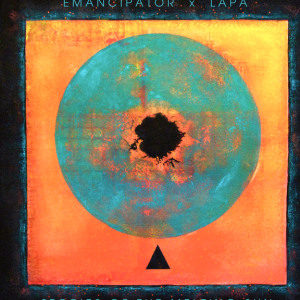
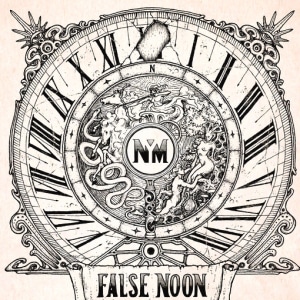
Emancipator's production sits squarely within trip hop and downtempo traditions, though with less emphasis on dub textures or industrial grit than earlier 1990s trip hop. The sonic signature is sparse and deliberate: minimal drum patterns, often relying on swing and hi-hat detail rather than density; layered strings or atmospheric pads; and a consistent use of vinyl crackle or analog warmth that signals a producer thinking in terms of analog-era aesthetics. Tracks typically move at 80–110 BPM, creating a meditative but not somnolent listening space—what listeners often describe as 'morning music' or 'thinking music' rather than ambient background. His recent work, visible across albums like False Noon (2023), Bloom Bap (2023), and the latest Stories of the Melting Sun (2025), shows an evolution toward more organic instrumentation and what might be called 'chillstep'—a softer, less glitchy sibling to dubstep that prioritizes groove and melody over wobble. The pacing never rushes; individual tracks allow space for instrumental voices to breathe, and the overall album experience unfolds like a single narrative rather than a collection of standalone pieces. This aesthetic is explicitly not for listeners seeking high-energy DJing or beat-driven music—it rewards focus, not background listening.
Start with Soon It Will Be Cold Enough (2006), Emancipator's debut and still his most crystalline statement of intent. The album distills his core production philosophy into ten tracks that introduce all the recurring elements without stylistic detours: restrained beat work, lush string arrangements, vinyl textures, and an architectural approach to song structure. If that resonates, move immediately to Dusk to Dawn (2012), which many longtime listeners consider his commercial and compositional peak—more confident in its orchestration, more ambitious in its scope. For listeners drawn to more recent sonic evolution, the 2024 Dusk to Dawn Deluxe Anniversary Edition offers both the original vision and expanded context. After establishing those anchors, explore his 2023 and 2025 output—False Noon, Bloom Bap, and Stories of the Melting Sun show how he's deepened his engagement with organic instrumentation and live ensemble arrangements without abandoning his foundational downtempo language. Avoid starting with remix collections or the Desert Drip Remixes (2024) unless you're already familiar with his original work; those are best appreciated as conversation pieces rather than introduction points. If you prefer studio albums in a single sitting over a more exploratory approach, Dusk to Dawn remains the most cohesive entry point and the strongest argument for why Emancipator matters.
Where many downtempo and chillstep producers default to lo-fi aesthetics or beat-centric grooves, Emancipator prioritizes compositional architecture and restraint in a way that aligns him more with producers like Tycho or early Nightmares on Wax than with contemporary trap-influenced downtempo. His refusal to add elements simply because they might enhance commercial appeal—no vocoders, no trend-chasing snares, no algorithmic EDM pandering—creates a consistent voice that's immediately identifiable across a decade of releases. His formation of the Emancipator Ensemble in 2013 was also anomalous: most electronic producers work solo in home studios, but Emancipator committed to live ensemble arrangement and real-time performance, which infused his later studio work with the texture of acoustic collaboration that most downtempo records simply don't pursue. His independent label Loci Records (founded 2012) further distinguishes him as someone thinking beyond his own discography—he's invested in building a platform and aesthetic community rather than pursuing maximum streaming dominance. Sonically, he favors vinyl warmth and analog emulation over clinical digital clarity, and his production never privileges beat complexity over melodic space. What surprises newcomers most is how slow his music actually is and how much patience it demands; in an era of playlist-optimized attention spans, Emancipator's refusal to accelerate the tempo or heighten drama within three minutes marks him as deliberately outside the mainstream downtempo conversation.
The four-album foundation is Soon It Will Be Cold Enough (2006), Dusk to Dawn (2012), Safe in the Steep Cliffs (2016), and Run Alone (2020)—these form the spine of his artistic development and are the albums referenced most frequently by longtime listeners and critics. Soon It Will Be Cold Enough remains essential listening: a debut that established his compositional voice so clearly that subsequent albums deepen rather than reinvent it. Dusk to Dawn is the commercial and artistic apex—a fully realized statement where orchestration, beat craft, and narrative cohesion align perfectly; the 2024 Deluxe Anniversary Edition includes new material and retroactive context making it a compelling revisit. For evidence of how Emancipator has evolved in the 2020s, False Noon (2023), Bloom Bap (2023), and Stories of the Melting Sun (2025) are indispensable: they show a producer increasingly interested in organic instrumentation, live ensemble contribution, and a willingness to incorporate elements of jazz harmony and folk melody into his downtempo framework. Lament (2025) is his most recent studio work and should be approached as a current statement of where his practice stands. Avoid starting with remixes or live albums unless you're already established as a listener; those are supplementary contexts, not primary works. For listeners with limited time, Soon It Will Be Cold Enough and Dusk to Dawn are the minimum viable introduction to understanding why Emancipator has sustained a career across nearly two decades.
While exact studio documentation isn't publicly detailed, Emancipator's sonic signature reveals consistent instrumental and production choices: strings (violins, cellos, sometimes orchestral arrangements), piano or keyboard pads, analog-emulated synthesizers, and a signature use of vinyl noise and tape saturation that suggests intentional analog-era modeling. His beat work is typically constructed from sampled or synthesized percussion—kick drums with significant low-frequency warmth, restrained hi-hats and snares that prioritize swing and timing over density, and occasional live drum contributions (evidenced more prominently in Emancipator Ensemble performances). Since forming the Emancipator Ensemble in 2013, his recent albums integrate live instrumentation more visibly: acoustic strings, live drums, and additional orchestration that moves beyond what could be rendered through software synthesis alone. The production approach favors warm, compressed, and slightly 'colored' mixes rather than clinical clarity—the sound is deliberately analog-adjacent even when the source is digital. His choice of collaborators and remix work across projects like A Radiant Sign (Remixed) (2023) and Desert Drip Remixes (2024) suggests openness to diverse instrumental interpretation while maintaining his core sonic vocabulary. The overall toolkit is deliberately constrained—he doesn't showcase granular synthesis, extensive effects chains, or sound-design experimentation; instead, the focus remains on melodic and harmonic content rendered through a small, intentional palette. This restraint is a stylistic choice that distinguishes him from producers who treat the studio as an effects laboratory.
The Emancipator Ensemble, formed in 2013, represents Emancipator's primary live vehicle—a shift from typical electronic producer touring where a DJ controls pre-recorded material. The Ensemble arranges Emancipator's compositions for live instrumentation including strings, live drums, keyboards, and additional orchestration, transforming the studio versions into real-time ensemble performances. This approach is rare in the downtempo and trip hop spaces and significantly deepens the listening experience: what sounds like lush arrangement on a recording becomes visibly collaborative and human on stage, with visible musicians responding to each other's timing and phrasing. The live format also allows for longer, more exploratory versions of studio tracks, creating space for instrumental dialogue that the fixed studio arrangements don't accommodate. Listeners familiar only with studio versions often report that seeing the Ensemble perform recontextualizes their understanding of the compositions—the intimacy and precision of the arrangements become clearer when you witness the musicians executing them. However, current tour dates and upcoming Ensemble performances are not documented in available data, so interested listeners should monitor Emancipator's official website at emancipatormusic.com, his Spotify artist page, and his YouTube channel (@EmancipatorMusic) for tour announcements and live session recordings. Some live albums exist in his discography, offering documented recordings of Ensemble performances for those unable to attend shows in person.
Emancipator maintains an official website at emancipatormusic.com as his primary hub for news, release information, and tour dates. His Spotify profile (@6HCnsY0Rxi3cg53xreoAIm) is the most direct way to stay updated on new album and single releases, with 412,665 followers receiving notifications when new work drops—recent releases include the albums Lament (2025), Stories of the Melting Sun (2025), and the single Surfing Sufi (2026), so he maintains a consistent release schedule. His YouTube channel (@EmancipatorMusic) archives music videos, live Ensemble performances, and occasional behind-the-scenes content, making it a secondary but valuable resource for context beyond streaming audio. For touring and event information, the official website is the most reliable source, though no current tour dates are publicly available in standard directories. Following his social media presence or subscribing to Loci Records updates (his label founded in 2012) can also signal upcoming releases and associated artist announcements. Notably, he does not maintain an Apple Music profile, so Spotify is the dominant streaming platform for tracking his work. Given the relatively sparse but consistent release schedule—multiple singles and albums across 2023–2025—checking his Spotify profile quarterly or subscribing to release notifications ensures you won't miss new material. His album-oriented approach and independent label operation mean he doesn't rely on aggressive social media marketing, so direct platform monitoring is more reliable than algorithm-based discovery.
Loci Records, founded by Emancipator in 2012, is his independent record label and represents a deliberate expansion of his artistic practice beyond solo production into label curation and artist development. The label's foundation came after Emancipator had already established himself through several albums and significant streaming presence, suggesting the motivation was not commercial desperation but rather a commitment to creating a platform for aesthetically aligned artists and works that major labels might not prioritize. By starting his own label, Emancipator positioned himself alongside other producers who built independent platforms (Four Tet's Text Records, Jon Hopkins' Emerald Rush) rather than pursuing traditional major label deals or pure streaming optimization. Loci Records allows him to release his own work on his own terms and timeline—visible in his consistent output across 2023–2025—while also potentially supporting other artists working within downtempo, trip hop, and chillstep traditions. The label name itself, 'Loci,' suggests philosophical and spatial intentionality (loci as 'places' or 'contexts'), implying a curatorial vision beyond commercial opportunism. This move also positioned Emancipator as someone thinking about artistic community and continuity rather than individual achievement, a relatively uncommon stance in electronic music production where solo careers typically dominate. While detailed Loci Records roster information isn't provided in available data, the label's existence is significant evidence of Emancipator's commitment to artistic infrastructure and independent operation—a choice that requires financial stability and belief in a long-term vision that streaming-era producers often can't afford to pursue.
Emancipator's evolution across nearly two decades has followed a consistent arc of increasing orchestral ambition and live ensemble integration while maintaining his foundational downtempo and trip hop vocabulary. His earliest work, Soon It Will Be Cold Enough (2006), established his minimalist, vinyl-textured aesthetic—sparse beats, careful string layering, and an almost classical restraint in arrangement that immediately distinguished him from maximalist electronic producers of that era. By Dusk to Dawn (2012), he had increased orchestral sophistication and compositional confidence: arrangements are fuller, the production more spacious, and the emotional range more explicit without abandoning the core vocabulary. The formation of the Emancipator Ensemble in 2013 marks the second major inflection point: from this moment onward, his studio albums increasingly incorporate live instrumentation and ensemble arrangement, visible in the fuller acoustic textures and more prominent strings across late 2010s and 2020s work. His 2023 albums—False Noon and Bloom Bap—represent a further evolution toward organic instrumentation and what might be called 'neo-chamber' aesthetics, where electronic production serves as foundation for acoustic and ensemble voices rather than the primary compositional driver. The most recent albums, Lament and Stories of the Melting Sun (2025), continue this trajectory while also introducing more experimental production choices and varied sonic textures—evidence that he remains a developing artist rather than a legacy act repeating past successes. Notably, this evolution has been gradual and integrated: he hasn't abandoned his original aesthetic for new trendy sounds, but rather deepened and expanded the original vision through live collaboration and instrumental exploration.


C’est vous ? Revendiquer cette page ›
There's more where this came from.
BrightStar is the global directory of artists, teachers, and healers in the wellness and spiritual movement. Find your next experience — or add yourself.
Discover More Artists
Browse 14,000+ curated profiles across kirtan, yoga, meditation, and beyond.
Explore directory →Find an Event Near You
Kirtan, retreats, sound baths, breathwork, ceremonies — happening this week.
Browse events →Add Your Profile
Are you an artist, teacher, or healer? Get listed — free, AI-assisted, live in minutes.
Get started →