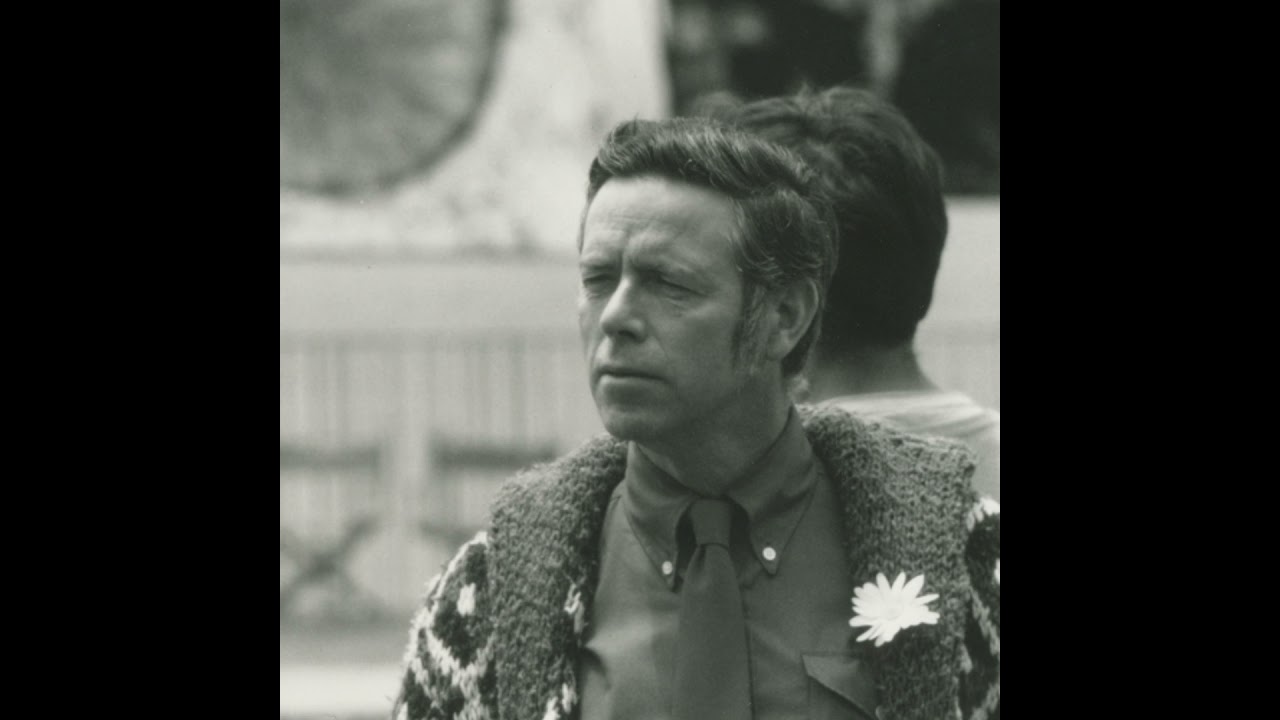
In a two-and-a-half-minute video from Esalen Institute, teacher Fletcher Tucker makes the case that belonging to the Earth is something to be felt in the body rather than merely understood in the head. He is set to co-teach two Big Sur workshops this season: While the Veil Is Thin, October 26 to 30, with herbalist and ceremonialist Micha Merrick, and The Plants Who Know Us, November 16 to 20, with somatic practitioner Ariel Johnson. Across the clip he lays out the shared frame of both programs: animistic perspectives, traditions of kinship with the more-than-human world, the liminal qualities of autumn, and an embodied route to a sense of self that, in his words, "includes the entire cosmos." The video is brief and sketches its ideas rather than developing them, so what follows works through those ideas in depth and marks where the clip stops short.
The most useful phrase in the video is the one Tucker spends the most care on. He describes "a deeper substrate of human experience, one in which our fundamental entanglement with all life is felt and encountered, not just thought about or conceptually understood" (0:79 in the video's timeline is where this framing begins to take shape). A substrate is a layer underneath, the ground a more visible structure rests on. Tucker's claim is that most people relate to ecology at the level of ideas: we know that forests, soil, and pollinators are interdependent, and we can say so fluently. What he proposes is a different register, one where that interdependence is registered physically, in breath, posture, and attention.
The distinction matters because knowing a thing and living inside it are not the same. A person can recite the web of life and still move through a day as though the land were a backdrop. Tucker's workshops are aimed at closing that gap. The stated method is direct contact: going out onto the land at Big Sur and encountering it rather than studying it from a classroom. For readers who have spent time in wild places, the experience of walking a trail and suddenly feeling implicated in what grows along it will sound familiar. Tucker is naming that feeling as a practice worth cultivating on purpose.
Tucker's vocabulary is deliberate. He does not frame the natural world primarily as a resource to be protected, though protection may follow from his approach. He speaks instead of "animistic perspectives and traditions of kinship," and of our "plant and animal and fungi and mineral relatives who we share this world with" (2:02 in the video). Animism, in the broad sense, is the view that the world is populated by beings in relationship with us rather than by inert objects. Kinship goes a step further: it describes obligations, familiarity, and mutual recognition, the way one speaks about family rather than about property.
This is where the plant workshop becomes specific. Tucker describes The Plants Who Know Us as an exploration of "traditions of kinship and connection with plants that are pan-ancestral across the entire Northern Hemisphere" (0:54 in the video). The word pan-ancestral carries weight. It suggests that the relationships he has in mind are not confined to one lineage or one cultural tradition but recur across many peoples who lived close to the same plant communities. He also calls these plants "extremely important botanical beings" (1:07), a phrasing that treats them as subjects of relationship rather than as ingredients or scenery. The video does not detail which plants, which traditions, or which exercises will be used, so viewers should treat the workshop as an invitation to meet these relationships rather than a catalogue of them.
Tucker's partner on the October program, Micha Merrick, is introduced as a gifted herbalist and ceremonialist, and the workshop's title, While the Veil Is Thin, points to the season as much as to the content. Tucker describes the program as exploring "the liminal, spiritual, and ecological qualities of the season of fall, of autumn" (0:31). Liminal comes from the Latin word for threshold, and a liminal season is one that sits between states: the green of summer giving way to the bare structure of winter, the outward growth of the year turning inward.
Threshold seasons have a particular pull for contemplative practice because they make transition visible. Leaves drop, light shortens, and the living world shows its process in plain sight. For a practice centered on belonging, this is a useful backdrop. If we are entangled with the rhythms of the land, autumn is one of the moments when those rhythms are easiest to notice. Tucker pairs the seasonal theme with "direct, embodied, ecological engagement with this extraordinary landscape" (0:40), so the season becomes a lens and the land becomes the classroom.
The phrase Tucker uses for the body's role is "creaturely belongingness," which he describes as "inhabitation into our animal bodies" (2:02). The emphasis is on the fact that humans are animals before we are anything else. Much modern spiritual language treats the body as a vehicle for the mind or the spirit. Tucker reverses the direction: the body is where the belonging happens, and the sense of self opens outward from there.
This is the work that Ariel Johnson, introduced as a somatic practitioner, is positioned to lead. Somatic approaches generally attend to sensation, movement, and the nervous system's responses to environment, and in an ecological setting they can turn attention from the mental commentary about a place to the direct experience of being in it. The video does not describe Johnson's specific methods, and it would be a mistake to invent them. What it does establish is the intention: to move the experience of entanglement out of conceptual territory and into the body, on the land.
Tucker's stated hope is ambitious. He says he hopes participants will "experience a significant expansion of our sense of self, which includes the entire cosmos" (2:19). That is a large promise, and the video offers no measure of how it might be reached or how anyone would know. Readers approaching this kind of claim should hold it as a direction of travel rather than a guaranteed result. Expansion of self is a recurring theme in contemplative writing, and Tucker's version ties it specifically to the bodily, animal, and land-based side of practice rather than to abstraction alone.
An honest reading of this clip has to note its limits. It runs about two and a half minutes and functions as an invitation. It gives both workshop dates, both co-teachers, the setting in Big Sur, and the broad themes. It does not give schedules beyond the date ranges, pricing, prerequisites, the specific plants or traditions to be studied, or any description of the day-to-day practice. Those details belong on Esalen's own pages, which the video's description links through esalen.org. Esalen describes itself in its channel materials as a not-for-profit, holistic, educational retreat center offering space for contemplation, creation, and internal exploration since 1962, and the workshops sit within that tradition.
If the ideas in this video resonate, the most direct next step is to sit with the question Tucker is actually asking: where in your body do you already feel connected to the land you live on, and where do you only know it in your head? That gap is the terrain both workshops propose to explore. For a deeper look at the programs themselves, check Esalen's listings for While the Veil Is Thin, October 26 to 30, and The Plants Who Know Us, November 16 to 20, and read the full descriptions before deciding. Between now and then, spend time outdoors without a purpose. Notice what is changing with the season, and notice what changes in you when you stop naming it. That noticing is the practice Tucker is pointing toward, and it does not require a ticket to Big Sur to begin.