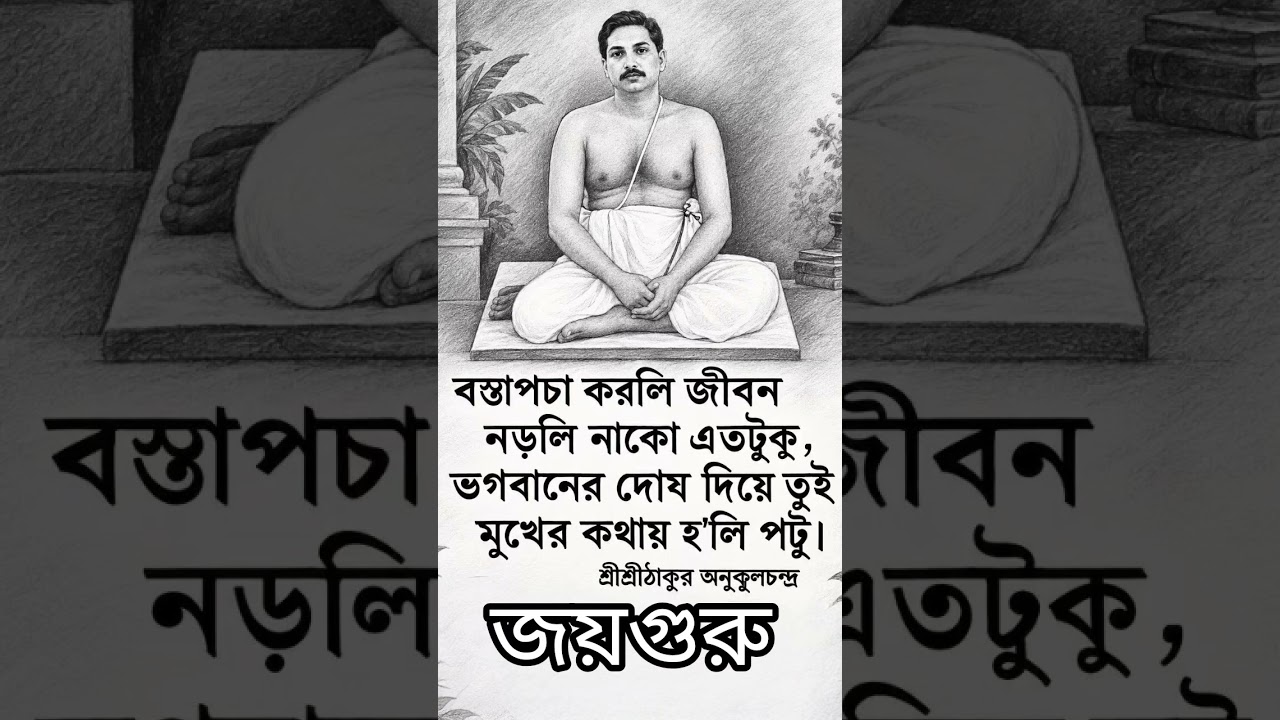
This brief kirtan—a devotional chant rooted in bhakti, the Hindu path of devotion—distills one of contemplative practice's most enduring gestures: the repetition of sacred names as a form of refuge and remembrance. Over just 43 seconds, the chant cycles through the divine names Radha, Krishna, and Govinda, with the opening invocation "Chhado re man bhavero asha"—"Let go, mind, of worldly desire"—establishing the practice's intention at the outset. The repetition itself is the technology here: each utterance of the name is not ornament but a method, a way of turning the mind inward and anchoring awareness in the divine presence the names represent.
How Does Sacred Name Repetition Work in Kirtan?
In the Hindu devotional tradition, the name of the divine is not merely a label but a direct contact point with transcendence. Sri Sri Thakur Anukul Chandra, the spiritual guide whose teachings and legacy this chant honors, worked within a lineage that understood name-chanting as both a practical discipline and a grace-bestowing practice. The kirtan form—congregational singing, often call-and-response—serves a dual purpose: it anchors the individual chanter in focused awareness while creating a collective field of devotion when sung in community.
The structure here is deliberate. The opening plea to relinquish worldly attachment ("Let go, mind, of worldly desire / Take intoxication in the chanting of names") frames the entire practice as a kind of sacred amnesia—a voluntary forgetting of the small self and its concerns in order to remember the divine. The sustained repetition of "Radha" and "Govinda" that follows is not hypnotic in the colloquial sense; rather, it's a systematic return of attention, like a musician returning again and again to a fundamental note. Each cycle deepens the resonance.
This practice belongs to a larger current in Hindu devotionalism where the name is held to contain the full presence of what it names. A sincere utterance is an invocation. The voice becomes an instrument not of ego but of transmission, and the listener—whether present in body or simply receiving the vibrational offering—enters a shared field of remembrance.
Where to go from here
This short chant serves as an entry point to Sri Sri Thakur Anukul Chandra's broader teachings on devotional practice and the transformative power of sacred repetition. His lineage continues to emphasize kirtan, satsang (spiritual gatherings), and the integration of name-chanting into daily life as paths to expanded awareness and heart-centered living. To explore this practice more deeply, seek out longer recordings from the Satsang Music tradition, and consider the role of kirtan in your own spiritual inquiry—whether as a listener, a chanter, or simply as a witness to the devotional impulse that moves across cultures and centuries.