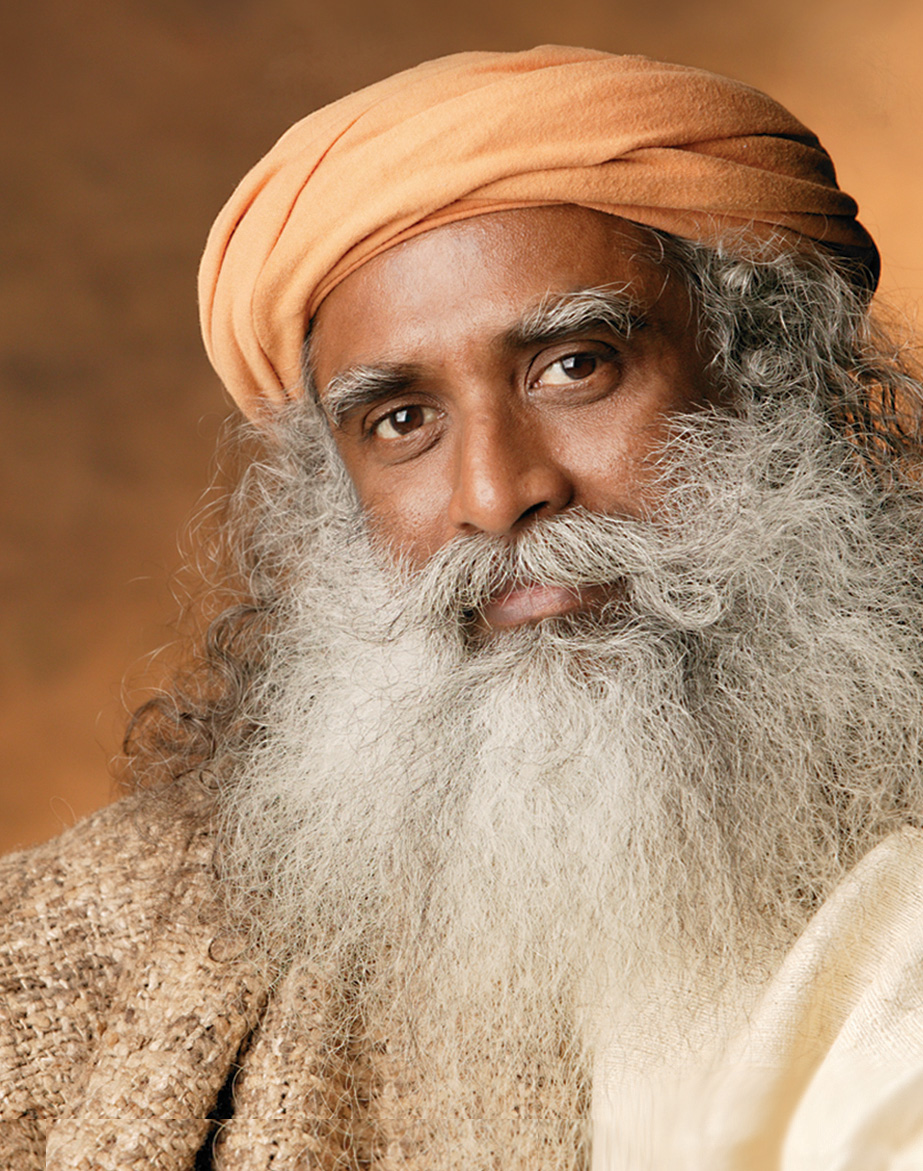
Picture someone who has been sitting with a meditation practice for a while, noticing that the restlessness they once carried is quieter, and then noticing something else: the old pull of sexual desire is no longer quite where it used to be. They are not sure whether this is progress, a problem, or something they are supposed to fight. That uncertainty is what a 104-second clip from Sadhguru sets out to address. The question on the video's title, "If you are meditator, is it fine to have sex?", is one many practitioners ask privately and few teachers answer on camera. Sadhguru's answer is direct. Sex is fine. But the more useful part of his reply is an account of why desire changes shape as awareness deepens, and why trying to govern that change with rules tends to miss the point. This piece works through that reasoning, using only what he says in the video.
He begins with a line that is deliberately blunt. "Even if you're an animal, it's fine to have sex," Sadhguru says at the very start of the clip (0:01). The point of the joke is to strip away the idea that sexuality is a moral emergency. Sex is a natural function, and nothing about sitting in meditation makes it forbidden. The rest of his answer is not about permission. It is about what happens inside a person when meditation starts doing its work.
That distinction matters. Many people who take up meditation arrive carrying a set of inherited rules about the body and its appetites. The question "is it fine?" often hides a second question: "am I allowed to want this, and what does it say about me if I do?" Sadhguru's reply sidesteps the moral frame and moves to observation. If the question is asked from inside the practice, he suggests, the honest answer comes from watching what changes, not from consulting a rulebook.
The core of his explanation is a claim about experience. "The only thing which gets you little high is sex," he says (0:17). For many people, sexual experience is the most intense pleasure they have reliably known. It is the peak against which everything else is measured. That is why it looms so large in the mind, and why giving it up, or even reducing it, can feel like losing the only window onto elevated feeling.
His remedy is not suppression but expansion. "As you start tasting other dimensions of life," he says, the hold of sexuality begins to shift (0:19). The sentence is short, but the logic is sound: if the only peak you have ever climbed is one specific mountain, you will keep returning to it. Once you discover other terrain, the mountain becomes one place among many rather than the only place.
He reaches for a childhood image to make the point. "As a kid you were so thrilled with certain things. As you grew up, you dropped it without any effort like that" (0:23–0:32). Anyone who remembers the toys, games, or obsessions of early life will recognize the pattern. Nobody decided to stop caring about them. Their absorption simply faded as something else took over. Sadhguru's view is that this is how sexual preoccupation should also loosen in a meditator, through a natural outgrowing rather than a battle. "It should drop," he says (0:35).
"As you start tasting other dimensions of life, you just… it's just like as a kid you were so thrilled with certain things. As you grew up, you dropped it without any effort like that. It should drop."
This is the sharpest move in the clip, and the one most likely to surprise viewers who expect a spiritual teacher to lay down prohibitions. "If you set up a rule, 'I am a meditator, I should not do this or that,' then your mind will rule only that," Sadhguru warns (0:37–0:42). The problem with a rule is that it keeps the desire at the center of attention. To say "I must not" is to think about the thing constantly. The mind, fixated on the forbidden, does not dissolve the appetite; it sharpens it into an obsession with the prohibition itself.
Any practitioner who has tried to white-knuckle a habit will recognize the trap. Denial rarely produces freedom. It produces a second, quieter form of bondage in which the thing you refuse to do dominates your inner life more than the thing you enjoy. Sadhguru's point is that awareness works differently. It does not argue with desire. It lets desire be seen clearly, and clear seeing tends to weaken the grip.
The clip's most precise passage describes the shift itself. "As your energies get more and more subtle," Sadhguru says, the experience changes. He even makes a comparison that deserves attention: "It's much more orgasmic than sexuality just to simply sit here" (0:45–0:53). Whatever one makes of the claim, the logic is consistent with the rest of his talk. As attention turns inward, the sense of aliveness that once demanded a physical outlet begins to find expression in stillness.
He then names the mechanism. "If you have used meditation as a way, as a tool to become aware, then the other kinds of needs are dropping in you naturally" (0:57–1:10). The key phrase is "as a tool." Meditation here is not a moral identity or a status to protect. It is a means of becoming aware of what is happening inside you. Used that way, it changes your relationship to needs in general, including the sexual one. Nothing is being controlled, he is careful to add: "It is not that you are controlling or denying or anything" (1:12).
That qualification is the heart of the teaching. The difference between control and natural dropping is not a technicality. Control requires constant effort, and effort keeps the thing alive. Natural dropping happens when the energy that once flowed toward a single channel finds a wider one.
Sadhguru compresses the whole argument into one contrast. "Meditation means you have become less of a body. Sexuality means you become all of a body" (1:17–1:23). The line is worth sitting with. In sexual experience, identity tends to collapse into physical sensation; the whole self is pulled into the body's pleasure. In meditation, the reverse happens. The body is still there, but it no longer commands the whole field of awareness. You are less identified with it, and so it is less able to dictate what you want.
This reframing removes the sense that meditation is a sacrifice of the body. He is not describing a person who has cut off physical life. He is describing a person whose sense of self has widened beyond the physical, which makes the physical less insistent rather than less real.
The clip ends with an observation that many people will find counterintuitive. "Even if somebody has really fallen in love with somebody, very little sex will happen," Sadhguru says (1:23). Intuition suggests that deep romantic feeling should lead directly to physical intimacy. He argues that the link is looser than we assume. "Only to the extent that the hormones support, rest will not happen. But only when that is missing, it'll happen all the time" (1:33–1:44).
The sentence is compressed, and the transcript is partly garbled at this point, so it is best read as he delivered it: the physical expression of desire is shaped by hormonal support, and the mind's attachment does not automatically produce it. The implication for a meditator is that the question of sex is not answered by how much love or longing one feels. Desire, in his account, runs on its own mechanisms, and awareness is what lets a person see those mechanisms rather than be driven by them.
Taken together, the clip offers a coherent position in under two minutes. Sex is not sinful and does not disqualify anyone from meditation. Desire is most often sustained by its status as the only peak a person knows, and that status can loosen as other dimensions of experience open up. Rules tend to intensify the very craving they target, because the mind keeps returning to what it has been told to avoid. When meditation is used as a tool for awareness, needs of many kinds begin to drop away on their own, not through denial but through a shift in identity from "I am this body" toward something less bound to it.
What the video does not do is provide a practical checklist. Sadhguru does not outline a method for working with desire day to day, and anyone expecting one will find only the principle. That is a reasonable limit for a short clip, but it means the real work is left to the viewer's own practice. The useful question may not be "is it fine?" so much as "what do I notice when I sit, and what changes as I keep sitting?"
If this question is live for you, start with the clip itself. It runs under two minutes, and hearing the phrasing in Sadhguru's own voice, including the pauses where he lets an idea settle, adds something a summary cannot carry. Then turn the question inward: notice whether your relationship to desire feels like a rule you are obeying or a pattern you are watching. The difference he draws between control and natural dropping is worth testing in your own sitting practice rather than accepting on authority. Finally, if you want to explore the wider territory of awareness and the body that this talk touches on, look for longer teachings from Sadhguru on those themes, where the reasoning has room to develop beyond a single answer.


