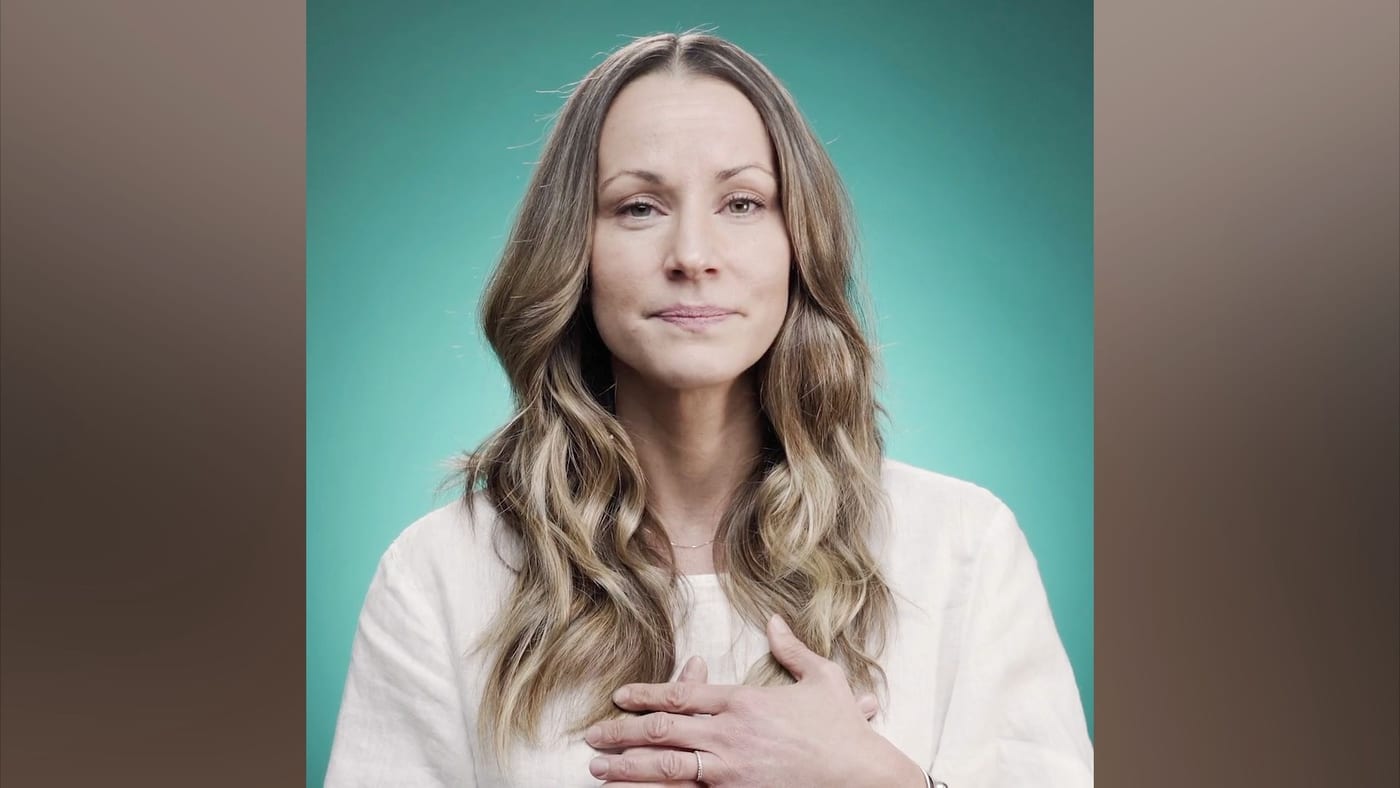

Sarah Blondin describes herself as a storyteller, author, and meditation guide, and her work has always been organized around the heart. Her courses, "This Deepest Self" and "Coming Home to Yourself," have been studied by more than 200,000 students. She hosts the Live Awake podcast and wrote the book Heart-Minded. Meditations for Living an Awakened Life, released December 25, 2021, is the piece of that body of work made for solitary, repeatable listening.
It is a seven-track album, and it distills her teaching into a format with no course scaffolding and no community around it. Where the podcast pairs reflection with a short meditation, the album is for the moment when you only want the practice. It is a small, quiet entry in a catalog that mostly lives elsewhere.
Detailed liner notes aren't part of the public record, so claims about instrumentation should stay modest. What can be said with confidence is that this is a guided-meditation album, and Blondin's voice is its central instrument. Her speaking style, as students describe it, is calm and non-performative: grounded and conversational rather than the hushed, ethereal register common in meditation apps. Expect a voice that sounds like a person speaking to you, not a voice trying to hypnotize you.
The pacing follows from her teaching. She works with the body and heart, helping listeners regulate and stay present, so the mood is one of steadiness rather than transcendence. The title points the same direction: "living an awakened life" implies returning to ordinary days, not escaping them. If you come looking for lush ambient soundscapes or devotional chant, adjust your expectations. The attention here belongs to the words and to what happens in your own chest while you hear them.
I can't responsibly name individual tracks, because the track titles aren't in the information available for this guide. Rather than guess, here is how to find your own signature pieces across the seven.
Listen for the track where her voice slows and the instructions thin out. That is where her emphasis on emotional regulation tends to land: staying with a feeling without being overwhelmed by it. Listen, too, for any meditation that turns toward story, since narrative inquiry is the center of her method. The moments that ask you to notice the stories running you, and to separate the story from the self, are the heart of the teaching. Finally, notice which track you return to on a hard day. With an album built for daily practice, that is the one that matters.
The album doesn't belong to a single lineage, and Blondin hasn't claimed one. No named teacher or specific meditation tradition is part of her public record. Her heart-centered emphasis echoes bhakti and devotional traditions in spirit, but this is not kirtan, chanting, or deity-focused devotion. Anyone seeking those will not find them here.
A better frame is contemporary contemplative practice. It blends heart-centered meditation, narrative self-inquiry, and modern ideas about regulating the body and nervous system. That makes it accessible to people wary of religious framing, and it also means it lacks the structure and accountability of a lineaged path. Her authority rests on lived experience and the response of her students, not on formal transmission. Knowing that is part of listening honestly.
This album suits people who are already emotionally available, or are trying to become so. It fits someone moving through a difficult stretch of life, because her premise is that turbulent times are the curriculum, not an interruption of it. It also fits listeners who have read psychology or contemplative books and want practices attached to a philosophy, and anyone who already knows her voice from the podcast or courses and wants a standalone version.
It will frustrate people who want to feel nothing, bypass difficulty, or transcend the body. It is also a poor fit for those who prefer technical, systematic practices such as detailed breathwork progressions or strict lineage structure. Newcomers may do better starting with the Live Awake podcast, which offers a quick sample of her voice and sensibility, and coming to the album afterward.
Treat this as a working album, not a background playlist. Listen alone, ideally with headphones, so her voice sits close and nothing competes with it. Evening suits it well, as a way to put down the day, but a quiet morning works equally if that is when you can be undisturbed.
Take one track at a time rather than playing all seven in a row. Let the silences be silences. If something stirs, such as an old story, a tightness, or an unexpected tenderness, stay with it instead of reaching to fix it. That is what the album asks for. Return to the same track several days running; her teaching favors repeated turning back to the heart over a single breakthrough.