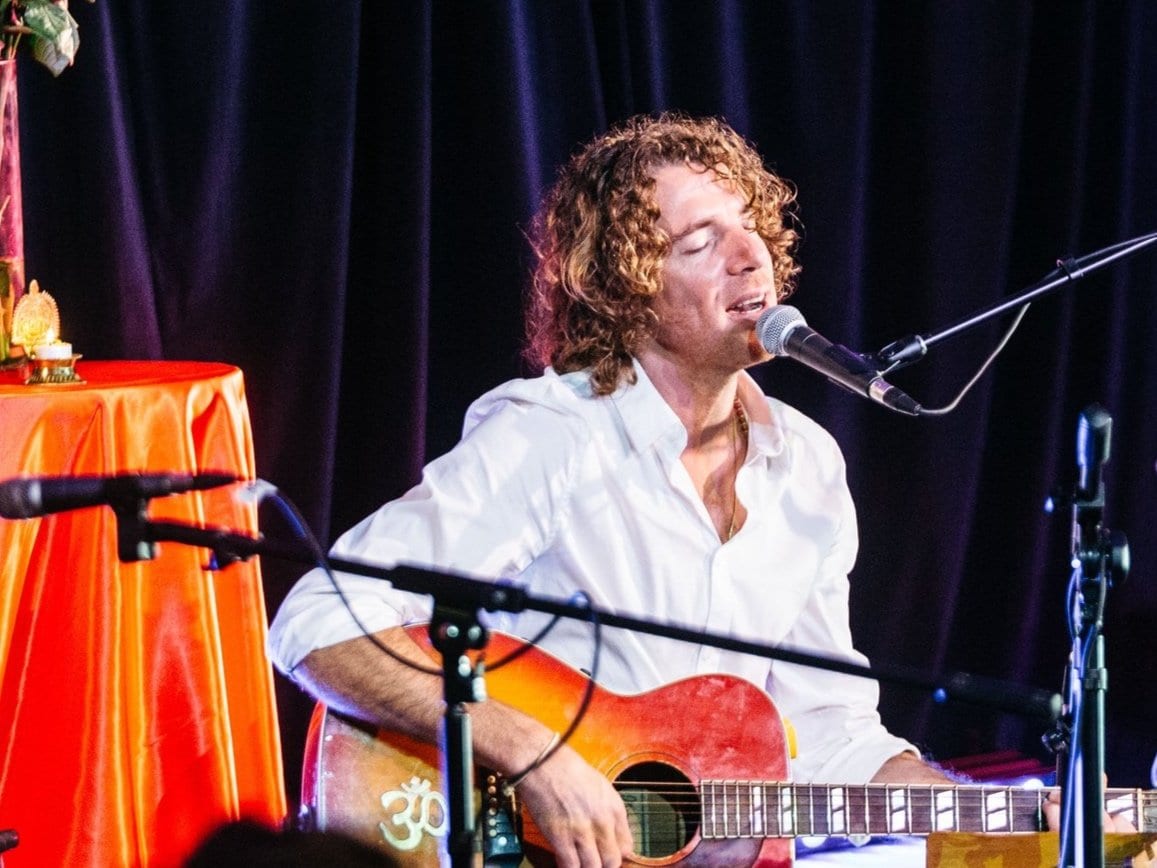

Edo & Jo made mantra music that borrowed the shape of the Western pop song. Their site describes the result as both soothing and uplifting, and the two words name the balance the records keep: meditative repetition on one side, accessible melody on the other. Kirtan is a call-and-response form built on repetition, so the mantra is the structural center of a track rather than a hook dropped into a verse-chorus frame. Pop craft shapes the melody and the arrangement around it.
Some specifics are not documented. The sources on file do not list instrumentation, production credits or vocal technique, so this piece will not guess at which instruments appear on which track. What the record does support is the character of the music: measured rather than driving, devotional rather than showy, and clean enough that the chanted words stay in front. Restraint over spectacle is the honest summary. Anyone wanting the exact arrangements should listen to the albums themselves.
Their work sits within bhakti, the devotional path in which repeating divine names is the central act. Kirtan is the most visible form of that path in their output. The third album draws on Sound Yoga, also called Nada Yoga, which treats sound as a route into meditative absorption. That album also shares a mantra meditation practice into which they were initiated by their teacher, Sakthi Amma. Sakthi Amma is the only teacher the bio names, and the initiation places the duo inside a transmitted practice rather than a loose spiritual aesthetic.
Bhakti favors heart-centered devotion over technical display. That explains why the records keep the mantra up front rather than burying it under production. Their Sound Yoga workshops combined asana, mantra, chakra meditation and sound relaxation, so the chanting was meant to sit inside a wider practice.
Most kirtan artists arrive as devotional leaders first. Edo & Jo arrived as songwriters. Edo Kahn was signed to Virgin/EMI with his rock bands Gelbison and Kahn Brothers, and he is an APRA award-winning songwriter. Jo Mall Kahn was a singer-songwriter, a classically trained musician and a qualified yoga teacher. Together they paired songwriting craft with musical discipline and embodied yoga practice.
Their signature contribution is the explicit blend of Eastern mantra and Western pop. Many peers lean toward traditional chant or toward commercial polish. Edo & Jo made the blend itself the concept. The albums also work as companions to a discipline. They were tied to workshops and retreats, so they function as part of a practice and not only as standalone products.
The bio names no outside musical collaborators, and none are invented here. The shaping relationships it does document are the partnership between Edo and Jo themselves and the teacher who initiated them, Sakthi Amma. Their long residency at Ubud Yoga Barn in Bali, held monthly from 2012 to 2014, gave their teaching a sustained home. Festival stages also shaped the work, including Byron Spirit Festival, Sydney Spirit Festival, Bhakti Bliss, Bodhi Festival and Bali Spirit Festival.
After Jo died in September 2015, shortly after a cancer diagnosis, the duo's legacy continued through the charity they co-founded, A Sound Life. It brings music and yoga free of charge to people in health care and underprivileged communities.
Begin with Kirtan Alive (2012), their first album and one of Australia's best-selling kirtan CDs. It was built for people who have never sat in a kirtan circle. Play it as a whole record rather than skipping to single tracks, because the pacing shows how repetition becomes meditative over the length of the album.
Then move to Bliss, which extends the same approach. After that comes Chakra Meditation, the most purposeful record for stillness. The third album, drawing on Sound Yoga and the initiated mantra practice, rewards listeners already comfortable with chant. Its title is not recorded in the available data, so check the official site for the full discography.
A few things may surprise a newcomer. The mantra stays present throughout, so this is not ambient background music. Purists who expect long, unadorned call-and-response may find the pop framing polished. Anyone hoping for dance-floor energy will find little. And since Jo's passing ended the working partnership, some listeners find the music hard to separate from that loss. To preview before buying, the official YouTube channel is at youtube.com/@edoandjo.
Within the wider world of kirtan, mantra and sound-healing music, Edo & Jo occupy the songwriter's corner. They sit nearer to the pop-informed end of the field than to the devotional-leader end, yet they stay anchored in a named teacher and a defined practice. Their touring across Australia, South-East Asia, India and America, from 2008 to 2015, placed them on an international spiritual-festival circuit.
Active touring ended in 2015, so much of what distinguishes them now lives in the recordings and archived material. The sound has two parts: melody that welcomes a newcomer and a mantra that does the meditative work. For listeners who want soothing, devotional music for practice, ceremony or quiet evenings, the catalogue remains a clear example of how chant and song can share a record.