BrightStar

Parcourir tous les Events

Découvre des rassemblements conscients

events

Yoga
Meditation
Breathwork
Qigong
Tai Chi
Sacred Music
World Music
Medicine Music
Sound Healing
Ecstatic Dance
Destinations populaires
BaliSedonaLos AngelesCosta RicaNew YorkSan FranciscoAustinMiamiJoshua TreeTulum
Voir toutes les catégoriesVoir toutes les destinations

Explorer toutes les fonctionnalités

Des outils puissants pour développer tes événements

Fonctionnalités de la plateforme

Tarification dynamique intelligente
Catégories de billets
Places assignées
Récupération des paniers abandonnés
Récupération des visiteurs
Dons & Prix variables
Système d'affiliation
Scanner de billets
Codes promo
Questions personnalisées
Partage de billets
Ventes additionnelles & Options
Analyses & Rapports
Séquences d'emails
Liste d'attente / Notifier / Rappeler
Personnes & Lieux
Artists & TeachersEvent OrganizersVenues & StudiosKnowledge BaseGlossaryInspiration
Voir toutes les fonctionnalitésÀ propos
TarifsBlog
Language
Saved events
Parcourir tous les événements

events

YogaMeditationBreathworkQigongTai ChiSacred MusicWorld MusicMedicine Music

Destinations populaires

BaliSedonaLos AngelesCosta RicaNew YorkSan Francisco

Personnes & Lieux

Artists & TeachersEvent OrganizersVenues & StudiosKnowledge BaseGlossaryInspiration

Fonctionnalités de la plateforme

Tarification dynamique intelligenteCatégories de billetsPlaces assignéesRécupération des paniers abandonnésRécupération des visiteursDons & Prix variablesSystème d'affiliationScanner de billetsCodes promoQuestions personnaliséesPartage de billetsVentes additionnelles & OptionsAnalyses & RapportsSéquences d'emailsListe d'attente / Notifier / Rappeler
Voir toutes les fonctionnalitésÀ propos
TarifsBlog
ConnexionChercheursCréateurs
  • Parcourir tous les Événements
  • Pour les chercheurs
  • Yoga
  • Méditation
  • Breathwork
  • Qi gong
  • Tai-chi
  • Musique sacrée
  • Musiques du monde
  • Musique médecine
  • Soins sonores
  • Danse extatique
  • Retraites
  • Ateliers
  • Toutes les catégories →
  • Bali
  • Sedona
  • Los Angeles
  • Costa Rica
  • Tulum
  • Byron Bay
  • San Francisco
  • Austin
  • New York
  • San Diego
  • Denver
  • Seattle
  • Portland
  • Miami
  • Toutes les villes →
  • Join the Movement
  • Why we list
  • Sell Globally
  • Pour les créateurs
  • Pour les équipes
  • Pour les écrivains
  • Pour les enseignants
  • Pour les artistes de kirtan
  • Pour les studios
  • Pour les festivals
  • Pour les centres de retraite
  • Pour les associations
  • Ambassadeur de marque
  • Billetterie gratuite
  • Elevate
  • Amplify
  • Réseau de 500K+ acheteurs
  • Récupération des paniers abandonnés
  • Tarification dynamique intelligente
  • Catégories de billets
  • Événements récurrents
  • Places assignées
  • Système d'affiliation
  • Liste d'attente / Notifier
  • Scanner de billets
  • Widget intégrable
  • Diffusion d'événements
  • Messagerie
  • Intégrations
  • Rapports
  • Toutes les fonctionnalités →
  • À propos
  • L'écosystème
  • Blog
  • Glossaire
  • Inspiration
  • Centre d'aide
  • Contact
  • Documentation API
  • Ressources de marque
  • Carrières
  • Presse
  • Conditions d'utilisation
  • Politique de confidentialité

Événements

  • Parcourir tous les Événements
  • Pour les chercheurs
  • Yoga
  • Méditation
  • Breathwork
  • Qi gong
  • Tai-chi
  • Musique sacrée
  • Musiques du monde
  • Musique médecine
  • Soins sonores
  • Danse extatique
  • Retraites
  • Ateliers
  • Toutes les catégories →

Destinations

  • Bali
  • Sedona
  • Los Angeles
  • Costa Rica
  • Tulum
  • Byron Bay
  • San Francisco
  • Austin
  • New York
  • San Diego
  • Denver
  • Seattle
  • Portland
  • Miami
  • Toutes les villes →

Pour les créateurs

  • Join the Movement
  • Why we list
  • Sell Globally
  • Pour les créateurs
  • Pour les équipes
  • Pour les écrivains
  • Pour les enseignants
  • Pour les artistes de kirtan
  • Pour les studios
  • Pour les festivals
  • Pour les centres de retraite
  • Pour les associations
  • Ambassadeur de marque
  • Billetterie gratuite
  • Elevate
  • Amplify

Fonctionnalités

  • Réseau de 500K+ acheteurs
  • Récupération des paniers abandonnés
  • Tarification dynamique intelligente
  • Catégories de billets
  • Événements récurrents
  • Places assignées
  • Système d'affiliation
  • Liste d'attente / Notifier
  • Scanner de billets
  • Widget intégrable
  • Diffusion d'événements
  • Messagerie
  • Intégrations
  • Rapports
  • Toutes les fonctionnalités →

Entreprise

  • À propos
  • L'écosystème
  • Blog
  • Glossaire
  • Inspiration
  • Centre d'aide
  • Contact
  • Documentation API
  • Ressources de marque
  • Carrières
  • Presse
  • Conditions d'utilisation
  • Politique de confidentialité
BrightStar
Téléchargez l'app
Télécharger dans l'App StoreDisponible surGoogle Play
© 2026 BrightStar. Tous droits réservés.
Back to Dalai Lama
Dalai Lama's Teaching: Approach, Method, and Voice
Teaching

Dalai Lama's Teaching: Approach, Method, and Voice

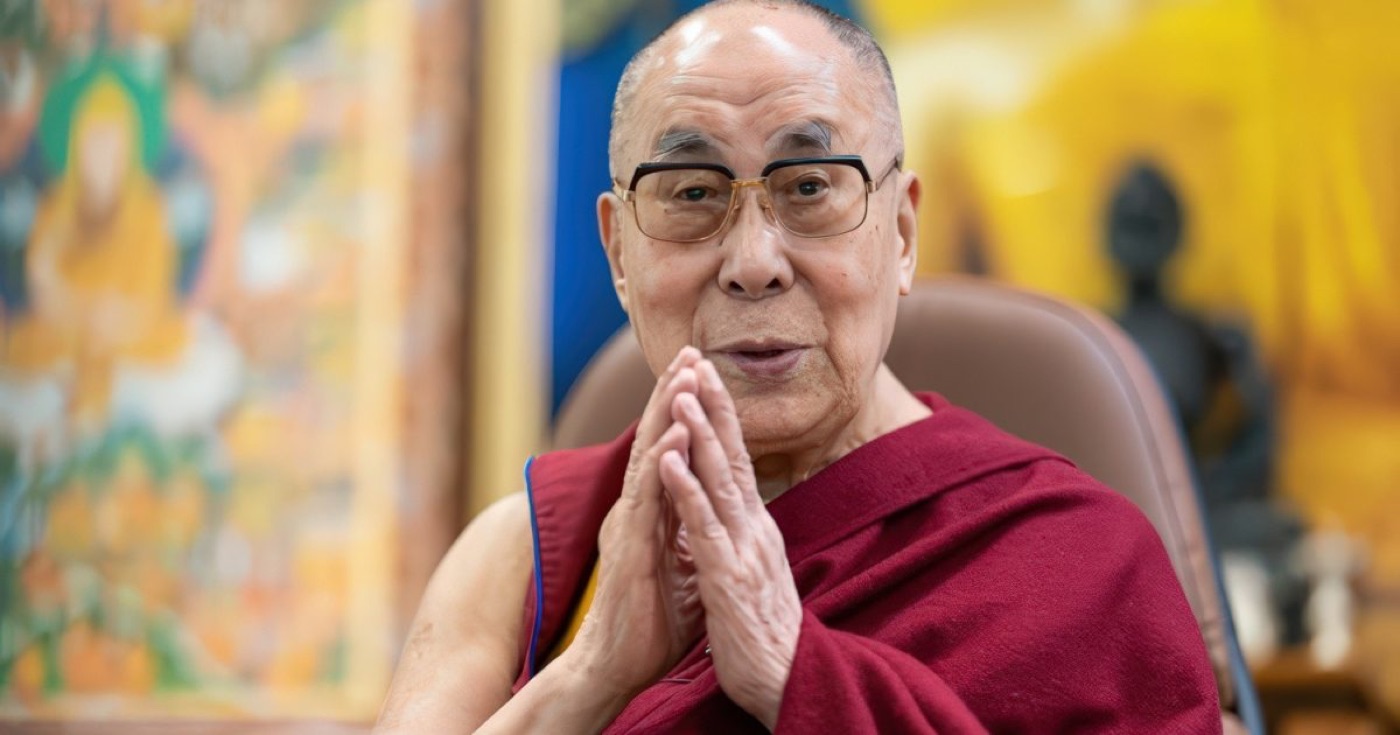
A teaching by the Dalai Lama is not a performance of mystical intensity, and newcomers who expect one are often surprised. His style is conversational and direct, with clear explanation favored over ornament.

Dalai Lama
Dalai Lama
Oct 18, 2026
5 min de lecture
Lecture · 6 sections

The Shape of a Session

A teaching by the Dalai Lama is not a performance of mystical intensity, and newcomers who expect one are often surprised. His style is conversational and direct, with clear explanation favored over ornament. Public talks are typically delivered in Tibetan with live translation, and that fact shapes everything about the rhythm. Sentences are built for interpreters, the pace is measured, and the material arrives in an even, unhurried way. A listener needs patience for that pacing.

The format varies considerably with the occasion. A short public talk is a different experience from the Kalachakra gatherings, which were historically international, multi-day events combining public teaching with initiation. Those belong to the tantric side of the tradition and are closer to a long ceremonial program than to a small-group retreat. They involve extended ritual, recitation in Sanskrit and Tibetan, and hours of translated exposition. Anyone used to the compact formats of modern mindfulness will find them slow.

Because his teaching draws on Gelug scholarship, sessions tend to follow a text-based structure rather than open-ended discussion. The student who reads along is rewarded. The student who arrives hoping for improvised conversation about life's meaning will find something more systematic.

He now teaches on a reduced schedule within India and sometimes addresses international audiences through live webcasts, so the typical contact for most people is a recording or a stream rather than a room.

Recurring Themes

The themes follow the three commitments he names for his own life: promoting basic human values, or secular ethics, in the interest of human happiness; fostering inter-religious harmony; and preserving Tibet's Buddhist culture, which he describes as a culture of peace and nonviolence.

Compassion and nonviolence run through nearly everything. They are framed less as sentiment than as practical ethical positions that can be argued and tested. That distinction matters: this is not an appeal to feel kindly but an argument about how to live and why.

Dialogue with scientists is another steady thread, particularly the question of how contemplative insight relates to the empirical study of the mind. Environmental concern appears as an ethical extension of the same framework, care for the natural world treated as part of human responsibility. Underneath much of his public speech lies the historical fact of exile and the survival of Tibetan Buddhist culture.

When the teaching turns more explicitly Buddhist, familiar concepts arise: karma, emptiness, the bodhisattva path, and the stages of the path known as lamrim. These assume more background than the ethics material does.

The Questions He Pushes

The bio and sources do not record particular exercises he assigns, and it would be dishonest to invent them. What the material does show is the shape of the questions his framework puts to a listener. Can ethics stand without religious belief, grounded in a shared wish for happiness? How should contemplative insight be weighed against empirical evidence about the mind? What does care for others require when it is treated as a practical position rather than a feeling? And how can one hold a religious identity while living in respectful harmony with other traditions?

He tends to return to a few core ideas rather than presenting a long list of techniques. The effect is cumulative. A student is asked to stay with a small number of questions and test them against experience, not to collect methods.

The Aesthetic of Delivery

His delivery favors plain speech and humor over the ornate ritual that often marks lineage teaching. Many talks include humor and direct address to the audience. That register makes him easier to follow in translation than many peers, since plain language survives an interpreter better than elaborate rhetoric.

Scripture is present, but as structure rather than decoration. The text-based Gelug frame organizes the talk, and the explanation unfolds step by step. The sources do not document his use of silence or particular stories, so no claims are made here about them. What can be said is that the manner is measured and often conversational, not dramatic.

Who It Lands For, and Who May Not

It lands for listeners who are patient with long-form talk and comfortable with ideas built step by step. It suits those who want ethics and compassion argued with some rigor, and those curious about the meeting of contemplative traditions and science. Newcomers can begin with the secular ethics material, which does not require Buddhist vocabulary.

It is a poor fit for people wanting a short, technique-only meditation method absorbed in one sitting. Secular-minded listeners who want Buddhist practice fully separated from its doctrinal and monastic frame may find the Gelug terminology and emphasis on lineage heavier than expected. Those who prefer high-energy, motivational pacing will not find it. And listeners who come mainly for political commentary on Tibet may be disappointed, since the teaching is more concerned with ethics and compassion than geopolitics, a deliberate choice on his part.

Kalachakra-scale initiations presuppose serious commitment to Buddhist practice and are not an entry point.

The Wider Tradition

He is a monk of the Gelug school, the tradition within Tibetan Buddhism that shapes both his scholastic training and the structure of his teachings. The Dalai Lama line is understood within Tibetan Buddhism as a succession of reincarnations, which is why his recognition in 1939 carried such weight. His public work spans open dharma talk and tantra.

One feature sets him apart from most lineage teachers: he led a government in exile and retired as its political head in 2011. His authority therefore rests on more than a meditation center or personal following. As a long-standing policy he accepts no fees for his talks, which is unusual among teachers who run paid retreats, and the office's archive at dalailama.com is a freely accessible body of work.

A fair assessment should note that some observers have questioned how a religious leader should combine that role with political office. That debate sits alongside the praise, including the Nobel Peace Prize he received in 1989.

Dalai Lama
AboutDalai Lama

Born Lhamo Thondup, the 14th Dalai Lama is the spiritual leader of the Tibetan people and head of Tibetan Buddhism, a Gelug monk who champions secular ethics, inter-religious harmo…

Voir le profilSite web

Continuer la lecture

More about Dalai Lama

Voir tout
Where to Start with Dalai Lama: A Beginner's Guide
Article

Where to Start with Dalai Lama: A Beginner's Guide

Who Is Dalai Lama? Life, Work, and Legacy
Article

Who Is Dalai Lama? Life, Work, and Legacy

Continue d’explorer

Poursuis ton chemin

Plus de sagesse et de rassemblements dans tout l’annuaire BrightStar.

Plus d’articles

Parcours toute la bibliothèque d’enseignements, d’entretiens et de guides.

Retour à tous les articles →

Enseignants et artistes

Découvre les lignées, les musiciens et les guides du monde conscient.

Explorer les artistes →

Trouver un événement

Kirtan, retraites, bains sonores, breathwork, festivals — bientôt près de chez toi.

Parcourir les événements →