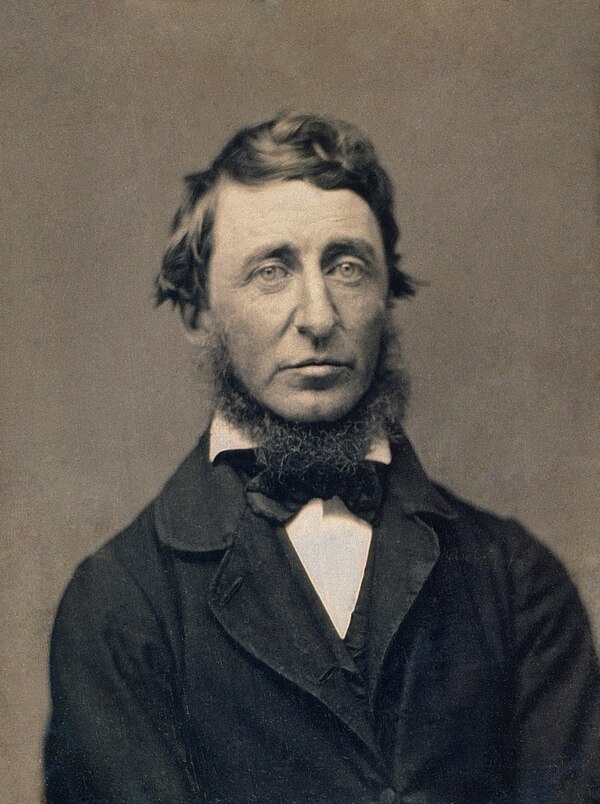
Henry David Thoreau's assertion that "Eternity is in every moment" invites us to reconsider our relationship with time and presence. In a world often dominated by the rush of schedules and the weight of future anxieties, this quote serves as a gentle reminder that each moment holds the potential for profound significance. To grasp this idea is to awaken to the richness of our existence, to recognize that the eternal is not a distant concept but rather an intrinsic quality of our everyday lives.
This perspective challenges us to cultivate mindfulness, urging us to engage fully with the present rather than allowing it to slip away unnoticed. Thoreau's words resonate deeply within the framework of transcendentalism, a movement that emphasizes the inherent goodness of people and nature, as well as the importance of individual intuition. By embracing the notion that eternity resides in each fleeting moment, we are called to live with intention, to savor the beauty of the now, and to find meaning in the seemingly mundane.
The image / the metaphor
At first glance, Thoreau's quote presents a striking image: eternity, a concept often associated with infinity and timelessness, is nestled within the confines of a singular moment. The juxtaposition of these two ideas—eternity and moment—creates a vivid tension that invites contemplation. The choice of the word "is" suggests a state of being, a profound connection between the transient and the everlasting. Each moment, then, becomes a vessel for eternity, a microcosm of the infinite possibilities that life offers.
Diving deeper into this metaphor, we can see that Thoreau is not merely speaking of time but rather of presence. Each moment is imbued with the potential for awakening, for insight, and for connection. When we fully inhabit the present, we transcend the limitations of linear time and tap into a deeper understanding of existence. This realization transforms our perception of life, encouraging us to see each moment as sacred, a doorway to the eternal that lies within us and around us.
In the speaker's tradition
Thoreau's philosophy is deeply rooted in the transcendentalist tradition, which emphasizes the interconnectedness of all life and the importance of individual experience. Concepts such as "dharma" in Eastern thought resonate with Thoreau's understanding of purpose and presence, suggesting that each moment carries its own inherent significance. Similarly, the idea of "kenosis," or self-emptying, aligns with the notion that to truly experience eternity in the moment, one must let go of distractions and preconceptions, allowing for a deeper engagement with the present.
In his seminal work, "Walden," Thoreau explores the beauty of simplicity and the importance of living deliberately. He writes about the value of solitude and reflection, echoing the sentiments found in Eastern philosophies that advocate for mindfulness and presence. By immersing ourselves in nature and the rhythms of life, Thoreau illustrates how we can access the eternal within the temporal, reinforcing the idea that every moment is a chance to connect with something greater than ourselves.
Living the teaching
Consider a modern scenario where this teaching can be applied: imagine a busy parent juggling work, household responsibilities, and the demands of family life. In the midst of this whirlwind, it can be easy to overlook the beauty of a shared meal or the laughter of children playing. By consciously choosing to be present during these moments, the parent can discover the richness of connection and the joy that resides in the here and now. This practice of mindfulness transforms routine activities into sacred experiences, allowing for a deeper appreciation of life's fleeting moments.
In a different context, think about a challenging conversation with a loved one. Often, we find ourselves preoccupied with past grievances or future outcomes, which can cloud our ability to truly listen and engage. By embracing Thoreau's teaching, we can approach such moments with an open heart, recognizing that the present interaction holds the potential for healing and understanding. This shift in perspective not only enhances our relationships but also deepens our capacity for empathy and connection, reminding us that eternity is indeed woven into the fabric of our daily lives.
A reflection
As we ponder Thoreau's profound insight, we are invited to reflect on our own lives: How often do we rush through moments, overlooking their inherent significance? In what ways can we cultivate a deeper presence in our daily experiences, allowing ourselves to fully engage with the beauty and complexity of each moment? By asking ourselves these questions, we open the door to a richer, more meaningful existence, where eternity is not a distant dream but a vibrant reality waiting to be embraced.


