BrightStar

すべてのEventsを見る

意識ある集いに出会う

events

Yoga
Meditation
Breathwork
Qigong
Tai Chi
Sacred Music
World Music
Medicine Music
Sound Healing
Ecstatic Dance
人気の目的地
BaliSedonaLos AngelesCosta RicaNew YorkSan FranciscoAustinMiamiJoshua TreeTulum
すべてのカテゴリを見るすべての目的地を見る

すべての機能を探索

イベントを成長させる強力なツール

プラットフォーム機能

スマートダイナミックプライシング
チケットカテゴリ
座席指定
カート放棄リカバリー
訪問者リカバリー
寄付とスライディングスケール
アフィリエイトシステム
チケットスキャナー
クーポンコード
カスタム質問
チケット共有
アップセルとアドオン
分析とレポート
メールシーケンス
ウェイトリスト / 通知 / リマインダー
人と場所
Artists & TeachersEvent OrganizersVenues & StudiosKnowledge BaseGlossaryInspiration
すべての機能を見る私たちについて
料金ブログ
Language
Saved events
すべてのイベントを見る

events

YogaMeditationBreathworkQigongTai ChiSacred MusicWorld MusicMedicine Music

人気の目的地

BaliSedonaLos AngelesCosta RicaNew YorkSan Francisco

人と場所

Artists & TeachersEvent OrganizersVenues & StudiosKnowledge BaseGlossaryInspiration

プラットフォーム機能

スマートダイナミックプライシングチケットカテゴリ座席指定カート放棄リカバリー訪問者リカバリー寄付とスライディングスケールアフィリエイトシステムチケットスキャナークーポンコードカスタム質問チケット共有アップセルとアドオン分析とレポートメールシーケンスウェイトリスト / 通知 / リマインダー
すべての機能を見る私たちについて
料金ブログ
ログイン探求者クリエイター
  • すべてのイベントを見る
  • 探求者向け
  • ヨガ
  • 瞑想
  • ブレスワーク
  • 気功
  • 太極拳
  • 聖なる音楽
  • ワールドミュージック
  • メディスンミュージック
  • サウンドヒーリング
  • エクスタティックダンス
  • リトリート
  • ワークショップ
  • すべてのカテゴリ →
  • Bali
  • Sedona
  • Los Angeles
  • Costa Rica
  • Tulum
  • Byron Bay
  • San Francisco
  • Austin
  • New York
  • San Diego
  • Denver
  • Seattle
  • Portland
  • Miami
  • すべての都市 →
  • Join the Movement
  • Why we list
  • Sell Globally
  • クリエイター向け
  • チーム向け
  • ライター向け
  • 講師向け
  • キルタンアーティスト向け
  • スタジオ向け
  • フェスティバル向け
  • リトリートセンター向け
  • 非営利団体向け
  • ブランドアンバサダー
  • 無料チケット販売
  • Elevate
  • Amplify
  • 50万人以上のバイヤーネットワーク
  • カート放棄リカバリー
  • スマートダイナミックプライシング
  • チケットカテゴリ
  • 定期イベント
  • 座席指定
  • アフィリエイトシステム
  • ウェイトリスト / 通知
  • チケットスキャナー
  • 埋め込みウィジェット
  • イベント配信
  • メッセージセンター
  • インテグレーション
  • レポート
  • すべての機能 →
  • 概要
  • エコシステム
  • ブログ
  • 用語集
  • インスピレーション
  • ヘルプセンター
  • お問い合わせ
  • APIドキュメント
  • ブランドアセット
  • 採用
  • プレス
  • 利用規約
  • プライバシーポリシー

イベント

  • すべてのイベントを見る
  • 探求者向け
  • ヨガ
  • 瞑想
  • ブレスワーク
  • 気功
  • 太極拳
  • 聖なる音楽
  • ワールドミュージック
  • メディスンミュージック
  • サウンドヒーリング
  • エクスタティックダンス
  • リトリート
  • ワークショップ
  • すべてのカテゴリ →

目的地

  • Bali
  • Sedona
  • Los Angeles
  • Costa Rica
  • Tulum
  • Byron Bay
  • San Francisco
  • Austin
  • New York
  • San Diego
  • Denver
  • Seattle
  • Portland
  • Miami
  • すべての都市 →

クリエイター向け

  • Join the Movement
  • Why we list
  • Sell Globally
  • クリエイター向け
  • チーム向け
  • ライター向け
  • 講師向け
  • キルタンアーティスト向け
  • スタジオ向け
  • フェスティバル向け
  • リトリートセンター向け
  • 非営利団体向け
  • ブランドアンバサダー
  • 無料チケット販売
  • Elevate
  • Amplify

機能

  • 50万人以上のバイヤーネットワーク
  • カート放棄リカバリー
  • スマートダイナミックプライシング
  • チケットカテゴリ
  • 定期イベント
  • 座席指定
  • アフィリエイトシステム
  • ウェイトリスト / 通知
  • チケットスキャナー
  • 埋め込みウィジェット
  • イベント配信
  • メッセージセンター
  • インテグレーション
  • レポート
  • すべての機能 →

会社

  • 概要
  • エコシステム
  • ブログ
  • 用語集
  • インスピレーション
  • ヘルプセンター
  • お問い合わせ
  • APIドキュメント
  • ブランドアセット
  • 採用
  • プレス
  • 利用規約
  • プライバシーポリシー
BrightStar
アプリを入手
App StoreからApp StoreGoogle Playで手に入れようGoogle Play
© 2026 BrightStar. 全著作権所有.
Watch

Four Stages of Breathing: Renew, Reaffirm, Release, Review

Don Reed Simmons
Don Reed Simmons
Jun 27, 2013
読了 約8分
視聴 · 6

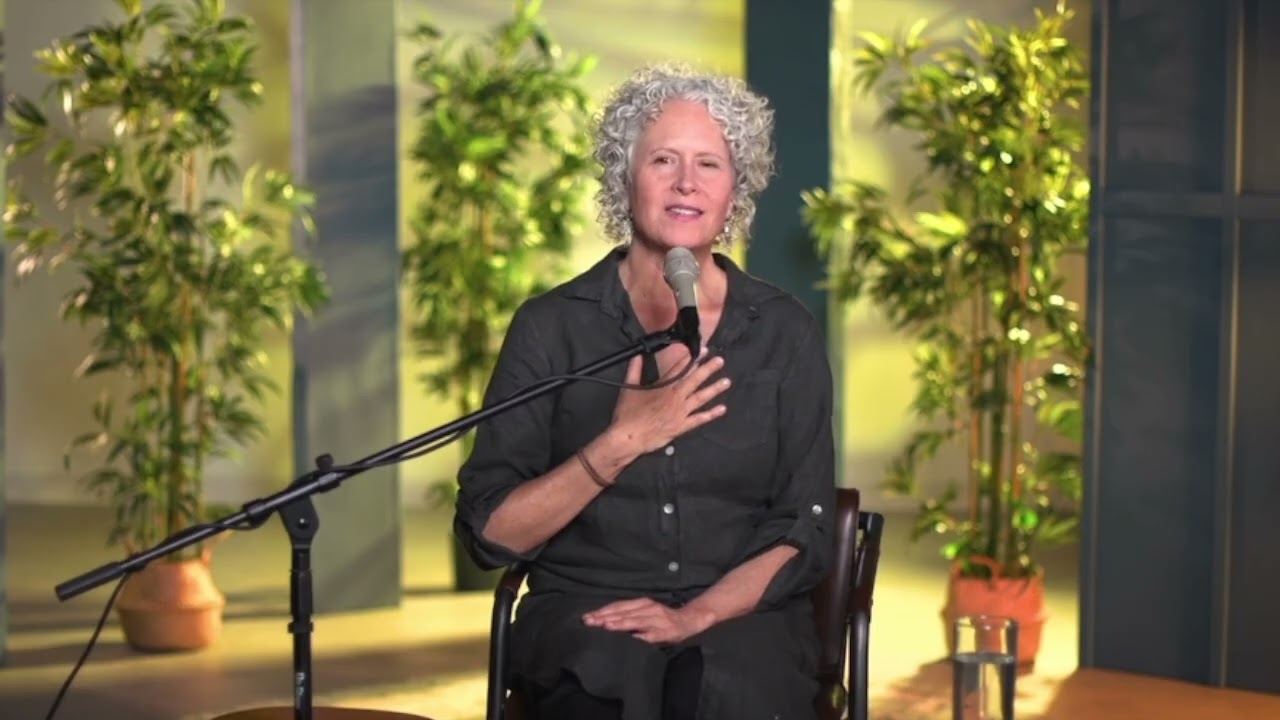
Somewhere between the inhale and the exhale there is a moment when nothing is moving. Most people never notice it. In a two-and-a-half-minute video posted to YouTube in June 2013, the teacher Don Reed Simmons asks viewers to pay attention to exactly that pause, and to treat each phase of a single breath as a stage in a small, repeatable practice: renewal on the way in, reaffirmation at the top, release on the way out, and review at the bottom before the next breath begins. The framework is openly devotional. Simmons asks you to imagine that God is the air itself, so that every inhale is a breath of God's love and light. But the structure beneath the imagery is simple and portable, and it holds up whether or not you share the frame. This article walks through each stage, explains why the pauses matter, and suggests how to turn a short talk into a daily habit.

読む · 8セクション

What happens when you imagine God as the air you breathe?

Simmons begins by setting the frame before he names any stages. "Wherever you are, God is right," he says, and then makes the central move: "God is the very air that we breathe" (0:15). The breath stops being a background process and becomes a point of contact. You are not trying to get air; you are receiving something that is already everywhere.

This is an old kind of contemplative move. Many devotional traditions use the breath as a bridge between attention and something larger than the self, and the instruction here is correspondingly gentle. Simmons does not ask you to feel anything in particular. He asks you to imagine. The imagining is the practice, and it gives the rest of the cycle a direction.

How does renewal work on the in-breath?

The first stage belongs to the inhale. "As we breathe in, think of you and just imagine that you are renewing yourself in God's light, in God's love, in God's compassion" (0:22). Renewal here is not a dramatic event. It is a slow filling, a restoring of your sense of who you are before the day has had a chance to wear it down.

What makes this stage useful is its specificity. Simmons names three qualities to bring into the breath: light, love, and compassion. You can keep the theology and still use the list as a set of attributes to hold while you inhale. A reader who finds the word "God" difficult can substitute a word of their own choosing, though the video itself does not suggest this. What matters is that the in-breath has a quality and a content, rather than simply being the mechanical start of a cycle.

What is the reaffirmation at the top of the breath?

The second stage is the one most people will recognize without being told, because it happens at the peak of the breath, when the lungs are full and the body pauses before letting go. Simmons calls this "that very apex moment" and says it is "the point in time when we are reaffirming ourself" (0:40). The sequence is deliberate: you have received the renewal, and now you stand in it.

Later in the video he returns to this stage and describes it as "that sense of conviction" (1:35). That word is worth lingering on. Conviction is not the same as certainty or excitement. It is a settled sense of what you are doing and why. At the top of the breath, the question Simmons wants you to hold is whether the renewal you just took in is something you can stand on. Reaffirmation is the moment you decide what your life is for, at least for the length of one exhale.

Musicians will recognize the logic. A phrase in a song needs its peak, the note where the line arrives before it resolves. The top of the breath works the same way. Without that held point, the release that follows has no shape.

What does release look like on the out-breath?

The third stage belongs to the exhale, and Simmons is direct about its purpose. "As you breathe out you're moving into the stage of releasing," he says. "I'm jumping into the world. I'm jumping into my renewal space" (0:53). The image is one of motion outward. The renewal and reaffirmation are the preparation; release is the doing.

Simmons then connects this to the way you move through a real day. He describes releasing yourself "out into the breathing out of the doing of it" (1:43). This is where intention meets action. You have renewed yourself, you have affirmed what you are doing, and now you go and do it, without holding back the thing you just decided on at the top of the breath. The release is a commitment to act from what you have already taken in.

Why is review at the bottom of the breath the most important part?

The fourth stage is the one most people skip, and it is where the video becomes most unusual. At the bottom of the out-breath, after the air has left and before the next one arrives, Simmons asks you to review. "How did I do? What am I doing?" he asks (1:10). Then he adds the condition that gives the whole cycle its character: "Without judging yourself. Remember, meditation is observation without judgment" (1:14).

That sentence is the hinge of the talk. Most people approach self-reflection as a verdict, a quick trial in which the day is found wanting. Simmons asks for something closer to a field note. Did the release match what you thought it would be? If not, how do you do something different next time? He frames this as a question of change rather than fault. The review is a moment to see clearly, and then to return to the next renewal with that knowledge in hand.

The bottom of the breath is a good place for this because it is the quietest point in the cycle. The body has finished one movement and has not yet begun the next. Simmons's instruction is to use that gap for honest observation, not for self-criticism. Done well, the review becomes the thing that keeps the cycle from hardening into routine.

How do you use the four stages on a real question in your life?

Simmons ends the talk by moving the practice off the cushion and into ordinary life. He asks the viewer to "think of something that's going on within your life," or something you have wanted to do and have not done, or have not done lately (1:58). Then he gives the sequence as a set of questions to carry through a single breath cycle: How do I renew myself with God? How do I reaffirm what I'm doing? How do I release myself into it? And after I've done it, is it what I thought it would be, and what do I need to change?

This is the most practical part of the video, and it works well as a template. Choose one concrete concern: a difficult conversation, a project you keep postponing, a habit you want to change. Take the four questions in order, one per phase of breath. You do not need to solve the problem in a single cycle. You are only using the breath to slow down the decision-making process and to put a space of observation between the impulse and the action.

How can you try the practice today?

The video gives no set duration, so the following is one way to start, drawn directly from Simmons's sequence rather than from any additional instruction of his. Sit comfortably for five minutes. Let the breath move without forcing it. On the inhale, bring to mind the qualities he names, light, love, and compassion, and let the breath carry them in. At the top of the breath, pause and ask whether you stand in the renewal you just received. On the exhale, let yourself move outward toward the thing you intend to do. At the bottom, pause and review, without grading yourself. Notice what you observed, and what you might do differently in the next cycle.

After a few days, the cycle may begin to feel less like an exercise and more like a rhythm, the same way a groove settles under a band once everyone stops counting. That is roughly what Simmons seems to be pointing toward: a way of living in which each breath is a small, complete unit of renewal, action, and honest self-attention.

Where to go from here

Simmons's video is short enough to watch several times, and it rewards repetition. Watch it once for the framework, and again for the specific phrases: "renewing yourself," "that sense of conviction," "without judging yourself." Then try the practice for a week, using one real question from your life each time. Keep a few notes at the bottom of the breath, the way Simmons suggests, and read them back at the end of the week. You will find that the review stage has as much to teach as the others. For a teacher who speaks in a few gentle lines, that may be the point: the breath already holds the whole practice, and it is available whenever you stop to notice it.

Comments

Loading the conversation…

Transcript

[0:01] hi this is don simmons i'd like to take

[0:03] a moment to talk to you about breathing

[0:05] in the four stages of breathing

[0:07] there's four very distinct stages of

[0:09] breathing but before we get into that

[0:12] let's also recognize that wherever you

[0:14] are god is

[0:15] right and so god is the very air that we

[0:18] breathe

[0:19] well if we think about god as the very

[0:21] air that we breathe

[0:22] as we breathe in think of you and just

[0:25] imagine

[0:26] that you are renewing yourself in god's

[0:29] light in god's love in god's compassion

[0:32] so as you breathe in you are renewing

[0:34] that state

[0:36] as you get to the very top of your

[0:38] breath at that place between

[0:40] breathing in and breathing out that very

[0:42] apex moment

[0:43] that's the point in time when we are

[0:45] reaffirming ourself

[0:47] we've gotten that renewal of ourself

[0:50] we're coming to that re-affirmation of

[0:52] ourself

[0:53] and then as you breathe out you're

[0:55] moving into the stage of

[0:57] releasing that's breathing out i'm

[0:59] jumping

[1:00] into the world i'm jumping into my

[1:03] renewal space

[1:04] as you get down to the bottom of your

[1:06] breath after you've breathed out you get

[1:08] to the very bottom of your breath

[1:10] that's at that stage of review how did i

[1:12] do what am i doing

[1:14] without judging yourself remember

[1:16] meditation is observation without

[1:18] judgment

[1:18] so review your all of your your

[1:22] releasing that you've done is this what

[1:24] i thought it would be

[1:25] how do i make something different when

[1:27] you get to that review part at the

[1:28] bottom of your breath

[1:29] then you come back to renewal of

[1:31] yourself breathing in god's love

[1:33] breathing in god's will

[1:35] coming back up to the second stage the

[1:38] re-affirmation that sense of conviction

[1:40] and then you release yourself out into

[1:42] the breathing out of the doing

[1:44] of it coming back to the bottom of the

[1:47] breath the review

[1:48] how did that do what do i want to change

[1:51] this goes through life

[1:52] think of something that's going on

[1:53] within your life think of something that

[1:55] you would like to do that you've not

[1:57] done before

[1:58] or have you not done lately and say how

[2:01] do i renew myself with god

[2:03] how do i reaffirm what i'm doing and

[2:06] then how do i release myself

[2:08] into it and then after i've done it is

[2:10] it what i thought it would be

[2:12] what do i need to change so you can use

[2:14] these little tips

[2:16] for reviewing renewing

[2:19] reaffirming and releasing thank you so

[2:23] much

[2:25] namaste

Don Reed Simmons
ArtistDon Reed Simmons

Don Reed Simmons is a meditation teacher and shamanic practitioner whose path changed after a near-fatal scuba dive in Hawaii, and whose spirit guide became a Hawaiian kahuna he me…

プロフィールを見るウェブサイト
トピックを見る
Breath-meditationFour-stages-of-breathingBreath-awarenessNon-judgmental-observationRenewal-and-reaffirmation

ご質問はありますか?

よくある質問

Simmons describes renewal as the in-breath, reaffirmation at the apex between inhale and exhale, release on the out-breath, and review at the bottom of the out-breath before the next inhale. Each stage has its own job in a repeating cycle. The video is about two and a half minutes long.
He asks viewers to think of God as the very air that we breathe, so that each inhale becomes a way of receiving God's light, love, and compassion. The image is meant to turn the breath from a background process into a point of contact. Simmons frames it as imagination rather than a required feeling.
Simmons calls the apex moment the point where we reaffirm ourselves, standing in the renewal we have just taken in. He later describes this stage as a sense of conviction. The held point gives the release that follows a clear direction.
Simmons asks you to review how you did and what you are doing without judging yourself, and he ties this to the idea that meditation is observation without judgment. The question is what you would do differently, not whether you failed. The review is meant to inform the next renewal.
The video frames the practice around God, but its structure is a sequence of intention, reflection, action, and observation. A reader can replace the devotional language with a word of their own, as long as the core pattern of renewing, affirming, acting, and reviewing stays intact. Simmons himself does not discuss this substitution.
Simmons suggests choosing something happening in your life, or something you have wanted to do, and working through four questions across one breath cycle. Ask how you renew yourself, how you affirm what you are doing, how you release into it, and then whether it turned out as expected and what to change. You do not need to resolve the issue in one cycle.

読みつづける

More from Don

すべて表示
The Road Not Taken: Reading Frost's Two Roads Slowly
Inspire

The Road Not Taken: Reading Frost's Two Roads Slowly

A traveler stands in a yellow wood, weighing two paths. Don Reed Simmons's short recitation of Frost's "The Road Not Taken" invites a slower…

1 min read
Temple of Sound 2011: An Evening of Sound Meditation
Inspire

Temple of Sound 2011: An Evening of Sound Meditation

A look at the 2011 Temple of Sound evening, an annual event from the International Sound Therapy Association that pairs guided sound meditat…

1 min read
Loving-Kindness Metta: How the Phrases Widen the Heart
Inspire

Loving-Kindness Metta: How the Phrases Widen the Heart

Brenda McMorrow's eight-minute guided metta meditation moves from self to all beings through three short phrases. Here is how the sequence w…

1 min read
Opening a Lighthouse: Gratitude, Seva and Song in Mumbai
Inspire

Opening a Lighthouse: Gratitude, Seva and Song in Mumbai

A three-hour live ceremony in Borivali West reopens a Brahma Kumaris service center. Here is how gratitude, seva and devotional song shape t…

1 min read

探索を続ける

旅をつづける

BrightStarのディレクトリから、さらなる智慧と集いを。

もっと記事を読む

教え、インタビュー、ガイドのライブラリ全体をご覧ください。

すべての記事に戻る →

講師とアーティスト

コンシャスな世界の系譜、音楽家、導き手を探しましょう。

アーティストを探す →

イベントを見つける

キルタン、リトリート、サウンドバス、ブレスワーク、フェスティバル — まもなく開かれます。

イベントを見る →