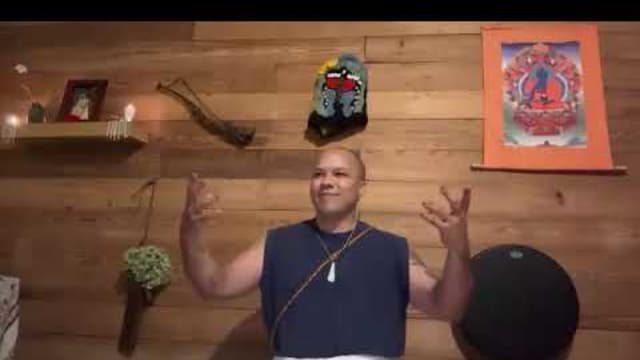
You say no to a weekend invitation, and within ninety seconds you are drafting a paragraph of justification nobody asked for. Your voice goes soft. You offer to reschedule. By the time the conversation ends, the thing you actually wanted, a quiet Saturday, has been quietly traded away to manage someone else's disappointment. In a 14-minute video published October 24, 2026 on The Holistic Psychologist channel, Dr. Nicole LePera argues that this reflex is rarely about the present moment. It is usually an old adaptation, learned in childhood, that has hardened into what feels like your whole personality. Her central claim is that the self you experience as "who I am" may be a role you were assigned to keep your family connected, and that the path back to yourself begins with treating your feelings, especially guilt, as information to examine rather than verdicts to obey.
LePera opens with a scenario most adults will recognize: someone is upset with you, you have done nothing wrong, and yet you find yourself apologizing, explaining, changing your decision, or working to make the other person feel better. Afterward you wonder why something as simple as saying no felt so overwhelming (video, 0:00 and 0:44). She is careful to frame this not as a personal failing but as a learned sequence. The reflex is the thing to study.
The distinction she draws is between a boundary and the emotional alarm that follows it. Saying "I don't want to discuss that" or "I'm not available" is a small, reasonable sentence for someone who grew up with healthy limits. For someone who learned early that another person's disappointment meant they had done something wrong, the same sentence can set off a chain: you wonder whether you were too harsh, you explain yourself, you explain again, and eventually the original question, what do I actually want, gets buried under a new one: how do I make sure they are okay with what I want? (video, 4:31)
Her key correction is that another person's unhappiness does not prove you are wrong. They can disagree, feel let down, wish you had chosen differently, even judge you as unfair. Those feelings are real for them. They do not automatically establish that you have violated anything. LePera acknowledges that intellectually accepting this can be easy while emotionally it still registers as dangerous, selfish, or mean. That gap between what you know and what your body reports is the territory she wants you to explore.
LePera's starting premise is that all families develop their own emotional systems, and children adapt to whatever environment they are born into. In a healthy home, a child has room to form preferences, opinions, and boundaries while still feeling connected to the people around them. But when a family is highly controlling, unpredictable, enmeshed, or organized around one person's emotional needs, a child learns that connection depends on playing a particular part. The roles she names include the responsible one, the peacemaker, the achiever, the caretaker, the rebellious one, the invisible one, and the person everyone blames when something goes wrong.
No one announces these roles. You learn them through repetition: which version of you gets approval, which version creates conflict, and which version makes everyone else more comfortable. Over time, what began as a strategy for staying safe can start to feel like your personality. LePera offers her own history as an example. She learned quickly that she could earn her mother's attention, approval, and love through academics and sports. Her mother was emotionally stoic, not especially encouraging or affectionate, so LePera "ended up trying harder and harder" and expected approval when she succeeded (video, 2:18).
Her point is not that achievement is bad or that every parent who was reserved caused damage. It is that most people can recall some version of this: a behavior done in order to keep love, connection, or worth intact. The adaptation may have been useful at the time. The problem arrives when it runs unexamined into adult life.
One of the most useful passages in the video describes what happens when a child spends years monitoring other people's moods. That child can grow into an adult who walks into a room and immediately registers a shift in tone or expression. They know when someone is irritated, withdrawn, disappointed, or anxious, and they adjust before anyone asks them to (video, 2:59 and 3:25). From outside, LePera notes, this can look like emotional intelligence, and sometimes it is a genuine strength.
But she draws a line between being perceptive and feeling responsible for regulating everyone around you. When attention is constantly aimed outward, a person can become fluent in other people's emotional states while staying oddly unfamiliar with their own. She gives three concrete images: knowing exactly what your partner wants for dinner but not what you want; sensing a friend's upset before a word is spoken but not noticing your own exhaustion until you are depleted; anticipating everyone's needs while struggling to name your own (video, 3:58). These are not character flaws. They are the predictable result of a skill that was once necessary for safety and is now running on autopilot.
LePera's most important distinction is between your authentic self and the self you formed to function inside your family. The second depends on what your particular environment required of you. She does not ask you to throw the second one away. A responsible or caretaking adult may have real gifts, and those qualities can still be of genuine value. What changes is the question you ask about them. Instead of asking only "what is expected of me here," you begin asking "what do I actually want, and which of these traits do I choose now?"
"There is a difference between who you really are and between who you learned to become in order to function inside of your family." (Dr. Nicole LePera, The Holistic Psychologist, October 24, 2026 video)
This is where the video's title promise becomes concrete. Not knowing who you are, in her framing, is often not a fog of confusion. It is the result of having never been given permission to find out, because each decision was made in service of keeping the family's emotional system steady. Rediscovery means slowly testing which preferences, boundaries, and reactions were actually yours.
Here LePera makes her sharpest argument. When you start doing things differently, saying no, stopping explanations, deciding without permission, prioritizing what matters to you, guilt tends to show up. The easy interpretation is that the guilt proves you are doing wrong and should return to old habits. LePera disagrees: "Guilt isn't always a reliable moral compass. Sometimes guilt is simply the emotional response you learned to associate with breaking an old family rule" (video, 6:18).
She is careful not to tell you to ignore guilt entirely. Some guilt is accurate, and when you have actually harmed someone, repair matters. Her proposal is to become curious about it. Instead of concluding "I feel guilty, therefore I must have done something wrong," you pause and investigate. The pause itself is the intervention. LePera calls it creating space between an emotion and an action, and says that space matters because the dysfunctional family pattern depended on the reflex having no space at all (video, 6:47 and 7:02).
LePera offers a short set of questions meant to separate what is genuinely yours to carry from what is someone else's emotional weather. Her first is about facts: what actually happened? Second, she asks whether you violated someone's rights or whether someone simply disliked your decision: "Did I violate someone's rights, or did someone simply dislike my decision?" Third, she asks whether you are being responsible for repairing something you truly damaged, or whether you are uncomfortable because someone else is not getting what they want: "Am I being responsible for repairing something I genuinely damaged, or am I uncomfortable because someone else isn't getting what they want?" (video, 6:47 and 7:02).
The power of these questions lies in what they refuse to do. They do not ask whether the other person is happy. They do not ask whether you feel bad. They separate harm from disappointment, and responsibility from discomfort. For someone trained since childhood to treat every frown as a verdict, simply sorting these categories out can be the first real act of self-assessment in years.
Across the video, LePera returns to one practice: curiosity. When an intense emotion arises, she suggests asking what it reminds you of from your past. That simple question, she says, helps interrupt automatic responses and lets you distinguish today's reality from older experiences. Her description says the same thing in plainer terms: understanding your emotional patterns is the first step toward reclaiming an authentic identity. She adds that this work requires a willingness to sit with discomfort and observe your mind without judgment, and that as you practice, your reactions begin to change and you gain room to make conscious choices (video, 13:13 onward).
The result she describes is not a dramatic reinvention. It is more modest and more durable: a growing ability to notice the old rule, feel its pull, and decide whether it still applies. You may still say yes sometimes. The difference is that the yes is chosen, and the no no longer has to be defended for ten minutes afterward.
If the scenes at the start of this piece felt familiar, the most useful next step is small and specific. Notice the next time you say no and feel the pull to explain. Before you add the second justification, ask LePera's questions in order: what actually happened, did I violate someone's rights or did they simply dislike my choice, and am I repairing real damage or relieving my own discomfort? Write down your answers. Then, if the feeling is intense, ask what it reminds you of from your past. LePera's own book, Reparenting the Inner Child, which she mentions in the video and in its description, expands on this inner-child work for readers who want a longer framework. Her point throughout is that you do not have to know who you are before you begin. You begin by noticing the rules you were given, and by giving yourself the space to decide which ones are still yours.