BrightStar

すべてのEventsを見る

意識ある集いに出会う

events

Yoga
Meditation
Breathwork
Qigong
Tai Chi
Sacred Music
World Music
Medicine Music
Sound Healing
Ecstatic Dance
人気の目的地
BaliSedonaLos AngelesCosta RicaNew YorkSan FranciscoAustinMiamiJoshua TreeTulum
すべてのカテゴリを見るすべての目的地を見る

すべての機能を探索

イベントを成長させる強力なツール

プラットフォーム機能

スマートダイナミックプライシング
チケットカテゴリ
座席指定
カート放棄リカバリー
訪問者リカバリー
寄付とスライディングスケール
アフィリエイトシステム
チケットスキャナー
クーポンコード
カスタム質問
チケット共有
アップセルとアドオン
分析とレポート
メールシーケンス
ウェイトリスト / 通知 / リマインダー
人と場所
Artists & TeachersEvent OrganizersVenues & StudiosKnowledge BaseGlossaryInspiration
すべての機能を見る私たちについて
料金ブログ
Language
Saved events
すべてのイベントを見る

events

YogaMeditationBreathworkQigongTai ChiSacred MusicWorld MusicMedicine Music

人気の目的地

BaliSedonaLos AngelesCosta RicaNew YorkSan Francisco

人と場所

Artists & TeachersEvent OrganizersVenues & StudiosKnowledge BaseGlossaryInspiration

プラットフォーム機能

スマートダイナミックプライシングチケットカテゴリ座席指定カート放棄リカバリー訪問者リカバリー寄付とスライディングスケールアフィリエイトシステムチケットスキャナークーポンコードカスタム質問チケット共有アップセルとアドオン分析とレポートメールシーケンスウェイトリスト / 通知 / リマインダー
すべての機能を見る私たちについて
料金ブログ
ログイン探求者クリエイター
  • すべてのイベントを見る
  • 探求者向け
  • ヨガ
  • 瞑想
  • ブレスワーク
  • 気功
  • 太極拳
  • 聖なる音楽
  • ワールドミュージック
  • メディスンミュージック
  • サウンドヒーリング
  • エクスタティックダンス
  • リトリート
  • ワークショップ
  • すべてのカテゴリ →
  • Bali
  • Sedona
  • Los Angeles
  • Costa Rica
  • Tulum
  • Byron Bay
  • San Francisco
  • Austin
  • New York
  • San Diego
  • Denver
  • Seattle
  • Portland
  • Miami
  • すべての都市 →
  • Join the Movement
  • Why we list
  • Sell Globally
  • クリエイター向け
  • チーム向け
  • ライター向け
  • 講師向け
  • キルタンアーティスト向け
  • スタジオ向け
  • フェスティバル向け
  • リトリートセンター向け
  • 非営利団体向け
  • ブランドアンバサダー
  • 無料チケット販売
  • Elevate
  • Amplify
  • 50万人以上のバイヤーネットワーク
  • カート放棄リカバリー
  • スマートダイナミックプライシング
  • チケットカテゴリ
  • 定期イベント
  • 座席指定
  • アフィリエイトシステム
  • ウェイトリスト / 通知
  • チケットスキャナー
  • 埋め込みウィジェット
  • イベント配信
  • メッセージセンター
  • インテグレーション
  • レポート
  • すべての機能 →
  • 概要
  • エコシステム
  • ブログ
  • 用語集
  • インスピレーション
  • ヘルプセンター
  • お問い合わせ
  • APIドキュメント
  • ブランドアセット
  • 採用
  • プレス
  • 利用規約
  • プライバシーポリシー

イベント

  • すべてのイベントを見る
  • 探求者向け
  • ヨガ
  • 瞑想
  • ブレスワーク
  • 気功
  • 太極拳
  • 聖なる音楽
  • ワールドミュージック
  • メディスンミュージック
  • サウンドヒーリング
  • エクスタティックダンス
  • リトリート
  • ワークショップ
  • すべてのカテゴリ →

目的地

  • Bali
  • Sedona
  • Los Angeles
  • Costa Rica
  • Tulum
  • Byron Bay
  • San Francisco
  • Austin
  • New York
  • San Diego
  • Denver
  • Seattle
  • Portland
  • Miami
  • すべての都市 →

クリエイター向け

  • Join the Movement
  • Why we list
  • Sell Globally
  • クリエイター向け
  • チーム向け
  • ライター向け
  • 講師向け
  • キルタンアーティスト向け
  • スタジオ向け
  • フェスティバル向け
  • リトリートセンター向け
  • 非営利団体向け
  • ブランドアンバサダー
  • 無料チケット販売
  • Elevate
  • Amplify

機能

  • 50万人以上のバイヤーネットワーク
  • カート放棄リカバリー
  • スマートダイナミックプライシング
  • チケットカテゴリ
  • 定期イベント
  • 座席指定
  • アフィリエイトシステム
  • ウェイトリスト / 通知
  • チケットスキャナー
  • 埋め込みウィジェット
  • イベント配信
  • メッセージセンター
  • インテグレーション
  • レポート
  • すべての機能 →

会社

  • 概要
  • エコシステム
  • ブログ
  • 用語集
  • インスピレーション
  • ヘルプセンター
  • お問い合わせ
  • APIドキュメント
  • ブランドアセット
  • 採用
  • プレス
  • 利用規約
  • プライバシーポリシー
BrightStar
アプリを入手
App StoreからApp StoreGoogle Playで手に入れようGoogle Play
© 2026 BrightStar. 全著作権所有.
Inspiration

Sita Ram Chant: Lyrics, Meaning and Tina Malia's Bridge to Vallabha

Tina Malia
Tina Malia
Oct 16, 2015
読了 約5分

出典:Tina Malia Officiel

視聴 · 5

Five minutes into the quiet, a single repeated name carries the whole track: Sita Ram. In "Sita Ram - Bridge to Vallabha (New Age)," posted to the Tina Malia Officiel channel in October 2015, the devotional phrase is sung, swelled by a music bed, and returned to again and again, with no spoken introduction to frame it. The video runs about five minutes and has drawn roughly 220,000 views. What follows is a close reading of what the track actually offers a listener: its printed text, the shape it takes in performance, and the things the video itself does not tell you.

読む · 5セクション

What does the Sita Ram chant actually say?

The video's description prints the text in full, and it is short enough to hold in memory after one listen:

Sita Ram, Sita Ram, Sita Ram Kahiye
Jahi Vidhi Rakhe Ram
Tahi Vidhi Rahiye
Sita Ram, Pyare

(lyrics as printed in the video description)

The structure is almost a dance step. The first line is a triple address, Sita Ram repeated three times before the verb arrives: kahiye, roughly "say" or "speak." The second and third lines pair two clauses that mirror each other. "Jahi vidhi rakhe Ram" points to the way Ram keeps you, and "tahi vidhi rahiye" answers it: in that way, remain. A loose gloss of the couplet, offered here as interpretation rather than as a translation credited to any source, is something like: speak the names of Sita and Ram, and live in whatever manner Ram keeps you. The closing "Pyare," which in Hindi generally means "beloved," turns the whole thing into an address.

That couplet is the emotional engine of the chant. It asks for acceptance rather than effort. The singer is not told to reach for a state or to arrange a life; the instruction is to name the divine pair and to rest inside whatever arrangement follows. For a listener who has never heard the phrase, that surrender is the thing to notice first.

How is the track built, and what does the performance sound like?

Because the transcript is machine-generated, the sung words survive only as fragments, and most of the captions read as music tags. Even so, the timestamps sketch a clear arc. The track opens around five seconds in with the first syllables over a sustained instrumental bed. By the 40-second mark the phrase is cycling. At 98 seconds, a fuller vocal line comes back over the music, and the track settles into the middle section that makes up most of its runtime.

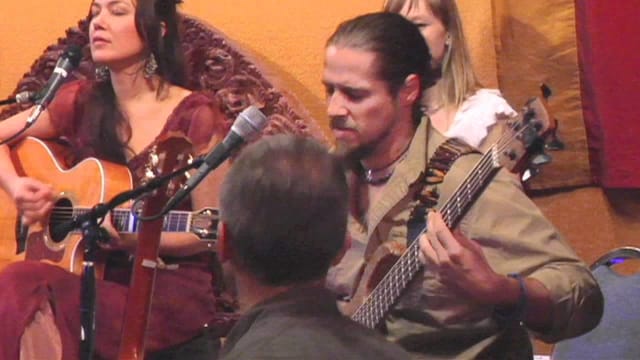
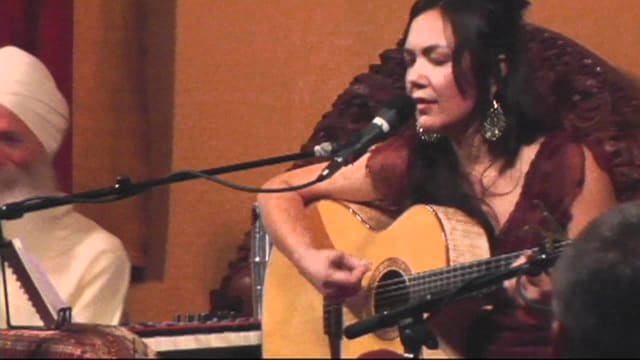
The captions also record two applause tags, at about 214 and 249 seconds. Those are the most telling details in the transcript. Applause in the middle of a devotional track almost always means the recording captures a live audience, or at least a room that responds to the music as it happens. The listener is therefore hearing a performance moment rather than a studio construction, and the pauses for applause become part of the shape of the piece.

The closing stretch, near 299 seconds, is marked by a short fragment of sung syllables and then the end of the track. The ending does not resolve with a grand flourish. It simply stops, which suits a chant meant to be repeated rather than concluded.

What is the "Bridge to Vallabha" in the title?

The subtitle is the part of the video that most invites a question, and the material does not answer it. The title pairs the chant with the phrase "Bridge to Vallabha" and tags the track "New Age," but neither the description nor the captions explain what the bridge connects, who or what Vallabha refers to in this context, or how the "New Age" label was chosen. Any account of those ideas would have to come from outside this video, and this piece will not supply it from memory.

That gap is worth naming because it changes how the track should be approached. Without a spoken introduction, the listener meets the chant as sound first and context second. You can still follow the lyrics, feel the call-and-response shape the repetition creates, and register the presence of an audience. The bridge in the title remains an open door.

Why does a five-minute chant keep an audience?

A devotional track like this one earns its place through repetition with variation. The same three syllables, Sita Ram, come back in new registers, and the music's sustained bed lets each return sound slightly different. Over five minutes, a listener who stays with it hears the phrase move from something spoken to something sung to something almost meditative. The applause tags are a reminder that people were in the room for that transformation.

The track's modest length is also part of its design. At just over five minutes, it can be played on repeat, folded into a practice, or returned to in a single sitting without demanding a long commitment. That is the practical logic of many chants: they are built to be used, not merely heard.

Where to go from here

If the track has drawn you in, the most useful next step is to listen again with the printed lyrics in front of you, following the couplet line by line as the music repeats it. Then look for the lineage behind the phrase itself. The video does not tell the story of the Sita Ram chant or of the Vallabha reference in the title, and a reader who wants that history should seek it in sources devoted to the tradition rather than rely on a five-minute upload. Start with the lyrics, let the repetition do its work, and let the unanswered questions in the title point you toward the next thing to read.
Comments

Loading the conversation…

Transcript

[0:05] سم

[0:08] س

[0:13] سم

[0:17] [موسیقی]

[0:22] را س

[0:24] [موسیقی]

[0:26] سم سم

[0:40] را سم

[0:44] سم

[0:48] سم را

[0:53] [موسیقی]

[1:06] سم

[1:11] را

[1:14] [موسیقی]

[1:16] ری

[1:20] [موسیقی]

[1:25] سرا را

[1:28] [موسیقی]

[1:38] سرا

[1:41] p s

[1:44] [موسیقی]

[2:27] س س

[2:31] [موسیقی]

[2:35] س

[2:39] [موسیقی]

[2:45] را

[2:48] س س

[2:51] [موسیقی]

[3:11] سرا

[3:15] [موسیقی]

[3:20] s

[3:24] سرا ی

[3:27] [موسیقی]

[3:34] [تشویق]

[3:36] [موسیقی]

[3:42] ‏sita

[3:47] p

[3:51] [موسیقی]

[3:56] sar sita

[4:04] ‏p

[4:08] sar

[4:09] [تشویق]

[4:12] pi

[4:17] c

[4:21] p s

[4:28] [موسیقی]

[4:59] ا ‏l

Tina Malia
ArtistTina Malia

Tina Malia is a singer, songwriter and sound engineer whose sacred chant, world, dream pop and folk music expresses her inner landscape through song.

プロフィールを見るウェブサイト
トピックを見る
Sita-ram-chantKirtanDevotional-musicBhaktiMantra-singing

ご質問はありますか?

よくある質問

The lyrics printed in the video's description read: Sita Ram, Sita Ram, Sita Ram kahiye / Jahi vidhi rakhe Ram / Tahi vidhi rahiye / Sita Ram, pyare. The first line repeats the divine names before the verb kahiye, meaning roughly say or speak.
A loose interpretation is 'in whatever way Ram keeps you, so remain' or 'live in that way.' The couplet asks for acceptance of the way the divine arranges one's life rather than striving to control it. This gloss is an interpretation, not a credited translation.
No. The video's description and captions do not explain what the bridge connects or who Vallabha refers to. Understanding that subtitle would require sources outside the video.
The captions include two applause tags, around 214 and 249 seconds into the track, which suggests the recording captures an audience responding as the music plays. The transcript is machine-generated, so this is an inference from those tags rather than a stated fact.
The track runs about five minutes, listed as PT5M2S, and was published on October 16, 2015. It has around 219,750 views on YouTube.
In Hindi, pyare generally means 'beloved' or 'dear.' It closes the chant as a direct address, turning the repeated names into an expression of devotion.

読みつづける

More from Tina Malia

すべて表示
The Silent Awakening: Lyrics and Meaning Behind the Song
Inspire

The Silent Awakening: Lyrics and Meaning Behind the Song

A close reading of "The Silent Awakening," a live devotional song performed in Berkeley, California, and published in 2011. The dream imager…

9 min read
Sarva Mangala and Apenas Sale Aurora Live: Song of the Soul
Inspire

Sarva Mangala and Apenas Sale Aurora Live: Song of the Soul

Tina Malia and GuruGanesha perform "Sarva Mangala" and "Apenas Sale Aurora" on the Song of the Soul Tour. Here is what the 2011 Berkeley vid…

5 min read
Flowers, Tapas, and the Open-Heart Field in Live Kirtan
Inspire

Flowers, Tapas, and the Open-Heart Field in Live Kirtan

A Friday-night livestream opens with names read aloud, a Sarasvati invocation, and flowers offered through the chat. Here is how the teacher…

9 min read
Opening a Lighthouse: Gratitude, Seva and Song in Mumbai
Inspire

Opening a Lighthouse: Gratitude, Seva and Song in Mumbai

A three-hour live ceremony in Borivali West reopens a Brahma Kumaris service center. Here is how gratitude, seva and devotional song shape t…

9 min read

探索を続ける

旅をつづける

BrightStarのディレクトリから、さらなる智慧と集いを。

もっと記事を読む

教え、インタビュー、ガイドのライブラリ全体をご覧ください。

すべての記事に戻る →

講師とアーティスト

コンシャスな世界の系譜、音楽家、導き手を探しましょう。

アーティストを探す →

イベントを見つける

キルタン、リトリート、サウンドバス、ブレスワーク、フェスティバル — まもなく開かれます。

イベントを見る →