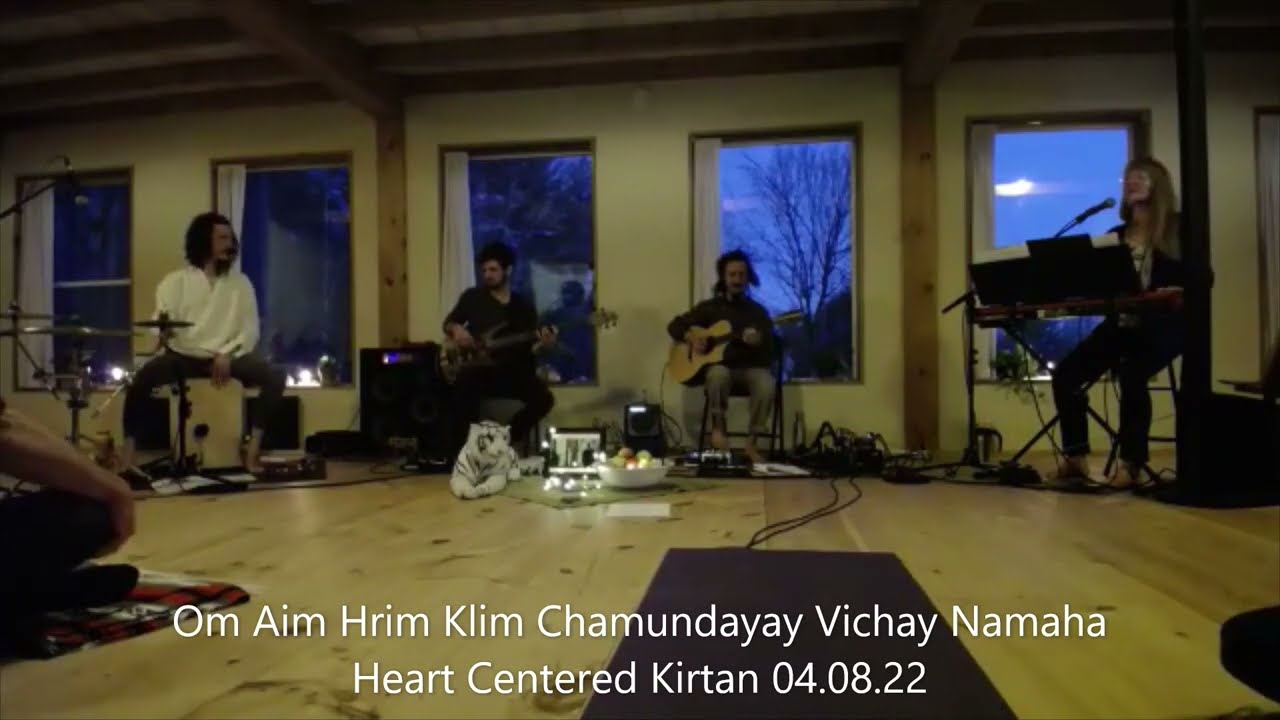
This is a live heart-centered kirtan performance of the mantra Om Namah Shivaya, recorded at Chez North Studio in March 2021. Kirtan is a participatory devotional chanting practice rooted in Hindu and yogic traditions. The performance features call-and-response singing with keys, guitar, bass, and vocals—creating an immersive sonic container for the repetition of the sacred mantra. Om Namah Shivaya translates loosely as "I bow to Shiva," invoking the consciousness of Shiva, the destroyer and transformer aspect of the divine trinity in Hindu philosophy.
Kirtan is a Sanskrit term meaning "to recite or narrate." In contemporary spiritual practice, kirtan refers to participatory devotional chanting, typically performed in a call-and-response format where a leader or group of leaders sing a mantra or devotional song, and participants repeat or harmonize with the phrase. This back-and-forth exchange creates a rhythmic, meditative state that deepens engagement with the mantra's meaning and vibration.
The practice originates from bhakti yoga traditions, emphasizing devotion as a primary path to spiritual realization. Unlike meditation, which may emphasize silence or internal focus, kirtan is inherently communal and embodied—the voice becomes an instrument for cultivating emotional connection to the divine. The repetition of sacred Sanskrit words and phrases is believed to attune the nervous system and consciousness to specific frequencies or spiritual qualities associated with those names and sounds.
The heart-centered approach to kirtan emphasizes sincerity, emotional authenticity, and devotional feeling rather than technical perfection. This means the practice prioritizes the inner experience of the singer—their vulnerability, presence, and willingness to invoke the sacred quality of the mantra—over polished vocal technique or performance aesthetics.
Om Namah Shivaya is one of the most widely recognized mantras in yoga and Hindu spirituality. It is the root mantra of Shaivism, a major philosophical school devoted to the worship and realization of Shiva. The phrase breaks down as follows:
- Om (or Aum): The primordial sound, representing ultimate consciousness or Brahman; often understood as the source vibration from which all creation emerges.
- Namah: Means "I bow" or "I honor."
- Shivaya: Refers to Shiva, one of the principal deities in Hinduism, representing consciousness, destruction, transformation, and the dissolution of the ego.
Chanting Om Namah Shivaya is an act of surrender and reverence toward the transformative power of consciousness. Rather than worshipping Shiva as an external deity, many modern practitioners understand this mantra as an invocation of the Shiva principle within themselves—the capacity to release what no longer serves, to transform suffering, and to abide in pure awareness.
The mantra is believed to activate specific energy centers (chakras) in the body, particularly the third eye (ajna) and the heart center (anahata). Repetition is thought to purify the mind, dissolve mental patterns, and align the individual consciousness with universal consciousness.
The Heart Centered Kirtan performance features a multi-instrumental arrangement: keys, guitar, bass, and percussion. Each instrument serves a distinct function in supporting the devotional atmosphere and rhythmic container of the chant.
- Keys: Often provide harmonic support and can create sustained melodic textures that hold the emotional tone of the practice.
- Guitar: Brings melodic and harmonic direction, often supporting the call-and-response structure or ornamenting the basic mantra with variations.
- Bass: Grounds the rhythm and provides harmonic foundation, supporting both the vocals and melodic instruments.
- Percussion: Establishes and maintains rhythmic momentum, often using traditional Indian drums (mridangam, tabla) or Western percussion adapted to serve the kirtan's heartbeat.
The integration of acoustic instruments—rather than purely electronic or amplified sound—supports the "heart-centered" quality by creating a warm, organic sonic environment. Acoustic resonance allows participants to feel the vibration through their bodies, fostering deeper embodied connection to the mantra.
Kirtan relies on repetition as its primary mechanism of transformation. The same mantra or devotional phrase is sung over and over, often for 15 to 45 minutes or longer. This extended repetition serves several functions:
- Bypassing the analytical mind: After the novelty of first hearing the mantra wears off, the intellect's engagement begins to soften, and the chant can penetrate deeper layers of consciousness.
- Creating rhythmic entrainment: The repetitive rhythm synchronizes brain wave activity and nervous system function, often inducing states of relaxation or meditative absorption.
- Accessing emotional and energetic states: As the mind settles, practitioners often experience emotional release, joy, devotion, or transcendent states that arise spontaneously from sustained engagement with the sacred sound.
- Dissolving resistance: Repetition can gradually dissolve mental resistance, self-consciousness, and ego-based defensiveness, allowing the singer to open more fully to the mantra's meaning and power.
The sixteen-minute duration of this performance allows sufficient time for the chant to move through these phases—beginning with conscious, engaged singing, progressing through deepening states of focus and feeling, and potentially reaching moments of transcendence or absorption (samadhi) in the mantra's quality.
A defining feature of kirtan is its participatory, communal nature. The call-and-response format—in which the leader sings a phrase and participants echo or harmonize—creates a field of shared intention and consciousness. This structure serves multiple purposes:
- It removes barriers to participation; listeners are not required to know the mantra in advance—they simply repeat what they hear.
- It creates rhythmic unity and synchronization among diverse singers, building collective emotional resonance.
- The call embodies the teacher's or leader's direct relationship with the divine quality being invoked, while the response embodies the student or participant's willingness to follow that consciousness.
- The back-and-forth mirrors the dialogue between the individual self (jiva) and universal consciousness (Brahman) central to Vedantic philosophy.
Even in a recorded format, this call-and-response structure invites the listener to sing along, transforming passive listening into active, embodied participation. The listener becomes part of the kirtan lineage, joining a centuries-old tradition of devotional singing.
This performance was recorded live at Chez North Studio on March 12, 2021, with sound engineering by Brian DiMartino. Recording a live kirtan differs significantly from a studio-produced pop album. The engineers and musicians are working to capture not just clear vocals and instruments, but the energetic and emotional texture of a devotional gathering.
A live recording preserves spontaneity, vulnerability, and the genuine energy of participants engaging together in real time. Unlike heavily edited studio albums, live recordings maintain the organic flow, the breathing of the singers, the slight imperfections, and the moments where the group consciousness seems to align and deepen. This authenticity supports the heart-centered intention—the listener hears human beings genuinely offering their voices in service to the mantra.
If Om Namah Shivaya kirtan resonates with you, consider these next steps: Practice the mantra independently, either silently or aloud, to develop familiarity with its sound and meaning. Attend live kirtan events in your community or online to experience the collective energy of group chanting. Explore other foundational mantras and devotional practices from Hindu and Buddhist traditions. Study the philosophy of Shaivism or Advaita Vedanta to deepen intellectual understanding of the mantra's cosmology. Experiment with call-and-response formats—singing with the recording, adjusting your pace and feeling to what the musicians offer. Keep a journal of any shifts in mood, energy, or consciousness that arise from regular kirtan practice. Remember that kirtan works gradually and subtly; consistency matters more than dramatic experience.