BrightStar

すべてのEventsを見る

意識ある集いに出会う

events

Yoga
Meditation
Breathwork
Qigong
Tai Chi
Sacred Music
World Music
Medicine Music
Sound Healing
Ecstatic Dance
人気の目的地
BaliSedonaLos AngelesCosta RicaNew YorkSan FranciscoAustinMiamiJoshua TreeTulum
すべてのカテゴリを見るすべての目的地を見る

すべての機能を探索

イベントを成長させる強力なツール

プラットフォーム機能

スマートダイナミックプライシング
チケットカテゴリ
座席指定
カート放棄リカバリー
訪問者リカバリー
寄付とスライディングスケール
アフィリエイトシステム
チケットスキャナー
クーポンコード
カスタム質問
チケット共有
アップセルとアドオン
分析とレポート
メールシーケンス
ウェイトリスト / 通知 / リマインダー
人と場所
Artists & TeachersEvent OrganizersVenues & StudiosKnowledge BaseGlossaryInspiration
すべての機能を見る私たちについて
料金ブログ
Language
Saved events
すべてのイベントを見る

events

YogaMeditationBreathworkQigongTai ChiSacred MusicWorld MusicMedicine Music

人気の目的地

BaliSedonaLos AngelesCosta RicaNew YorkSan Francisco

人と場所

Artists & TeachersEvent OrganizersVenues & StudiosKnowledge BaseGlossaryInspiration

プラットフォーム機能

スマートダイナミックプライシングチケットカテゴリ座席指定カート放棄リカバリー訪問者リカバリー寄付とスライディングスケールアフィリエイトシステムチケットスキャナークーポンコードカスタム質問チケット共有アップセルとアドオン分析とレポートメールシーケンスウェイトリスト / 通知 / リマインダー
すべての機能を見る私たちについて
料金ブログ
ログイン探求者クリエイター
  • すべてのイベントを見る
  • 探求者向け
  • ヨガ
  • 瞑想
  • ブレスワーク
  • 気功
  • 太極拳
  • 聖なる音楽
  • ワールドミュージック
  • メディスンミュージック
  • サウンドヒーリング
  • エクスタティックダンス
  • リトリート
  • ワークショップ
  • すべてのカテゴリ →
  • Bali
  • Sedona
  • Los Angeles
  • Costa Rica
  • Tulum
  • Byron Bay
  • San Francisco
  • Austin
  • New York
  • San Diego
  • Denver
  • Seattle
  • Portland
  • Miami
  • すべての都市 →
  • Join the Movement
  • Why we list
  • Sell Globally
  • クリエイター向け
  • チーム向け
  • ライター向け
  • 講師向け
  • キルタンアーティスト向け
  • スタジオ向け
  • フェスティバル向け
  • リトリートセンター向け
  • 非営利団体向け
  • ブランドアンバサダー
  • 無料チケット販売
  • Elevate
  • Amplify
  • 50万人以上のバイヤーネットワーク
  • カート放棄リカバリー
  • スマートダイナミックプライシング
  • チケットカテゴリ
  • 定期イベント
  • 座席指定
  • アフィリエイトシステム
  • ウェイトリスト / 通知
  • チケットスキャナー
  • 埋め込みウィジェット
  • イベント配信
  • メッセージセンター
  • インテグレーション
  • レポート
  • すべての機能 →
  • 概要
  • エコシステム
  • ブログ
  • 用語集
  • インスピレーション
  • ヘルプセンター
  • お問い合わせ
  • APIドキュメント
  • ブランドアセット
  • 採用
  • プレス
  • 利用規約
  • プライバシーポリシー

イベント

  • すべてのイベントを見る
  • 探求者向け
  • ヨガ
  • 瞑想
  • ブレスワーク
  • 気功
  • 太極拳
  • 聖なる音楽
  • ワールドミュージック
  • メディスンミュージック
  • サウンドヒーリング
  • エクスタティックダンス
  • リトリート
  • ワークショップ
  • すべてのカテゴリ →

目的地

  • Bali
  • Sedona
  • Los Angeles
  • Costa Rica
  • Tulum
  • Byron Bay
  • San Francisco
  • Austin
  • New York
  • San Diego
  • Denver
  • Seattle
  • Portland
  • Miami
  • すべての都市 →

クリエイター向け

  • Join the Movement
  • Why we list
  • Sell Globally
  • クリエイター向け
  • チーム向け
  • ライター向け
  • 講師向け
  • キルタンアーティスト向け
  • スタジオ向け
  • フェスティバル向け
  • リトリートセンター向け
  • 非営利団体向け
  • ブランドアンバサダー
  • 無料チケット販売
  • Elevate
  • Amplify

機能

  • 50万人以上のバイヤーネットワーク
  • カート放棄リカバリー
  • スマートダイナミックプライシング
  • チケットカテゴリ
  • 定期イベント
  • 座席指定
  • アフィリエイトシステム
  • ウェイトリスト / 通知
  • チケットスキャナー
  • 埋め込みウィジェット
  • イベント配信
  • メッセージセンター
  • インテグレーション
  • レポート
  • すべての機能 →

会社

  • 概要
  • エコシステム
  • ブログ
  • 用語集
  • インスピレーション
  • ヘルプセンター
  • お問い合わせ
  • APIドキュメント
  • ブランドアセット
  • 採用
  • プレス
  • 利用規約
  • プライバシーポリシー
BrightStar
アプリを入手
App StoreからApp StoreGoogle Playで手に入れようGoogle Play
© 2026 BrightStar. 全著作権所有.
Inspiration

Meditating on Itchiness: Eczema, Aversion and Mindfulness

YB
Yuttadhammo Bhikkhu
Nov 9, 2026
読了 約8分

出典:Yuttadhammo Bhikkhu

視聴 · 7

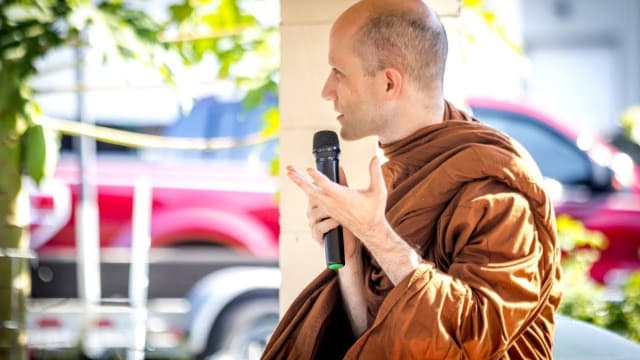
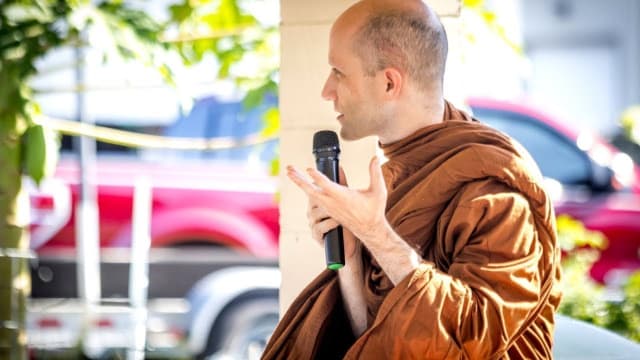
Picture it at eleven at night. The meditation cushion is set up, the timer is ready, and then the skin begins to burn. The hand drifts toward the arm before you have decided to move it. Within a minute the session has collapsed, and the phone is in your palm, scrolling through anything at all just to get away from the feeling. That is the scene behind a question put to Yuttadhammo Bhikkhu during an Online Dhamma Group livestream on September 19, 2026: a listener with eczema said that when the condition flares, they cannot meditate, so they distract themselves with their phone and ask how to handle the skin condition gracefully. His answer runs under three minutes, and it turns the question around. The itch, he suggests, is not what stands between you and practice. It is the practice.

読む · 6セクション

Can you really not meditate when your skin is on fire?

The monk's first move is to contest the premise. "The thing about mindfulness is it's never correct, they're never accurate to say I can't meditate," he said in the livestream, adding, "Never. There's no situation." It is a striking claim, and it is worth sitting with before reaching for objections. The listener's sentence, "I can't meditate," assumes that meditation requires a certain condition, a calm body and a quiet mind, and that the itch removes that condition. Yuttadhammo Bhikkhu's point is that mindfulness does not ask for a particular state. It asks you to know what is present, and an itch is very present.

He also makes an observation about who tends to find the practice most persuasive. Someone whose life is "excessively challenging and excessively stressful," he said, "will quickly see the benefits, more quickly than someone who doesn't suffer from any sort of condition like that." People whose lives feel fine often struggle to see the point. "What's it for? Everything's good. Why should I practice?" The person with a relentless itch has no such doubt. Suffering, in this framing, is a kind of motivation that comes pre-installed. The thing you could not stand, he says, can become, through honest attention, "suddenly harmless." He calls this "such an eye opener," and it is the reason the listener's difficulty is not a detour from practice but the most direct route into it.

What does it mean to meditate on an itch?

The instruction is concrete. "Can you meditate on the itching?" he asks, and answers himself: "You can. And you meditate on the disliking of the itching and the desire to scratch." Notice that there are three objects here, not one. There is the sensation of itching. There is the mind's dislike of it, the quick recoil that makes the sensation feel like an enemy. And there is the desire to scratch, which is its own pull toward action. A beginner often collapses these into a single lump called "the itch is bad." Mindfulness separates them. You notice the prickle, you notice the aversion, you notice the urge, and you let each one be known rather than argued with.

This is why the teaching does not require the itch to go away. Relief may come, or it may not. The practice is attention to what is happening now, and the itch is happening now. The monk is not asking the listener to tolerate suffering as a grim endurance test. He is asking them to make the sensation, and the reaction to it, the actual subject of their awareness. Once the itch is the object rather than the enemy, the meditation has a place to stand.

What about the urge to scratch?

Here the teaching becomes practical. "When you scratch, you meditate on the scratching," he said. The scratch is not treated as a failure that cancels the session; it is another event to be known. Still, he offers a suggestion for someone whose skin is genuinely damaged: "Try not to scratch. It's suggested that you rub instead if you need to, rather than scratch, try rubbing if you have to. And then just be mindful: rubbing, rubbing." The advice is gentle and specific. Rubbing is a lighter action, one the listener can deliberately choose, and the repeated word "rubbing" is the same noting technique used for breath or any other object. The mind labels the movement and returns to the label.

The distinction here matters. Yuttadhammo Bhikkhu does not present scratching as a moral lapse, and he does not recommend forcing yourself to hold still against all reason. He recommends watching what you do, and giving the action a name. Over time, the difference between a reflexive scratch and a chosen rub becomes visible, and that visibility is the training.

Why does distraction make the itch worse?

This is the heart of the answer, and it addresses the listener's own habit directly. The phone is a familiar escape. It takes the mind away from the itch, and it feels like relief. But the monk argues the relief is an illusion that costs something. "The thing about distracting yourself, curing the problem, etc., is it reinforces aversion to it," he said. "Anything but facing it is always going to reinforce defilement."

The word defilement, a translation of the Pali term kilesa often used in this tradition, names the mental states that cloud and bind the mind: aversion, greed, delusion. Escaping into a screen does not remove those states. It rehearses them. Each time the hand reaches for the phone to avoid an itch, the mind learns that the itch is unbearable and must be fled. The next flare arrives with more dread attached. That is what he means when he says anything we do that is not mindful "is always going to encourage and feed our defilement."

"It will feed your aversion to the problem. It will feed your desire to fix things, to fix everything, to always be looking for a fix. And it will keep you attached. It will keep you bound. It will keep you enslaved."

— Yuttadhammo Bhikkhu, Online Dhamma Group livestream, September 19, 2026

Read closely, the passage describes a loop of three parts: aversion to the problem, a craving to fix it, and attachment to the outcome. The monk's critique is not that wanting relief is shameful. It is that a mind run by the search for a fix keeps returning to the same unpleasantness, because the search itself confirms that the unpleasantness is intolerable. Mindfulness breaks the loop not by promising a cure but by changing the relationship to the sensation.

Why suffering may be the fastest teacher

It would be easy to hear this as a demand that the listener become heroically patient. The teaching is more hopeful than that. A person with a persistent, debilitating condition, the monk says, has an unusually clear chance to see something most of us miss: that the thing we could not stand can be seen differently, and in seeing it differently, can lose much of its power. This is not a claim about skin medicine. Nothing in the answer suggests that meditation replaces treatment or that eczema disappears through practice. The claim is narrower and more interesting. The mind's reaction to an itch is itself a process you can observe, and observing it changes what the itch feels like to you.

For the listener who asked, the path is not to abandon the phone in a single act of willpower. It is to notice the moment the hand moves toward the screen and to have the new option available: the itch, the dislike, the urge, labeled and faced. Some sessions will still be short. Some will still end with a scratch. The practice is not measured by whether the skin cooperates. It is measured by whether the mind is, moment by moment, a little less bound to the fix.

Where to go from here

The full answer is short enough to watch in one sitting, and it rewards a second viewing for the exact wording of the instructions. The core moves are simple to state and harder to practice: treat the itch as a meditation object, separate the sensation from the dislike and the urge, rub rather than scratch when you must, label what you do, and resist the reflex to distract yourself. For further study, the teacher's own material is the best next step. His channel hosts the Online Dhamma Group recordings, and his website and booklets, linked from the video's description, offer longer instruction on how to meditate. Start with one flare-up, one note at a time: itching, disliking, wanting, rubbing.
Comments

Loading the conversation…

Transcript

[0:00] I have eczema.

[0:03] When it flares up, I can't meditate

[0:05] because of the itchiness.

[0:08] I usually distract myself with my phone

[0:11] during those times.

[0:13] How can I gracefully navigate this skin

[0:16] condition?

[0:19] >> The thing about mindfulness is it's

[0:21] never correct, they're never accurate to

[0:24] say I can't meditate.

[0:27] Never. There's no situation, and that's

[0:30] the the marvelous thing about

[0:31] mindfulness,

[0:34] that I mean it's quite obvious you would

[0:35] you would be mindful of the itchiness

[0:37] and the reactions to the itchiness.

[0:41] You can change your life. You you will

[0:42] see the change. Someone with a situation

[0:45] like this where it's

[0:47] excessively challenging

[0:49] and excessively stressful

[0:52] will quickly see the benefits, more

[0:54] quickly than someone who doesn't suffer

[0:56] from any sort of condition like that and

[0:58] they have a hard time seeing the point

[1:00] of meditation.

[1:02] What's it for? Everything's good. Why

[1:03] should I practice? My my life is good.

[1:06] A person who has difficulties

[1:09] is much more likely to quickly see

[1:11] benefit.

[1:13] You can really

[1:15] it's just such a such an eye opener

[1:18] to realize that this thing that you

[1:20] couldn't stand and and

[1:22] couldn't bear with and felt was

[1:24] debilitating

[1:26] is suddenly harmless.

[1:31] Can you meditate on the itching?

[1:33] You can.

[1:35] And you meditate on the disliking of the

[1:37] itching and the desire to scratch, and

[1:39] when you scratch, you meditate on the

[1:41] scratching.

[1:43] Try not to scratch. It suggested that

[1:45] you rub instead if you need to, rather

[1:47] than scratch, try rubbing

[1:50] if you have to. And then just be mindful

[1:52] rubbing rubbing.

[1:54] The thing about distracting yourself,

[1:56] curing the problem, etc.,

[1:59] is it it reinforces aversion to it.

[2:02] Anything but facing it is always going

[2:04] to reinforce defilement.

[2:07] That's the problem.

[2:08] It's the problem that we have as living

[2:10] beings, as unmindful beings.

[2:13] Is that anything we do that is not

[2:15] mindful is always going to encourage and

[2:17] feed

[2:18] our defilement. It will feed your

[2:20] aversion to

[2:22] the problem. It will feed your desire to

[2:24] fix things, to fix everything, to always

[2:27] be looking for a fix.

[2:30] And it will keep you attached. It will

[2:31] keep you bound. It will keep you

[2:33] enslaved.

YB
Artist
Yuttadhammo Bhikkhu

Watch more from Yuttadhammo Bhikkhu on YouTube.

ウェブサイト
トピックを見る
ItchinessEczema-meditationAversionMindfulnessScratching

ご質問はありますか?

よくある質問

Yuttadhammo Bhikkhu says it is never accurate to claim you cannot meditate, because mindfulness can be applied to whatever is present, including itching and the reactions to it. In his September 19, 2026 livestream answer, he suggested treating the itch and the urge to scratch as the objects of meditation.
The teacher advises trying not to scratch, and if you must move, to rub rather than scratch and to note the rubbing as "rubbing, rubbing." If you do scratch, he says you can meditate on the scratching itself rather than treating it as a failure.
According to Yuttadhammo Bhikkhu, distraction reinforces aversion to the problem and feeds defilement, because anything other than facing the experience strengthens the habit of escape. He describes this as a way the mind keeps becoming attached and bound.
Note three things separately: the sensation of itching, the disliking of it, and the desire to scratch. Rather than arguing with these experiences or trying to make them disappear, you simply know each one as it arises.
Yuttadhammo Bhikkhu observed that people whose lives are excessively challenging or stressful often see the benefits of meditation more quickly than those who feel their lives are fine. A debilitating sensation can become harmless when observed closely, which makes the lesson vivid.
The teaching in this livestream answer does not claim that meditation cures eczema or replaces medical treatment. It focuses on how the mind relates to the itch and the urge to scratch, not on the physical condition itself.

読みつづける

More from Yuttadhammo Bhikkhu

すべて表示
Kondañña's Awakening: Mahasi Sayadaw on the First Sermon
Inspire

Kondañña's Awakening: Mahasi Sayadaw on the First Sermon

A 2026 online study session on Mahasi Sayadaw's commentary reveals how the Buddha's first sermon, and one old astrologer's sudden awakening,…

8 min read
Studying Mahasi Sayadaw on the Wheel of Dhamma Sutta
Inspire

Studying Mahasi Sayadaw on the Wheel of Dhamma Sutta

A two-hour online Dhamma group takes up the late Mahasi Sayadaw's commentary on the Dhammacakkappavattana Sutta. Here is what the text is, w…

4 min read
Why Arguing Feeds the Pain Body and How to Stop It
Inspire

Why Arguing Feeds the Pain Body and How to Stop It

Eckhart Tolle explains why insults hook the ego and how the pain body feeds on every argument. Presence, not a comeback, is the way out of t…

9 min read
Light in Shining Armour: A Goddess Myth Set to Mantra Pop
Inspire

Light in Shining Armour: A Goddess Myth Set to Mantra Pop

A four-and-a-half-minute video turns an ancient goddess story into a sung prayer about slowing down, guarding your energy, and remembering y…

10 min read

探索を続ける

旅をつづける

BrightStarのディレクトリから、さらなる智慧と集いを。

もっと記事を読む

教え、インタビュー、ガイドのライブラリ全体をご覧ください。

すべての記事に戻る →

講師とアーティスト

コンシャスな世界の系譜、音楽家、導き手を探しましょう。

アーティストを探す →

イベントを見つける

キルタン、リトリート、サウンドバス、ブレスワーク、フェスティバル — まもなく開かれます。

イベントを見る →