BrightStar

すべてのEventsを見る

意識ある集いに出会う

events

Yoga
Meditation
Breathwork
Qigong
Tai Chi
Sacred Music
World Music
Medicine Music
Sound Healing
Ecstatic Dance
人気の目的地
BaliSedonaLos AngelesCosta RicaNew YorkSan FranciscoAustinMiamiJoshua TreeTulum
すべてのカテゴリを見るすべての目的地を見る

すべての機能を探索

イベントを成長させる強力なツール

プラットフォーム機能

スマートダイナミックプライシング
チケットカテゴリ
座席指定
カート放棄リカバリー
訪問者リカバリー
寄付とスライディングスケール
アフィリエイトシステム
チケットスキャナー
クーポンコード
カスタム質問
チケット共有
アップセルとアドオン
分析とレポート
メールシーケンス
ウェイトリスト / 通知 / リマインダー
人と場所
Artists & TeachersEvent OrganizersVenues & StudiosKnowledge BaseGlossaryInspiration
すべての機能を見る私たちについて
料金ブログ
Language
Saved events
すべてのイベントを見る

events

YogaMeditationBreathworkQigongTai ChiSacred MusicWorld MusicMedicine Music

人気の目的地

BaliSedonaLos AngelesCosta RicaNew YorkSan Francisco

人と場所

Artists & TeachersEvent OrganizersVenues & StudiosKnowledge BaseGlossaryInspiration

プラットフォーム機能

スマートダイナミックプライシングチケットカテゴリ座席指定カート放棄リカバリー訪問者リカバリー寄付とスライディングスケールアフィリエイトシステムチケットスキャナークーポンコードカスタム質問チケット共有アップセルとアドオン分析とレポートメールシーケンスウェイトリスト / 通知 / リマインダー
すべての機能を見る私たちについて
料金ブログ
ログイン探求者クリエイター
  • すべてのイベントを見る
  • 探求者向け
  • ヨガ
  • 瞑想
  • ブレスワーク
  • 気功
  • 太極拳
  • 聖なる音楽
  • ワールドミュージック
  • メディスンミュージック
  • サウンドヒーリング
  • エクスタティックダンス
  • リトリート
  • ワークショップ
  • すべてのカテゴリ →
  • Bali
  • Sedona
  • Los Angeles
  • Costa Rica
  • Tulum
  • Byron Bay
  • San Francisco
  • Austin
  • New York
  • San Diego
  • Denver
  • Seattle
  • Portland
  • Miami
  • すべての都市 →
  • Join the Movement
  • Why we list
  • Sell Globally
  • クリエイター向け
  • チーム向け
  • ライター向け
  • 講師向け
  • キルタンアーティスト向け
  • スタジオ向け
  • フェスティバル向け
  • リトリートセンター向け
  • 非営利団体向け
  • ブランドアンバサダー
  • 無料チケット販売
  • Elevate
  • Amplify
  • 50万人以上のバイヤーネットワーク
  • カート放棄リカバリー
  • スマートダイナミックプライシング
  • チケットカテゴリ
  • 定期イベント
  • 座席指定
  • アフィリエイトシステム
  • ウェイトリスト / 通知
  • チケットスキャナー
  • 埋め込みウィジェット
  • イベント配信
  • メッセージセンター
  • インテグレーション
  • レポート
  • すべての機能 →
  • 概要
  • エコシステム
  • ブログ
  • 用語集
  • インスピレーション
  • ヘルプセンター
  • お問い合わせ
  • APIドキュメント
  • ブランドアセット
  • 採用
  • プレス
  • 利用規約
  • プライバシーポリシー

イベント

  • すべてのイベントを見る
  • 探求者向け
  • ヨガ
  • 瞑想
  • ブレスワーク
  • 気功
  • 太極拳
  • 聖なる音楽
  • ワールドミュージック
  • メディスンミュージック
  • サウンドヒーリング
  • エクスタティックダンス
  • リトリート
  • ワークショップ
  • すべてのカテゴリ →

目的地

  • Bali
  • Sedona
  • Los Angeles
  • Costa Rica
  • Tulum
  • Byron Bay
  • San Francisco
  • Austin
  • New York
  • San Diego
  • Denver
  • Seattle
  • Portland
  • Miami
  • すべての都市 →

クリエイター向け

  • Join the Movement
  • Why we list
  • Sell Globally
  • クリエイター向け
  • チーム向け
  • ライター向け
  • 講師向け
  • キルタンアーティスト向け
  • スタジオ向け
  • フェスティバル向け
  • リトリートセンター向け
  • 非営利団体向け
  • ブランドアンバサダー
  • 無料チケット販売
  • Elevate
  • Amplify

機能

  • 50万人以上のバイヤーネットワーク
  • カート放棄リカバリー
  • スマートダイナミックプライシング
  • チケットカテゴリ
  • 定期イベント
  • 座席指定
  • アフィリエイトシステム
  • ウェイトリスト / 通知
  • チケットスキャナー
  • 埋め込みウィジェット
  • イベント配信
  • メッセージセンター
  • インテグレーション
  • レポート
  • すべての機能 →

会社

  • 概要
  • エコシステム
  • ブログ
  • 用語集
  • インスピレーション
  • ヘルプセンター
  • お問い合わせ
  • APIドキュメント
  • ブランドアセット
  • 採用
  • プレス
  • 利用規約
  • プライバシーポリシー
BrightStar
アプリを入手
App StoreからApp StoreGoogle Playで手に入れようGoogle Play
© 2026 BrightStar. 全著作権所有.
Inspiration

25-Minute Daily Full-Body Yoga Flow for All Levels

CF
Charlie Follows
Oct 25, 2026
読了 約9分

出典:Charlie Follows

視聴 · 7

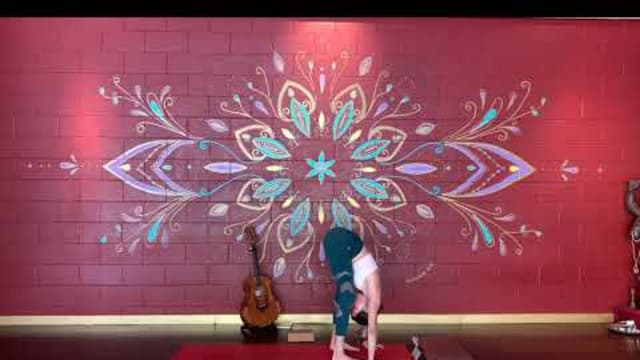
Charlie Follows' 25-minute daily yoga flow is a single, unhurried session built to be repeated on an ordinary day, not saved for a special one. It opens on the floor in child's pose, moves through wrist warm-ups and cat-cow, pedals into plank and downward dog, and then works through a long run of vinyasa transitions: low lunge twists, chaturanga, high lunges, warrior variations, lizard lunge, a standing fold, and a wide-legged squat called Skandasana before it settles into lying-down rest. Follows is a registered yoga teacher with more than 500 hours of training in vinyasa and functional anatomy, and the video shows that training in the choices she makes: which joints get attention first, which options she offers at each step, and how the breath is used as the metronome for the whole practice. What follows breaks down how the flow is built and why it holds together.

The class begins where most home practices do, on the mat, knees folded, forehead heading toward the floor. "So, you can keep your knees together or open them apart if you prefer," Follows says, and then she gives you five breaths to arrive. It is a small thing, but it sets the terms for everything after it. The first five breaths are not a warm-up in the athletic sense. They are a deliberate pause, and Follows frames the whole routine around that idea: take time to tune in to your body, to your breath, and to the practice.

読む · 6セクション

Why does a daily yoga flow start with the wrists and spine?

Because the hands carry you through most of what comes next. From tabletop, Follows asks students to begin "moving in a circular direction to warm up the wrists," traveling through all four corners of the mat, first forward and back, then clockwise and counterclockwise. Anyone who has held a plank or a downward dog knows that wrists are the joints most likely to complain when they are asked to bear weight without preparation, and this short circuit does that work in under a minute.

Then comes cat-cow, linked tightly to the breath. "Now, on your inhale, arch your back, look forward. On your exhale, round your spine, look down. Move in time with your breath." The instruction is simple, but the function is significant. The spine is put through flexion and extension in a controlled rhythm, and the practice quietly teaches the habit it will rely on all session: movement starts with the breath, not the other way round. Follows adds a permission that matters for a daily practice: "Going as fast or as slow as you like." On the days when the body is stiff, the pace can drop. On the days when it is loose, it can rise.

Follows then uses the final inhale of cat-cow to lengthen the chest and back body with a longer pause, a pattern she repeats throughout the video. The contrast between the open chest and the rounded back gives the spine its first real range of motion before the body comes up into the weight-bearing work of plank.

How do the vinyasa transitions keep the body moving?

Vinyasa, in its everyday sense, means linking one shape to the next with the breath as the connective tissue, and this video is built that way from start to finish. From cat-cow, Follows moves into plank by extending the legs and "pedal[ing] out the legs," with the option to lower one knee for support. She is specific about the form that matters in the transition: "try to keep the shoulders over the wrists. The spine is neutral. You're bracing your core here." That bracing is what makes the plank a working position rather than a collapse.

From plank the flow slides back into downward dog, where the feet alternate heel by heel, and then walks forward to a ragdoll position. The knees are bent, the upper body hangs over the legs, and the neck is relaxed with the chin tucked. Follows instructs a gentle side-to-side sway, holding the opposite elbow. It is one of the few moments where the video deliberately asks you to let weight go, and it works as a reset before the body is asked to build heat again.

The heat-building begins with low lunge twists. "Bring your fingertips down to the mat, inhale and lift your chest. Exhale, step the left foot back to low lunge." From there the arms open into a T-shape with each exhale, and the chest turns with the twist. Follows repeats the sequence several times, sometimes with the breath at the lead, sometimes with the pause at the top of the twist. The repetition is the point. A single twist stretches; a run of them starts to mobilize.

Then the flow shifts into a sequence that recurs through the class: chaturanga, a choice between cobra or upward-facing dog, and a return to downward dog. Chaturanga is described with care, "lower through chaturanga, moving as slowly as you can," and the back-bend choice is left open. Follows gives a clear cue for the transition itself: "Inhale, take cobra or upward-facing dog. Exhale, downward-facing." It is the spine's version of a breath cycle, and it appears on both sides of the body throughout.

"Choose the option that allows you to prioritize your breath."

Charlie Follows, in the video (around 7:30)

That line is worth stopping on. It appears in the middle of the standing sequence, and it summarizes the teaching philosophy of the whole video: the form is a means to a steady breath, not an end in itself.

What do the standing sequences ask of the hips and legs?

The standing work is where the practice spreads across the body's planes. From downward dog, Follows steps or hops the right foot through to a high lunge, reaches the arms up, and finds balance by fixing the gaze on one spot. The next move opens the hips and chest at once: exhale to open the back foot into warrior two, relax the shoulders, and focus on the front middle finger. Then the palm flips and the body leans back into a reverse warrior, which works the front of the body in a different direction from anything before it. Extended side angle follows, where the forearm can rest on the thigh or the hand can reach down to the inside of the foot. Follows gives the choice directly: pick the option that lets you "take a deep breath in and turn your chest open."

Lizard lunge comes next, with both hands on the inside of the front foot and the back foot turned forward. The knee can stay up or come down. The stretch is specific, and Follows names it: "You're looking to feel that stretch in the front of the left thigh," then the same on the other side. Working each side in turn, the flow keeps the balance even rather than letting one leg do all the work.

Once both sides are complete, the practice returns to the top of the mat and rounds the spine up to standing, turns to the side, and moves into a straddle. The forward fold is described with attention to the feet: distribute your weight "between the toes and the heels for balance," and let the hands come down to support you. A little bend in the knees is offered as acceptable. From the fold, the body lifts halfway, twists, and works through a long Skandasana near the end of the standing section, a wide-legged squat that takes the hands away when balance allows. The option structure is consistent. There is always a way to make the shape easier without losing the thread of the breath.

How can someone at any level use this routine?

The description calls the class suitable for all levels, and the transcript supports that claim through its repeated options. Knees can come down in plank. The back toes can stay on the mat or tuck and lift the knee in the lunge pauses. Arms can rest on the thigh or reach to the floor. In the standing fold, the knees can stay bent. Each choice is framed the same way: keep the breath moving and the spine neutral, and choose the version that allows both. That is the real accessibility of the video. It does not reduce the practice to something gentle. It gives you permission to find the level at which the same shapes can be breathed through.

For a beginner, the value is in the pace and the cues. For a more experienced student, the value is in the options that add depth: the extended side angle with the hand on the mat, the Skandasana with hands lifted, the back-bend choice after chaturanga. The same sequence serves both, which is what a daily routine needs.

What does the ending ask you to notice?

The final stretch of the video slows down. Follows invites you to lie down and extend the legs, and the instruction shifts from doing to noticing: relax the upper body, let the breath even out, and come back to the body. Near the close, she offers a question that sums up the intention of the whole class. Can you just be here without having to do anything? The answer is not a technique. It is a reminder that the twenty-five minutes were meant to be a pause as much as a workout.

The video ends with a brief farewell: "I hope that you enjoyed today's" session, with the closing word about energy. The routine is brief enough to repeat daily and thorough enough to touch every major area of the body. That combination is the reason it works as a daily practice, and why a teacher who spent years in studios and now teaches online built it this way.

Where to go from here

If you try this flow, start with the opening five breaths and the wrist circles, and do not rush the first cat-cow. Let the breath set the pace, choose the option that keeps you steady, and treat the closing rest as part of the practice rather than an afterthought. If you want more from Charlie Follows, her programs are listed on her channel's site at charliefollows.com/programs, and her teaching is also shared on Instagram, Facebook, and TikTok. For a complete daily routine, pair this flow with a few minutes of seated breathwork on rest days, and return to the same sequence until the transitions feel like your own.

Comments

Loading the conversation…

Transcript

[0:00] Hello, and welcome to this daily yoga

[0:03] flow. This is a full body practice

[0:05] suitable for all levels and it includes

[0:07] a little bit of everything for a daily

[0:09] routine that you can come back to every

[0:11] day.

[0:12] When you're ready, we'll begin in

[0:14] child's pose.

[0:17] So, you can keep your knees together or

[0:19] open them apart if you prefer.

[0:21] And then walk the hands forward, lower

[0:23] yourself down.

[0:25] And rest the head on the mat.

[0:28] And we'll take the first five breaths

[0:30] here to give you chance to tune in

[0:33] to your body,

[0:35] to your breath, and to the practice.

[1:00] Take a final deep breath in here.

[1:03] >> [snorts]

[1:04] >> And exhale out.

[1:09] Then come up into table top or hands and

[1:12] knees position.

[1:14] So, the wrists are under the shoulders,

[1:16] the knees are under the hips. And then

[1:18] start moving in a circular direction to

[1:21] warm up the wrists. Seeing if you can

[1:23] travel through all four corners of your

[1:26] mat.

[1:28] So, come as far forward as you can.

[1:31] And as far back.

[1:32] >> [snorts]

[1:33] >> Going a few times clockwise.

[1:38] And then anti-clockwise.

[1:48] Then come back through center moving

[1:50] through cat cow. Now, on your inhale,

[1:53] arch your back, look forward.

[1:55] On your exhale, round your spine, look

[1:58] down.

[2:00] Move in time with your breath.

[2:03] Inhale, cow pose.

[2:06] Exhale, cat.

[2:10] Going as fast or as slow as you like.

[2:23] >> [sighs]

[2:24] >> One more inhale.

[2:26] Pause a little bit longer this time to

[2:28] really open the chest.

[2:32] And then exhale, pausing a little bit

[2:35] longer as you open through the back

[2:37] body.

[2:40] Then coming back to neutral, extend both

[2:44] legs to come to plank.

[2:47] And we'll pedal out the legs here. So,

[2:49] as you do so, you can always lower one

[2:51] knee down for support.

[2:54] And then switch.

[2:58] As you do this, try to keep the

[2:59] shoulders over the wrists.

[3:03] The spine is neutral. You're bracing

[3:05] your core here.

[3:11] Then slowly lift the hips as you keep

[3:14] pedaling your legs back,

[3:16] walking into downward dog.

[3:20] And we can continue pedaling out the

[3:22] legs as we arrive here.

[3:24] So, just sending one heel down, lifting

[3:26] the other.

[3:28] And then switching.

[3:32] Take a deep breath in now, ground

[3:35] through both feet. And with your breath

[3:38] out, take baby steps to walk the feet to

[3:41] the hands, coming into a ragdoll

[3:43] position. So, knees are bent here. Hold

[3:46] on to opposite elbow and sway side to

[3:49] side.

[3:51] Let the upper body hang over your legs.

[3:54] You can relax your neck, tuck your chin

[3:56] into your chest.

[4:02] Good. Moving a little bit quicker now to

[4:05] build some heat in the body. Bring your

[4:07] fingertips down to the mat, inhale and

[4:10] lift your chest.

[4:12] Exhale, step the left foot back to low

[4:15] lunge.

[4:17] Inhale, reach your arms up.

[4:21] And as you exhale, twist open to the

[4:24] right. Open the arms into a T-shape.

[4:28] Inhale, reach your arms up, turn to face

[4:30] forward.

[4:32] And exhale, twist open.

[4:35] Three more. Inhale, center.

[4:38] Exhale, twist.

[4:40] >> [sighs]

[4:41] >> Inhale.

[4:42] And exhale.

[4:44] Final one. Inhale.

[4:47] Exhale, [snorts]

[4:48] pause here. Lower the left hand down,

[4:51] reach the right arm up, gaze up to your

[4:54] fingertips.

[4:55] Option to tuck the back toes and lift

[4:58] your knee.

[4:59] Pause for three breaths now.

[5:08] Final deep breath in here.

[5:11] >> [snorts]

[5:12] >> Exhale out, lower the right hand down,

[5:14] step to plank and pause for a breath in

[5:17] here. Knees could always come down.

[5:21] With your breath out, lower through

[5:23] chaturanga, rock forward and bend the

[5:25] arms close to the side of the body.

[5:29] Then keep the hands under the shoulders.

[5:30] With your inhale, lift the chest using

[5:34] the strength in your back, so the hands

[5:35] are just lightly here on the mat to

[5:38] support you.

[5:40] And then as you exhale, push back to

[5:42] downward facing dog.

[5:45] Pause for a deep breath in here.

[5:48] And with your exhale, look forward and

[5:50] you could step or hop to forward fold.

[5:55] Inhale, lift the chest halfway.

[5:58] Exhale, step the right foot back to low

[6:01] lunge. With your inhale, reach your arms

[6:04] up.

[6:05] >> [snorts]

[6:05] >> And moving through those dynamic twists,

[6:07] exhale, twist left, open the arms apart.

[6:11] >> [snorts]

[6:11] >> Inhale, come through center.

[6:15] Exhale to twist.

[6:17] Three more go at the pace of your

[6:19] breath.

[6:26] >> [snorts]

[6:29] >> Final one.

[6:31] With your exhale, pause in your twist,

[6:34] lower the right hand down, reach the

[6:36] left arm up. Option two, tuck the back

[6:39] toes and lift your knee as you gaze up

[6:42] to your fingertips. Three breaths here.

[6:51] Final deep breath in.

[6:53] On your exhale, plant the left hand,

[6:56] step to plank, pause for a breath in.

[7:00] Exhale, lower through chaturanga, moving

[7:03] as slowly as you can. This time on your

[7:06] inhale, you could retake cobra or come

[7:09] through to up dog. So, flipping the tops

[7:11] of the feet onto the mat, thighs are off

[7:13] the mat. Pull your chest forward, take a

[7:16] big breath in.

[7:18] And as you exhale, push back to downward

[7:20] facing.

[7:21] Pause and hold.

[7:24] Inhale, lift the right leg high now,

[7:27] keeping the hips level. So, slightly

[7:29] roll the right side hip down.

[7:34] And with your exhale, step the right

[7:35] foot through to high lunge. So, it's

[7:38] okay if you take a couple steps to get

[7:40] there.

[7:41] And reach the arms up, inhale.

[7:44] Gaze ahead of you as you find your

[7:46] balance here.

[7:48] On your exhale, open out the back foot,

[7:51] come to warrior two. Reach the arms

[7:53] apart, relax the shoulders, and focus

[7:56] the gaze on the right middle finger.

[7:58] Good.

[8:00] Inhale, flip the right palm, reach up,

[8:03] and lean back for a reverse warrior.

[8:07] And exhale, come to extended side angle,

[8:09] either resting the right forearm on the

[8:11] thigh as you reach the left arm

[8:13] overhead, or bringing the hand down to

[8:15] the inside of the foot.

[8:18] Choose the option that allows you to

[8:20] take a deep breath in and turn your

[8:22] chest open.

[8:23] Pause for three breaths here.

[8:26] >> [snorts]

[8:31] >> Final deep breath in.

[8:35] With your exhale, come to lizard lunge.

[8:37] So, both hands come to the inside of the

[8:39] right foot. Turn the back foot to face

[8:41] forward, and you can either keep the

[8:43] knee up or lower it down.

[8:46] Then pause for three breaths. Let your

[8:49] hips sink down and forward. You're

[8:51] looking to feel that stretch in the

[8:53] front of the left thigh.

[9:01] Final deep breath in here.

[9:04] >> [snorts]

[9:05] >> Then with your exhale, step to plank.

[9:10] Pause for a breath in.

[9:13] Exhale, chaturanga.

[9:16] Inhale, take cobra or upward-facing dog.

[9:20] Exhale, downward-facing.

[9:23] Pause for a breath in.

[9:26] >> [snorts]

[9:27] >> Exhale the breath out.

[9:29] Then lifting the left leg, keeping the

[9:32] hips level, so the left side is drawing

[9:34] down just a little bit.

[9:36] On your exhale, step through to high

[9:39] lunge.

[9:41] Reach your arms up, inhale, focus your

[9:43] gaze on one spot as you find your

[9:46] balance.

[9:48] Then exhale to open out to warrior two.

[9:51] Relax your shoulders, reach arms apart.

[9:54] Focus on the left middle finger.

[9:58] And inhale to flip your palm, reverse

[10:00] your warrior. Left arm reaches up. The

[10:02] right arm can rest on your leg.

[10:06] With your exhale, find extended side

[10:08] angle. So, left forearm could rest on

[10:10] the thigh as right arm comes overhead.

[10:13] Or you can bring the hand down to the

[10:14] mat inside the foot.

[10:16] >> [snorts]

[10:16] >> Choose the option that allows you to

[10:18] prioritize your breath.

[10:21] Then pause for three breaths here.

[10:29] Take a final deep breath in.

[10:33] With your exhale, come to lizard lunge.

[10:35] Plant the hands on the inside of the

[10:37] left leg, turn the back foot to face

[10:39] forward. And you could lower the knee

[10:41] down here if you prefer.

[10:45] Then let your hips sink down, looking to

[10:47] feel that stretch in the front of the

[10:48] right thigh. We have three breaths here.

[10:58] Final deep breath in now.

[11:02] Exhale and step to plank. Pausing for a

[11:06] breath in.

[11:07] >> [snorts]

[11:08] >> Exhale, lower down through chaturanga,

[11:11] slow and controlled.

[11:13] Inhale to find your back bend of choice.

[11:17] And exhale back to downward facing.

[11:20] Pause for a deep breath in.

[11:24] With your breath out, step or hop to the

[11:26] top of the mat.

[11:30] And on your breath in, round the spine,

[11:32] slowly round all the way up to a

[11:35] standing position.

[11:40] And turn to face the side of your mat.

[11:41] Step your feet apart for a straddle

[11:43] position.

[11:45] Hands can start at the hips here. As you

[11:47] inhale, roll your shoulders back.

[11:49] >> [snorts]

[11:49] >> As you exhale, hinge from the hips to

[11:52] fold.

[11:53] As you fold, distribute your weight

[11:56] between the toes and the heels for

[11:58] balance. Then the hands can come down to

[12:01] support you.

[12:02] Point the crown of the head down to the

[12:05] mat.

[12:07] Pause and hold for three breaths. You

[12:09] can always keep a little bend in the

[12:11] knees if it feels better for the legs.

[12:20] >> [snorts]

[12:23] >> With your inhale, lift your chest

[12:25] halfway. Keep the left hand or

[12:27] fingertips on the mat. As you reach the

[12:30] right arm up, twist open. Gaze up to

[12:33] your fingertips.

[12:35] And pause here for three breaths.

[12:38] If you'd like to take this further, wrap

[12:40] the right arm behind the back. Reach for

[12:42] your waistband or your T-shirt.

[12:48] Final deep breath in here.

[12:52] >> [snorts]

[12:52] >> As you exhale, release the right hand

[12:54] down. We'll switch sides. So, we'll

[12:56] inhale, lift the left arm up. Turn your

[12:59] chest open.

[13:01] Gazing up to the fingertips now. Option

[13:04] to wrap the arm behind the back for the

[13:06] next three breaths.

[13:08] >> [snorts]

[13:17] >> At the end of your next exhale, release

[13:19] the left hand back down. Then using your

[13:22] fingertips on the mat for support, bend

[13:25] the right knee. Shift your weight to the

[13:27] right side.

[13:28] Keep the left foot planted so you feel

[13:31] that stretch down the inside of the

[13:32] thigh.

[13:34] And then we'll switch straight in the

[13:35] right leg, bend the left knee, finding

[13:37] that stretch down the inside of the

[13:39] right thigh.

[13:42] Then switching from side to side, moving

[13:45] a little bit quicker now. If you like,

[13:46] you could take the hands away

[13:48] completely.

[13:55] And the next time you go over to the

[13:57] right side, pause here. Place the right

[14:01] fingertips on the mat, reach the left

[14:03] arm up. If you'd like to take this

[14:05] further, spin on the left heel so that

[14:08] you can sink your hips a little further

[14:10] down finding Skandasana.

[14:16] Turn your chest open, take a deep breath

[14:18] in.

[14:21] And [snorts] then as you exhale,

[14:22] transition to the other side. Straighten

[14:25] the right leg, bend the left. Place the

[14:27] left hand by your side, reach the right

[14:29] arm up turning the chest open.

[14:31] And if you'd like to take this further,

[14:33] spin the right foot to point up so that

[14:36] you can press the heel down to support

[14:38] you in Skandasana.

[14:43] Pause and hold, take a deep breath in.

[14:47] As you exhale, lower the right hand down

[14:49] to support you, come back through

[14:51] straddle

[14:52] and carefully stand up stepping the feet

[14:55] together.

[15:00] Then separate your feet a little bit

[15:02] wider than hips width to help with the

[15:03] balance. Coming into tree pose, bend the

[15:07] right knee, open the knee out to the

[15:08] side and you can rest the foot against

[15:11] the ankle keeping the toes on the mat

[15:13] for support or bring the foot below the

[15:16] knee or above the knee. You can always

[15:18] use your hand for assistance here.

[15:21] Then placing the hands in prayer

[15:23] position at the center of the chest,

[15:26] focus the gaze on one spot.

[15:28] We have three more breaths to go here.

[15:38] Final deep breath in.

[15:43] Then exhale slowly release.

[15:46] If you need to roll out the left ankle,

[15:48] please do so.

[15:51] And then we'll switch. So bending the

[15:53] left knee, open the knee out to the

[15:54] side, externally rotate the thigh.

[15:57] And then you can either keep the toes on

[15:59] the mat just resting the ankle against

[16:01] the lower leg, or place the foot either

[16:03] below or above the knee.

[16:06] Bring hands to prayer.

[16:08] We have about three more breaths.

[16:17] Final deep breath in now.

[16:21] Exhale out.

[16:23] Release the left foot, roll out the

[16:25] right ankle if needed.

[16:30] Then stepping to the top of the mat,

[16:32] carefully fold forward. Plant your

[16:34] hands, step to plank.

[16:38] Pause for a deep breath in here.

[16:42] As you exhale [snorts]

[16:43] slowly lower through chaturanga, come

[16:46] all the way down to lie on your belly.

[16:49] Then untuck the toes, relax your arms by

[16:52] your sides, steady your breath.

[16:55] On your inhale, lift the legs, the arms,

[16:59] and the chest to find locust

[17:01] shalabhasana, strengthening the whole of

[17:04] the back of the body here.

[17:06] You could use your fingertips for

[17:07] support as stabilizers.

[17:10] As best you can, try to squeeze the

[17:12] shoulder blades together, squeeze the

[17:14] glutes to lift the legs.

[17:18] Find a few breaths here.

[17:22] Last deep breath in.

[17:26] Exhale and release. Make a pillow with

[17:29] your arms. Rest your head. Wiggle your

[17:31] hips side to side releasing the lower

[17:34] back.

[17:40] >> [snorts]

[17:45] >> And then slowly push all the way back to

[17:48] child's pose.

[17:52] And as you rest your forehead on the

[17:54] mat,

[17:56] let your whole body relax now.

[18:01] Instead of trying to hold or control the

[18:04] pose,

[18:06] can you just be here without having to

[18:08] do anything?

[18:26] Take a final deep breath in here.

[18:30] Exhale out.

[18:33] >> [sighs]

[18:36] >> Then come up and extend the legs in

[18:39] front of you.

[18:45] >> [snorts]

[18:45] >> Then flex your feet here. Engage the

[18:48] legs squeezing them together.

[18:51] Rest your hands either side your legs

[18:53] and start by sitting up as tall as you

[18:55] can.

[18:56] So head is in line with the base of the

[18:58] spine. Take a deep breath in here.

[19:01] Then the movement will come from the

[19:03] hinge at the hips. As you exhale, start

[19:06] to lever forward.

[19:09] So it's less of a a and more of a lever.

[19:12] As hinge from the hips, keep the chest

[19:15] open as you come into Pashimottanasana,

[19:18] our forward fold.

[19:20] You can keep a slight bend in the knees

[19:22] here if this feels better for you.

[19:24] Angle the head down. We'll take a little

[19:26] bit longer here this time. We have five

[19:29] breaths.

[19:31] If you would like to take this further

[19:32] option to catch hold of the big toes and

[19:36] draw yourself in compressing the belly

[19:38] against the thighs.

[19:41] So the chest is the last thing to come

[19:43] down.

[19:52] Final deep breath in now.

[19:56] Exhale out.

[19:58] >> [sighs]

[20:00] >> And then slowly sit back up.

[20:04] Hug the right knee into your chest.

[20:08] And wrap the left arm around the leg.

[20:10] Then place the right hand behind you for

[20:12] support as you twist to the right just

[20:15] gazing over your shoulder.

[20:18] Keeping the head in line with the hips.

[20:22] Start to slow down your breath now as

[20:24] this practice begins to shift gear a

[20:27] little bit.

[20:48] Final deep breath in here.

[20:51] >> [snorts]

[20:52] >> Exhale out.

[20:56] Then turn to face forward, extend the

[20:57] right leg. Hug the left knee into your

[21:00] chest now.

[21:01] Wrap the right arm around the leg, place

[21:03] the left hand behind for support and

[21:06] turn to gaze over your shoulder.

[21:10] Slow down the breath.

[21:13] Evening your inhale and exhale.

[21:19] >> [snorts]

[21:30] >> Final deep breath in here.

[21:35] Exhale out.

[21:37] >> [sighs]

[21:38] >> And turn to face forward, extend the

[21:40] left leg, and come and lie down on your

[21:42] back.

[21:47] As you lie down, you can extend the legs

[21:49] completely for Savasana.

[21:52] Or you could keep a bend in the knees so

[21:53] the feet are flat to the mat. This can

[21:55] be more comfortable if you experience

[21:58] any sensitivity in your back.

[22:01] And start by rolling the shoulders away

[22:03] from the ears so that you can completely

[22:06] relax the upper body.

[22:09] Close the eyes.

[22:13] And for these next few minutes, just be

[22:16] with your breath.

[22:18] Letting go of your roles and your

[22:20] responsibilities.

[23:33] >> Deepen your breath.

[23:37] And bring your attention

[23:40] back to your body.

[23:45] Start to move your fingers and toes.

[23:49] Just gently waking yourself back up.

[23:56] Hug your knees into your chest.

[24:02] And then roll onto your side.

[24:05] And come up into a seated position when

[24:09] you're ready.

[24:16] Just keeping the eyes closed for now as

[24:18] you sit up tall.

[24:22] Pause for these last few seconds just to

[24:25] take what you need from this practice.

[24:32] And we'll close out by taking a deep

[24:35] breath in.

[24:39] And a big sigh out.

[24:45] And open your eyes when you're ready.

[24:51] Thank you so much for your time and

[24:53] energy. I hope that you enjoyed today's

[24:55] practice and that it can be a routine

[24:57] that you come back to every day.

[25:00] Take care and I'll see you next time.

CF
Artist
Charlie Follows

Watch more from Charlie Follows on YouTube.

ウェブサイト
トピックを見る
Daily-yoga-routineFull-body-yogaVinyasa-flowYoga-for-all-levelsBreath-synchronized-movement

ご質問はありますか?

よくある質問

Yes, the video is presented as suitable for all levels, and it repeatedly offers easier options. Knees can come down in plank, back toes can stay on the mat, and the standing fold allows bent knees. Follows keeps returning to the idea of choosing the version that lets you keep your breath steady.
Follows begins in child's pose and asks you to take five breaths to tune in to your body, breath, and practice. Then she moves into tabletop to warm up the wrists with circles in all four corners of the mat. Those first minutes prepare the wrists and spine for the plank and downward dog that come next.
In the video, Follows links each move to an inhale or exhale, such as inhaling to arch the back in cat-cow and exhaling to round it. She tells students to move in time with the breath and to go as fast or slow as they like. The breath leads and the body follows, not the other way round.
Skandasana is the wide-legged squat Follows names near the end of the standing sequence, after the forward fold and straddle work. She offers the option to take the hands away when balance allows. It is one of the lower-body shapes that prepares the legs for the closing rest.
Charlie Follows is a registered yoga teacher with over 500 hours of training in vinyasa yoga and functional anatomy, according to her channel description. She taught for years at studios in her home town and now focuses on online teaching to make yoga accessible worldwide. Her sequencing combines anatomy knowledge with creative, playful flows.
The video is designed as a daily routine that moves through all planes of movement and targets major muscle groups. The channel description frames it as a way to take a short period each day to tune in and connect with the present. Check with a physician before starting any new exercise program, as the channel's own disclaimer advises.

読みつづける

More from Charlie Follows

すべて表示
Forearm Plank Form: Hand Placement, Shoulders, and Hips
Inspire

Forearm Plank Form: Hand Placement, Shoulders, and Hips

A close look at forearm plank form from Charlie Follows' 100-second tutorial: forearm base, gaze, shoulder protraction, and the posterior pe…

6 min read
Intention-Setting Yoga: Finding Your Own Flow in 35 Minutes
Inspire

Intention-Setting Yoga: Finding Your Own Flow in 35 Minutes

A 35-minute intention-setting yoga class that starts with a vision of your happiest life and turns that feeling into a flow built around you…

8 min read
Warrior I and II for Beginners: A Morning Alignment Flow
Inspire

Warrior I and II for Beginners: A Morning Alignment Flow

Liza Colpa's 30-minute beginner class builds from child's pose and sun salutations into Warrior I and Warrior II, teaching alignment as a wa…

10 min read
Bhakti Vinyasa Yoga: Devotion Meets Breath-Linked Flow
Inspire

Bhakti Vinyasa Yoga: Devotion Meets Breath-Linked Flow

A 56-minute recorded practice from Bhakti Yoga Shala, posted in April 2020, pairs devotional yoga with vinyasa flow. Here is what that pairi…

9 min read

探索を続ける

旅をつづける

BrightStarのディレクトリから、さらなる智慧と集いを。

もっと記事を読む

教え、インタビュー、ガイドのライブラリ全体をご覧ください。

すべての記事に戻る →

講師とアーティスト

コンシャスな世界の系譜、音楽家、導き手を探しましょう。

アーティストを探す →

イベントを見つける

キルタン、リトリート、サウンドバス、ブレスワーク、フェスティバル — まもなく開かれます。

イベントを見る →