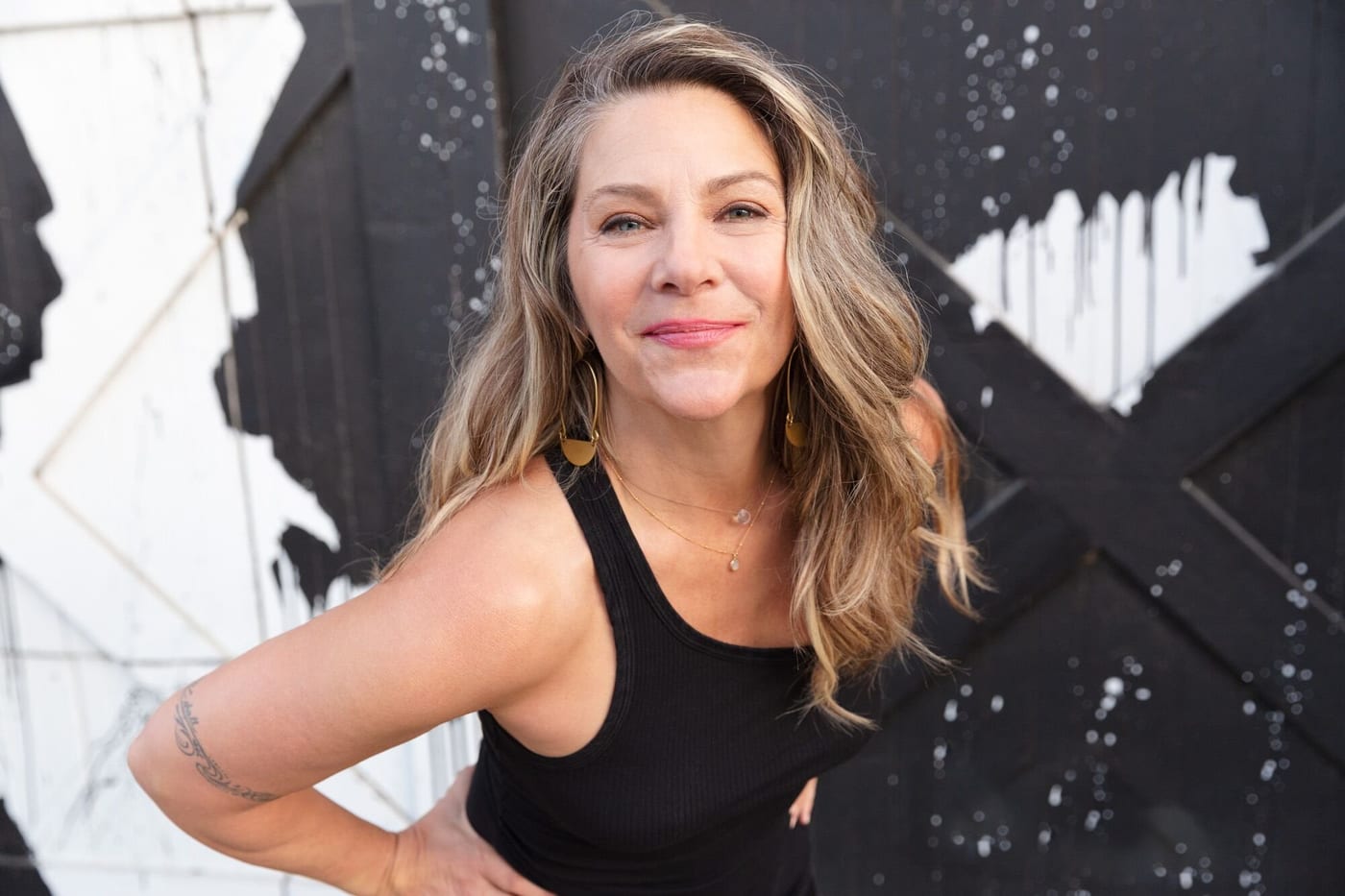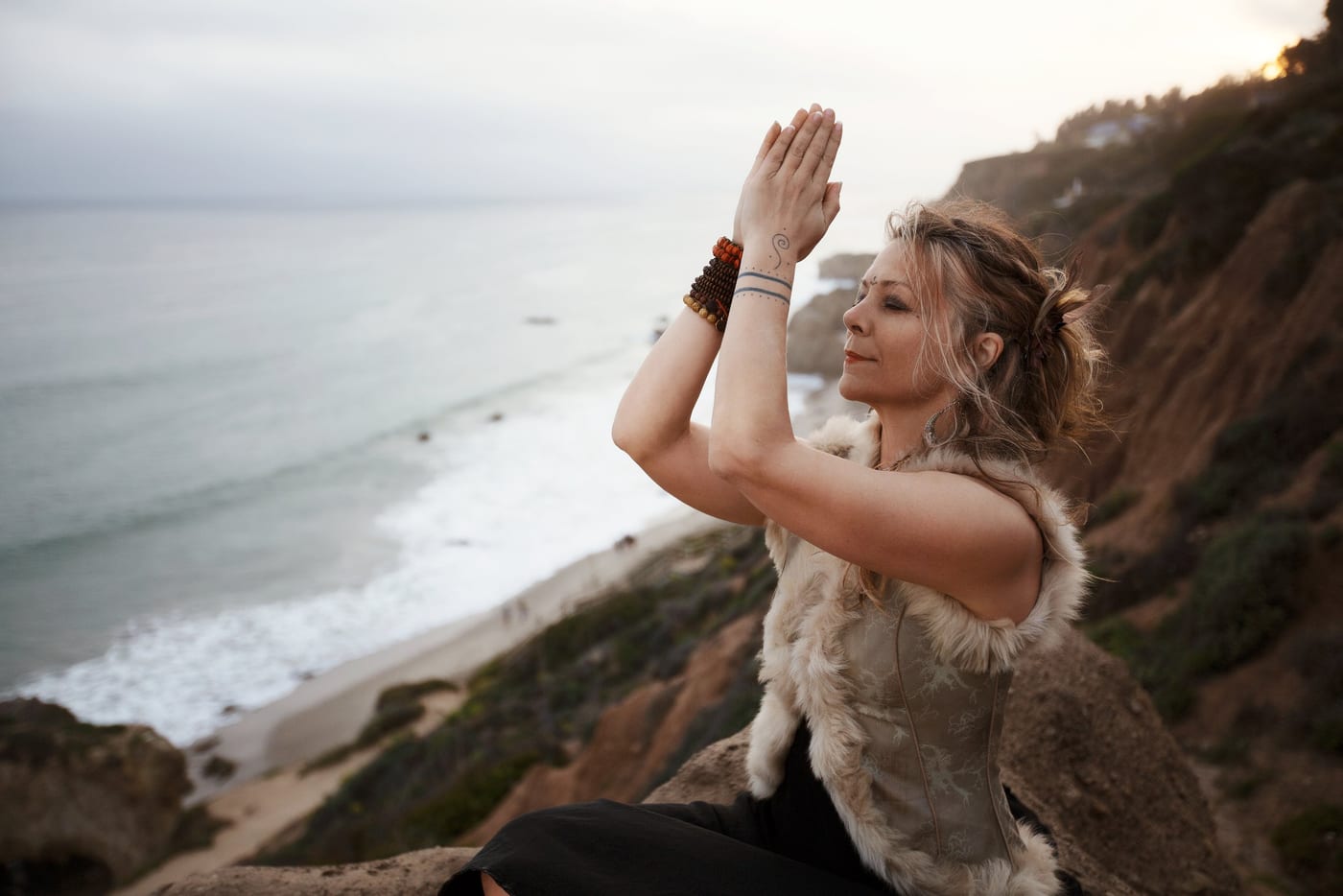

Hole in the Stone arrived on 5 January 2026 as a single with one track, and it opens a run of 2026 releases that includes Open All the Doors (February) and Songspell (March). For listeners who know Suzanne Sterling mainly through chant records, this is a useful marker of where she is now. Her catalogue spans the kirtan collection Kirtan: The Bhakti Yoga of Chanting Mantras (2018), the dub-inflected Dub Mantra Sangha, the ambient Chakra Flow, and the earth-based ritual compilations from the Reclaiming community. The 2026 singles are described as showing her current, more song-forward writing. That makes this release a good window into the present phase of a career that has run more than 25 years across performance, teaching, ritual and activism.
Because it is a single, this is a short document of a moment rather than a full album statement. It is best approached that way.
Her sound is built around the human voice, mantra and rhythm rather than dense orchestration, and her voice is the central instrument. Production exists to support breath and song rather than compete with them. Across her catalogue, pacing leans toward repetition: a phrase returns, a melody settles, and the listener is invited to stay with it instead of waiting for a climax.
I can't offer a detailed account of the arrangement here. The available record does not list instrumentation, personnel or a track-by-track description for this release, so no collaborators or specific instruments are named in this guide. What can be said is that her work generally favors a spare, slow-moving texture, and that she approaches singing as a path to the sacred. Expect a mood of presence and invitation rather than spectacle. If you want fast tempos or layered electronic arrangements, this is not where they will be found.
"Hole in the Stone"
The single has one track, and it carries the title. A title like this suggests an opening, an image of something solid being pierced so that light, air or voice can pass through. That reading is an interpretation, not a statement from the artist, so treat it as a way into the piece rather than a claim about its meaning.
What makes it worth your attention is where it sits. Her own descriptions emphasize finding one's unique voice and using song as a tool for healing and community. A single built around her songwriting gives you that emphasis in compact form. Its shorter length also makes it practical: the available notes suggest that Hole in the Stone and Open All the Doors can work as openings or closings for a session, a practice or a quiet ritual. Preview it on Spotify before using it in a class or ceremony, since no detailed description of the track is on record.
Her work sits primarily within bhakti, the Indian devotional path in which song and the repeated sacred name become a direct route to the divine. Kirtan, the call-and-response chanting she leads, is the most visible expression of that. A second strand runs beside it: more than 25 years with the International Reclaiming Community, co-creating public ritual and training teachers in earth-based spirituality. Her lineage is better read as a set of practices than as a single guru line, and no specific teachers are named in the record.
Hole in the Stone belongs to the song-forward side of this world, closer to devotional songwriting than to strict call-and-response chant. It sits in the wider territory of modern devotional and ritual music, where the line between performance and practice is deliberately thin.
This single will land most for listeners who already value music tied to practice: people who sing in circles, attend kirtans or retreats, or use sound as part of a daily ritual. It also suits someone at a threshold, perhaps starting something new, leaving something behind or wanting to open to a different way of expressing themselves. That fits her emphasis on voice as a tool for growth, though it is a suggestion rather than a documented intent.
It is less suited to listeners who want a polished pop hook, club energy, or a concert arc with clear peaks. Those who are skeptical of devotional or ritual framing may also find the spiritual language central rather than decorative.
Give it a quiet room and headphones, ideally in the evening when the day has settled. Play it once without doing anything else, letting the voice and the pacing set the tempo of your attention. Then play it again and sing along, even quietly, since her work is built on participation rather than spectator listening. If you use ritual or practice in your life, it can serve as an opening or closing for a short sit, a few minutes of breathwork or a candle-lit pause.
From there, newcomers can follow the thread outward: to Kirtan: The Bhakti Yoga of Chanting Mantras for her core chant material, and eventually to a live kirtan or workshop, where the music is meant to be completed by the people in the room.