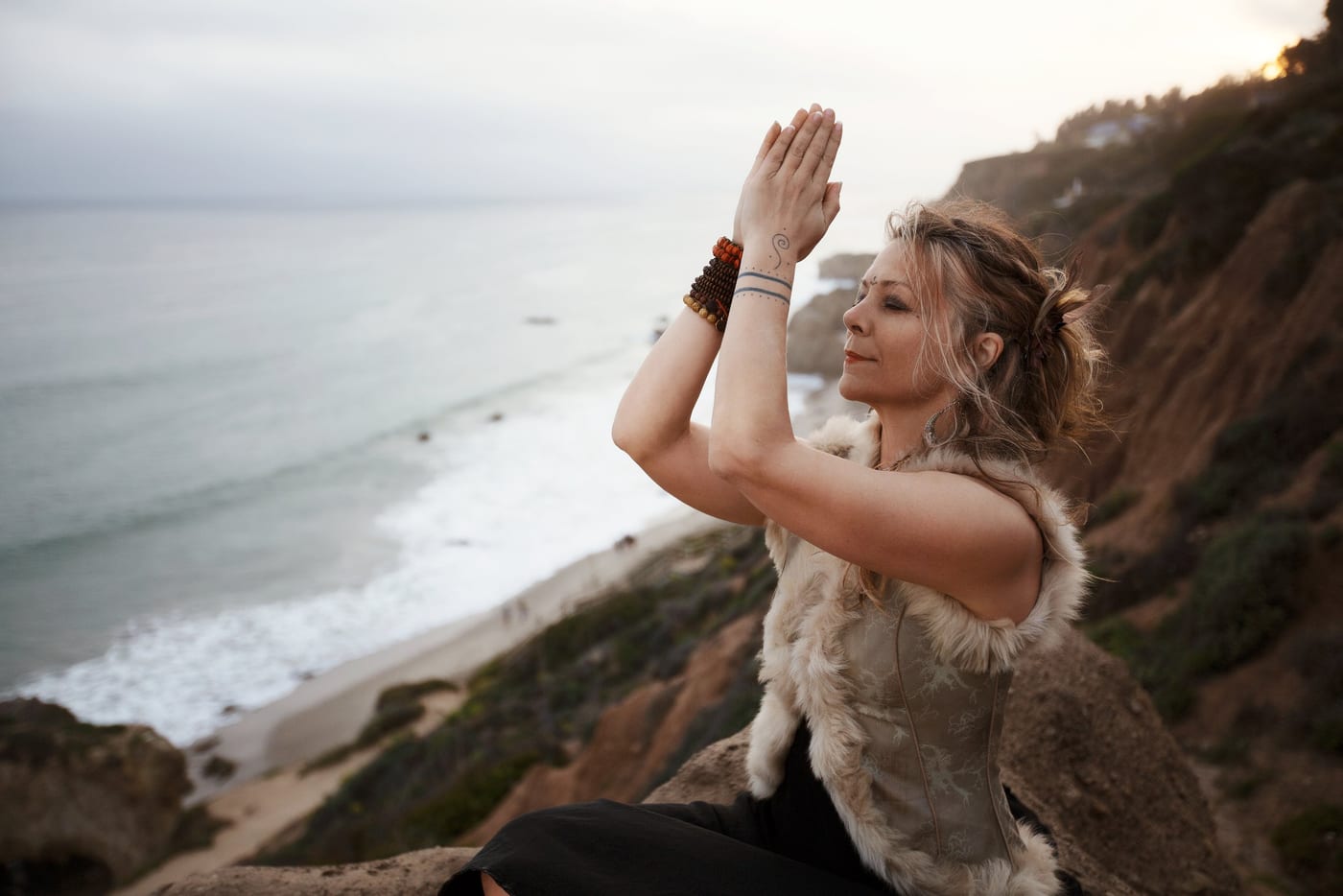

Suzanne Sterling's catalogue begins around 2000 with Bhakti and reaches into 2026 with three new singles. In between, the releases fall into several strands. Early on there are devotional albums, Bhakti and Japa (2002), whose titles name the path of song and the quiet repetition of mantra. Mid-period work leans toward yoga-class and kirtan settings, then the dub-flavored Dub Mantra Sangha. A thread of earth-based ritual compilations from the Reclaiming community runs alongside, and 2024 brought remasters of earlier work. Her bio credits her with five solo albums, while the full listing also holds compilations and singles, so this guide marks each release by what the record shows. Track names are mostly absent from the facts, so where none is known, I point you to the opening of the release.
A 2026 single, released in March, and the newest entry in the catalogue. It belongs to a trio of recent releases that show her current, more song-forward writing. For a newcomer it works as a short, low-commitment doorway into where she is now. It follows Hole in the Stone and Open All the Doors in a quick sequence. Start with the title track, Songspell.

Released as a single in February 2026, this is the middle piece of her recent run. Its title reads like an invitation, and its short length suits it to opening or closing a gathering or a practice. It sits in her latest chapter, where writing leans toward song over long chant. Begin with the title track, Open All the Doors.

The January 2026 single that opened her current run of releases. The title suggests earth and ritual imagery, though the record gives no further detail on its sound. As the first of three new singles, it is where to begin if you want to follow her newest work in order. Play the title track, Hole in the Stone.
A 2025 compilation that draws on community ritual circles. It represents the earth-based side of her work, shaped by more than 25 years with the International Reclaiming Community. It gathers multiple contributors rather than standing as a solo statement, and it suits group ritual and ceremony best. Listeners comfortable with Reclaiming-influenced frames will find the most here. No track list is documented, so begin with track one.
A 2024 compilation built for rest and stillness. It suits savasana or the close of a practice, and its "and Friends" billing points to a wide circle of collaborators. It sits in the Reclaiming-linked strand of her catalogue, on the quiet side. Since no tracks are named in the record, start at the beginning and let it settle.
A 2024 reissue of earlier work, centered on mantra repetition. The title evokes the prayer beads used to count chants. The record does not say who handled the remastering, though the aim of such a reissue is cleaner sound. It is a natural pick for seated meditation and pairs with the Japa remaster. The record names no tracks, so start with the first.
The 2024 return of her 2002 album, pointing to japa, the quiet repetition of a mantra. It suits stillness more than call-and-response singing. It shows how her early devotional work has been brought back for new listeners, and it makes a good companion to the original release. With no track names on record, begin with the opening track.
A 2023 compilation of ritual music from the Reclaiming tradition. It belongs with Wyrd Vibrations from the same year, part of a run of earth-based releases. It gathers several voices and reflects her long involvement co-creating public ritual. Best for listeners at ease with pagan and ritual language. The record lists no tracks, so start at track one.

A single from 2023, and one of the few releases whose title also names a track. The wording suggests a livelier register than her stillness-oriented work, though the record offers no more detail. It sits between the remasters and the 2026 singles as a short, song-forward release. Play the title track, Soul on Fire.

A 2023 compilation whose subtitle looks forward, treating pagan ritual music as something still evolving. It represents the earth-based side of her work and suits group ritual. It is not aimed at listeners who want a purely secular sound. The record names no tracks, so begin with the first and take the album as a whole.

The 2018 remix of the 2015 original. It continues the idea of setting mantra inside dub production, a style uncommon in kirtan circles. It is a good pick if you prefer rhythm and space to quiet repetition. Hear the original first if you can, then use this as a second pass. Start with the opening track.

A 2018 compilation of twenty chant-based tracks, and the most direct entry point to her devotional material. It frames kirtan as bhakti yoga, with song as a route to the divine. Its length gives you a broad survey, and the communal, call-and-response texture is the heart of her practice. No individual track is named in the record, so begin with track one and let it carry you.

The 2015 album that brings mantra into a reggae-style world of echo and space. It stands among the most distinctive titles in her catalogue, where devotional chant meets dub production. It is the best choice for listeners who want groove alongside devotion. Start with the opening track and let the bass and echo set the pace.

A 2014 album that sits close to ambient practice music. It suits yoga and meditation rather than active singing along. In the arc, it belongs to her run of practice-oriented records alongside The Yoga Sessions. A good choice for newcomers who want stillness over call-and-response. With no tracks named on record, begin at track one.

A 2013 compilation framed as music for the journey. It leans toward a secular, ambient feel and suits listeners wary of overt devotional language. As a compilation, it gathers multiple contributors rather than standing as a solo statement. Start with the opening track and treat it as travel music.
A 2013 album designed for the pace of an Ashtanga class. The beats are chilled rather than driving, which makes it a clear choice for movement practice. It shows her working in a practical, studio-friendly mode. Press play from the first track and let it run through a session.

A six-track release from 2013, named for the Sanskrit term for vitality. Its compact shape makes it easy to hear in a single sitting. It sits in the stretch of practice-oriented records of the early 2010s. No track is singled out in the record, so start at track one and follow it through.

A 2012 compilation. Its title echoes her lifelong theme, that your voice is the strongest tool you have. The record offers no further description of its contents. In the arc, it marks the period when her teaching and music were growing together. Start with the first track.
A 2011 album that sits closer to ambient practice music than to chant. It is well suited to yoga and quiet movement, and a gentle starting point for those who want stillness. It marks the start of her practice-music phase, which continues with Chakra Flow. Begin with the opening track.

A 2011 compilation that points to a wide network of collaborating kirtan artists. It places her inside a community rather than alone at the microphone. Check the credits to find her contributions, since she appears among many. Start with the first track.
A 2010 album. The record gives no description of its sound or tracks, so this section stays brief. It sits in the years between her early devotional work and her practice-music period, and it is best approached with an open ear. Begin at track one.

A 2010 album released alongside Yane Yane. The title suggests color and heat, but the record offers nothing more on its content. It belongs to the middle of the arc, when her output was steady. Preview it on Spotify, starting with the opening track.

A 2008 album. The facts include only its title and year, so details are left to your own listening. It sits in the mid-2000s, between Ananda Ma and the 2010 releases. Start with the first track.
A 2007 album whose title pairs goddess and deity imagery. The record gives no track list or description. It was released the same year as Ananda Ma, and the two make good companions. Begin with the opening track.

A 2007 album. The title evokes blissful motherhood, though the record says nothing more about its contents. It belongs to the devotional stretch that began with Bhakti and Japa. Preview it from the first track.

A 2006 compilation of songs and chants from the Reclaiming community. It is the earliest entry in the earth-based strand that later grew into Sacred Well and Wyrd Vibrations. It suits listeners at ease with pagan ritual frames. Begin with the first track.

A 2004 compilation. The record includes no description or track list. It falls between Japa and the mid-2000s releases and shows her appearing on collected work early. Start at track one.
The 2002 original of the mantra-repetition album, named for the quiet repetition of a mantra. It is her second documented release, and the 2024 remaster later brought it back. Hearing both shows how the sound has been refreshed. The record names no tracks, so begin at track one.

Her first documented release, from around 2000, named for the Indian devotional path in which song becomes a direct route to the divine. It is where the arc starts, and the title states the foundation of her kirtan and devotional work. The record gives no further detail on its sound. Begin with the opening track and hear the starting point.
Devotional: Kirtan: The Bhakti Yoga of Chanting Mantras. Twenty chant-based tracks that show the center of her devotional practice.
Contemplative: Japa 2024 Remaster. Quiet mantra repetition with cleaner sound, made for seated stillness.
Energetic: Dub Mantra Sangha. Mantra set inside dub echo and rhythm, the liveliest answer in the catalogue.
Healing: Deep Repose: Meditation Music from Reclaiming and Friends. Built for rest and stillness, good for the end of a practice.