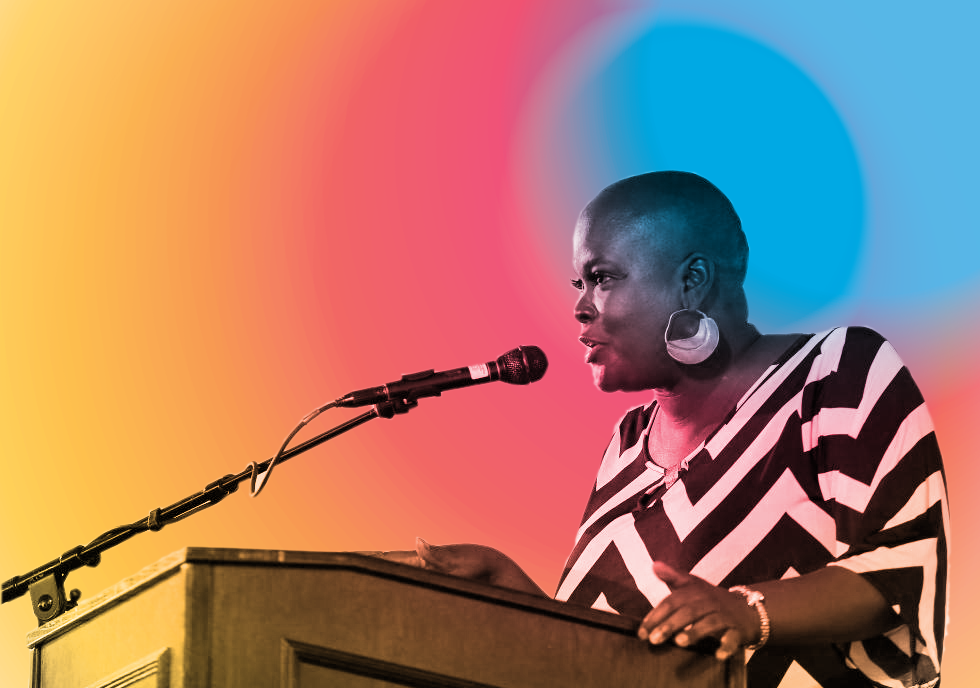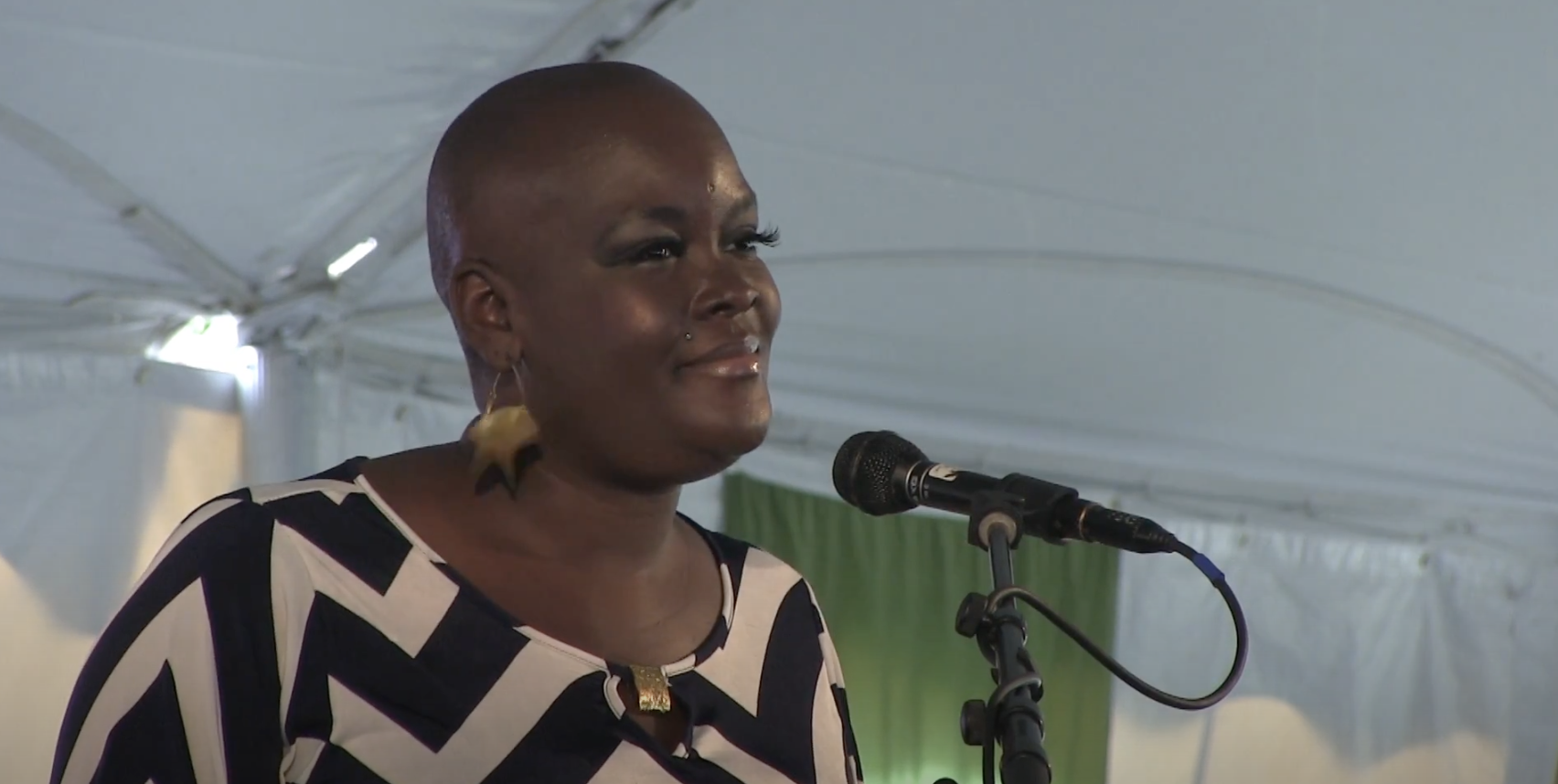

Sonya Renee Taylor's trajectory from slam poetry champion to architect of a global body liberation movement represents one of the more distinctive evolutions in contemporary activist work. Born in Columbus, Ohio, Taylor came of age in the spoken word poetry circuits of the early 2000s—a time when performance poetry served as both art form and political organizing tool for a generation grappling with identity, justice, and visibility. Her 2003 win at the National Poetry Slam individual championship marked her as a formidable voice, one that drew from the cadences of Black church oratory and the confrontational energy of slam's competitive stages. But it was what came after—the pivot from individual acclaim to collective organizing—that would define her most significant contribution.
The turning point arrived in 2011, not on a stage but in the intimate space of a Facebook thread. Taylor and two friends began discussing body shame and its entanglement with systems of oppression. What started as a personal exchange quickly revealed itself as something larger: a framework for understanding how body-based oppression operates as a mechanism of social control, inseparable from white supremacy, ableism, and capitalism. That conversation became The Body Is Not An Apology, a name that functions as both declaration and invitation.
Within three years, the project had transformed from a digital dialogue into a full-fledged media platform—a digital magazine publishing essays, interviews, and resources centered on body positivity, disability justice, and anti-oppression frameworks. This wasn't simply about feeling better about one's appearance; Taylor was articulating something more foundational. She was mapping how shame gets weaponized, how it moves through bodies marked as deviant by virtue of race, size, disability, gender, or sexuality.
In 2018, Taylor distilled these ideas into The Body Is Not An Apology: The Power of Radical Self-Love, published by Berrett-Koehler. The book operates at the intersection of memoir, political theory, and practical guide, offering readers both analysis and action steps. Its central thesis—that radical self-love is not merely personal wellness work but a prerequisite for collective liberation—has resonated across borders and disciplines. Translated into multiple languages, the book has been adopted as a teaching text in university classrooms and activist training programs internationally.
What distinguishes Taylor's framework is its grounding in intersectionality. She refuses to separate body liberation from the broader struggle against systemic oppression, arguing instead that they are fundamentally linked. The shame that tells a fat person they are unworthy, a disabled person they are broken, or a Black person they are dangerous serves the same hierarchies that organize our political and economic systems. To dismantle one, Taylor insists, requires dismantling all.
Taylor's performance work predates The Body Is Not An Apology but remains integral to understanding her approach. Her poetry addresses sexual violence, anti-Blackness, queer identity, and mental health with a directness that can feel both confronting and cathartic. Her chapbook A Little Truth on Your Shirt showcases this sensibility, as does her presence in numerous journals and anthologies focused on feminist and queer perspectives.
The slam poetry background matters here. It taught Taylor to read a room, to build toward crescendo, to understand that political education can happen through the body—through breath, rhythm, repetition. Her workshops and speaking engagements carry this performative quality, blending the pedagogical with the experiential. She doesn't just explain concepts; she creates conditions for people to feel them, to recognize their own relationships to shame and liberation.
The Body Is Not An Apology has evolved from magazine to education company, developing curricula and resources for organizations seeking to integrate body liberation principles into their practice. This institutionalization represents both opportunity and challenge—how to maintain radical roots while building sustainable infrastructure, how to reach broader audiences without diluting the message. Taylor has navigated this tension by keeping intersectionality at the center, refusing simplistic or depoliticized versions of body positivity.
Her current work continues to span multiple modes: writing, speaking, facilitating workshops, and stewarding the digital platform she founded. She occupies a particular niche in the landscape of contemporary social justice work—someone who can translate theoretical frameworks into accessible language without sacrificing complexity, who can hold space for both individual healing and systemic analysis.
Taylor's audience extends from college students encountering intersectional feminism for the first time to seasoned organizers seeking frameworks that center embodiment. She matters because she's articulated something many people feel but struggle to name: that the violence of oppression lives in our bodies, and so too must the work of liberation. In an era of performative allyship and commodified wellness, Taylor's insistence on the political nature of body shame—and body liberation—offers necessary rigor.
Her legacy is still being written, but its contours are visible: a framework adopted across movements, a vocabulary that's entered common use, and a generation of activists who understand that justice work includes—must include—the relationship we have with our own flesh. In this, Sonya Renee Taylor has done what the best poet-activists do: she's given us new language for old wounds, and in doing so, opened pathways toward collective healing.