
don Miguel Ruiz was born in Tijuana, Baja California, Mexico, on August 27, 1952, the youngest of eleven brothers and two sisters. His family was very poor, but he received a good education. He attended school in Tijuana and earned his baccalaureate in Mexico City, then went on to study medicine at the National Autonomous University of Mexico.
That path led to surgery. He became a surgeon and began practicing neurosurgery in Tijuana alongside his older brother, Carlos Ruiz. It was a respected profession and, by any ordinary measure, a settled one. But the details of his later work suggest that the questions that mattered most to him were not only the ones that medicine could answer.
In 1986, he left medicine and moved to San Diego, California. The reasons he gives are two, and they fit together. He describes being born from a lineage of shamans and feeling compelled to share the philosophy he inherited from his ancestors. And as a scientist, he wanted answers to his own questions about the human mind.
His mother, Sarita Vasquez, had tutored him in the Toltec tradition, and that instruction continued until he was inspired to begin teaching on his own. The move was less a rejection of his training than a change of instrument. The habits of a clinician, attentive to how a mind actually works, carried over into the way he framed a spiritual inheritance.
Since then, he has worked with thousands of students. He has led spiritual journeys to the pyramids of Teotihuacan and to sacred sites around the world, grounding his teaching in particular places as well as in ideas.
What distinguishes don Miguel is a method more than a mystique. In his early years of teaching, he created tools to help students quiet their minds. That work became The Four Agreements, his first book, published in 1997, which offers practical steps toward long-term personal transformation.
The appeal lies in compression. A shamanic inheritance, which might in other hands arrive as ritual or elaborate cosmology, is rendered as short, named principles that a reader can test in daily life. The prose is plain and the emphasis falls on habits of attention. Transformation, in this account, is a long process rather than an instant event.
It is worth being clear about what the tradition is. "Toltec" in his usage refers to a spiritual lineage with shamanic roots, not a strictly historical account of a single ancient civilization. Readers seeking archaeology or footnoted scholarship will not find it here, and those looking for detailed meditation technique or ritual instruction may find the books lighter than expected. They are written for general readers, and their authority rests on family lineage and decades of teaching rather than academic citation.
The center of his output is the Toltec Wisdom Series: The Four Agreements, The Mastery of Love, The Voice of Knowledge, The Four Agreements Companion Book, The Circle of Fire, and The Fifth Agreement. Together, his Toltec Wisdom books have sold over 16.5 million copies and been published in 52 languages. He has published more than a dozen books in all.
Collaboration runs through the catalog. Janet Mills, founder of Amber-Allen Publishing, is credited as co-author of six Toltec Wisdom Series books and has worked with him since 1997. The Fifth Agreement was written with his son, don Jose Ruiz. Barbara Emrys, a longtime apprentice since 2001, has co-authored multiple books, including the Mystery School series. His eldest son, don Miguel Ruiz Jr., apprenticed at age 14 and is an author and Toltec teacher in his own right.
Another strand of the work is Toltec Dreaming, an intensive course for select apprentices that he began in 2000. Its monthly workshops ran for over a decade and still inform his lectures, online classes, and writing. That history matters: the books grow out of years of in-person, repeated teaching rather than out of a single act of authorship.
For newcomers, the sensible order is The Four Agreements first, then the Companion Book for slower, more deliberate work, followed by The Mastery of Love and The Fifth Agreement once the core vocabulary is familiar.
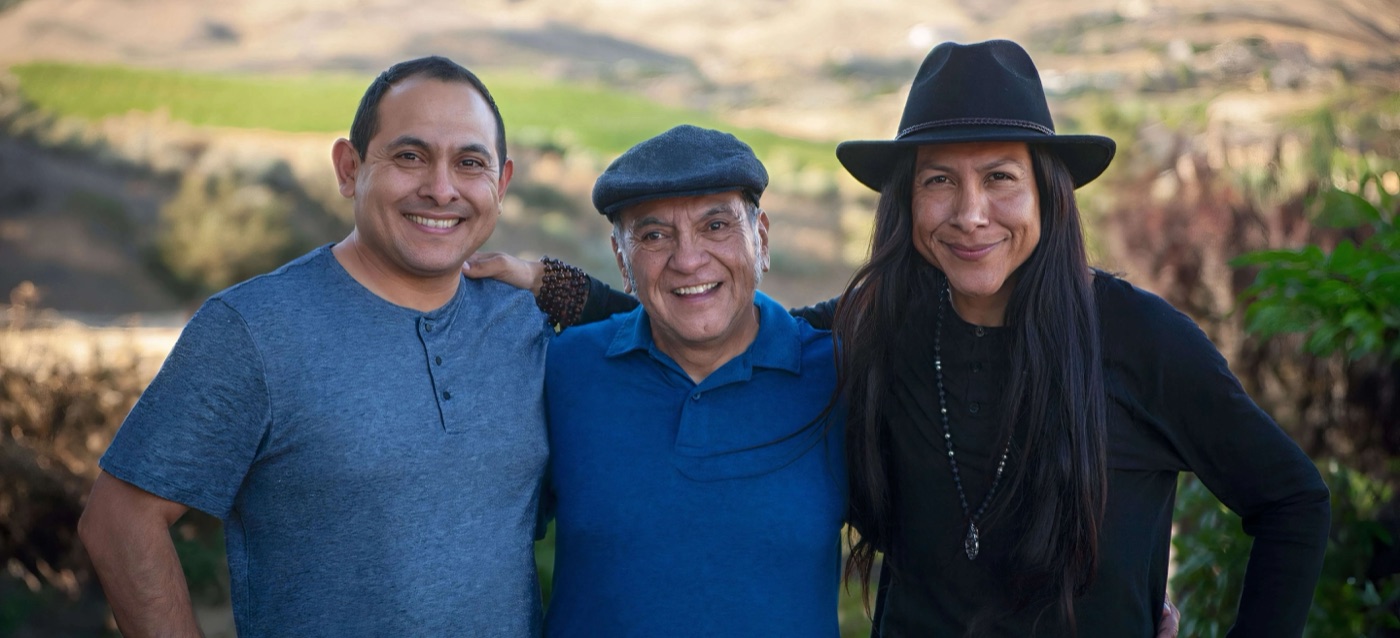
Today he teaches alongside his family of Toltec teachers, including don Jose Ruiz. His official site, miguelruiz.com, and his YouTube channel are the main places to follow new titles, talks, and events.
The listed calendar remains rooted in place. Teotihuacan, Mexico, anchors the near term, with events on October 22, 2026 and December 28, 2026, including sessions at The Dreaming House and the Teotihuacan Archaeological Site. Further dates include November 13, 2026 at Whispering Hills in Boone, USA, and February 21, 2027 at the Paradise Island Ashram in Nassau, Bahamas. As with any retreat schedule, dates and venues can shift, so confirming on the official site is wise.
The format emphasizes experiential work at sacred places over stage performance. The tone is restrained: he explains the agreements in plain language and asks students to test them in their own lives.
The reach of the work is difficult to overstate. A book that began as practical tools for quieting the mind now circulates in 52 languages. One telling sign of its range is a U.S. Air Force challenge coin engraved with The Four Agreements, which suggests an audience well beyond conventional spiritual readers.
Formal recognition has come mostly from regional, cultural, and academic institutions. He received the 2023 Latino Spirit Award for Achievement in Literature from The California Latino Caucus, was awarded an honorary doctorate from Universidad Instituto Americano, and was inducted into the Tijuana Hall of Fame in 2017. His standing rests less on mainstream literary prizes than on sustained readership.
Why does he matter? Partly because he offers an unusual bridge. A trained neurosurgeon who turned to a family lineage of shamans, he speaks to readers from scientific backgrounds as readily as to those drawn to indigenous wisdom. His distinction is method rather than mysticism: ancestral teaching reduced to habits of attention that a reader might change in a week, and then spend years practicing. For a tradition often presented as mysterious, that clarity may be his most lasting contribution.