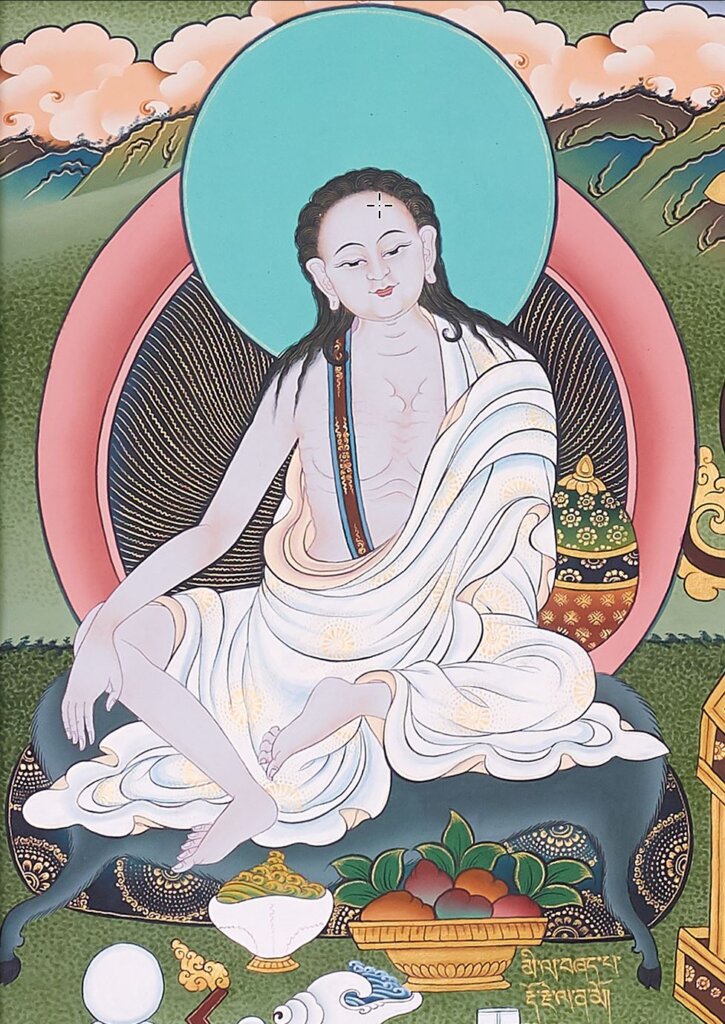
Milarepa's poignant assertion, "Practice the dharma if you would be free," encapsulates a profound truth about the nature of liberation. In essence, he invites us to engage deeply with the teachings and practices that lead to spiritual freedom. This call to action resonates with anyone seeking a deeper understanding of life, urging us to recognize that true freedom is not merely the absence of constraints but the active pursuit of wisdom and compassion through the dharma.
In a world often characterized by distraction and superficiality, Milarepa's words serve as a reminder of the transformative power of dedicated practice. The dharma, which encompasses the teachings of the Buddha and the path to enlightenment, is not an abstract concept but a lived experience. To practice the dharma is to engage with the world in a way that fosters inner peace and clarity, ultimately leading us toward the liberation we seek. This journey is both personal and universal, inviting us to explore the depths of our own being while connecting with the shared human experience.
The image / the metaphor
At first glance, the quote presents a straightforward directive: to practice the dharma. The verb "practice" implies action, commitment, and a willingness to engage with the teachings in a tangible way. The term "dharma" evokes a rich tapestry of meaning, encompassing not only the teachings of the Buddha but also the natural law and the inherent truth of existence. Together, these words create a vivid image of a path that requires both effort and intention, suggesting that freedom is not a passive state but an active pursuit.
In the speaker's tradition
Milarepa, a revered figure in Tibetan Buddhism, embodies the essence of the dharma through his life and teachings. His journey from a life of suffering and vengeance to one of profound compassion and enlightenment illustrates the transformative power of dedicated practice. Central to his teachings is the concept of "kenosis," or self-emptying, which aligns with the idea that true freedom arises when we let go of our ego-driven desires and attachments. This process of self-transcendence is echoed in the Buddhist notion of "sunyata," or emptiness, which invites us to recognize the interdependent nature of all things and the illusion of a separate self.
In the context of Milarepa's life, we can draw parallels to the teachings found in the "Songs of Milarepa," where he articulates the importance of meditation, ethical conduct, and the cultivation of wisdom. For instance, in one of his songs, he emphasizes the need to overcome ignorance through diligent practice, reinforcing the idea that liberation is not a gift bestowed upon us but a state we must actively cultivate. This echoes the teachings of the Buddha, who emphasized the Four Noble Truths and the Eightfold Path as a framework for understanding suffering and achieving enlightenment.
Living the teaching
Consider a modern scenario where the teaching of practicing the dharma can be applied: a busy professional grappling with stress and burnout. In this context, the call to "practice the dharma" might manifest as a commitment to mindfulness meditation, allowing the individual to cultivate a sense of presence and awareness amidst the chaos of daily life. By integrating moments of stillness and reflection into their routine, they begin to experience a shift in perspective, recognizing that true freedom lies not in external circumstances but in their ability to respond to life's challenges with equanimity and grace.
In another application, imagine a relationship strained by misunderstandings and unspoken grievances. Here, practicing the dharma could involve open communication and the willingness to listen deeply to one another. By embodying the principles of compassion and understanding, both partners can navigate their differences with a sense of shared humanity, ultimately fostering a deeper connection. This practice of relational dharma not only cultivates freedom within the relationship but also serves as a microcosm of the broader journey toward liberation.
A reflection
As we contemplate Milarepa's profound invitation to "practice the dharma if you would be free," we are called to reflect on our own lives and the ways we engage with the teachings that resonate with us. What practices do we embrace that lead us toward greater freedom and understanding? In this moment of reflection, consider this question: How can you deepen your commitment to the dharma in your daily life, and what steps might you take to cultivate a sense of liberation within yourself?
