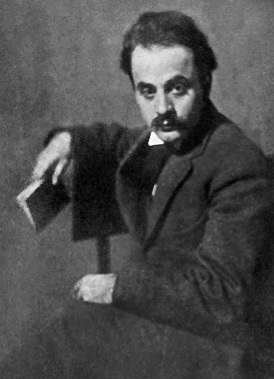
Kahlil Gibran's poignant assertion, "We live only to discover beauty. All else is a form of waiting," invites us to reflect on the essence of our existence. In this statement, Gibran encapsulates a profound truth about the human experience: our lives are fundamentally oriented toward the pursuit of beauty, whether in nature, art, relationships, or moments of transcendence. The implication is clear: if we are not actively seeking beauty, we are merely biding our time, caught in a cycle of anticipation rather than engagement. This perspective challenges us to reconsider how we define purpose and fulfillment in our daily lives.
Delving deeper into Gibran's words, we find a call to awaken our senses and embrace the world around us. Beauty, in this context, is not merely an aesthetic quality; it is a spiritual experience that connects us to the divine and to one another. The notion of waiting suggests a passive existence, one that lacks the vibrancy and richness that comes from actively seeking and appreciating beauty. Gibran's invitation is to cultivate an awareness that transforms our perception of life from a series of mundane moments into a tapestry woven with the threads of beauty and wonder.
The image / the metaphor
The imagery in Gibran's quote evokes a vivid sense of movement and discovery. The verb "discover" suggests an active engagement with the world, a journey that requires both intention and openness. In contrast, the phrase "a form of waiting" conjures feelings of stagnation and unfulfilled potential. This juxtaposition creates a dynamic tension between the vibrancy of life lived in pursuit of beauty and the inertia of a life spent merely waiting for something to happen. The felt sense of this quote resonates deeply, urging us to recognize the beauty that surrounds us and to seek it out with fervor.
As we explore the metaphor further, we can see that beauty serves as both a destination and a guiding star on our journey. It is not simply an endpoint to be reached but a continuous process of exploration and appreciation. Gibran's words remind us that beauty is often found in the most unexpected places, waiting to be uncovered by those willing to look beyond the surface. This metaphor invites us to engage with life in a way that transcends mere existence, encouraging us to cultivate a mindset that seeks beauty in every experience, interaction, and moment.
In the speaker's tradition
Kahlil Gibran's insights are deeply rooted in the Christian mystical tradition, which emphasizes the interconnectedness of all creation and the divine presence within it. Concepts such as kenosis, the self-emptying of one's will to make space for divine love, resonate with Gibran's call to seek beauty. In this light, the pursuit of beauty becomes an act of surrender, allowing us to transcend our ego-driven desires and align ourselves with a higher purpose. This alignment is akin to the practice of bhakti, where devotion and love for the divine manifest through the appreciation of beauty in the world.
Moreover, Gibran's perspective can be likened to the teachings found in the works of other mystics, such as Meister Eckhart, who spoke of the divine spark within all creation. In his writings, Eckhart emphasizes the importance of recognizing and nurturing this spark, which can be seen as a form of beauty that calls us to deeper awareness. Both Gibran and Eckhart invite us to engage with the world in a way that reveals the divine presence, suggesting that the discovery of beauty is not merely a personal endeavor but a spiritual practice that connects us to the greater whole.
Living the teaching
Consider a modern scenario where Gibran's teaching might resonate: a busy professional caught in the grind of daily responsibilities. Each day may feel like a series of tasks to complete, leaving little room for the appreciation of beauty. However, by consciously shifting focus to moments of beauty—whether in the laughter of a colleague, the colors of a sunset, or the joy of a shared meal—this individual can transform their experience from one of waiting for the weekend to one of actively engaging with the beauty present in everyday life. This shift not only enhances personal fulfillment but also fosters deeper connections with others.
In a different context, imagine a relationship that has grown stale over time. Partners may find themselves waiting for the spark to return, yet Gibran's wisdom suggests that the key lies in actively seeking beauty within one another. By taking the time to appreciate the small gestures, shared memories, and unique qualities that initially drew them together, they can reignite their connection. This practice of recognizing and celebrating beauty in their relationship can transform their dynamic, moving them from a state of waiting to one of vibrant engagement and mutual appreciation.
A reflection
As we contemplate Gibran's profound statement, we are invited to ask ourselves: "In what ways am I waiting for beauty to reveal itself in my life?" This question encourages us to examine our own experiences and recognize the moments of beauty that may be overlooked in our daily routines. By fostering a mindset that actively seeks beauty, we can transform our waiting into a journey of discovery, enriching our lives and deepening our connections with the world around us.
