BrightStar

Sfoglia tutti i Events

Scopri incontri consapevoli

events

Yoga
Meditation
Breathwork
Qigong
Tai Chi
Sacred Music
World Music
Medicine Music
Sound Healing
Ecstatic Dance
Destinazioni popolari
BaliSedonaLos AngelesCosta RicaNew YorkSan FranciscoAustinMiamiJoshua TreeTulum
Vedi tutte le categorieVedi tutte le destinazioni

Esplora tutte le funzionalità

Strumenti potenti per far crescere i tuoi eventi

Funzionalità della piattaforma

Prezzi dinamici intelligenti
Categorie di biglietti
Posti assegnati
Recupero carrelli abbandonati
Recupero visitatori
Donazioni e prezzi variabili
Sistema affiliati
Scanner biglietti
Codici sconto
Domande personalizzate
Condivisione biglietti
Upsell e componenti aggiuntivi
Analisi e report
Sequenze email
Lista d'attesa / Notifica / Promemoria
Persone e Luoghi
Artists & TeachersEvent OrganizersVenues & StudiosKnowledge BaseGlossaryInspiration
Vedi tutte le funzionalitàChi siamo
PrezziBlog
Language
Saved events
Sfoglia tutti gli eventi

events

YogaMeditationBreathworkQigongTai ChiSacred MusicWorld MusicMedicine Music

Destinazioni popolari

BaliSedonaLos AngelesCosta RicaNew YorkSan Francisco

Persone e Luoghi

Artists & TeachersEvent OrganizersVenues & StudiosKnowledge BaseGlossaryInspiration

Funzionalità della piattaforma

Prezzi dinamici intelligentiCategorie di bigliettiPosti assegnatiRecupero carrelli abbandonatiRecupero visitatoriDonazioni e prezzi variabiliSistema affiliatiScanner bigliettiCodici scontoDomande personalizzateCondivisione bigliettiUpsell e componenti aggiuntiviAnalisi e reportSequenze emailLista d'attesa / Notifica / Promemoria
Vedi tutte le funzionalitàChi siamo
PrezziBlog
AccediRicercatoriCreatori
  • Sfoglia tutti i Eventi
  • Per i ricercatori
  • Yoga
  • Meditazione
  • Breathwork
  • Qigong
  • Tai chi
  • Musica sacra
  • World music
  • Musica medicina
  • Sound healing
  • Danza estatica
  • Ritiri
  • Workshop
  • Tutte le categorie →
  • Bali
  • Sedona
  • Los Angeles
  • Costa Rica
  • Tulum
  • Byron Bay
  • San Francisco
  • Austin
  • New York
  • San Diego
  • Denver
  • Seattle
  • Portland
  • Miami
  • Tutte le città →
  • Join the Movement
  • Why we list
  • Sell Globally
  • Per i creatori
  • Per team
  • Per gli scrittori
  • Per gli insegnanti
  • Per gli artisti kirtan
  • Per gli studi
  • Per i festival
  • Per i centri ritiro
  • Per le no-profit
  • Ambasciatore del brand
  • Case study
  • Biglietteria gratuita
  • Elevate
  • Amplify
  • Rete di 500K+ acquirenti
  • Recupero carrelli abbandonati
  • Prezzi dinamici intelligenti
  • Categorie di biglietti
  • Eventi ricorrenti
  • Posti assegnati
  • Sistema affiliati
  • Lista d'attesa / Notifica
  • Scanner biglietti
  • Widget incorporabile
  • Distribuzione eventi
  • Centro messaggi
  • Integrazioni
  • Report
  • Tutte le funzionalità →
  • Chi siamo
  • L’ecosistema
  • Blog
  • Glossario
  • Ispirazione
  • Centro assistenza
  • Contatti
  • Documentazione API
  • Risorse del brand
  • Carriere
  • Stampa
  • Termini di servizio
  • Informativa sulla privacy

Eventi

  • Sfoglia tutti i Eventi
  • Per i ricercatori
  • Yoga
  • Meditazione
  • Breathwork
  • Qigong
  • Tai chi
  • Musica sacra
  • World music
  • Musica medicina
  • Sound healing
  • Danza estatica
  • Ritiri
  • Workshop
  • Tutte le categorie →

Destinazioni

  • Bali
  • Sedona
  • Los Angeles
  • Costa Rica
  • Tulum
  • Byron Bay
  • San Francisco
  • Austin
  • New York
  • San Diego
  • Denver
  • Seattle
  • Portland
  • Miami
  • Tutte le città →

Per i creatori

  • Join the Movement
  • Why we list
  • Sell Globally
  • Per i creatori
  • Per team
  • Per gli scrittori
  • Per gli insegnanti
  • Per gli artisti kirtan
  • Per gli studi
  • Per i festival
  • Per i centri ritiro
  • Per le no-profit
  • Ambasciatore del brand
  • Case study
  • Biglietteria gratuita
  • Elevate
  • Amplify

Funzionalità

  • Rete di 500K+ acquirenti
  • Recupero carrelli abbandonati
  • Prezzi dinamici intelligenti
  • Categorie di biglietti
  • Eventi ricorrenti
  • Posti assegnati
  • Sistema affiliati
  • Lista d'attesa / Notifica
  • Scanner biglietti
  • Widget incorporabile
  • Distribuzione eventi
  • Centro messaggi
  • Integrazioni
  • Report
  • Tutte le funzionalità →

Azienda

  • Chi siamo
  • L’ecosistema
  • Blog
  • Glossario
  • Ispirazione
  • Centro assistenza
  • Contatti
  • Documentazione API
  • Risorse del brand
  • Carriere
  • Stampa
  • Termini di servizio
  • Informativa sulla privacy
BrightStar
© 2026 BrightStar. Tutti i diritti riservati.
Watch

Jaya Ganesh: Kirtan's Invocation of the Obstacle Remover

Girish
Girish
Dec 26, 2019
7 min di lettura

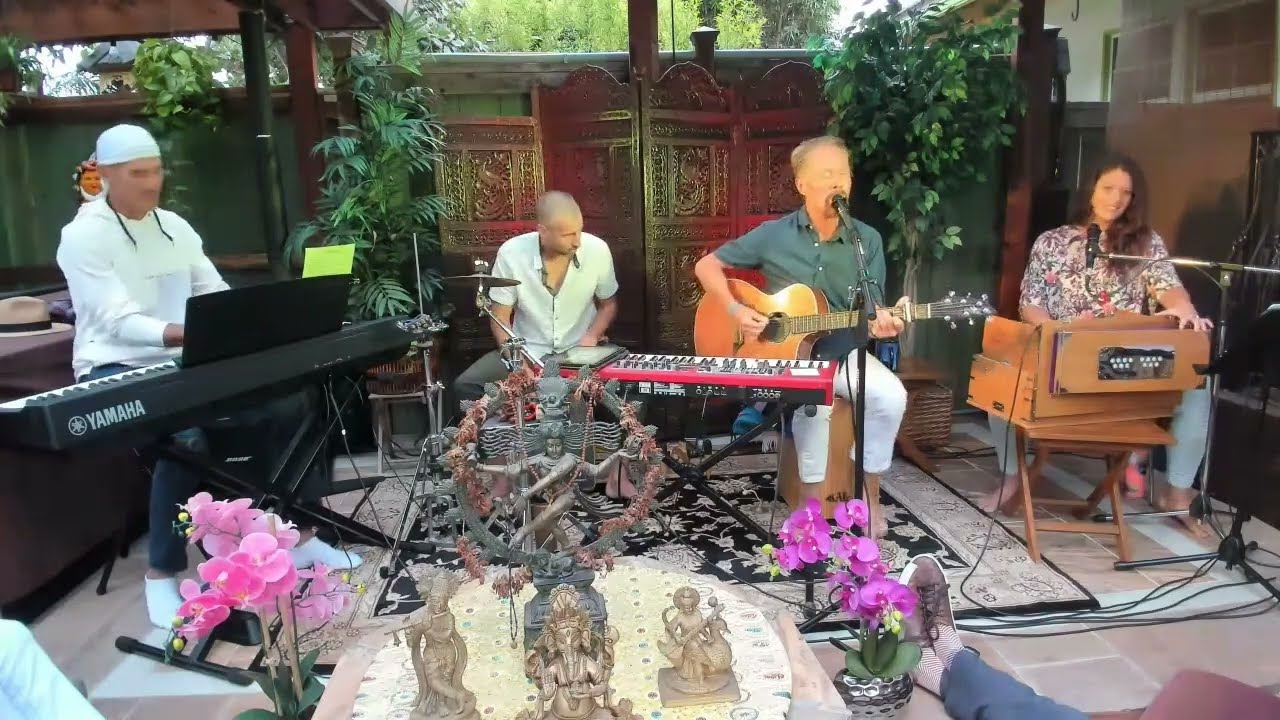
Somewhere in the opening moments of a kirtan session—whether in a yoga studio in Portland, a temple in Mumbai, or a living room anywhere in between—a singer often begins with the same invocation: Jaya Ganesh. The call goes out, the voices of practitioners join in response, and something shifts. The space opens. The practice begins. This is the power of a mantra that has worked its way into the heart of devotional music practice across the modern world, remaining as vital to contemporary spiritual seekers as it was to temple-goers centuries ago.

Lettura · 7 sezioni

What Is Jaya Ganesh?

At its root, Jaya Ganesh is a Sanskrit invocation meaning "Victory to Ganesha" or "Hail to Ganesha." In the context of mantra practice, it functions as both a prayer and a vibrational tool. The mantra does not require the listener to believe in Ganesha as a literal deity, though many practitioners do; rather, it invites engagement with what Ganesha represents in Hindu and yogic philosophy: the remover of obstacles, the clearer of the path, the guardian who stands at every threshold.

Kirtan—the practice of call-and-response chanting of Sanskrit mantras—draws Jaya Ganesh into daily spiritual life. Unlike silent meditation, kirtan is relational and communal. The singer or group leader begins, holding a melody; the participants respond, creating a vocal dialogue that builds in momentum and depth. Jaya Ganesh, as a short and direct phrase, works perfectly within this structure. It is easy to learn, easy to repeat, and becomes easier to feel the longer it is sung.

Who Is Ganesha in Hindu and Yogic Tradition?

Ganesha occupies a unique place in the Hindu pantheon. Unlike gods associated with specific domains or cosmic functions, Ganesha is the remover of obstacles—the deity invoked before all other rituals, prayers, and undertakings. Traditional Hindu practice begins with Ganesha. To proceed without his blessing is considered inauspicious.

Iconographically, Ganesha is recognized by his elephant head, though the tradition offers multiple origin stories for this form. Some accounts describe a deity created with an elephant's head by Parvati to guard her threshold; others speak of transformation and blessing encoded in the form itself. The elephant—at once powerful and gentle, strong and sensitive—carries symbolic weight: it represents both the strength to overcome obstacles and the wisdom to navigate complexity with grace.

In yogic philosophy, particularly within tantra, Ganesha holds an even more foundational position. He is associated with the muladhara chakra, the root energy center at the base of the spine from which all spiritual ascent begins. He is also linked to the primordial sound Om—the original vibration from which all mantras and creation itself are said to emerge. This placement makes him not merely a deity of convenience, but a guardian of the threshold between the material and the spiritual, between the individual self and the universal consciousness.

The Architecture of Jaya Ganesh in Kirtan Practice

When Jaya Ganesh is sung in a kirtan session, the mantra functions on multiple levels simultaneously. On the surface level, it is a greeting, a nod of respect, an invocation: "I acknowledge the remover of obstacles and ask for his presence in this practice." Beneath that, the repetition of the syllables—JA-YA GA-NESH—creates a rhythmic pattern that settles the nervous system and focuses the mind. The melody, typically simple and memorable, acts as a container for attention, holding consciousness in the present moment.

The sustained repetition of a mantra has been shown to calm the amygdala, the brain's threat-detection center, and activate areas associated with self-referential processing and sense of safety. Spiritually, practitioners report that the vibration of the mantra—felt in the body and the subtle energy system—creates a genuine sense of clearing and opening. Whether one interprets this as psychological, energetic, or divine remains secondary to the lived experience: the path feels clearer after Jaya Ganesh is sung.

Traditionally, Jaya Ganesh serves as the opening chant of a kirtan session for precisely this reason. It removes the blockages—both internal (doubt, resistance, scattered attention) and external (the noise and busyness of the world outside the practice space)—that might otherwise prevent deeper work. Once Ganesha has cleared the way, other mantras can take root more fully.

The Deeper Layers of Sound and Meaning

In mantra practice, every syllable carries meaning, and every level of meaning matters. Jaya, from the Sanskrit root meaning "victory" or "triumph," suggests both the external conquest of obstacles and the internal victory of consciousness over limitation. It is not passive acceptance; it is active overcoming.

Ganesh carries within it multiple meanings: "Lord of the Ganas" (the celestial beings who serve Shiva), "the intelligent one," and "the remover." Each meaning layers onto the others, creating a richness of interpretation that allows the mantra to work on multiple levels of understanding simultaneously. The person just beginning their practice might experience Jaya Ganesh as a simple invocation to divine help. The experienced practitioner might recognize it as an affirmation of their own capacity to move through obstacles with wisdom and grace. Both are valid; both are held within the mantra.

Jaya Ganesh in the Modern Kirtan Revival

The resurgence of kirtan as a spiritual practice in the West over the past several decades has drawn many practitioners back to foundational mantras like Jaya Ganesh. While kirtan has deep roots in South Asian devotional traditions stretching back centuries, its presence in contemporary spiritual life—in yoga studios, temples, concert venues, and living rooms worldwide—represents a genuine transmission of practice across cultures.

Modern kirtan musicians and teachers have preserved the essential function of Jaya Ganesh while adapting the musical and social contexts of its delivery. Recordings, live performances, and online classes have made the chant accessible to seekers who might never enter a traditional Hindu temple. Yet the mantra's power remains unchanged: it opens, it clears, it invites the removal of obstacles. Each rendering, each setting, each voice that joins the call honors the same ancient wisdom.

Singing the Gateway

There is something profound about beginning again, always, with Ganesha. The remover of obstacles. The guardian of the threshold. The acknowledgment that the path is never entirely clear, and that clarity is something we must invoke, sing for, pray for. Each time Jaya Ganesh is sung, it is a fresh beginning. Each time, the obstacles—real or perceived—are recognized and released. Each time, the gateway opens. This is why the mantra has endured, and why it continues to work its way into the hearts of practitioners who have never heard Sanskrit spoken in a temple, who may have no framework for understanding Hindu cosmology, and yet who feel, immediately and unmistakably, the clearing that comes when the voices rise together in invocation.

Where to go from here

If Jaya Ganesh resonates with you, consider exploring other foundational mantras in kirtan and yoga practice. Om Namah Shivaya, a mantra honoring Shiva as the principle of transformation and consciousness, works as a companion to Ganesha's obstacle-clearing. So Hum, which translates to "I am that," reflects the nondual consciousness underlying all existence. The Gayatri Mantra invokes the illuminating power of the sun and the light of wisdom. Each offers a different doorway into practice; together, they form a comprehensive spiritual toolkit.

Mantras work best when sung or repeated over time, allowing the vibration to settle into the nervous system and create lasting shifts in how you relate to difficulty, possibility, and the sacred dimension of ordinary experience. Begin where Ganesha invites you to begin—with the removal of the obstacle that stands between you and deeper practice.
Comments

Loading the conversation…

Girish
ArtistGirish

Girish is a kirtan artist who leads chant, live music, workshops and retreats, with a welcoming approach for people of all musical levels.

Vedi il profiloSito web
Esplora i temi
KirtanGaneshaMantraDevotional-musicHindu-tradition

Hai domande?

Domande frequenti

Jaya Ganesh is a Sanskrit invocation meaning 'victory to' or 'hail to' Ganesha, the Hindu deity of wisdom and the remover of obstacles. In kirtan practice, it serves as an opening chant to clear the path for spiritual work and remove blockages in one's practice.
Jaya (JAH-yuh) Ganesh (GUH-nesh). The 'a' in Jaya is pronounced like the 'a' in 'father,' and Ganesh follows with a soft 'g' as in 'get.' Many kirtan recordings demonstrate the pronunciation through melody.
In Hindu and yogic tradition, Ganesha is the remover of obstacles and the guardian of thresholds—the deity called upon to clear the path before any spiritual undertaking or ritual. He ensures that practice proceeds smoothly without internal or external blockages.
A mantra is a Sanskrit word or phrase believed to carry specific vibrational and psychological power; a chant is the act of singing or repeating it. Jaya Ganesh is a mantra; when sung in call-and-response form in a group setting, it becomes kirtan.
Yes. Many yoga and kirtan communities invite practitioners of all backgrounds to work with mantras as a form of meditation, sound therapy, and devotional practice, regardless of religious belief. The mantra's power is understood to operate through vibration and intention rather than faith alone.
Ganesha is traditionally associated with the muladhara or root chakra, the foundational energy center at the base of the spine. This placement reflects his role as the guardian of the threshold and the remover of obstacles that prevent energy from flowing upward through the body's subtle channels.

Continua a leggere

More from Girish

Vedi Tutto
Gospel Meets Kirtan: How to Find Your Sacred Voice
Inspire

Gospel Meets Kirtan: How to Find Your Sacred Voice

Kirtan artist demonstrates how gospel and Sanskrit mantras share the same spiritual purpose. Learn why every voice—trained or not—is sacred …

1 min read
Same Sun: Girish's Chant from Sky of the Heart
Inspire

Same Sun: Girish's Chant from Sky of the Heart

Girish performs "Same Sun," a kirtan piece from his album Sky of the Heart, a meditative vocal work rooted in devotional tradition.…

1 min read
Beyond Thought: The Fourth State of Consciousness
Inspire

Beyond Thought: The Fourth State of Consciousness

Eckhart Tolle examines how identification with the conceptual mind creates suffering and explores the shift toward presence—a state of aware…

1 min read
Nice vs. Loving Kindness: Why Being Kind Starts Inside
Inspire

Nice vs. Loving Kindness: Why Being Kind Starts Inside

Most people who resolve to be kinder find the resolve slipping within days. Eckhart Tolle's short talk on loving kindness argues the fault i…

1 min read

Continua a esplorare

Continua il tuo viaggio

Altra saggezza e altri incontri da tutta la directory BrightStar.

Altri articoli

Sfoglia l’intera raccolta di insegnamenti, interviste e guide.

Torna a tutti gli articoli →

Insegnanti e artisti

Esplora i lignaggi, i musicisti e le guide del mondo consapevole.

Esplora gli artisti →

Trova un evento

Kirtan, ritiri, sound bath, breathwork, festival: in arrivo presto.

Sfoglia gli eventi →
