BrightStar

Sfoglia tutti i Events

Scopri incontri consapevoli

events

Yoga
Meditation
Breathwork
Qigong
Tai Chi
Sacred Music
World Music
Medicine Music
Sound Healing
Ecstatic Dance
Destinazioni popolari
BaliSedonaLos AngelesCosta RicaNew YorkSan FranciscoAustinMiamiJoshua TreeTulum
Vedi tutte le categorieVedi tutte le destinazioni

Esplora tutte le funzionalità

Strumenti potenti per far crescere i tuoi eventi

Funzionalità della piattaforma

Prezzi dinamici intelligenti
Categorie di biglietti
Posti assegnati
Recupero carrelli abbandonati
Recupero visitatori
Donazioni e prezzi variabili
Sistema affiliati
Scanner biglietti
Codici sconto
Domande personalizzate
Condivisione biglietti
Upsell e componenti aggiuntivi
Analisi e report
Sequenze email
Lista d'attesa / Notifica / Promemoria
Persone e Luoghi
Artists & TeachersEvent OrganizersVenues & StudiosKnowledge BaseGlossaryInspiration
Vedi tutte le funzionalitàChi siamo
PrezziBlog
Language
Saved events
Sfoglia tutti gli eventi

events

YogaMeditationBreathworkQigongTai ChiSacred MusicWorld MusicMedicine Music

Destinazioni popolari

BaliSedonaLos AngelesCosta RicaNew YorkSan Francisco

Persone e Luoghi

Artists & TeachersEvent OrganizersVenues & StudiosKnowledge BaseGlossaryInspiration

Funzionalità della piattaforma

Prezzi dinamici intelligentiCategorie di bigliettiPosti assegnatiRecupero carrelli abbandonatiRecupero visitatoriDonazioni e prezzi variabiliSistema affiliatiScanner bigliettiCodici scontoDomande personalizzateCondivisione bigliettiUpsell e componenti aggiuntiviAnalisi e reportSequenze emailLista d'attesa / Notifica / Promemoria
Vedi tutte le funzionalitàChi siamo
PrezziBlog
AccediRicercatoriCreatori
  • Sfoglia tutti i Eventi
  • Per i ricercatori
  • Yoga
  • Meditazione
  • Breathwork
  • Qigong
  • Tai chi
  • Musica sacra
  • World music
  • Musica medicina
  • Sound healing
  • Danza estatica
  • Ritiri
  • Workshop
  • Tutte le categorie →
  • Bali
  • Sedona
  • Los Angeles
  • Costa Rica
  • Tulum
  • Byron Bay
  • San Francisco
  • Austin
  • New York
  • San Diego
  • Denver
  • Seattle
  • Portland
  • Miami
  • Tutte le città →
  • Be Found
  • Sell Globally
  • Per i creatori
  • Per team
  • Per gli scrittori
  • Per gli insegnanti
  • Per gli artisti kirtan
  • Per gli studi
  • Per i festival
  • Per i centri ritiro
  • Per le no-profit
  • Ambasciatore del brand
  • Case study
  • Biglietteria gratuita
  • Elevate
  • Amplify
  • Rete di 500K+ acquirenti
  • Recupero carrelli abbandonati
  • Prezzi dinamici intelligenti
  • Categorie di biglietti
  • Eventi ricorrenti
  • Posti assegnati
  • Sistema affiliati
  • Lista d'attesa / Notifica
  • Scanner biglietti
  • Widget incorporabile
  • Distribuzione eventi
  • Centro messaggi
  • Integrazioni
  • Report
  • Tutte le funzionalità →
  • Chi siamo
  • L’ecosistema
  • Blog
  • Glossario
  • Ispirazione
  • Centro assistenza
  • Contatti
  • Documentazione API
  • Risorse del brand
  • Carriere
  • Stampa
  • Termini di servizio
  • Informativa sulla privacy

Eventi

  • Sfoglia tutti i Eventi
  • Per i ricercatori
  • Yoga
  • Meditazione
  • Breathwork
  • Qigong
  • Tai chi
  • Musica sacra
  • World music
  • Musica medicina
  • Sound healing
  • Danza estatica
  • Ritiri
  • Workshop
  • Tutte le categorie →

Destinazioni

  • Bali
  • Sedona
  • Los Angeles
  • Costa Rica
  • Tulum
  • Byron Bay
  • San Francisco
  • Austin
  • New York
  • San Diego
  • Denver
  • Seattle
  • Portland
  • Miami
  • Tutte le città →

Per i creatori

  • Be Found
  • Sell Globally
  • Per i creatori
  • Per team
  • Per gli scrittori
  • Per gli insegnanti
  • Per gli artisti kirtan
  • Per gli studi
  • Per i festival
  • Per i centri ritiro
  • Per le no-profit
  • Ambasciatore del brand
  • Case study
  • Biglietteria gratuita
  • Elevate
  • Amplify

Funzionalità

  • Rete di 500K+ acquirenti
  • Recupero carrelli abbandonati
  • Prezzi dinamici intelligenti
  • Categorie di biglietti
  • Eventi ricorrenti
  • Posti assegnati
  • Sistema affiliati
  • Lista d'attesa / Notifica
  • Scanner biglietti
  • Widget incorporabile
  • Distribuzione eventi
  • Centro messaggi
  • Integrazioni
  • Report
  • Tutte le funzionalità →

Azienda

  • Chi siamo
  • L’ecosistema
  • Blog
  • Glossario
  • Ispirazione
  • Centro assistenza
  • Contatti
  • Documentazione API
  • Risorse del brand
  • Carriere
  • Stampa
  • Termini di servizio
  • Informativa sulla privacy
BrightStar
© 2026 BrightStar. Tutti i diritti riservati.
Retreats

Lama Yeshe's Living Presence:A Student's Testament

Istituto Lama Tzong Khapa
Dec 23, 2025
6 min di lettura
Guarda · 5

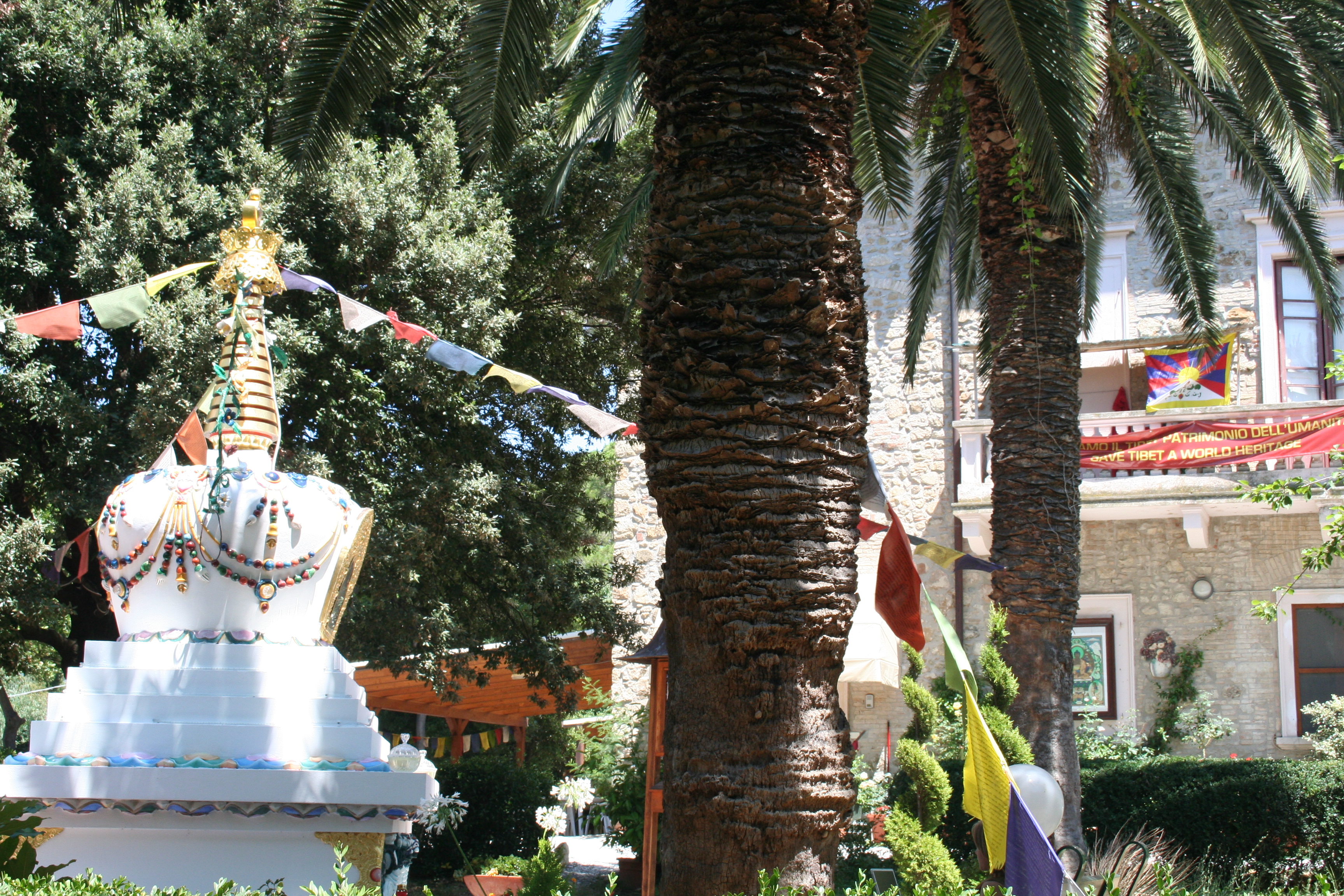
The garden at Lama Tzong Khapa Institute holds its own kind of silence. It is here that one of Lama Yeshe's first-generation Western students witnessed a teacher in profound repose—fresh from waking, absorbed in the aftermath of night practice, the body illusory. Looking at him, the observer thought: this is what the deepening of sacred practice actually does to a human being. The light in his eyes was so concentrated that simply to look at him was to find one's own mind settling into focus. Everything about him was magnificent.

Fabrizio Pallotti carries this memory ninety years after Lama Yeshe's birth, and it is not nostalgia that animates his recollection but rather an attempt to render visible something that most teachings can only point toward: the tangible reality of liberation as lived practice. When Pallotti speaks of his teacher, he is describing not an historical figure but a presence that continues to move through the lineage and its students—a presence transmitted, paradoxically, through the most ordinary of human gestures: the way someone laughed, the way they touched another person, the manner of their walk.

Lettura · 4 sezioni

The Avalanche of Teaching and Life Example

Lama Yeshe was present in the West for what Pallotti describes as "very few years"—a brief window of direct encounter that nonetheless became foundational for the entire FPMT (Foundation for the Preservation of the Mahayana Tradition) lineage in the West. But the temporal measure is almost irrelevant. What Pallotti emphasizes is not duration but transmission: "he gave us an avalanche of teachings, but most of all life example."

This distinction matters profoundly. In the Buddhist context, teachings refer to the doctrinal content, the intellectual scaffolding of dharma. Life example is something else entirely—it is the embodiment of that teaching in the specific, unrepeatable particularity of a single human being's choices, reactions, and way of moving through the world. A teacher can deliver perfect doctrine and leave students unchanged. But a teacher who demonstrates liberation in the texture of their ordinariness—in the humility and normality with which they conducted themselves—offers something that no text can contain.

Pallotti recalls that Lama Yeshe remained "extremely humble and normal" even as he proved "pivotal in leading masses into the dharma into developing the real root of liberation and enlightenment." This paradox is central to understanding his impact. He did not position himself as a remote authority dispensing wisdom from an elevated platform. Instead, his ordinariness became the gateway through which students could recognize that liberation was not a distant, exotic state but something accessible, grounded, human.

The Radical Democracy of Gratitude

What strikes Pallotti most forcefully now, decades later, is something he calls "the gratefulness that he show to everybody." This gratitude was not discriminate or performative. It extended equally to everyone who crossed his path—people the teacher knew intimately and those he had never encountered before, Buddhists and non-Buddhists alike, men and women, children and the elderly. The gratitude was exactly the same. Always.

This consistency points to something deeper than politeness. Pallotti connects it directly to the Buddhist teachings: "Exactly like in the teachings, like a mother looks at her own single child with an incredible affection, love, but supported with kindness." The metaphor of the mother is classical in Buddhist literature—the wish that all beings experience the warmth and protection that a mother naturally radiates toward her child. But Pallotti's observation is that Lama Yeshe did not merely teach this; he enacted it, with every person, without exception.

The kindness Pallotti emphasizes is not sentimental. It is rooted in what he calls "feeling grateful of others"—a recognition that one's own development, one's own qualities and capacities, arise entirely from the kindness and generosity of others. Lama Yeshe was, by all accounts, a teacher of extraordinary realization and skill. And yet, Pallotti says, "whatever lama had in his qualities, he was fully aware that they all came from the kindness of others and he did nothing but to show this openly to everyone."

This is a radical statement. It suggests a teacher who understood gratitude not as a polite response to specific favors but as a fundamental orientation toward existence—a recognition that the self is woven entirely from the gifts of others, and that to live authentically is to acknowledge and radiate that awareness. To "show this openly" means that his gratitude was not hidden in his heart; it was visible in gesture, word, and presence.

Presence as Transmission

The account from the Lama Yeshe Wisdom Archive that Pallotti quotes captures something essential about how teaching travels in living lineages. "The way he laughed, touched people, even the way he walked brought dreams to your mind." The specificity here matters. It is not that his teachings were philosophical innovations. Rather, his presence itself was transformative. To be in the room with him, to observe the quality of his attention, to feel the texture of his touch, was to have access to dharma in a form that bypassed intellectual understanding and worked directly on the nervous system, the emotional body, the subtle dimensions of consciousness.

"He was so skillful and so fast," the account continues. This too deserves attention. In Buddhist contexts, skillfulness refers to an extraordinary sensitivity to the specific needs and capacities of each student, a capacity to offer precisely the intervention or teaching that will catalyze growth. Speed, in this context, refers not to rushing but to an absence of delay—the ability to perceive an opportunity for transformation and meet it immediately, without the hesitation that usually accompanies self-consciousness or doubt.

These are not qualities that can be copied or transmitted through text alone. They require the presence of a teacher to whom students can expose themselves fully, whose example can be studied in real time, and whose way of being can be gradually internalized through proximity and sustained attention.

Where to Go From Here

Ninety years after Lama Yeshe's birth, the lineages he co-founded continue to offer teachings and practice. The FPMT maintains centers and resources worldwide, and the Lama Yeshe Wisdom Archive preserves recordings, writings, and recollections of the teacher and his work. For students seeking to understand how authentic dharma transmission functions—how the marriage of intellectual understanding and embodied presence creates genuine transformation—Pallotti's testimony offers a clear window. The garden remains. The practices continue. The example endures.
Transcript

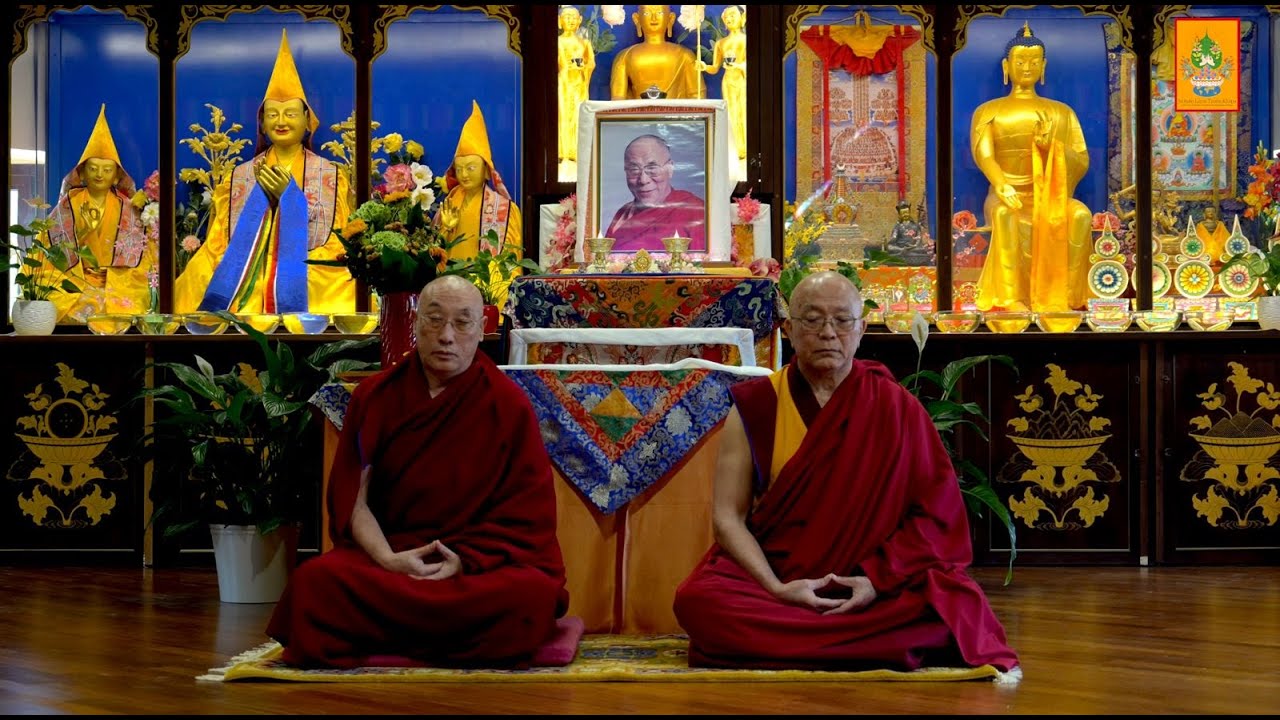
[0:00] Hello everybody. I'm Fabricio Palotei

[0:03] and I'm fortunate enough to be one of

[0:06] the students of the first generation

[0:09] of the propagation of the dharma in the

[0:11] west and particularly ofuch.

[0:17] So, Laayes in his very few years which

[0:22] was around with us fortunate disciples,

[0:26] direct disciples I should say, he gave

[0:29] us

[0:31] an avalanche of

[0:34] teachings, but most of all

[0:39] life example. How to conduct yourself in

[0:43] an extremely humble and normal way. and

[0:46] yet

[0:48] been pivotal in leading masses

[0:54] into the dharma into developing the real

[0:56] root of liberation and and enlightenment

[1:00] and I think is most important

[1:03] at least what strikes me now the

[1:06] gratefulness

[1:08] that he show to everybody people we know

[1:12] we didn't know matter whatever whether

[1:15] they Buddhist or Buddhist, men, woman,

[1:19] children, old and young,

[1:23] exactly the same. Exactly like in the

[1:27] teachings, like a mother

[1:29] looks at her own single child

[1:33] with an incredible affection, love, but

[1:37] supported with kindness.

[1:40] kindness in the sense of feeling

[1:43] grateful

[1:45] of others.

[1:47] Almost like

[1:50] whatever lama had in his qualities, he

[1:53] was fully aware that they all came from

[1:56] the kindness of others

[1:59] and he did nothing but to show this

[2:03] openly to everyone.

[2:06] >> Then maybe better go. Yes. Thank you so

[2:08] much. you really enjoy, you know. Thank

[2:10] you so much. Thank you. Thank you. Thank

[2:13] you so much.

[2:15] >> Thank you so much. I enjoy very much.

[2:18] >> Thank you.

Istituto Lama Tzong Khapa
ArtistIstituto Lama Tzong Khapa

Founded in 1977 by Lama Yeshe and Lama Zopa Rinpoche in the Tuscan hills near Pisa, Istituto Lama Tzong Khapa is Europe's premier center for rigorous Tibetan Buddhist study. Part o…

Vedi il profiloSito web
Esplora i temi
Lama-yesheDharma-teachingTibetan-buddhismSpiritual-transmissionGratitude-practice

Hai domande?

Domande frequenti

Lama Yeshe transmitted dharma primarily through his life example rather than doctrine alone. He remained profoundly humble and ordinary while serving as a pivotal guide into enlightenment practice, demonstrating that liberation was accessible and grounded, not remote or exotic.
Lama Yeshe extended the same quality of affection and kindness to everyone—regardless of whether they were Buddhist or non-Buddhist, known or unknown to him, or their age or gender. He was visibly aware that all his qualities arose from the kindness of others and showed this recognition openly to everyone.
The account of Lama Yeshe absorbed in the garden after waking illustrates the visible effects of advanced tantric practice (specifically illusory body work). His concentrated presence was so powerful that simply looking at him would focus students' minds, demonstrating how a teacher's realization manifests in their everyday presence.
As co-founder of the FPMT (Foundation for the Preservation of the Mahayana Tradition), Lama Yeshe was instrumental in establishing Tibetan Buddhist practice in the West. Though his time with Western students was brief, his life example shaped an entire generation of practitioners who continue his lineage.
His skillfulness referred to an extraordinary sensitivity to each student's unique needs and readiness for growth. His speed meant the absence of hesitation—an immediate, clear perception and response to opportunities for transformation without self-doubt or delay.
His kindness was rooted in a fundamental recognition that all one's qualities arise entirely from the kindness of others. Rather than a pleasant manner, it was an authentic orientation toward existence based on deep understanding—something visibly expressed in how he laughed, touched people, and moved through the world.

Continua a leggere

More on Retreats

Vedi Tutto
50 Years of Buddhist Study and Service in Tuscany
Inspire

50 Years of Buddhist Study and Service in Tuscany

Since 1976, Istituto Lama Tzong Khapa has cultivated Buddhist practice, scholarship, and community in rural Italy. The institute marks its 5…

1 min read
Tibetan Buddhism's European Hub: A Tuscan Castle Sanctuary
Inspire

Tibetan Buddhism's European Hub: A Tuscan Castle Sanctuary

Istituto Lama Tzong Khapa, nestled in Tuscany since 1976, stands as one of Europe's premier Buddhist centers, bridging Tibetan wisdom tradit…

1 min read
The Future Doesn't Exist—Here's Why That Changes Everything
Inspire

The Future Doesn't Exist—Here's Why That Changes Everything

The future is a construct most of us live in, postponing satisfaction indefinitely. Eckhart Tolle invites you to verify this for yourself.…

1 min read
Grief and Loss as Sacred Doorway: Meeting Change with Tenderness
Inspire

Grief and Loss as Sacred Doorway: Meeting Change with Tenderness

Discover how to meet grief with tenderness rather than avoidance, and how loss becomes a sacred gateway to deeper love and awakening.…

1 min read

Continua a esplorare

Continua il tuo viaggio

Altra saggezza e altri incontri da tutta la directory BrightStar.

Altri articoli

Sfoglia l’intera raccolta di insegnamenti, interviste e guide.

Torna a tutti gli articoli →

Insegnanti e artisti

Esplora i lignaggi, i musicisti e le guide del mondo consapevole.

Esplora gli artisti →

Trova un evento

Kirtan, ritiri, sound bath, breathwork, festival: in arrivo presto.

Sfoglia gli eventi →