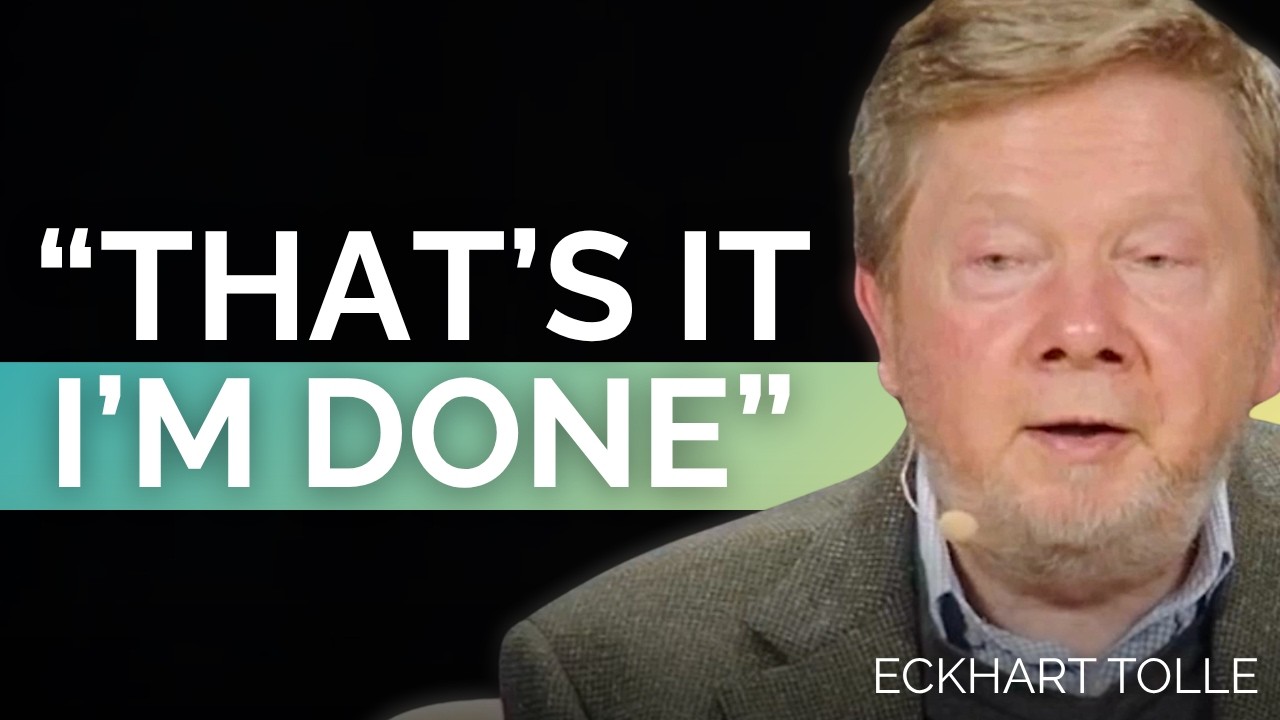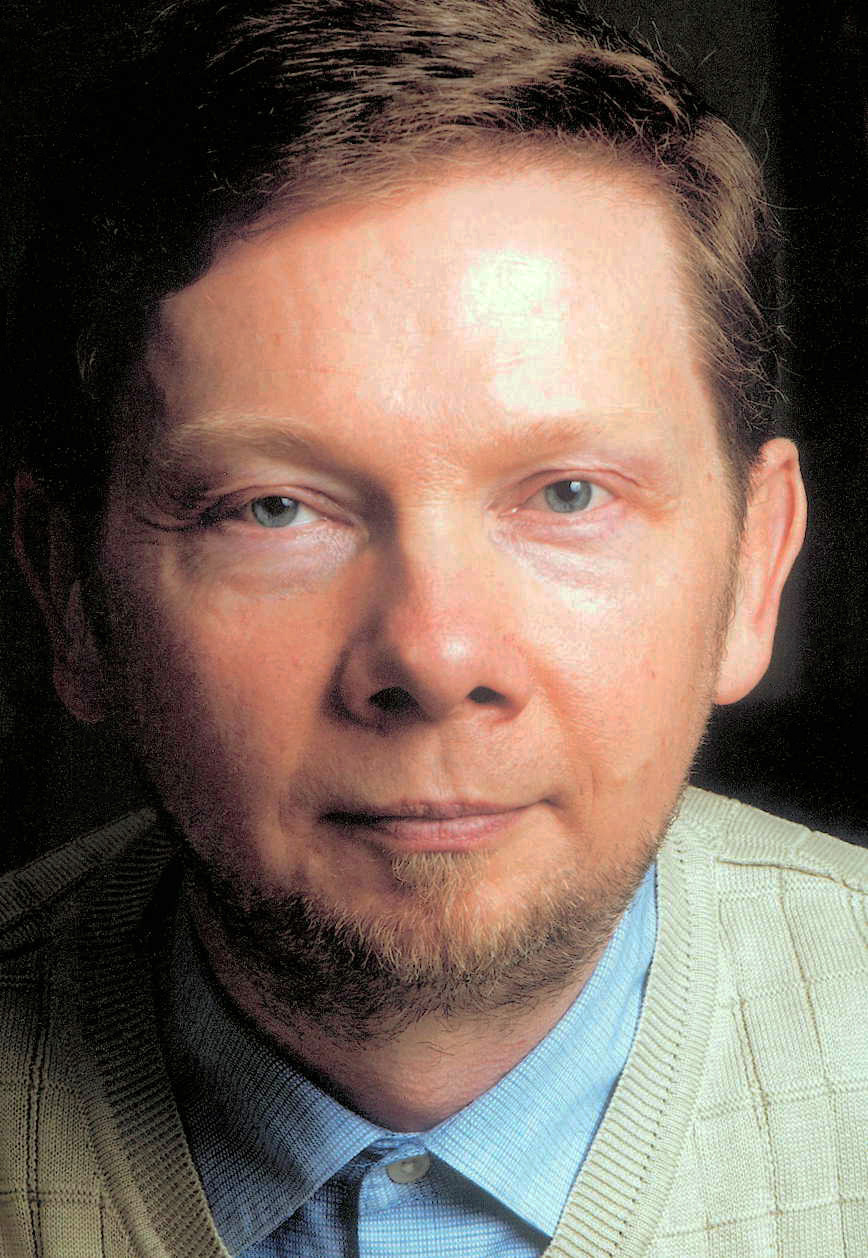
When both partners in a relationship lack self-awareness, their unconscious behavioral patterns, emotional reactivity, and unexamined wounds interact to create escalating conflict. Eckhart Tolle describes this dynamic as "a match made in hell" — not because the individuals are inherently incompatible, but because two people operating from ego, compulsion, and reactive states have no conscious awareness to interrupt destructive cycles. Self-awareness is the foundational capacity required to witness one's own patterns, take responsibility, and respond rather than react in relationships.
Self-awareness, as Tolle discusses, is not merely knowing your own thoughts or preferences. It is the capacity to observe your own mental and emotional states without being completely identified with them. It is the ability to notice when ego, fear, or conditioned reactivity has taken over, rather than being entirely run by those forces. Without this capacity, a person operates from unconscious compulsion — repeating patterns learned in childhood, reacting to their partner's behavior from a place of defensiveness or hurt, and projecting unhealed wounds onto the relationship.
When both partners lack this observational distance from themselves, neither can step back and recognize what is actually happening in the interaction. One partner reacts defensively, the other mirrors that defensiveness, and the cycle accelerates. Neither person can ask themselves: "Why am I really angry right now? What is this triggered?" or "Am I responding to what is actually being said, or to my interpretation and fear?" These are the questions self-awareness makes possible.
The "match made in hell" dynamic Tolle describes occurs because unconscious patterns reinforce one another. If one partner's wound involves feeling abandoned, they may become hypervigilant to perceived rejection — seeing criticism, distance, or preoccupation as abandonment. If the other partner's wound involves feeling controlled or suffocated, they may pull away as a defense. The first partner interprets the withdrawal as confirmation of their fear, and the second interprets the pursuit as suffocation. Neither recognizes that they are both reacting from old pain, not from the present moment.
Without self-awareness, both individuals remain trapped in what Tolle calls the ego state — a continuous mental narrative about threat, protection, and survival. The ego is comparative, competitive, and resistant. It sees the other person not as a conscious being with their own fears and wounds, but as an obstacle to getting what it wants or a threat to be defended against. Two egos in a room create a collision, not a relationship.
The destructive pattern deepens because neither person takes responsibility for their own state. Instead of recognizing "I am scared right now" or "I am triggered," the unconscious person blames the partner: "You made me angry. You hurt me. You are the problem." This externalization of responsibility means the partner becomes not an ally in navigating difficulties, but a villain in the unconscious person's internal drama.
A key aspect of lacking self-awareness is being entirely at the mercy of emotional reactivity. Emotions, when they arise from unconscious triggers, feel true and valid — they feel like accurate reflections of reality. An unconscious person experiences anger and assumes the partner truly intended to hurt them. They experience anxiety and assume danger is present. They experience shame and assume they are fundamentally flawed. The emotion becomes the entire truth.
Self-awareness creates space between the trigger and the response. It allows someone to feel emotion while also observing: "This feeling arose because of a wound in me, not because of my partner's intent." This distinction is the difference between a reactive system and a conscious partnership. Without it, emotions drive behavior, words become weapons, and both partners become increasingly defended and distant.
In a couple where both people are emotionally reactive and unconscious, small disagreements can escalate into crises because neither has the capacity to soothe themselves or the other. Neither can offer genuine understanding because neither is genuinely understanding themselves. The relationship becomes a collision of wounds rather than a meeting of conscious beings.
True communication requires the ability to listen without immediately filtering what is heard through one's own fear or defensive narrative. Self-aware individuals can hear their partner's perspective even when it challenges them, because they are not entirely identified with being right. Unconscious individuals, by contrast, hear criticism or disagreement as an attack on their identity. They listen only to find the flaw in their partner's argument so they can defend themselves.
When neither partner has self-awareness, conversations become mutual defense rather than mutual understanding. Each person is focused on protecting themselves, justifying their actions, or proving the other person wrong. The actual issue — the real disconnection, the unmet need, the misunderstanding — never gets addressed because both people are locked in protective mode.
A partner with self-awareness recognizes when they are triggered and can pause before reacting. They notice their own story, their own fear, their own wound. They can say to themselves: "I am feeling angry because I felt dismissed, and that touches a wound from my past where my needs were not heard." This recognition does not eliminate the emotion, but it creates a choice point. Instead of acting from that emotion unconsciously, they can address the actual issue: "I felt unheard in that conversation. Can we talk about it?"
Self-aware partners can also recognize their impact on the other person without becoming defensive. If their partner says they felt hurt, a self-aware person can consider that reality rather than dismissing it or immediately explaining why the partner is wrong to feel that way. This openness to being affected by the other person's experience, even when not intended, is a sign of genuine self-awareness.
Additionally, self-awareness allows someone to take responsibility for their own emotional state rather than making their partner responsible for managing their feelings. An unconscious person expects their partner to not trigger them, to say the right things, to be available in exactly the way needed. A self-aware person recognizes: "I am responsible for my own healing. My partner can support me, but they cannot fix me or prevent me from ever feeling hurt."
The first step toward breaking the "match made in hell" pattern is for at least one partner to begin developing self-awareness. This does not require the other person to change. One person who can observe their own patterns without blame, who can pause before reacting, who can take responsibility for their own state — that person interrupts the automatic cycle. They stop mirroring the other person's defensiveness. They stop fueling escalation.
This creates space for something different. The unconscious partner may eventually begin to notice that their usual defensive moves are not necessary in the same way. They may begin to develop their own capacity for self-observation, not because they are told to, but because they experience a different relational dynamic.
However, real change in the relationship requires both people to eventually develop some capacity for self-awareness. A person can only be in genuine relationship with another to the degree that both are capable of stepping outside their automatic reactivity and seeing clearly.
If you recognize yourself or your relationship in this description, the path forward begins with turning awareness inward. Notice when you are reactive. Notice when you are blaming. Notice when you are defending. These moments of simple observation — without judgment, without trying to fix it immediately — are the beginning of self-awareness. Therapy, meditation, and contemplative practice can support this development. But the foundation is willingness to see yourself clearly, which is also the beginning of being able to see your partner clearly.
For those interested in deeper exploration of consciousness and relationships, Eckhart Tolle's full talk on this topic (linked in the original video description) offers extended teachings on presence, the ego, and conscious partnership.