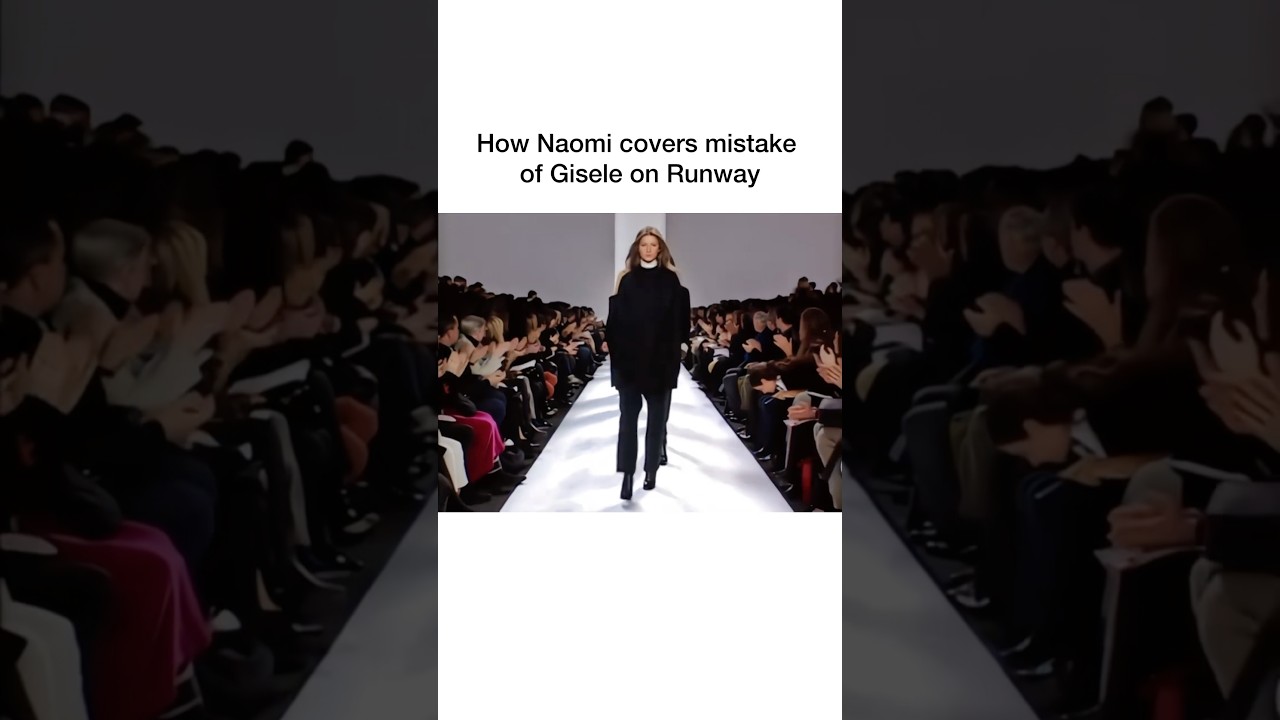
Gisele Bündchen appeared on The Tonight Show to teach Jimmy Fallon the essentials of the supermodel walk. Her instruction was streamlined to a single movement: "shake the hips." In 23 seconds, she distilled what the fashion industry typically guards as proprietary knowledge. Hip movement is the mechanical foundation of the runway walk—and it's learnable.
When Bündchen instructs someone to move their hips, she's identifying the point from which all motion should originate. In aligned posture, movement initiates from your center—your hips and core—rather than from your upper body or legs working in isolation.
This distinction is crucial. If you walk with your hips stationary and tight, movement fragments: your shoulders compensate, your spine curves, your stride shortens. If you walk with your hips in motion, your weight distributes through your entire body. Your spine extends. Your legs move freely from the hip sockets. Your whole frame reads as elongated and present.
This principle isn't unique to fashion. Dancers, martial artists, and movement practitioners across disciplines emphasize hip mobility and initiation as foundational. The runway walk is simply the form in which the fashion industry expresses this fundamental truth: your posture is determined by where you move from.
What makes Bündchen's moment significant is the accessibility. The supermodel walk has long been presented as an elite, nearly mystical skill—something you either possess or you don't. But this brief teaching suggests the mechanics are teachable. The "shake" isn't a gyration; it's activation. It's about engaging your center and allowing movement to flow from there.
The secondary effect is internal. When you move from your center with intention, your nervous system registers a difference. You feel more present in your body. The relationship between posture and presence isn't purely visual—it's embodied. How you move shapes not just how others perceive you, but how you perceive yourself.
For those interested in exploring aligned movement further, disciplines like dance, Pilates, martial arts, and somatic practices all teach the same foundational principle: your center initiates movement. The walk is one expression of this. The deeper value lies in recognizing how this principle reorganizes not just your body, but your relationship to it.