BrightStar

Sfoglia tutti i Events

Scopri incontri consapevoli

events

Yoga
Meditation
Breathwork
Qigong
Tai Chi
Sacred Music
World Music
Medicine Music
Sound Healing
Ecstatic Dance
Destinazioni popolari
BaliSedonaLos AngelesCosta RicaNew YorkSan FranciscoAustinMiamiJoshua TreeTulum
Vedi tutte le categorieVedi tutte le destinazioni

Esplora tutte le funzionalità

Strumenti potenti per far crescere i tuoi eventi

Funzionalità della piattaforma

Prezzi dinamici intelligenti
Categorie di biglietti
Posti assegnati
Recupero carrelli abbandonati
Recupero visitatori
Donazioni e prezzi variabili
Sistema affiliati
Scanner biglietti
Codici sconto
Domande personalizzate
Condivisione biglietti
Upsell e componenti aggiuntivi
Analisi e report
Sequenze email
Lista d'attesa / Notifica / Promemoria
Persone e Luoghi
Artists & TeachersEvent OrganizersVenues & StudiosKnowledge BaseGlossaryInspiration
Vedi tutte le funzionalitàChi siamo
PrezziBlog
Language
Saved events
Sfoglia tutti gli eventi

events

YogaMeditationBreathworkQigongTai ChiSacred MusicWorld MusicMedicine Music

Destinazioni popolari

BaliSedonaLos AngelesCosta RicaNew YorkSan Francisco

Persone e Luoghi

Artists & TeachersEvent OrganizersVenues & StudiosKnowledge BaseGlossaryInspiration

Funzionalità della piattaforma

Prezzi dinamici intelligentiCategorie di bigliettiPosti assegnatiRecupero carrelli abbandonatiRecupero visitatoriDonazioni e prezzi variabiliSistema affiliatiScanner bigliettiCodici scontoDomande personalizzateCondivisione bigliettiUpsell e componenti aggiuntiviAnalisi e reportSequenze emailLista d'attesa / Notifica / Promemoria
Vedi tutte le funzionalitàChi siamo
PrezziBlog
AccediRicercatoriCreatori
  • Sfoglia tutti i Eventi
  • Per i ricercatori
  • Yoga
  • Meditazione
  • Breathwork
  • Qigong
  • Tai chi
  • Musica sacra
  • World music
  • Musica medicina
  • Sound healing
  • Danza estatica
  • Ritiri
  • Workshop
  • Tutte le categorie →
  • Bali
  • Sedona
  • Los Angeles
  • Costa Rica
  • Tulum
  • Byron Bay
  • San Francisco
  • Austin
  • New York
  • San Diego
  • Denver
  • Seattle
  • Portland
  • Miami
  • Tutte le città →
  • Join the Movement
  • Why we list
  • Sell Globally
  • Per i creatori
  • Per team
  • Per gli scrittori
  • Per gli insegnanti
  • Per gli artisti kirtan
  • Per gli studi
  • Per i festival
  • Per i centri ritiro
  • Per le no-profit
  • Ambasciatore del brand
  • Case study
  • Biglietteria gratuita
  • Elevate
  • Amplify
  • Rete di 500K+ acquirenti
  • Recupero carrelli abbandonati
  • Prezzi dinamici intelligenti
  • Categorie di biglietti
  • Eventi ricorrenti
  • Posti assegnati
  • Sistema affiliati
  • Lista d'attesa / Notifica
  • Scanner biglietti
  • Widget incorporabile
  • Distribuzione eventi
  • Centro messaggi
  • Integrazioni
  • Report
  • Tutte le funzionalità →
  • Chi siamo
  • L’ecosistema
  • Blog
  • Glossario
  • Ispirazione
  • Centro assistenza
  • Contatti
  • Documentazione API
  • Risorse del brand
  • Carriere
  • Stampa
  • Termini di servizio
  • Informativa sulla privacy

Eventi

  • Sfoglia tutti i Eventi
  • Per i ricercatori
  • Yoga
  • Meditazione
  • Breathwork
  • Qigong
  • Tai chi
  • Musica sacra
  • World music
  • Musica medicina
  • Sound healing
  • Danza estatica
  • Ritiri
  • Workshop
  • Tutte le categorie →

Destinazioni

  • Bali
  • Sedona
  • Los Angeles
  • Costa Rica
  • Tulum
  • Byron Bay
  • San Francisco
  • Austin
  • New York
  • San Diego
  • Denver
  • Seattle
  • Portland
  • Miami
  • Tutte le città →

Per i creatori

  • Join the Movement
  • Why we list
  • Sell Globally
  • Per i creatori
  • Per team
  • Per gli scrittori
  • Per gli insegnanti
  • Per gli artisti kirtan
  • Per gli studi
  • Per i festival
  • Per i centri ritiro
  • Per le no-profit
  • Ambasciatore del brand
  • Case study
  • Biglietteria gratuita
  • Elevate
  • Amplify

Funzionalità

  • Rete di 500K+ acquirenti
  • Recupero carrelli abbandonati
  • Prezzi dinamici intelligenti
  • Categorie di biglietti
  • Eventi ricorrenti
  • Posti assegnati
  • Sistema affiliati
  • Lista d'attesa / Notifica
  • Scanner biglietti
  • Widget incorporabile
  • Distribuzione eventi
  • Centro messaggi
  • Integrazioni
  • Report
  • Tutte le funzionalità →

Azienda

  • Chi siamo
  • L’ecosistema
  • Blog
  • Glossario
  • Ispirazione
  • Centro assistenza
  • Contatti
  • Documentazione API
  • Risorse del brand
  • Carriere
  • Stampa
  • Termini di servizio
  • Informativa sulla privacy
BrightStar
© 2026 BrightStar. Tutti i diritti riservati.
Inspire

Raag Rageshwari Practice: How Sargam Phrases Build a Raag

Professor Paramjeet Singh
Oct 7, 2026
7 min di lettura
Guarda · 7

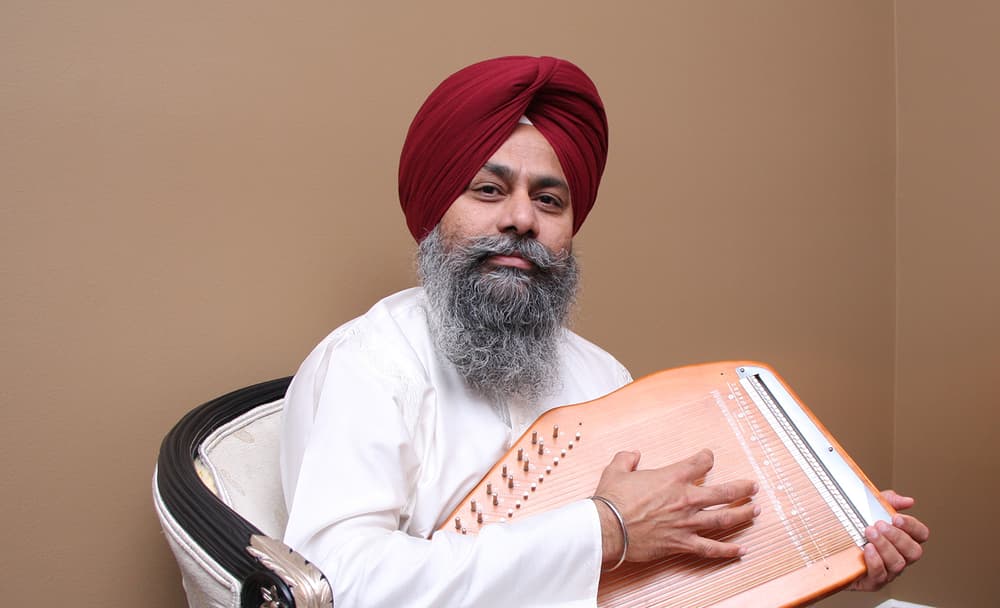
Seven minutes into a classroom recording, a handful of syllables keeps coming back: sa, re, ga, ma, dha, ni. They climb, turn back, and settle, then climb again in a slightly different shape. The recording is Professor Paramjeet Singh's Raag Rageshwari practice with students, posted to the ProfessorParamjeet channel. It is neither a concert nor a lecture. It is a drill, a raag broken into short phrases and repeated until the voice knows where it is going. The video runs 7 minutes 16 seconds, and its captions contain almost no spoken words. What it offers instead is a close look at how a raag gets built, one cell at a time, from sargam.

That is the story worth following. Much introductory writing about Indian classical music starts with history, lineage, or a list of rules. This video skips all of that. It puts you inside the repetition itself, where a student's voice is learning to place each note.

Lettura · 6 sezioni

Why does a raag drill use sargam syllables instead of lyrics?

Sargam is the sung solfège of Indian classical music: sa, re, ga, ma, pa, dha, ni. In practice, sargam strips the melody down to its bare intervals. Without words, a singer cannot hide behind a text's rhythm or emotional color. Every slightly flat ga and every late ni is audible. That is why teachers use sargam for early raag work: the student's attention goes to the distances between notes and to how a phrase moves.

The captions in this session show the method at work. Early on, around the 0:42 mark, a phrase cell in the shape of dha, ni, sa, ga, ma, ga is sung and then sung again with small variations. The repetition is not decoration. It gives the student a fixed pattern to return to, the way a guitarist drills a lick until the fingers stop thinking about it.

One detail is worth noting for anyone following along. In the captioned excerpt, the syllables that surface most often are sa, ga, ma, re, ni, and dha. The syllable pa does not appear in the captions at all. The captions are an imperfect record of a live recording, so that is not a claim about the raag's grammar. It is an observation a student can check by ear, and a sign of how much the phrases depend on the notes that are present.

How do sur, melodic phrases, and voice control fit together?

The channel's own description frames the session this way:

"This classroom session highlights the fundamentals of Raag Rageshwari, including sur, melodic phrases, voice control, expression, taal awareness, and disciplined riyaz." (ProfessorParamjeet channel description)

Those six elements are not a checklist. They work together, and the recording shows why. Sur, the pitch and tuning of each note, is the foundation. A phrase in a raag is only as good as its pitches, so the drill keeps returning to the same few notes in the same order until they land cleanly. Melodic phrases are the next layer: small units like the descending run that shows up near the 6:24 mark, a shape the captions render as ni, sa, ga, ma, ni, sa, ni, dha, ma, re, sa. Voice control is what makes the phrase sound like a phrase and not a set of separate notes. A student who can hold sa steady, then move through ga and ma without a jolt, has begun to control the instrument.

Expression is where the drill becomes music. The description links it to the other elements rather than treating it as an extra. A singer who has not yet secured sur and phrase cannot shape a line with intention. Once the notes are secure, dynamics, weight, and emphasis can start to carry meaning.

The channel's broader description makes a related claim about why this matters beyond one raag:

"Learning classical Raags can help students develop stronger vocal technique, musical understanding, and expression—whether their interest is in Gurbani Kirtan, Indian Classical Music, Punjabi singing, or professional vocal training." (ProfessorParamjeet channel description)

That breadth is important. A student who learns to build a raag from phrases is also learning the habits that carry into devotional singing, film and folk singing, or formal training.

Where does taal awareness show up in a sargam drill?

Taal is the rhythmic cycle that organizes a performance, and its presence in a recording like this is easy to miss. Sargam drills are often sung against a rhythmic framework, so each phrase has to land in a specific place within the cycle. The captions here mark long passages as music and singing rather than giving the exact beats, so the rhythmic detail is not fully visible on the page. The description's inclusion of "taal awareness" tells you what the teacher is asking students to hear: the phrase is not finished until it resolves inside the cycle.

Taal awareness and phrase awareness are linked. A melodic cell placed one beat late sounds like a mistake even when every pitch is correct. Students who practice only pitches tend to hit notes but lose the shape. Students who practice only rhythm tend to keep time but blur the notes. The drill asks for both at once.

What is riyaz, and why does the drill keep returning to it?

Riyaz means disciplined practice: the daily, repetitive work that turns an idea into a reflex. The description calls for "disciplined riyaz," and the recording is a demonstration of what that looks like in a room. The same phrase is sung more than once, with small changes each time, and the descending run appears in several passes between roughly 6:01 and 6:24. That repetition is the lesson. Riyaz is not glamorous. It is the slow work of making the correct note the easy note.

For a reader who has never studied this tradition, the practical takeaway is simple. Pick a short phrase, sing it slowly on sa, and repeat it until each note is steady before you add speed, ornament, or words. Then move the phrase to a different part of the cycle. That is essentially what the recording shows, and it is the kind of work the channel says it teaches.

Who is this kind of training for?

The channel's description addresses several audiences: students of Gurbani Kirtan, Indian classical music, Punjabi singing, and professional vocal training. It also lists online classes worldwide and in-person classes in Mississauga, Canada. The video itself is a single session and does not present a full curriculum, so anyone interested should treat it as a window into the method rather than a complete course. What it does show clearly is the logic of raag training: start with notes, build phrases, control the voice, add expression, and repeat until it holds.

Where to go from here

If you want to hear the method rather than read about it, watch the full session on the ProfessorParamjeet channel and follow the phrase cells with the timestamps listed above. Sing along on sa, slowly, before you try any faster passage. For deeper study, look for a teacher who can correct your sur in person, since pitch is hard to judge alone. The channel's description lists online classes and in-person instruction in Mississauga, and those are the most direct routes to working on the same material with a teacher's ear. The phrases are short and the drill is repetitive by design. Patience with the repetition is the work.

Comments

Loading the conversation…

Transcript

[0:02] सा [संगीत]

[0:07] [संगीत]

[0:14] [संगीत]

[0:20] [संगीत]

[0:26] [संगीत]

[0:30] >> [गायन]

[0:31] [संगीत]

[0:35] >> निदासा

[0:38] [संगीत]

[0:42] धनी सा ग मगा [संगीत]

[0:46] सा ग मगा

[0:48] >> ग मगा [संगीत]

[0:52] गम ग म

[0:55] [संगीत]

[0:55] >> ग म [गायन] रे सध सा गम रे साम

[1:02] [संगीत]

[1:02] [गायन] रे सा नी साम

[1:06] रे सा

[1:08] [संगीत]

[1:08] >> गम धनी सामधानी

[1:11] [गायन]

[1:13] सा

[1:15] >> सामरे

[1:18] [गायन]

[1:19] [संगीत]

[1:24] [संगीत]

[1:29] सा

[1:32] [गायन]

[1:33] [संगीत]

[1:35] ग मध सा

[1:38] मध [संगीत]

[1:40] [गायन] साध

[1:42] म ग

[1:44] [संगीत] साध [गायन]

[1:45] म गम

[1:48] रे निसा [संगीत]

[1:51] गम रे निसा

[1:54] [संगीत] गम रे [गायन] निदासा

[1:58] रे

[2:00] सा [संगीत]

[2:01] गम [गायन] धनी सामनी

[2:04] [संगीत]

[2:05] सा

[2:11] [संगीत]

[2:14] >> सा

[2:16] [संगीत]

[2:21] [संगीत]

[2:27] गम [संगीत] धनी नीमधनी

[2:34] गम [संगीत][गायन] धनी नी धाम धनी [संगीत]

[2:39] नी

[2:40] >> गम धनी साधा धाम

[2:44] धनी [संगीत][गायन] साधा

[2:46] सा मरे

[2:50] >> सा मरे [संगीत]

[2:54] दासा सा

[2:58] [संगीत]

[3:01] गा [गायन]

[3:03] [संगीत]

[3:10] >> [संगीत]

[3:12] >> सा

[3:17] [संगीत]

[3:23] [गायन]

[3:24] [संगीत]

[3:26] मधानी [गायन] साधनी

[3:30] [संगीत]

[3:31] सा

[3:33] ग म

[3:36] सा मरे

[3:40] निधा [संगीत] साधनी

[3:53] [गायन]

[3:55] [संगीत]

[4:00] मगा सा [संगीत][गायन]

[4:05] सा धा धा म ग सा [संगीत][गायन] धानी ध म ग

[4:11] म रे निध साम [संगीत]

[4:15] रे

[4:17] सा धनी सा ग [संगीत][गायन] मनी

[4:22] सा ग म

[4:24] [संगीत] ग मध [गायन]

[4:31] [संगीत] ग मम धनी [गायन] सा

[4:35] मनीसा

[4:46] [संगीत]

[4:51] [संगीत]

[4:57] साधनी [गायन][संगीत]

[4:59] साधनी

[5:02] साधनी

[5:04] नी सनी धनी [संगीत]

[5:07] सा मरे

[5:11] सा

[5:12] [संगीत]

[5:18] रे सा [संगीत]

[5:25] रे सादा [संगीत]

[5:33] [संगीत]

[5:36] ग मम धनी स धनी ग मध साधा

[5:42] ग मम धनी [संगीत][गायन] सा धनी धम धनी सा

[5:47] [संगीत] धनी ग मनी साध सा

[5:54] [संगीत]

[5:55] ग मध सा [संगीत] ग मध

[6:01] सा नी म ग म रे सा नी [संगीत][गायन] म ग म

[6:07] रे सा ग म धनी सा नी धनी [संगीत]

[6:12] सा ग मनी धरे सा धानी सा ग म धनी सा रे सा

[6:18] धानी [संगीत] सा ग मनी धानी

[6:22] ध सा [संगीत]

[6:24] धानी [गायन] सा ग म नी सा नी धा म रे सा

[6:30] [संगीत][गायन]

[6:31] नी सा ग म नी सा नी धा म [संगीत] ग म रे

[6:37] सा नी सा ग म [गायन]

[6:39] रे सा नी धा म ग म रे सा नी [संगीत] सा ग

[6:45] [गायन] म

[6:47] सा नी धा म ग म [संगीत] रे सा ध रे सा म

[6:52] [गायन] रे सा नी ध

[6:56] रे सा ग म धनी सा नी धरे

[7:00] नी ग [संगीत]

[7:04] [गायन]

[7:07] [संगीत]

[7:12] [संगीत]

Professor Paramjeet Singh
ArtistProfessor Paramjeet Singh

Professor Paramjeet Singh is an Indian classical vocalist and Sikh kirtan artist who has mastered over 125 ragas and devoted his career to preserving the devotional music of saints…

Vedi il profiloSito web
Esplora i temi
Raag-rageshwariSargamRiyazSurVoice-culture

Hai domande?

Domande frequenti

In this session, students work through short sargam phrases in Raag Rageshwari, repeating each cell with small variations until the pitches and shape are secure. The channel's description frames the drill around sur, melodic phrases, voice control, expression, taal awareness, and riyaz. It is a drill rather than a performance.
Sargam syllables such as sa, re, ga, ma, dha, and ni strip the melody down to its intervals, so there are no lyrics to hide behind. A student's attention goes to pitch distances and phrase movement. This makes early raag work clearer for learning sur and phrase shape.
Riyaz is disciplined, repetitive practice that turns a musical idea into a reliable habit. The channel's description calls for disciplined riyaz as one of the core fundamentals of this raag session. In practice it means repeating short phrases slowly until each note is steady before adding speed or ornament.
Taal is the rhythmic cycle that organizes a performance, and a phrase has to resolve inside that cycle to sound finished. A melodic phrase placed one beat late can sound wrong even when the pitches are correct. Practicing pitch and rhythm together helps a singer keep both the notes and the shape.
The ProfessorParamjeet channel's description lists online classes worldwide and in-person classes in Mississauga, Canada, with Raag-based training in vocal technique, Gurbani Kirtan, harmonium, tabla, and Indian classical music. A single video shows the method but does not replace a full course. A teacher can correct sur and phrasing in ways a recording cannot.
The channel's description says that learning classical raags can help students develop stronger vocal technique, musical understanding, and expression, whether their interest is Gurbani Kirtan, Indian classical music, Punjabi singing, or professional vocal training. The skills drilled here, such as holding sur and shaping phrases, carry across these styles.
Choose one short phrase, sing it slowly on sa, and repeat it until each note is steady. Only then add speed, ornament, or words, and move the phrase to a different part of the taal cycle. This mirrors the repetitive structure of the classroom drill shown in the video.

Continua a leggere

More from Professor

Vedi Tutto
Raag-Based Gurbani Kirtan: The Beauty of Mere Laalan Ki Sobha
Inspire

Raag-Based Gurbani Kirtan: The Beauty of Mere Laalan Ki Sobha

Learn how raag-based Gurbani kirtan preserves authentic Sikh devotional music through the shabad "Mere Laalan Ki Sobha," performed in classi…

1 min read
Raag-Based Gurbani Kirtan: Tukhari, Bhairavi, and Classical Tradition
Inspire

Raag-Based Gurbani Kirtan: Tukhari, Bhairavi, and Classical Tradition

Experience the spiritual depth of Patiala Gharana kirtan through rare raags and Gurbani compositions. A live performance honoring classical …

1 min read
Alapana: The Melodic Foundation of Indian Classical Music
Inspire

Alapana: The Melodic Foundation of Indian Classical Music

Alapana is the unaccompanied melodic exploration that opens a raga performance, establishing the scale and emotional character before rhythm…

1 min read
Return to Love: A Guide to Healing Through Kindness
Inspire

Return to Love: A Guide to Healing Through Kindness

A meditation-centered gathering focused on loving-kindness practice, breathwork, and dharma teaching. Explore how community and conscious pa…

1 min read

Continua a esplorare

Continua il tuo viaggio

Altra saggezza e altri incontri da tutta la directory BrightStar.

Altri articoli

Sfoglia l’intera raccolta di insegnamenti, interviste e guide.

Torna a tutti gli articoli →

Insegnanti e artisti

Esplora i lignaggi, i musicisti e le guide del mondo consapevole.

Esplora gli artisti →

Trova un evento

Kirtan, ritiri, sound bath, breathwork, festival: in arrivo presto.

Sfoglia gli eventi →