BrightStar

Sfoglia tutti i Events

Scopri incontri consapevoli

events

Yoga
Meditation
Breathwork
Qigong
Tai Chi
Sacred Music
World Music
Medicine Music
Sound Healing
Ecstatic Dance
Destinazioni popolari
BaliSedonaLos AngelesCosta RicaNew YorkSan FranciscoAustinMiamiJoshua TreeTulum
Vedi tutte le categorieVedi tutte le destinazioni

Esplora tutte le funzionalità

Strumenti potenti per far crescere i tuoi eventi

Funzionalità della piattaforma

Prezzi dinamici intelligenti
Categorie di biglietti
Posti assegnati
Recupero carrelli abbandonati
Recupero visitatori
Donazioni e prezzi variabili
Sistema affiliati
Scanner biglietti
Codici sconto
Domande personalizzate
Condivisione biglietti
Upsell e componenti aggiuntivi
Analisi e report
Sequenze email
Lista d'attesa / Notifica / Promemoria
Persone e Luoghi
Artists & TeachersEvent OrganizersVenues & StudiosKnowledge BaseGlossaryInspiration
Vedi tutte le funzionalitàChi siamo
PrezziBlog
Language
Saved events
Sfoglia tutti gli eventi

events

YogaMeditationBreathworkQigongTai ChiSacred MusicWorld MusicMedicine Music

Destinazioni popolari

BaliSedonaLos AngelesCosta RicaNew YorkSan Francisco

Persone e Luoghi

Artists & TeachersEvent OrganizersVenues & StudiosKnowledge BaseGlossaryInspiration

Funzionalità della piattaforma

Prezzi dinamici intelligentiCategorie di bigliettiPosti assegnatiRecupero carrelli abbandonatiRecupero visitatoriDonazioni e prezzi variabiliSistema affiliatiScanner bigliettiCodici scontoDomande personalizzateCondivisione bigliettiUpsell e componenti aggiuntiviAnalisi e reportSequenze emailLista d'attesa / Notifica / Promemoria
Vedi tutte le funzionalitàChi siamo
PrezziBlog
AccediRicercatoriCreatori
  • Sfoglia tutti i Eventi
  • Per i ricercatori
  • Yoga
  • Meditazione
  • Breathwork
  • Qigong
  • Tai chi
  • Musica sacra
  • World music
  • Musica medicina
  • Sound healing
  • Danza estatica
  • Ritiri
  • Workshop
  • Tutte le categorie →
  • Bali
  • Sedona
  • Los Angeles
  • Costa Rica
  • Tulum
  • Byron Bay
  • San Francisco
  • Austin
  • New York
  • San Diego
  • Denver
  • Seattle
  • Portland
  • Miami
  • Tutte le città →
  • Join the Movement
  • Why we list
  • Sell Globally
  • Per i creatori
  • Per team
  • Per gli scrittori
  • Per gli insegnanti
  • Per gli artisti kirtan
  • Per gli studi
  • Per i festival
  • Per i centri ritiro
  • Per le no-profit
  • Ambasciatore del brand
  • Biglietteria gratuita
  • Elevate
  • Amplify
  • Rete di 500K+ acquirenti
  • Recupero carrelli abbandonati
  • Prezzi dinamici intelligenti
  • Categorie di biglietti
  • Eventi ricorrenti
  • Posti assegnati
  • Sistema affiliati
  • Lista d'attesa / Notifica
  • Scanner biglietti
  • Widget incorporabile
  • Distribuzione eventi
  • Centro messaggi
  • Integrazioni
  • Report
  • Tutte le funzionalità →
  • Chi siamo
  • L’ecosistema
  • Blog
  • Glossario
  • Ispirazione
  • Centro assistenza
  • Contatti
  • Documentazione API
  • Risorse del brand
  • Carriere
  • Stampa
  • Termini di servizio
  • Informativa sulla privacy

Eventi

  • Sfoglia tutti i Eventi
  • Per i ricercatori
  • Yoga
  • Meditazione
  • Breathwork
  • Qigong
  • Tai chi
  • Musica sacra
  • World music
  • Musica medicina
  • Sound healing
  • Danza estatica
  • Ritiri
  • Workshop
  • Tutte le categorie →

Destinazioni

  • Bali
  • Sedona
  • Los Angeles
  • Costa Rica
  • Tulum
  • Byron Bay
  • San Francisco
  • Austin
  • New York
  • San Diego
  • Denver
  • Seattle
  • Portland
  • Miami
  • Tutte le città →

Per i creatori

  • Join the Movement
  • Why we list
  • Sell Globally
  • Per i creatori
  • Per team
  • Per gli scrittori
  • Per gli insegnanti
  • Per gli artisti kirtan
  • Per gli studi
  • Per i festival
  • Per i centri ritiro
  • Per le no-profit
  • Ambasciatore del brand
  • Biglietteria gratuita
  • Elevate
  • Amplify

Funzionalità

  • Rete di 500K+ acquirenti
  • Recupero carrelli abbandonati
  • Prezzi dinamici intelligenti
  • Categorie di biglietti
  • Eventi ricorrenti
  • Posti assegnati
  • Sistema affiliati
  • Lista d'attesa / Notifica
  • Scanner biglietti
  • Widget incorporabile
  • Distribuzione eventi
  • Centro messaggi
  • Integrazioni
  • Report
  • Tutte le funzionalità →

Azienda

  • Chi siamo
  • L’ecosistema
  • Blog
  • Glossario
  • Ispirazione
  • Centro assistenza
  • Contatti
  • Documentazione API
  • Risorse del brand
  • Carriere
  • Stampa
  • Termini di servizio
  • Informativa sulla privacy
BrightStar
Scarica l'app
Scarica suApp StoreDisponibile suGoogle Play
© 2026 BrightStar. Tutti i diritti riservati.
Inspire

Morning Zazen: A Daily Practice of Zen Meditation

Upaya Zen Center
Upaya Zen Center
Sep 4, 2026
5 min di lettura

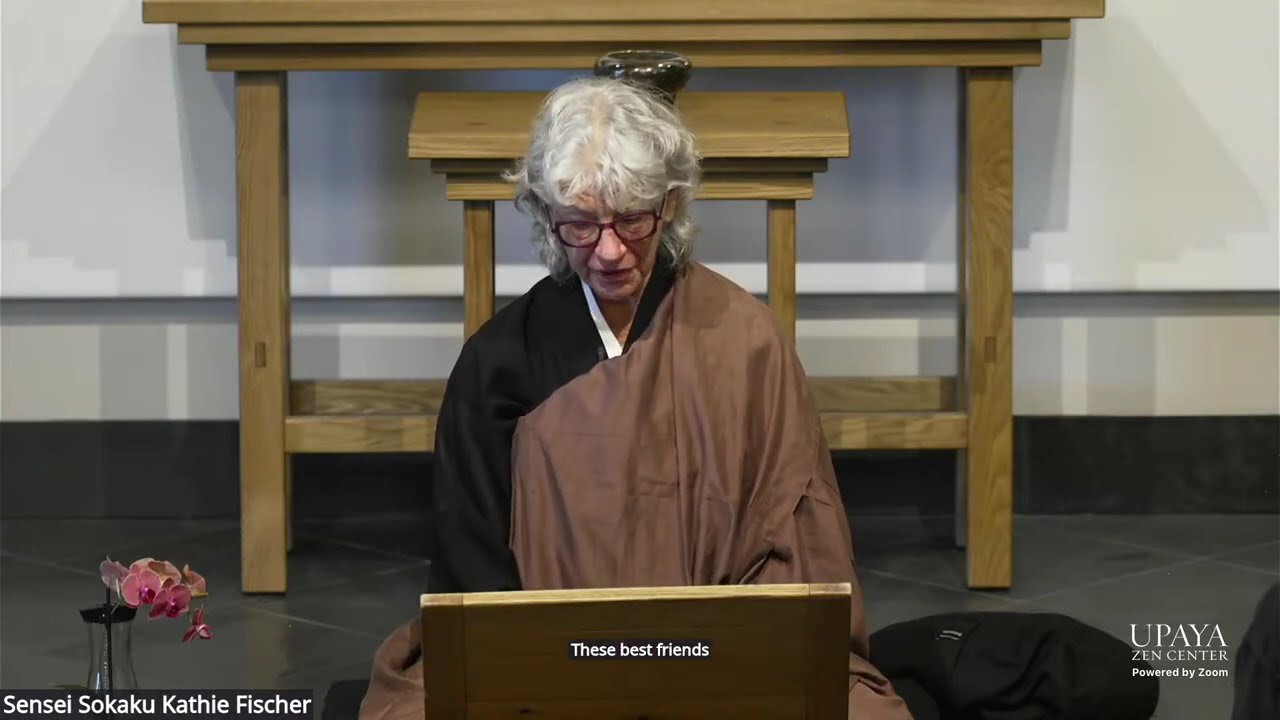
Zazen is the beating heart of Zen practice—a deceptively simple act of sitting with full attention. At Upaya Zen Center, a Buddhist residential contemplative community nestled in Santa Fe, New Mexico, zazen happens every day. Monks and visitors alike settle onto meditation cushions before dawn, before the world demands anything of them, to face the central question that Zen poses: What am I?

Lettura · 7 sezioni

What Is Zazen?

Zazen means "sitting meditation" in Japanese. Unlike some meditation traditions that guide you through visualization or mantra, zazen is radically unadorned. You sit upright—traditionally on a cushion called a zafu—with legs crossed, hands folded, eyes softly open, gaze cast downward. You sit and you breathe. You let thoughts come and go without chasing them, without pushing them away. This is not relaxation. This is not escape. Zazen is direct confrontation with the mind as it is.

The practice has roots that run back centuries through Zen Buddhism to the Buddha himself. But in the Zen lineage, there is a particular emphasis on zazen as awakening itself—not as a technique to get awakening, but as awakening happening. The teacher sits. The student sits. The farmer in the field sits. The act is transmission.

How Does a Morning Practice Begin?

Morning zazen at a center like Upaya typically starts before dawn. There is a rhythm to it: the bell rings to gather the sangha (community). People bow as they enter the zendo (meditation hall). There is silence—not the absence of sound, but a presence of attention. You take your seat. Another bell. The teacher enters. Then, for thirty or forty minutes, sometimes longer, nothing happens. Everything happens. Posture becomes porosity. The boundary between inside and outside thins.

This daily ritual is not performance. It is not achievement-oriented. A morning zazen session is one of the oldest human technologies for meeting consciousness head-on, and it costs nothing but time and willingness.

Why Sit Together?

Zazen can be practiced alone, and many people do practice at home. But there is something irreplaceable about sitting in a room with others—even strangers, even in silence. The collective field of attention strengthens individual practice. A teacher's presence in the room is not about instruction in the moment; it is about holding space, modeling steadiness, embodying what is possible when a human being sits without distraction for an hour.

At Upaya, daily zazen is offered free and open. Beginners sit beside people who have been practicing for decades. A visiting musician sits next to a therapist. A retired engineer sits next to someone who just flew in from out of state. In the silence, all hierarchies fall away. All that remains is the breath, the body, the fundamental fact of being alive.

The Role of Zazen in Buddhist Life

In traditional Zen monasteries, zazen is not one practice among many—it is the foundation. Before teachings, before rituals, before anything else: sitting. Some Zen ancestors spent years in zazen, emerging only to offer a word or gesture of profound simplicity. The teaching is not separate from the practice. The practice is the teaching.

Zazen is also a training in what Zen calls "just sitting"—not sitting in order to become enlightened, not sitting to fix yourself, not sitting to achieve anything at all. Just sitting. This surrender of purpose is itself the revolution. In a world that constantly asks "What is this for? What will I gain?"—zazen asks nothing. It simply invites you to show up.

How Do You Actually Begin?

If you have never sat zazen, the first session can feel strange. Your legs may ache. Your mind may race. You may wonder if you are doing it "right." The teacher will likely give basic instruction: sit upright, hand position, where to rest your gaze. Then the bell rings and you sit. There is no failure. There is only sitting.

Many people find that after twenty minutes of resistance—the mind spinning, the body restless—something shifts. Not transcendence, necessarily. Sometimes just a kind of neutral space where you are neither lost in thought nor desperately trying to be present. You are simply present. The effort relaxes. The practice deepens.

The Community That Holds the Practice

Upaya Zen Center was founded as a residential community specifically to support deep contemplative practice within a Buddhist framework. Daily zazen is one of the primary offerings. Regular practitioners and newcomers are equally welcome. The center also offers weekly dharma talks—teachings that illuminate the lived experience of practice. The integration of meditation, teaching, and community creates an ecosystem where individual practice is held and reflected back.

For those unable to attend in person, Upaya offers online zazen via Zoom, making morning practice accessible across geographies. This extension honors both tradition and modern reality: sincere practitioners live everywhere.

Where to Go from Here

If you are curious about zazen, the path is simple: find a group, show up early, and sit. Bring no expectations. Wear comfortable clothes. Come as you are. The practice does not demand belief or prior experience. It asks only for attention. Over weeks and months, patterns of mind become visible. Over years, a deep settling can occur—not as achievement, but as your true nature revealing itself. This is why Zen practitioners return, morning after morning, season after season, to the same cushion, the same bell, the same question: Who is sitting here?
Comments

Loading the conversation…

Upaya Zen Center
ArtistUpaya Zen Center

Watch more from Upaya Zen Center on YouTube.

Vedi il profiloSito web
Esplora i temi
ZazenZen-meditationBuddhismContemplative-practiceMindfulness

Hai domande?

Domande frequenti

Zazen is Zen sitting meditation—a practice of alert, upright sitting without visualization or mantra. Unlike some meditation traditions that guide the mind toward specific states, zazen emphasizes direct awareness of the mind as it is, letting thoughts arise and pass without attachment. It is considered not a technique to achieve enlightenment, but awakening itself.
No. Upaya Zen Center and most Zen communities welcome complete beginners. Basic instruction on posture and hand position is typically given before practice. All you need is willingness to sit and show up; there is no right or wrong way to begin.
Morning zazen sessions typically last 30 to 45 minutes, sometimes longer in residential or intensive settings. The exact duration varies by center and practice schedule. What matters is consistency and presence rather than length.
Yes, many people practice zazen alone. However, sitting with a group—called the sangha in Buddhism—amplifies the practice. The collective field of attention and the teacher's presence in the room offer a support that solo practice cannot fully replicate, though both have value.
Your mind may race, your legs may ache, and you may feel restless. These are common experiences, not failures. After about 20 minutes, many beginners find the mind settles into a more neutral, present state. The practice is meeting your actual experience, not achieving any particular mental state.
Yes. Upaya offers daily zazen practice via Zoom for those unable to attend in person, making morning meditation accessible from anywhere. This allows practitioners to maintain consistency even when they cannot be physically present at the center.

Continua a leggere

More from Upaya

Vedi Tutto
Koans, Camouflage, and the Porous Line Between Zen Schools
Inspire

Koans, Camouflage, and the Porous Line Between Zen Schools

A Dharma talk from Upaya Zen Center in Santa Fe traces how the Soto and Rinzai schools drew apart, why koan questions and answers differ in …

1 min read
Why Chan Masters Shouted: Words, Silence and Direct Experience
Inspire

Why Chan Masters Shouted: Words, Silence and Direct Experience

A Santa Fe Zen teacher opens a fall practice period by asking why the Chan masters shouted at students. Her answer turns on the mind that lo…

1 min read
What You Know for Sure: Consciousness Aware of Itself
Inspire

What You Know for Sure: Consciousness Aware of Itself

Tolle answers Oprah's closing question with one certainty: you are conscious. Here is why noticing that awareness halts thought, and the sma…

1 min read
This Belongs: The Ocean Meditation for Meeting Every Wave
Inspire

This Belongs: The Ocean Meditation for Meeting Every Wave

Tara Brach's guided meditation "Everything Belongs" turns a body scan into an ocean metaphor and a two-word practice. Here is how "This belo…

1 min read

Continua a esplorare

Continua il tuo viaggio

Altra saggezza e altri incontri da tutta la directory BrightStar.

Altri articoli

Sfoglia l’intera raccolta di insegnamenti, interviste e guide.

Torna a tutti gli articoli →

Insegnanti e artisti

Esplora i lignaggi, i musicisti e le guide del mondo consapevole.

Esplora gli artisti →

Trova un evento

Kirtan, ritiri, sound bath, breathwork, festival: in arrivo presto.

Sfoglia gli eventi →