BrightStar

Sfoglia tutti i Events

Scopri incontri consapevoli

events

Yoga
Meditation
Breathwork
Qigong
Tai Chi
Sacred Music
World Music
Medicine Music
Sound Healing
Ecstatic Dance
Destinazioni popolari
BaliSedonaLos AngelesCosta RicaNew YorkSan FranciscoAustinMiamiJoshua TreeTulum
Vedi tutte le categorieVedi tutte le destinazioni

Esplora tutte le funzionalità

Strumenti potenti per far crescere i tuoi eventi

Funzionalità della piattaforma

Prezzi dinamici intelligenti
Categorie di biglietti
Posti assegnati
Recupero carrelli abbandonati
Recupero visitatori
Donazioni e prezzi variabili
Sistema affiliati
Scanner biglietti
Codici sconto
Domande personalizzate
Condivisione biglietti
Upsell e componenti aggiuntivi
Analisi e report
Sequenze email
Lista d'attesa / Notifica / Promemoria
Persone e Luoghi
Artists & TeachersEvent OrganizersVenues & StudiosKnowledge BaseGlossaryInspiration
Vedi tutte le funzionalitàChi siamo
PrezziBlog
Language
Saved events
Sfoglia tutti gli eventi

events

YogaMeditationBreathworkQigongTai ChiSacred MusicWorld MusicMedicine Music

Destinazioni popolari

BaliSedonaLos AngelesCosta RicaNew YorkSan Francisco

Persone e Luoghi

Artists & TeachersEvent OrganizersVenues & StudiosKnowledge BaseGlossaryInspiration

Funzionalità della piattaforma

Prezzi dinamici intelligentiCategorie di bigliettiPosti assegnatiRecupero carrelli abbandonatiRecupero visitatoriDonazioni e prezzi variabiliSistema affiliatiScanner bigliettiCodici scontoDomande personalizzateCondivisione bigliettiUpsell e componenti aggiuntiviAnalisi e reportSequenze emailLista d'attesa / Notifica / Promemoria
Vedi tutte le funzionalitàChi siamo
PrezziBlog
AccediRicercatoriCreatori
  • Sfoglia tutti i Eventi
  • Per i ricercatori
  • Yoga
  • Meditazione
  • Breathwork
  • Qigong
  • Tai chi
  • Musica sacra
  • World music
  • Musica medicina
  • Sound healing
  • Danza estatica
  • Ritiri
  • Workshop
  • Tutte le categorie →
  • Bali
  • Sedona
  • Los Angeles
  • Costa Rica
  • Tulum
  • Byron Bay
  • San Francisco
  • Austin
  • New York
  • San Diego
  • Denver
  • Seattle
  • Portland
  • Miami
  • Tutte le città →
  • Join the Movement
  • Sell Globally
  • Per i creatori
  • Per team
  • Per gli scrittori
  • Per gli insegnanti
  • Per gli artisti kirtan
  • Per gli studi
  • Per i festival
  • Per i centri ritiro
  • Per le no-profit
  • Ambasciatore del brand
  • Case study
  • Biglietteria gratuita
  • Elevate
  • Amplify
  • Rete di 500K+ acquirenti
  • Recupero carrelli abbandonati
  • Prezzi dinamici intelligenti
  • Categorie di biglietti
  • Eventi ricorrenti
  • Posti assegnati
  • Sistema affiliati
  • Lista d'attesa / Notifica
  • Scanner biglietti
  • Widget incorporabile
  • Distribuzione eventi
  • Centro messaggi
  • Integrazioni
  • Report
  • Tutte le funzionalità →
  • Chi siamo
  • L’ecosistema
  • Blog
  • Glossario
  • Ispirazione
  • Centro assistenza
  • Contatti
  • Documentazione API
  • Risorse del brand
  • Carriere
  • Stampa
  • Termini di servizio
  • Informativa sulla privacy

Eventi

  • Sfoglia tutti i Eventi
  • Per i ricercatori
  • Yoga
  • Meditazione
  • Breathwork
  • Qigong
  • Tai chi
  • Musica sacra
  • World music
  • Musica medicina
  • Sound healing
  • Danza estatica
  • Ritiri
  • Workshop
  • Tutte le categorie →

Destinazioni

  • Bali
  • Sedona
  • Los Angeles
  • Costa Rica
  • Tulum
  • Byron Bay
  • San Francisco
  • Austin
  • New York
  • San Diego
  • Denver
  • Seattle
  • Portland
  • Miami
  • Tutte le città →

Per i creatori

  • Join the Movement
  • Sell Globally
  • Per i creatori
  • Per team
  • Per gli scrittori
  • Per gli insegnanti
  • Per gli artisti kirtan
  • Per gli studi
  • Per i festival
  • Per i centri ritiro
  • Per le no-profit
  • Ambasciatore del brand
  • Case study
  • Biglietteria gratuita
  • Elevate
  • Amplify

Funzionalità

  • Rete di 500K+ acquirenti
  • Recupero carrelli abbandonati
  • Prezzi dinamici intelligenti
  • Categorie di biglietti
  • Eventi ricorrenti
  • Posti assegnati
  • Sistema affiliati
  • Lista d'attesa / Notifica
  • Scanner biglietti
  • Widget incorporabile
  • Distribuzione eventi
  • Centro messaggi
  • Integrazioni
  • Report
  • Tutte le funzionalità →

Azienda

  • Chi siamo
  • L’ecosistema
  • Blog
  • Glossario
  • Ispirazione
  • Centro assistenza
  • Contatti
  • Documentazione API
  • Risorse del brand
  • Carriere
  • Stampa
  • Termini di servizio
  • Informativa sulla privacy
BrightStar
© 2026 BrightStar. Tutti i diritti riservati.
Inspire

Magic Ten Yoga Sequence:10-Minute Daily Practice

Sharon Gannon
Sharon Gannon
Apr 3, 2018
6 min di lettura
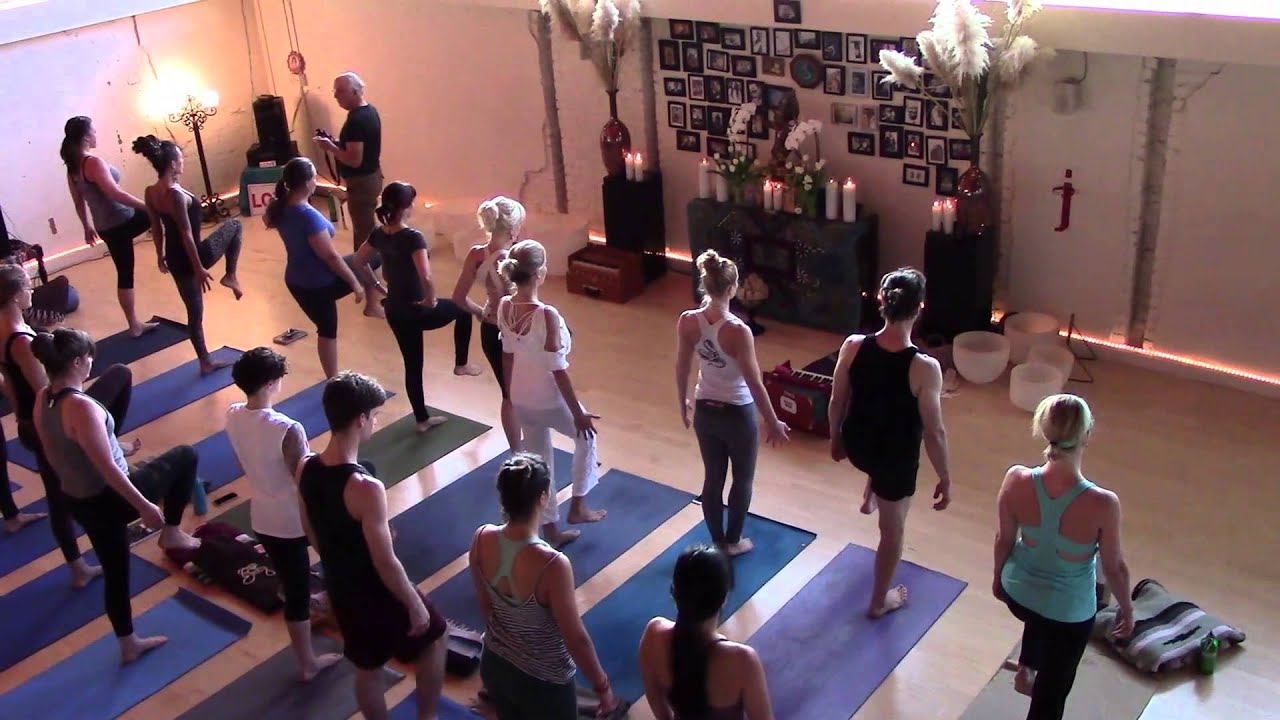
The Magic Ten is a deliberately minimal, accessible yoga sequence of ten poses that takes approximately ten minutes to complete. Designed by Jivamukti Yoga co-founder Sharon Gannon, it serves three practical purposes: preparing the body for a longer asana practice, generating energy first thing in the morning, or creating movement and vitality at any point during the day when the body feels static or depleted. Rather than demanding flexibility, strength, or prior experience, the sequence works systematically through forward bends, twists, inversions, and backbends—each held for specific breath counts—to create a complete physical and energetic reset in minimal time.

Lettura · 8 sezioni

What Is the Magic Ten?

The Magic Ten is a teaching tool rooted in Jivamukti Yoga's philosophy that yoga should be simple, accessible, and integrated into daily life rather than confined to structured class time. The sequence comprises ten basic movements, each performed mindfully with specific breath counts, that together create a balanced physical practice. The genius of the system lies in its efficiency: done properly, the entire sequence requires no more than ten minutes, making it practical for anyone with a busy schedule or limited mobility.

Sharon Gannon describes the Magic Ten as a way to "get your body moving" and create energy, language that reflects its grounding in lived experience rather than aspirational ideology. This is not a sequence designed to impress or to achieve advanced poses; it is designed to work.

The Ten Poses and Their Breath Counts

Each pose in the Magic Ten is held for a specific number of breaths, a practice that anchors the work to breath awareness and ensures consistency across different days and bodies.

  • Downward Facing Dog — 10 breaths. This inverted pose begins the sequence, reversing the spine's typical relationship to gravity and accessing the hamstrings, shoulders, and full spinal column.
  • Standing Forward Bend — 10 breaths. From standing, the practitioner folds forward, continuing the work of lengthening the posterior chain and introducing gentle spinal flexion.
  • Squat — 10 breaths. This pose opens the hips and ankles, engages the lower body, and reconnects the practice to the earth.
  • Tee Pee Twist — 5 breaths each side. A seated twist that wrings the spine, stimulating digestion and releasing stored tension in the torso.
  • Seated Spinal Twist — 5 breaths each side. Another twist variation, deepening the work of spinal rotation and detoxification.
  • Table Top — 10 breaths. Also called reverse plank, this backbend strengthens the posterior body and opens the front of the chest and shoulders.
  • Handstand — 15–25 breaths. The inversion that demands the most focus, building arm and shoulder strength while reversing the typical flow of blood and energy through the head.
  • Chest Stretch — 5 breaths. A counterpose that neutralizes the spine and opens the often-contracted front of the body.
  • Side Bending — 2 breaths to each side. A lateral flexion that addresses the sides of the body, often neglected in forward/back bending.
  • Spinal Roll — 16-breath sequence. A final integration where the spine articulates vertebra by vertebra, releasing residual tension and bringing the practice to ground.

Why Is Breath Count Essential?

The assignment of specific breath counts—10 breaths for foundational poses, 5 for twists, 15–25 for the more demanding handstand—creates multiple benefits. First, it links the physical practice to pranayama (breath work), preventing yoga from becoming a purely mechanical exercise. Second, it standardizes the practice: ten breaths is long enough to allow the body to begin releasing and deepening into a pose, but not so long that less flexible practitioners become discouraged. Third, it gives the mind a clear anchor, reducing the tendency to either rush through poses or overthink their duration.

When and How to Practice the Magic Ten

Gannon identifies three main contexts for the Magic Ten: as a warm-up before a longer asana class, as a morning practice to generate energy and circulation, or as a movement break at any point during the day when the body needs activation. Each context is valid and serves a different need.

As a warm-up, the Magic Ten prepares all major joints and muscle groups—shoulders, hips, spine, hamstrings, quadriceps—without exhausting the practitioner before the main practice. As a morning practice, it serves to increase circulation, activate the nervous system gently, and set an intentional tone for the day ahead. As a movement break, it counteracts the stagnation of sitting, desk work, or stillness, quickly restoring vitality to a tired body.

The Balance of the Sequence

A hallmark of intelligent yoga design is balance: every forward bend is followed or preceded by a backbend, every right-side twist is matched with a left-side twist. The Magic Ten exemplifies this principle through its structure.

The sequence opens with two forward bends (Downward Dog and Standing Forward Bend), then transitions to a squat and two twists, creates a backbend with Table Top, moves into an advanced inversion (Handstand), returns to a gentle chest opener, adds lateral flexion, and concludes with a spinal roll that integrates the entire practice. This order ensures that no single region of the spine is isolated or overstressed, and that energy is evenly distributed throughout the body.

Accessibility and the Handstand Question

Some readers may notice that the Magic Ten includes a handstand, a pose that many practitioners cannot yet perform. This apparent contradiction reflects Gannon's philosophy that the Magic Ten is a template, not a dogma. A practitioner without handstand strength might substitute a supported inversion—pressing the feet up a wall while in Downward Dog, for example—or work toward the full expression gradually. The point is not to achieve the exact pose as demonstrated, but to engage the body's capacity at each level and work toward greater strength and openness over time.

Integration with Daily Life

The Magic Ten's real power emerges when it becomes a daily habit, woven into morning routine or work breaks rather than treated as an occasional experiment. Ten minutes is a realistic time commitment; almost anyone can find ten minutes. Over weeks and months, consistent practice rewires the nervous system, improves spinal mobility, increases strength, and teaches the body to move with intention rather than habit.

Gannon's framing—that the Magic Ten is good to "get your body moving" and "create some energy"—reflects a practical yoga that aims at tangible results: better circulation, more alertness, greater ease in the body. This contrasts with yoga marketed as "transformative" in abstract ways; the Magic Ten delivers concrete, immediate benefits.

Where to Go From Here

The Magic Ten is a gateway, not a destination. Once the sequence becomes familiar and the breath patterns integrate naturally, a practitioner might extend the practice by adding more breaths to each pose, exploring variations, or moving into a full asana class. Gannon has published The Magic Ten and Beyond, a resource that deepens the work begun in this foundational sequence. The Jivamukti Yoga platform also offers detailed instruction and further context for practitioners who wish to understand the philosophy and lineage informing the practice.

]]>
Comments

Loading the conversation…

Sharon Gannon
ArtistSharon Gannon

Sharon Gannon co-founded Jivamukti Yoga, one of the most influential vinyasa yoga methods in the West. Her teaching integrates asana practice with Sanskrit chanting, vegetarianism,…

Vedi il profiloSito web
Esplora i temi
Yoga-practiceMorning-routineAsana-sequenceBreath-workBody-movement

Hai domande?

Domande frequenti

The Magic Ten takes approximately 10 minutes to complete from beginning to end. Each pose is assigned a specific breath count, allowing the sequence to be consistent and efficient while still giving the body enough time to engage and release into each position.
Yes. The Magic Ten is designed as an accessible practice for most bodies and experience levels. Poses like handstand can be modified or substituted (for example, using a wall for support) until the practitioner builds strength. The focus is on mindful breath and movement rather than perfect form.
The Magic Ten serves three purposes: warming up the body before a longer asana class, generating energy and circulation during morning practice, or creating movement and vitality as a break from sitting or stagnation at any time during the day.
Specific breath counts anchor the practice to pranayama (breath awareness), prevent rushing or overthinking, and ensure consistency. Ten breaths is generally long enough for release but short enough to remain accessible; twists and smaller movements use fewer breaths, while the handstand uses more.
The Magic Ten is a balanced, complete sequence that addresses all major joints and creates forward bends, backbends, twists, and inversions in roughly 10 minutes. It is ideal as a warm-up, morning practice, or movement break, though many practitioners extend it with additional poses or use it as a foundation for longer asana classes.
You can modify the handstand by pressing your feet up a wall while in Downward Dog, working toward the full expression over time, or substituting another inversion. The Magic Ten is a template meant to adapt to each practitioner's current capacity and strength level.

Continua a leggere

More from Sharon

Vedi Tutto
Jivamukti Master Class: Liberation Through Yoga Philosophy
Inspire

Jivamukti Master Class: Liberation Through Yoga Philosophy

Sharon Gannon leads a comprehensive master class on Jivamukti yoga, exploring the philosophical foundations and practical applications of li…

1 min read
Lokah Samastah Sukhino Bhavantu: Universal Happiness in Yoga Philosophy
Inspire

Lokah Samastah Sukhino Bhavantu: Universal Happiness in Yoga Philosophy

Explore the Sanskrit mantra Lokah Samastah Sukhino Bhavantu and its teaching on universal compassion, personal responsibility, and collectiv…

1 min read
Minimal Vocalization as Spiritual Practice: Power in Simplicity
Inspire

Minimal Vocalization as Spiritual Practice: Power in Simplicity

A brief live vocal interlude demonstrates how devotional sound—stripped to its essence—can invoke presence and transformation through pure r…

1 min read
Govinda Jaya: How Sacred Sound Awakens the Heart
Inspire

Govinda Jaya: How Sacred Sound Awakens the Heart

Radhika Das channels the liberating power of mantra through a luminous kirtan performance at Medicine Festival, invoking divine names to pur…

1 min read

Continua a esplorare

Continua il tuo viaggio

Altra saggezza e altri incontri da tutta la directory BrightStar.

Altri articoli

Sfoglia l’intera raccolta di insegnamenti, interviste e guide.

Torna a tutti gli articoli →

Insegnanti e artisti

Esplora i lignaggi, i musicisti e le guide del mondo consapevole.

Esplora gli artisti →

Trova un evento

Kirtan, ritiri, sound bath, breathwork, festival: in arrivo presto.

Sfoglia gli eventi →