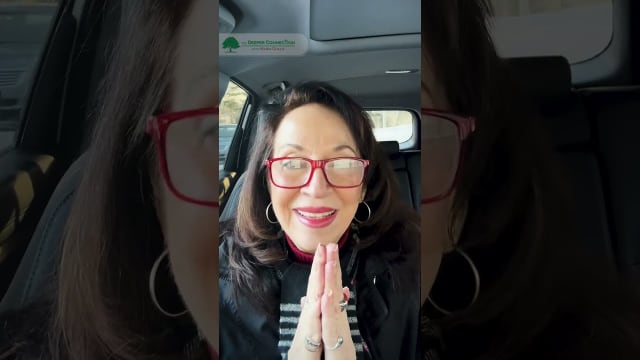
Centering prayer is built on a counterintuitive premise: you do not have to make your mind go quiet. In a six-minute orientation track from her channel The Deeper Connection, Maria Gullo lays out the whole arc of a session, from the room and the chair to the single word that anchors it, and the small, repeated act that the practice really depends on. The track is a setup rather than the sitting itself. Gullo tells listeners to skip ahead to tracks four or five once they're familiar with the process, which means the video is less a lecture than a set of instructions for entering silence without fighting it.
Picture a room with the door closed and no screen in sight. A straight-backed chair sits where the morning light falls. Shoes come off so the feet can feel the floor. Nothing is glowing, nothing is buzzing, and nothing is asking for attention. That is the room Gullo describes, and the stage-setting matters more than it first appears, because every later instruction assumes a body that has been asked to sit still and a mind that has been given something to return to.
Gullo's first demand is about place. She asks listeners to find "a place where you will be totally alone," away from "all TV's phones and computers," and she describes it as a space "dedicated for your times of prayer and silence, spiritual reading and journal writing." The phrase she uses for the purpose is "one-on-one time with God." Whatever one thinks of the theology, the practical point is consistency: a room reserved for this work begins to signal the work before you have even sat down.
Posture comes next, and Gullo is specific to the point of being almost stern about it. She asks for a chair that lets you "sit up straight with your feet resting on the floor," and she is clear that the goal is an attentive posture. "This wouldn't be the time to use a comfortable recliner or to curl up in a soft chair," she says at 1:04. Her reasoning is physical rather than moral. A slouched body invites drowsiness, and drowsiness is a different thing from stillness. An upright spine keeps the attention awake while the rest of the body settles.
She also warns, honestly, that this takes time. "It may take some persistence on your part while your mind and body adjust to the stillness," she says, "but the benefits will be immeasurable." The recommended rhythm is twice a day, "preferably when you wake up and then again early evening." Her small tips are practical: keep the room at a comfortable temperature and take your shoes off so you can feel the floor. Those details look minor, but they are the same kind of grounding that the rest of the practice asks for.
One more choice is worth noting. Gullo says you may begin with "a brief scripture or other spiritual reading," but then you should "put your Bible or book to the side and just sit unencumbered by anything." The reading is a doorway, not the destination. Once the words are set down, the session belongs to silence.
The moment you sit down, Gullo says, the mind begins its "rapid-fire program of thoughts." This is where most people quit, convinced they are doing the practice wrong. Gullo addresses that directly. "You are no different than anyone else," she tells listeners at 2:04. Her analogy is biological: the lungs breathe, the heart beats, and the mind thinks. None of these are things you decide to do in the moment. "We can't control it," she says.
From there comes the sentence that reorients the whole practice. "During centering prayer, we're not trying to control our thinking or forcefully clear our minds," she says. The aim is something else. "We simply want to fulfill our heart's desire to be in the presence of God, consenting to the transforming work within us and the deepening of our relationship." The verb that matters is consent. You are not producing emptiness; you are agreeing to a presence.
That shift changes what a distracted session means. A session full of thoughts is not a failed session. It is simply the material the practice works with. Gullo's framing removes the pressure to achieve a particular inner state, which is exactly the kind of pressure that tends to keep people from sitting again.
To give the attention something to rest on, Gullo introduces the sacred word. She describes it as "a short word that you will use during your prayer time as a symbol of your intention to consent to God's presence and action within you." Her instructions for choosing one are unusually restrained. Use only one word. You may change it over time, but "try not to think too hard about it."
"Your sacred word is not chosen for its meaning but as a symbol of your consent to God's healing presence and transforming action within you."
— Maria Gullo, The Deeper Connection (3:08)
She offers examples: "Abba," "Jesus," "spirit," "love," "peace," or any other word you choose. She does add one caution: try to stay away from a word that "might create particular images in your mind." The concern is practical. A vivid image becomes its own thought, and a word meant to be a doorway ends up pulling you into a scene. Gullo also offers an alternative for anyone who finds a word unhelpful: the breath. Either way, she says, the word or breath is sacred "because it's used as your turning point," your "gentle inner movement toward God."
The sacred word, in other words, works less like a mantra and more like a hinge. It is not a formula to be chanted or a meaning to be analyzed. It is a small, reusable gesture of intention.
Here is where the practice actually happens. Gullo says that thoughts will pass through the mind during centering prayer, and that the moment you notice you are "engaged in a particular thought," you "ever so gently return" to the sacred word or breath. She uses "thought" as a wide category: "every idea, perception, feeling, image, memory or experience" that you might become absorbed in.
The return is the entire method. It is not a struggle against the thought, and it is not a verdict on it. You notice, and you come back. Gullo is emphatic that this should be light. "No need to repeat your word over and over again," she says at 4:37. "Just a simple gentle return to your intention." Repetition, in her description, would turn the word into another activity to perform, and performance is one more form of effort.
She explains the logic at 4:46: "Our thoughts distract us. They may cause us to be in the past or in the future, and God, the great I AM, is in the present." The return is a way of bringing attention back to the only moment where, in her framing, the relationship is actually happening. She adds that this ability "develops and grows" with continued practice. It is not something you master in one session. It is something you get better at by returning, over and over, across many sittings.
There is a quiet paradox in this. The practice does not ask you to stop thinking. It asks you to keep noticing when you have stopped being present and to make the small move back. The wandering and the returning are both part of the work.
Gullo's concluding instructions are simple. When you're ready, "close your eyes, rest your hands on your thighs, notice your breathing and begin to settle." Then you settle into the sacred word or breath. She notes that the spoken prayer on the track is included as a way to open the session, and that the music and the prayer to the Father will mark the end, so there is "no need to watch clock." Timing is handled for you, which removes one more source of restlessness.
The track closes with the handoff: "I will guide you into the silence. You are more than ready to begin." Tracks four and five are where that guidance continues, and Gullo's suggestion to skip the first two tracks once you know the process is a useful signal of how the series is meant to be used. Learn the frame once, then let the frame recede.
If you are new to centering prayer, the most useful thing you can do is test the basics rather than memorize them. Set aside a single, consistent place. Use a chair that keeps you upright. Choose one short word, or use the breath, and resist the urge to analyze it. Sit for a short stretch, and when you notice that you have gone off into a thought, come back gently. Do not treat the thoughts as failures. Gullo's whole point is that they are the expected condition of the mind, and the practice is in the return.
This orientation track does not tell the history of centering prayer or its wider tradition, and it does not try to. It is a practical bridge between curiosity and sitting. For the sittings themselves, Gullo points listeners to tracks four and five, which carry the practice into silence. Start there, twice a day if you can, and let the persistence she mentions do its slow work.