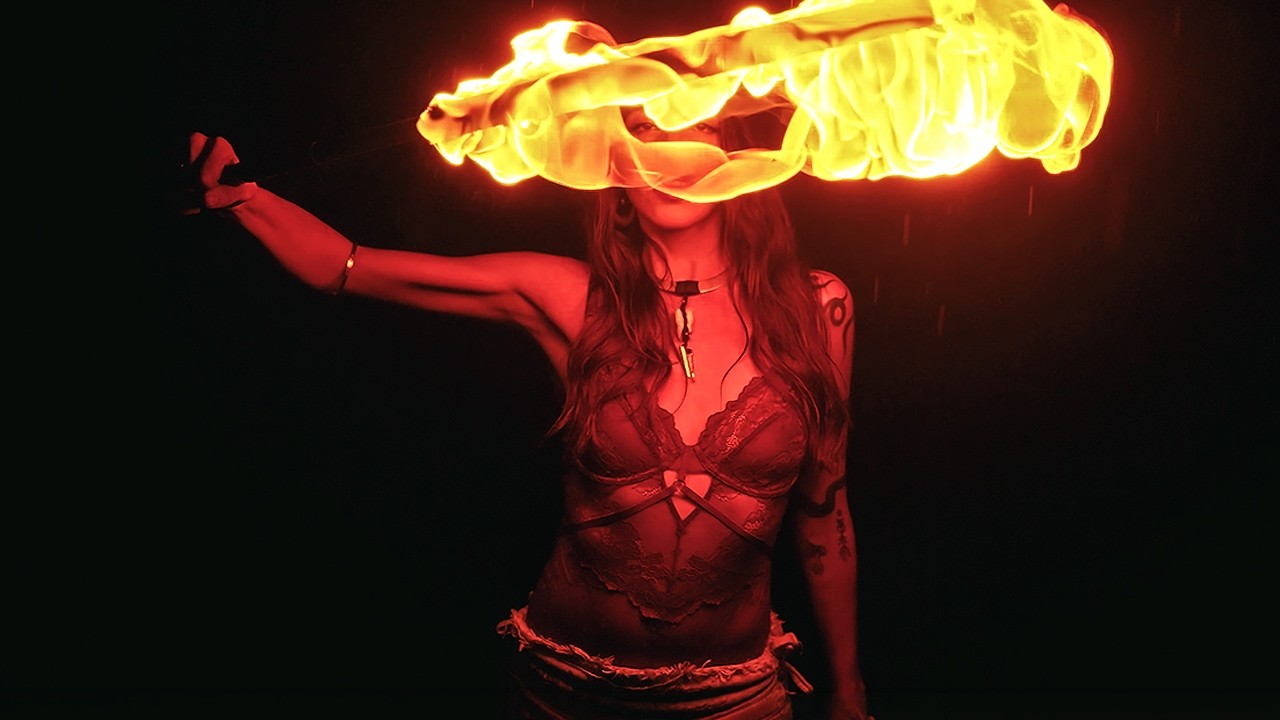
On a night in Croatia, under a Full Moon in Aries, Nadav Tabak closed the Luminaries Summit 2026 with "The Magic Garden," a single track built in front of the crowd from guitar, voice, percussion and loops. The six-minute recording opens on a pulse of music, a spoken line that names the piece, a voice rising over a layered groove, a shout, and a long wash of applause. There is no interview in the video and no spoken history. What it offers is the thing itself: a closing set in which a performer stacks sound on sound until a room of dancers is inside the music. That is worth examining closely, because the way the track is made is the point.
The video starts with the sound already moving. A low pulse arrives first, then a rhythmic figure that sits underneath everything that follows. At about the 1:36 mark, the performer speaks over the music: "Welcome to the magic garden." It is the only spoken line in the excerpt, and it works as a threshold. The crowd is being invited into a space, not simply watching a song. Within the next minute the voice enters as sung melody, first a few sustained notes and then a fuller line, and the texture thickens around it.
Nothing in the recording is announced as a new section. The changes arrive as additions. A figure is laid down, then another is set above it, and each addition changes what the first one means. This is the core discipline of a live looping performance, and it is easy to miss on a first listen because it sounds so natural.
Live looping is a method in which a performer records a short phrase into a loop device and lets it repeat, then records another phrase over it. A single musician can end up with what sounds like a full band: a rhythmic bed, a melodic line, a vocal harmony, a percussive layer. The loop is both the instrument and the arrangement. Every mistake is also recorded, so the performer must listen and commit in the same breath.
The description of this set lists the tools plainly: "Live looping • Guitar • Voice • Percussion • Organic Trance." Those five words describe a method rather than a genre label. The guitar supplies harmonic color and sustain, the voice carries melody and the occasional wordless cry, and percussion supplies the physical drive that makes dancers move. The "organic" in the name points to the fact that every element is played by hand in the moment rather than triggered from a pre-built track. The audience can hear the seams, and that is part of the appeal.
Around the middle of the excerpt, the vocal lines open into sung phrases and a sharp scream cuts through the groove. Then comes a short, deliberate "Oh, yeah" and a return to instrumental weight. These are the moments where a looped performance shows its human hand. A pre-recorded track never screams at the right moment; a performer reading a room does.
The closing slot of any summit carries a particular weight. It is the last sound a room hears before people go home, and it tends to be remembered as the feeling of the whole event. The description says the performer was grateful for "that feeling of everyone being completely present and sharing the moment together." That phrase is the performer's own account of the night, and it is the most revealing sentence in the material.
The full moon framing matters for the same reason. The description names the lunar event and its sign, Aries, which is a fire sign in astrology. Whether or not a listener takes the astrological reading seriously, the choice shows how the performer thought about the set: as a ritual of arrival and release rather than a simple concert. The phrase "something really special in the air that night" carries the same idea. The performance is pitched as an event in a particular time and place, not as a recording to be replayed.
An honest account has to note the limits of the material. The video contains no interview, no account of how the track was written, and no biography of the performer. The view count at the time of this writing is 329, and the description is brief. Anyone looking for the origin story of "The Magic Garden," or for the performer's background in looping and organic trance, will need other sources. The excerpt also includes many stretches where only music plays, so the viewer must do the listening rather than receive commentary.
That silence is not a flaw in the set. A closing performance is meant to be experienced, and the recording captures the shape of that experience: a slow build, a voice that enters, a peak with a cry, and a release into applause. The best way to understand the piece is to listen to it through, ideally with the sound loud enough to feel the low end.
Watch the full six-minute performance and listen for the moment each new layer enters. Count the number of distinct sounds you can identify by the second minute, then notice how many are still audible at the end. That exercise is the clearest way to hear what live looping does. If you want to go further into the form, search for live looping performers and organic trance sets to compare methods, and read the description of the Luminaries Summit set for the context the performer chose to share. The track itself is the best source: it was made to be heard on a dance floor under a moon, and the recording is most faithful when it is played loud.