Transcript
[0:00] Facebook and social media and chatbots
[0:03] have done so much to increase the crisis
[0:06] in loneliness.
[0:07] And then all the programs say, "Well,
[0:09] here we're going to give you chatbots to
[0:11] fix the problem in loneliness." That
[0:13] really is the problem that I say we face
[0:15] today
[0:16] >> [music]
[0:16] >> that for so many people the performance
[0:19] of empathy by a program becomes empathy
[0:22] [music] enough for them.
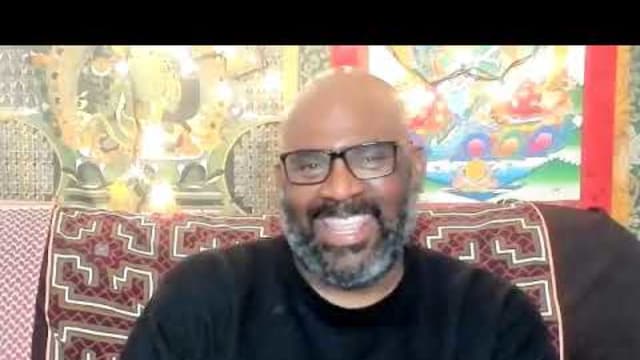
[0:23] >> I'm here with Sherry Turkle. Sherry,
[0:25] thanks for joining me.
[0:27] >> My pleasure.
[0:28] >> It's It's great to finally connect with
[0:29] you. I I don't Am I right in thinking
[0:31] that we have not met anywhere, not at a
[0:33] TED conference or
[0:35] >> No, I think this is the first time.
[0:37] >> Okay. Well, well, great. Well, I've been
[0:38] an admirer of your um
[0:40] you know, the perspective you've given
[0:42] on technology for many years now. You've
[0:44] written many books and the latest is
[0:46] Artificial Intimacy, Who We Become When
[0:48] We Talk to Machines. Um
[0:51] and we'll get to AI, which is which is
[0:53] your focus there, but um I mean you've
[0:55] been you've been thinking about our
[0:56] relationship with technology you know,
[0:59] as in as you say by computers and
[1:01] smartphones and social media for a long
[1:04] time. Um if you were going to compare
[1:07] the world of today to say
[1:09] 1975,
[1:11] right, when most people had nothing more
[1:14] than, you know, a television set and a
[1:16] landline.
[1:17] How do you think we're doing? I mean how
[1:19] how do you perceive the effects of
[1:23] information technology in all its guises
[1:26] permeating and and subsuming human
[1:30] culture to the degree that it has.
[1:32] >> Well, I think I'm going to narrow that
[1:34] question down to my field of expertise,
[1:37] which is the development of the person
[1:39] and how the person situates themselves
[1:42] in society in terms of feeling a sense
[1:45] of agency, a sense of community, etc. Um
[1:49] and there uh there's been a remarkable
[1:51] deterioration
[1:53] in um in how we relate to each other
[1:57] in our confidence in relating to each
[2:00] other, we've developed a feeling of
[2:03] vulnerability
[2:04] so that we want to escape into our
[2:07] phones or don't text don't talk just
[2:10] text me. Don't text me, I'll talk to a
[2:13] I'll talk to an avatar. I mean, first we
[2:15] talked to each other in 1976, we talked
[2:19] to each other, and then we talked to
[2:21] each other through machines, and now
[2:23] we're kind of dropping the middleman,
[2:25] which is the story of my new book, and
[2:27] we just are willing to just talk to the
[2:29] machines themselves. So, that's really a
[2:32] downgrading in our um in our kind of
[2:35] capacity and interest to deal with the
[2:39] um rough and tumble and vulnerability of
[2:43] dealing with other people. And
[2:45] similarly, we've um re- retreated from
[2:49] our communities. Uh when I first started
[2:52] studying personal computers, for
[2:54] example, the the people who were
[2:56] building them were interested in using
[2:58] them as kind of neighborhood hubs and
[3:01] ways of
[3:02] the the their slogan was use the virtual
[3:05] to improve the quality of life in the
[3:07] real. Mhm. That was the slogan of the
[3:10] early personal computer people. Whereas
[3:13] Mark Zuckerberg now talking about meta
[3:15] basically says people would like to have
[3:18] 15 friends, but that's unrealistic. Uh
[3:21] they're too busy. The demands of their
[3:23] jobs or two jobs or two great. Um so
[3:27] they can maybe have two or three
[3:28] friends, and he'll give them the extra
[3:31] 12 or 13 friends as avatars, as
[3:34] programs, as chatbots that'll be tuned
[3:38] to them. So, even there you see a kind
[3:41] of willingness or a a corporate interest
[3:44] in in saying, well, we're not really
[3:46] going to be members of our community.
[3:48] We'll even drop the real people to just
[3:51] look at screens. So, I think it's a the
[3:53] I you know, when I began looking at this
[3:56] phenomenon, I was um
[3:58] I was optimistic about using the virtual
[4:01] to improve the quality of life in the
[4:03] real. Can you Can you Can you recapture
[4:04] >> And what was your first interaction with
[4:07] the internet like? I mean, were you an
[4:08] early user? Like, were you on the well
[4:10] with lots of
[4:11] >> Yes, I mean, I the people who I was I
[4:13] wasn't myself I was on the well, but I
[4:15] wasn't an active user of the well, but I
[4:17] studied the well and I hung out with
[4:19] those people and the the idea really was
[4:23] to create community online that would
[4:26] translate into more and better community
[4:29] offline. And I remember visiting the
[4:32] early personal computer owners in San
[4:35] Francisco
[4:36] and a group called Community Memory that
[4:38] Lee Felsenstein started, great pioneer
[4:41] of the personal computer movement. And
[4:43] that was their mantra.
[4:45] Improve the virtual to improve the
[4:47] quality of life in the real. Make the
[4:50] virtual to improve the quality of life
[4:52] in the real. And
[4:54] you know, now there's uh
[4:57] there's kind of a retreat from the real.
[5:00] >> Mhm.
[5:00] >> Uh and a sense that if your best friends
[5:03] are chatbots, if you turn away from the
[5:06] the kind of biological people in your
[5:08] life to the to the easier to deal with
[5:12] virtual people,
[5:14] well, that's kind of understandable cuz
[5:16] real life is very hard.
[5:18] >> Mhm.
[5:18] >> So, actually in this book I I take a
[5:21] very um
[5:23] I really come down very hard on that
[5:25] because I think that's a disaster
[5:27] for the individual, for communities, for
[5:30] children as they grow up, it's a
[5:31] disaster for politics. And I say,
[5:35] "Don't abandon the real now. You know,
[5:37] reality really needs you. This is not a
[5:39] good time to abandon the real."
[5:41] >> So, so what's the evidence
[5:43] >> strongly.
[5:44] >> What what So, what is the evidence that
[5:46] we have lost many of these capacities?
[5:48] >> what Were you saying why was I
[5:50] optimistic?
[5:52] >> Well, I know, I mean, I just I
[5:53] I love to listen to I often listen to to
[5:58] people speaking from
[6:01] the period where the most of us were
[6:04] just getting online. I mean, like like
[6:06] there are people I'm fans of various
[6:07] people who um
[6:08] >> Yeah.
[6:09] >> I'll you know read their books or listen
[6:10] to their stuff and there's an endless
[6:11] number of you know YouTube conversations
[6:13] and lectures you can hear from people in
[6:16] let's say you know 1994
[6:18] who were you know early adopters online.
[6:21] >> Right.
[6:22] >> Um I'm thinking of someone like you know
[6:23] Terence McKenna who you know for all of
[6:25] his you know uh quirks as an as an
[6:27] intellectual he was quite brilliant and
[6:29] quite prescient uh with respect to you
[6:31] know many of the the cultural changes
[6:33] that would would soon follow once so
[6:35] much of of culture went into cyberspace
[6:38] but there was a there was a kind of
[6:39] optimism there that really seems quaint
[6:43] and and uh naive but it's it's easy it's
[6:46] easy to be
[6:48] sentimental for that moment where you
[6:49] where we [clears throat] thought okay
[6:51] this is
[6:53] this has to be intrinsically good to
[6:55] have access to more and more of the
[6:58] world's information and to connect
[7:00] people with less and less friction like
[7:04] what what like at some level what could
[7:05] be wrong with this? Yeah.
[7:06] >> I think I think the notion the problem
[7:09] there is the word intrinsic. Yeah. With
[7:11] technology
[7:13] nothing really is intrinsic because
[7:16] right away the social the political the
[7:19] economic environment in which the
[7:20] technology is being shaped jumps in.
[7:24] >> Mhm.
[7:24] >> So for example Facebook I remember when
[7:27] I first heard about it you know
[7:29] grandmas looking at pictures of babies
[7:32] my classmates from all over the world
[7:35] had a kindergarten reunion. I had a
[7:37] fifth grade reunion. I mean I did. I had
[7:40] a reunion of the people I went to fifth
[7:42] grade with.
[7:43] >> Yeah.
[7:43] >> Unthinkable.
[7:44] >> Yeah.
[7:44] >> Um and so there was every reason to feel
[7:47] my goodness uh
[7:49] I guess the word intrinsic would come up
[7:51] you know how can it be bad to connect
[7:54] the world with each other? Well, here's
[7:56] how it can be bad.
[7:59] American corporate culture actually
[8:01] thought of some ways
[8:03] >> make it
[8:03] >> we make this bad? Yeah.
[8:04] >> Right. I mean I mean
[8:06] >> Banner ads and
[8:07] and algorithms.
[8:09] >> Powerful minds went to work immediately.
[8:11] And
[8:12] you can make it bad if you make
[8:14] attention
[8:16] the most important thing about it,
[8:17] keeping people staring at their screens.
[8:20] And then you say, "Well, how do you do
[8:21] that?"
[8:22] You
[8:23] make people angry
[8:26] and then keep them with their own kind.
[8:28] Silo them with their own kind.
[8:31] That turns out to be like a really
[8:33] powerful way to keep people at their
[8:35] screens.
[8:36] Now,
[8:37] if you do that, you get them at their
[8:39] screens and you can give them ads, you
[8:41] can scrape their data, and you can make
[8:43] money. On the other hand, it's really
[8:45] terrible for the individual who's angry
[8:48] all the time, sort of activated,
[8:51] anxious,
[8:53] not going out, not meeting people, not
[8:55] being not kind getting nervous about the
[8:59] rough and tumble of the world as it is.
[9:01] And it's terrible for them politically.
[9:04] It's terrible for the community because
[9:07] what is the worst thing for democracy
[9:10] than to have everybody angry and only
[9:13] comfortable with their own kind and not
[9:15] wanting to talk across difference?
[9:18] So, something that sounded like
[9:20] a great
[9:22] a great thing,
[9:23] it didn't take very long for it to be
[9:26] a toxic thing.
[9:28] And that's even before we get into the
[9:31] things that I'm kind of a specialist in,
[9:34] which is that you lose the capacity for
[9:37] solitude.
[9:38] That people really need the capacity for
[9:40] solitude in order to have mutuality. You
[9:44] know, you need to feel, "I know who I
[9:46] am. I'm comfortable with who I am." And
[9:49] then I can in that comfort with who I
[9:52] am, I can say, "Well, who are you?"
[9:56] And I'd like to know you, and here's who
[9:58] I am, and let's have a relationship. If
[10:00] you don't know who you are, essentially
[10:02] you you approach another person and say,
[10:05] "Tell me who I am."
[10:07] And [clears throat]
[10:08] that's a disaster in terms of mutual
[10:10] friendship.
[10:10] >> Mhm.
[10:11] >> So,
[10:12] we gave up that, we gave up our capacity
[10:15] for boredom, which is so important
[10:16] developmentally. Uh people need to be
[10:19] able to let their minds wander and have
[10:22] a moment of kind of inner peace
[10:24] um in order for uh really their neurons
[10:30] for the for basically for the brain to
[10:32] develop an autobiographical sense of
[10:34] self. The brain needs that downtime that
[10:37] comes with boredom. Well, well, people
[10:39] get anxious if they're not being
[10:41] constantly stimulated.
[10:43] So, we're really taking away very
[10:45] important and and taking away solitude
[10:48] and taking away the capacity for
[10:49] boredom, where we're taking away very
[10:52] important signal uh developmental uh
[10:56] possibilities that we need. Um So, all
[11:00] of these things are not good.
[11:01] >> What what's most been most informative
[11:04] of
[11:05] your view of of all that we're losing
[11:07] here? Is it just is it your interaction
[11:09] with students at MIT
[11:11] over the years or is it the research
[11:14] literature that such as it is?
[11:15] >> No, uh well, the way I work, I mean, it
[11:18] turns out for the past 40 years, I've
[11:21] been interviewing people about their
[11:23] relationships with technology.
[11:24] >> Mhm.
[11:25] >> Now, that's a very particular kind of uh
[11:29] methodology.
[11:31] >> Yeah.
[11:31] >> Um
[11:32] but it's mine. And so, really, I have
[11:36] you know, 40 years of interviews about
[11:39] what it's like to sit in front of the
[11:40] screen, what people do, what their uh
[11:42] fantasies are, what they're doing, how
[11:44] they feel about themselves.
[11:45] >> Mhm.
[11:45] >> I have that.
[11:47] And then I have um
[11:49] you know, uh wide reading in the
[11:51] research literature. In other with other
[11:53] methodologies. But certainly on the
[11:56] things that I care about most, which is
[12:00] the loss of a capacity for empathy,
[12:04] that is my work supported by a very
[12:08] substantial, much more quantitative uh a
[12:12] set of research studies
[12:14] >> Mhm.
[12:14] >> that um
[12:15] You know, I actually there's a great
[12:16] story about empathy. I was
[12:19] I was discovering
[12:21] uh a loss in empathy
[12:24] when the cell phones became very big,
[12:26] 2010, '11, '12, '13, '14. And because
[12:30] people would say to me, you know, I'd
[12:33] rather text than talk. I'd rather be on
[12:34] my phone than talk to another person.
[12:36] >> Mhm.
[12:37] >> And I'd say, "Why?"
[12:38] And they'd say, "Oh, conversational tell
[12:41] you what's wrong with conversation. It
[12:43] takes place in real time and you can't
[12:45] control what you're going to say."
[12:47] >> Mhm.
[12:47] >> In other words, the job of doing the
[12:50] empathic work was starting to feel
[12:53] scary. But too much to do.
[12:56] And at that time I read a study by a
[12:58] brilliant uh a very quantitative study
[13:01] by a very brilliant psychol-
[13:03] psychologist named Sara Konrath. And I
[13:05] went to see her.
[13:06] And she said, "Yeah, from the time of
[13:08] the cell phones on
[13:10] um you see this drop in all the ways
[13:14] that we know to measure empathy."
[13:15] >> Mhm.
[13:16] >> And I said to her, and she says, "I'm
[13:17] very depressed about it."
[13:19] And I said, "Well, what are you going to
[13:21] do? I'm depressed, too." And she said,
[13:23] "I'm going to build empathy apps for the
[13:26] iPhone."
[13:26] >> Mhm.
[13:27] >> In other words, I'm going to build
[13:28] technology for the iPhone
[13:30] >> Mhm.
[13:31] >> that I hope will give people practice in
[13:33] empathy. You know, tell stories and how
[13:35] did they feel and how did they
[13:37] And I thought to myself
[13:40] this is a very bad time we're going into
[13:44] where technology helps to create a
[13:46] problem
[13:47] and then we look to technology to help
[13:50] us solve the problem. And at the time I
[13:53] said to her
[13:54] and I've said it many times in my
[13:56] writing, I say, "But we are the empathy
[13:58] app." People
[14:00] >> Mhm.
[14:00] >> are the empathy app. And she laughed at
[14:03] me. She knew what I was saying. But but
[14:04] basically she did develop these empathy
[14:06] apps for the iPhone.
[14:08] And that's kind of we're in the same
[14:10] place today. The sir- you know, Facebook
[14:12] and social media and chatbots have done
[14:15] so much to increase the crisis in
[14:18] loneliness.
[14:19] And then all the programs say, "Well,
[14:21] here we're going to give you chatbots to
[14:22] fix the problem in loneliness."
[14:24] If you're lonely, that's great. We'll
[14:26] throw a chatbot your way.
[14:27] >> Well, let's linger on empathy for the
[14:29] moment because um
[14:31] I mean, first of all, you can mean two
[14:33] things uh by the term. I mean, there's a
[14:37] there's an emotional strand of empathy
[14:38] and then there's a cognitive one. So,
[14:40] you cognitively being able to understand
[14:43] other people's experience is one thing
[14:46] and that's a you you know, it's
[14:47] obviously a necessary um
[14:49] piece of our cognition. I mean, this is
[14:51] you know,
[14:51] otherwise known as theory of mind. Uh
[14:53] and some some people have obvious
[14:55] deficits in that. Uh but then there's
[14:58] the the emotional
[15:00] permeability that we have to one or
[15:02] another degree where we where we care
[15:04] about, you know, we we can you know,
[15:06] when someone's sad, there you know,
[15:08] and we and we see the the external
[15:10] effects of their sadness, there's an
[15:12] emotional contagion component which you
[15:14] know, we we be their sadness begins to
[15:17] feel like our own and
[15:19] I mean, some of that's good, some of it
[15:20] is is it is the stuff of which, you
[15:23] know, real intimacy is is is made and
[15:25] also just the appreciation of, you know,
[15:27] vicarious lives through art and, you
[15:29] know, film and etc. So, it's we enjoy
[15:34] emotional contagion, but there's there
[15:35] also clearly pathologies of it, right?
[15:37] And and social media is now
[15:40] the um
[15:42] this kind of you know, cultural charnel
[15:44] house of in some sense is too much emp-
[15:48] too much emotional emp- empathy,
[15:49] certainly too much emotional contagion.
[15:51] I mean, there's a kind of I mean, every
[15:53] at the center of every moral panic is
[15:56] just the the kind of unreasoning
[16:00] zeal provoked by certain images being
[16:04] taken you know, as seriously as they
[16:06] can, right? I mean, who knows who knows
[16:08] even what the images actually depict in
[16:10] the real world, right?
[16:10] >> I I have a narrower definition. I think
[16:13] it's dangerous, personally,
[16:15] >> Mhm.
[16:16] >> to have that
[16:17] inclusive
[16:19] of you or me.
[16:20] >> how do you think about empathy?
[16:21] >> I think empathy is that because two
[16:25] humans
[16:27] have lived the arc of a human life,
[16:30] know what it is to feel pain,
[16:33] know what it is to fear illness, know
[16:37] what it is to feel joy or have desire or
[16:40] even the experience of being little and
[16:44] everybody around that you're dependent
[16:45] on is big,
[16:47] and then as you get bigger,
[16:49] you start to have more agency, but you
[16:52] still remember and have some of the
[16:54] anxieties of
[16:55] all those years when you were little,
[16:58] to look forward to things, to lose
[17:00] someone, to be rejected. I mean, all of
[17:03] the things in a human life.
[17:05] I think when two human beings face each
[17:08] other,
[17:09] they connect
[17:11] on these
[17:13] I don't call think of it as contagion. I
[17:15] think of it as as signaling to tune in
[17:21] to these moments in the arc of life and
[17:23] how they make us feel. So, that when
[17:26] you're hearing another person's story,
[17:28] you really can get into their head.
[17:31] Now,
[17:33] uh I think
[17:35] that that is only good.
[17:38] And the what you see online, which is
[17:42] whipping people up
[17:44] into a kind of, you know,
[17:48] almost pornographic. I mean, you know,
[17:50] every every art form, every trick is
[17:54] being used to incite violence, incite
[17:56] hatred, incite uh tribal
[18:00] uh feelings.
[18:02] I don't particularly think of that as
[18:04] the dance of empathy.
[18:06] Uh I think there are other ways that
[18:08] have more to do almost with propaganda
[18:11] and mass delusion that have to do with
[18:14] that. The thing that we're losing that I
[18:16] think social media and chatbots are
[18:19] undermining is really much more that
[18:22] person-to-person empathy
[18:25] where you really
[18:26] care about other people and you feel in
[18:29] a kind of community with them.
[18:32] And my point in artificial intimacy is
[18:34] that chatbots can't do that.
[18:37] Not because they're bad or because
[18:39] they're not well enough developed. They
[18:41] they never will because they haven't
[18:43] lived the arc of a human life.
[18:45] So they can have information
[18:48] about all these parts of the human life,
[18:50] but they're not they haven't lived it,
[18:52] they don't feel it.
[18:54] They don't have the equipment to
[18:56] empathize. So they perform empathy
[18:59] and really what a lot of my new work is
[19:01] about and what the book is about is what
[19:04] happens to people when the performance
[19:07] of empathy becomes empathy enough.
[19:11] And that really is the problem that I
[19:14] say we face today that for so many
[19:16] people
[19:17] the performance of empathy by a program
[19:20] becomes empathy enough for them.
[19:23] >> Well, that's an interesting distinction.
[19:24] I'm not sure
[19:26] I believe that distinction is so hard
[19:27] and fast even in the case of human
[19:30] beings, but uh but let's get there but
[19:33] let's let's jump into the
[19:34] >> Well, it's interesting to talk about
[19:36] because I think it is the question.
[19:38] >> Yeah.
[19:38] >> Because if you say
[19:40] well, there's cognitive empathy
[19:42] and there's that personal stuff.
[19:46] Well, then it's easy to say a program
[19:48] has cognitive empathy.
[19:51] It's easy to kind of grant the program
[19:53] a kind of understanding because of its
[19:56] literature searches and you know, it's
[19:59] reading all the literature and but but I
[20:02] don't think that I think that's a
[20:05] um
[20:05] the way empathy has two parts
[20:08] is the way in which people when they
[20:10] love each other have two parts. There's
[20:12] the cognitive part, my God, I admire you
[20:14] and you're beautiful. You know, there's
[20:15] that there's the there's the cognitive
[20:17] things.
[20:19] Uh you know, we want the same we have
[20:20] the same values and then there's the
[20:22] whole body experience
[20:25] falling in love, wanting to be close to
[20:27] the person, wanting to hold your hand,
[20:28] wanting to touch them, make love to
[20:30] them. I mean, and you you could say,
[20:32] "Well, let's just separate out the
[20:33] cognitive part from like all the other
[20:36] stuff." But it turns out that love
[20:38] doesn't work that way.
[20:40] And I don't think empathy works that
[20:42] way, either.
[20:42] >> uh don't you think we could be humbled
[20:44] by
[20:45] a complete understanding of the way
[20:47] empathy and sympathy and compassion and
[20:50] love work and how they're contingent
[20:52] upon certain surface features that
[20:55] uh can be can be emulated by machines
[20:59] ultimately. I mean, so let let let's
[21:00] just imagine
[21:02] um we get out of the Uncanny Valley and
[21:04] we have humanoid robots that just I mean
[21:05] we we we have Westworld essentially,
[21:07] right? I'm sure you saw Westworld,
[21:09] right? Um so
[21:10] >> Many times. Many times.
[21:13] >> [laughter]
[21:13] >> Um some of those seasons were great. Um
[21:16] I mean, if you if you compare a a
[21:18] perfect a perfectly tuned humanoid robot
[21:23] to a an imperfect person
[21:25] I think many people will have the
[21:27] experience in the presence of of a robot
[21:30] of feeling greater empathy, you know, in
[21:33] both directions, uh better understood,
[21:36] even more love than when they're in the
[21:40] presence of a person who for whatever
[21:42] reason I mean, you know, to take a you
[21:43] know, a person with Parkinson's who's
[21:45] got like kind of facial masking where
[21:47] they just they're not expressing emotion
[21:49] they're not expressing any emotion on
[21:50] their face, right? Because they're
[21:51] incapable of it. Or um
[21:54] you know, somebody who's just uh you
[21:56] know, for whatever reason just not very
[21:58] charismatic and we have we have the
[22:00] charisma function turned up to 11 on our
[22:02] perfect, you know, our our perfect bot.
[22:05] >> Well, you know, you can feel things that
[22:07] aren't there. In other words, you can
[22:09] feel
[22:11] that someone is performing empathy
[22:13] >> Mhm.
[22:14] >> and is doing this this is no fantastic
[22:16] performance taking place.
[22:18] But in fact
[22:20] the robot doesn't the robot or the
[22:22] chatbot or the doesn't care when you
[22:25] turn away from just take chatbots for a
[22:27] minute because we're with the chatbots.
[22:28] >> could make it seem to care, right? Like
[22:30] all of this is just what we
[22:31] >> Right, but the question is whether or
[22:33] not it matters, whether it's performing,
[22:35] seeming, or actually caring. So, I want
[22:38] to I want to just back up to what you
[22:39] said cuz I think that it's a it's very
[22:41] provocative.
[22:43] My position is is that the performance
[22:46] of empathy is never empathy enough.
[22:49] Because if you have a person I think
[22:51] it's important to take out of this
[22:53] equation people with dementia, people
[22:56] with Alzheimer's, people with
[22:59] >> Parkinson's or anything.
[23:00] >> certain sort of Parkinson's. I was
[23:01] thinking of Parkinson's, but the kinds
[23:02] of Parkinson's that bring you dementia.
[23:04] >> Right.
[23:04] >> I'm willing to take out of the equa- I
[23:06] think it's important to take out of the
[23:08] equation people who are are are are
[23:12] really have had the parts of the brain
[23:13] that allow them to do some of the
[23:16] empathy work uh
[23:18] removed. And take a person whose life
[23:21] history
[23:23] and whose uh family values, and whose
[23:26] way of being brought up has not made
[23:29] empathy and listening and and
[23:30] conversational skills and reading faces
[23:32] a very big part of their life. I mean,
[23:34] we know a lot of people like that.
[23:36] >> Yeah.
[23:36] >> Um
[23:37] and then you say well let's compare that
[23:41] person, which I thought you were sort of
[23:42] trying to do
[23:44] with a really fabulous chatbot robot,
[23:47] you know, the most finely tuned. It's
[23:49] the one that Eric Schmidt is perf- you
[23:51] know, it's it's his favorite one for
[23:53] having for having chats. Um
[23:56] and my feeling is is that
[23:59] the most imperfect person has lived a
[24:03] life
[24:04] and knows pain and knows fear and knows
[24:07] what it is to you know, to be little and
[24:11] maybe fears death and doesn't want to be
[24:13] sick and was worried about their
[24:15] children. And no no chatbot feels that.
[24:20] I think of myself as the front lash of
[24:22] the backlash. I think I make a very
[24:24] strong argument that this is not good
[24:26] for us. It's not good for our kids.
[24:29] They have trouble enough. They're
[24:30] frightened of relationships. They're
[24:32] They're not good at talking.
[24:35] They haven't been given practice.
[24:37] They're on their screens too much.