BrightStar

Sfoglia tutti i Events

Scopri incontri consapevoli

events

Yoga
Meditation
Breathwork
Qigong
Tai Chi
Sacred Music
World Music
Medicine Music
Sound Healing
Ecstatic Dance
Destinazioni popolari
BaliSedonaLos AngelesCosta RicaNew YorkSan FranciscoAustinMiamiJoshua TreeTulum
Vedi tutte le categorieVedi tutte le destinazioni

Esplora tutte le funzionalità

Strumenti potenti per far crescere i tuoi eventi

Funzionalità della piattaforma

Prezzi dinamici intelligenti
Categorie di biglietti
Posti assegnati
Recupero carrelli abbandonati
Recupero visitatori
Donazioni e prezzi variabili
Sistema affiliati
Scanner biglietti
Codici sconto
Domande personalizzate
Condivisione biglietti
Upsell e componenti aggiuntivi
Analisi e report
Sequenze email
Lista d'attesa / Notifica / Promemoria
Persone e Luoghi
Artists & TeachersEvent OrganizersVenues & StudiosKnowledge BaseGlossaryInspiration
Vedi tutte le funzionalitàChi siamo
PrezziBlog
Language
Saved events
Sfoglia tutti gli eventi

events

YogaMeditationBreathworkQigongTai ChiSacred MusicWorld MusicMedicine Music

Destinazioni popolari

BaliSedonaLos AngelesCosta RicaNew YorkSan Francisco

Persone e Luoghi

Artists & TeachersEvent OrganizersVenues & StudiosKnowledge BaseGlossaryInspiration

Funzionalità della piattaforma

Prezzi dinamici intelligentiCategorie di bigliettiPosti assegnatiRecupero carrelli abbandonatiRecupero visitatoriDonazioni e prezzi variabiliSistema affiliatiScanner bigliettiCodici scontoDomande personalizzateCondivisione bigliettiUpsell e componenti aggiuntiviAnalisi e reportSequenze emailLista d'attesa / Notifica / Promemoria
Vedi tutte le funzionalitàChi siamo
PrezziBlog
AccediRicercatoriCreatori
  • Sfoglia tutti i Eventi
  • Per i ricercatori
  • Yoga
  • Meditazione
  • Breathwork
  • Qigong
  • Tai chi
  • Musica sacra
  • World music
  • Musica medicina
  • Sound healing
  • Danza estatica
  • Ritiri
  • Workshop
  • Tutte le categorie →
  • Bali
  • Sedona
  • Los Angeles
  • Costa Rica
  • Tulum
  • Byron Bay
  • San Francisco
  • Austin
  • New York
  • San Diego
  • Denver
  • Seattle
  • Portland
  • Miami
  • Tutte le città →
  • Join the Movement
  • Why we list
  • Sell Globally
  • Per i creatori
  • Per team
  • Per gli scrittori
  • Per gli insegnanti
  • Per gli artisti kirtan
  • Per gli studi
  • Per i festival
  • Per i centri ritiro
  • Per le no-profit
  • Ambasciatore del brand
  • Biglietteria gratuita
  • Elevate
  • Amplify
  • Rete di 500K+ acquirenti
  • Recupero carrelli abbandonati
  • Prezzi dinamici intelligenti
  • Categorie di biglietti
  • Eventi ricorrenti
  • Posti assegnati
  • Sistema affiliati
  • Lista d'attesa / Notifica
  • Scanner biglietti
  • Widget incorporabile
  • Distribuzione eventi
  • Centro messaggi
  • Integrazioni
  • Report
  • Tutte le funzionalità →
  • Chi siamo
  • L’ecosistema
  • Blog
  • Glossario
  • Ispirazione
  • Centro assistenza
  • Contatti
  • Documentazione API
  • Risorse del brand
  • Carriere
  • Stampa
  • Termini di servizio
  • Informativa sulla privacy

Eventi

  • Sfoglia tutti i Eventi
  • Per i ricercatori
  • Yoga
  • Meditazione
  • Breathwork
  • Qigong
  • Tai chi
  • Musica sacra
  • World music
  • Musica medicina
  • Sound healing
  • Danza estatica
  • Ritiri
  • Workshop
  • Tutte le categorie →

Destinazioni

  • Bali
  • Sedona
  • Los Angeles
  • Costa Rica
  • Tulum
  • Byron Bay
  • San Francisco
  • Austin
  • New York
  • San Diego
  • Denver
  • Seattle
  • Portland
  • Miami
  • Tutte le città →

Per i creatori

  • Join the Movement
  • Why we list
  • Sell Globally
  • Per i creatori
  • Per team
  • Per gli scrittori
  • Per gli insegnanti
  • Per gli artisti kirtan
  • Per gli studi
  • Per i festival
  • Per i centri ritiro
  • Per le no-profit
  • Ambasciatore del brand
  • Biglietteria gratuita
  • Elevate
  • Amplify

Funzionalità

  • Rete di 500K+ acquirenti
  • Recupero carrelli abbandonati
  • Prezzi dinamici intelligenti
  • Categorie di biglietti
  • Eventi ricorrenti
  • Posti assegnati
  • Sistema affiliati
  • Lista d'attesa / Notifica
  • Scanner biglietti
  • Widget incorporabile
  • Distribuzione eventi
  • Centro messaggi
  • Integrazioni
  • Report
  • Tutte le funzionalità →

Azienda

  • Chi siamo
  • L’ecosistema
  • Blog
  • Glossario
  • Ispirazione
  • Centro assistenza
  • Contatti
  • Documentazione API
  • Risorse del brand
  • Carriere
  • Stampa
  • Termini di servizio
  • Informativa sulla privacy
BrightStar
Scarica l'app
Scarica suApp StoreDisponibile suGoogle Play
© 2026 BrightStar. Tutti i diritti riservati.
Inspiration

Why Breathing More Can Leave You Lightheaded: The CO2 Story

SB
SOMA Breath
Oct 23, 2026
9 min di lettura

Da SOMA Breath

Guarda · 7

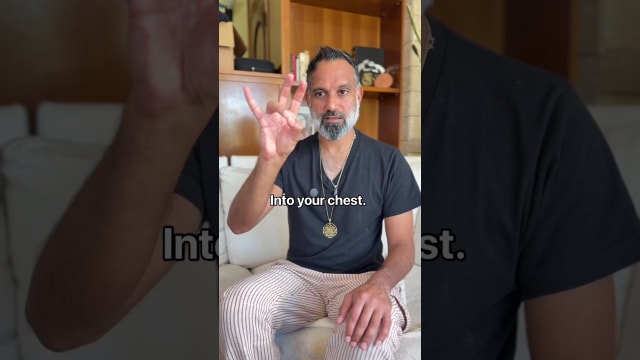
A SOMA Breath video, published in late October 2026 and running under four minutes, makes a bold opening claim: most breathwork is being done wrong, and some techniques may stress the body more than doing nothing at all. Its speaker, Niraj Naik, presents himself as a pharmacist and the founder of SOMA Breath, and he builds his case on one idea that deserves more attention than the usual wellness pitch gives it: that carbon dioxide, the gas most people think of as waste, is central to how oxygen actually reaches the brain and organs. The video is promotional, and several of its claims go well past what its own supporting notes establish. But the core physiology it points to is real, and it explains a common experience that many people have had in a breathwork session: the tingling, the dizziness, the sense that something has gone wrong while you were trying to go deeper.

Lettura · 8 sezioni

What does it feel like when breathwork goes wrong?

Picture someone who has signed up for a fast, forceful breathing session because they want to feel more awake. Ten minutes in, their hands start to tingle. The room seems to lean slightly. Their chest is working hard, but they feel less present, not more. They tell themselves this is a breakthrough and push harder. This is the scenario Naik opens his video with, and it is the one he wants you to recognize. The opening line, "Don't do breathwork. Seriously, don't do it," is a provocation, and it is also a deliberate hook. He names the practices most people already know, including the Wim Hof method and box breathing, and says that even a yoga teacher's instruction can be a problem unless you understand one thing first.

That one thing, in his telling, is what happens when you breathe more than your body needs. The sensations of over-breathing are not a sign that you are getting more from each breath. They can be a sign that you are getting less.

Why does breathing faster leave you lightheaded?

The mechanism Naik describes is the Bohr effect, and it is the heart of the video. In his words, "When you over-breathe, you actually dump too much CO2. And CO2, the gas you think is a toxic waste gas, is actually the key that unlocks oxygen delivery to your cells. Blow it all off, and your blood is full of oxygen that never actually reaches your brain or your organs."

"When you over-breathe, you actually dump too much CO2. And CO2, the gas you think is a toxic waste gas, is actually the key that unlocks oxygen delivery to your cells." (Niraj Naik, SOMA Breath video, published October 2026, around 0:53)

The supporting notes that accompany the video put this on firmer ground. Carbon dioxide helps regulate blood flow and the release of oxygen from haemoglobin. Excessive ventilation can lower carbon dioxide, reduce blood flow to the brain and cause lightheadedness. The notes sum it up in a line worth keeping: more breathing does not automatically mean better oxygen delivery.

This is the counterintuitive part. Most people assume that if they breathe faster and deeper, they are feeding the body more oxygen. But the amount of oxygen in your blood is only half the story. What matters is whether that oxygen gets released where it is needed, and CO2 plays a role in that handoff. When you flush out too much of it through rapid breathing, the blood can hold plenty of oxygen while tissues, including the brain, receive less of it than you would expect. That mismatch is one plausible explanation for why a session meant to calm you can instead leave you foggy, dizzy or panicky.

Is the average breathing rate really 15 to 20 breaths a minute?

Naik states that "the average person breathes 15 to 20 times a minute" and that "the optimal rate is actually four to six breaths a minute." He links the habit of over-breathing to a state of low-grade fight or flight, the foggy, wired-but-tired feeling that many people describe.

The numbers need some context. The supporting notes give a normal adult resting rate as commonly 12 to 20 breaths per minute, so the speaker's average is at the upper edge of what is typical. They also describe a pace of around four to six breaths per minute as one used in deliberate slow-breathing practices. The notes add that the right practice depends on the person and their context. In other words, a slow rhythm is a tool used with intention, not a universal target that every person should hit on their own.

This distinction matters. Breathing rate, depth and timing work together, as the notes say. A slow, controlled pace is not the same as forcing a deep breath or holding one. A reader who wants to explore slower breathing should think about rhythm as a whole rather than chasing one number.

Does more oxygen mean faster recovery?

The video also takes aim at the idea that more oxygen always helps. Naik describes what he calls the oxygen paradox: "The more oxygen you force in, the more oxidative stress you actually create. It literally accelerates aging at cellular level." That is a striking claim, and it is worth reading carefully. The video offers it as a statement about the body's cells, without giving the study design or the dose behind it.

The notes draw a useful line here. Oxygen exposure and oxidative stress depend on dose and conditions. Research involving concentrated or supplemental oxygen should be kept separate from breathing ordinary air during a guided practice. So the caution is about how much oxygen and under what conditions, not a blanket warning against breathing normally. A slow, nasal, rhythmic practice using ordinary air is a different situation from a high-concentration oxygen protocol, and the two should not be conflated.

Why does nasal breathing come up so often?

Naik argues that mouth breathing "bypasses your body's natural filtration system and cuts off your production of nitric oxide," which he describes as the molecule that dilates blood vessels, supports the immune system and keeps the heart healthy. The notes support the core of this: nasal breathing filters and conditions incoming air and carries nitric oxide from the nasal passages, and nitric oxide supports blood-vessel function. The notes also say nitric oxide is produced elsewhere in the body, which is a useful reminder that the nasal route is one contributor, not the only source.

For a reader, the practical takeaway is simpler than the video's framing. Breathing through the nose is a sensible default for most practices, and it is also the foundation of the rhythmic, slow approach the video promotes. Whether mouth breathing has the broader health consequences Naik describes is a question for a clinician and the primary literature, not for a single promotional video.

What did the Cambridge-linked study actually measure?

The video cites "the biggest breath work study done today by Cambridge University" as validation for its approach. The supporting notes describe something more specific and more modest. Cambridge-affiliated researchers studied 14 beginners across 301 repeated breathwork sessions and found associations between reported psychedelic-like experiences, including bliss, and EEG signal complexity. The research is listed as Lewis-Healey et al., published in Cerebral Cortex in 2024.

The important word is associations. The study looked at subjective experience and brain activity over repeated sessions. It was not a clinical treatment trial, and it did not guarantee any particular experience. That is a legitimate and interesting finding about how the brain's signal patterns relate to what people report feeling during breathwork. It is not the same as showing that a given app or method reliably produces bliss, lowers stress or heals a chronic condition. The video's leap from one to the other is the weakest link in its argument.

How should you choose a breathwork practice?

The video's most useful idea is not any single claim. It is the suggestion that breathwork should be treated like a dose rather than a free-for-all. Naik describes his system as "a doses system for your breath," and says, "I made it like a prescription, a dose." Whatever you think of the marketing, that framing points to questions worth asking of any practice you consider.

  • Rhythm: Is the pace controlled and gentle, or is it forceful and fast? Slow, nasal, rhythmic breathing is the pattern the video and its notes describe.
  • Recovery: If you feel lightheaded, tingly or panicky, does the instructor tell you to slow down, or to push through?
  • Oxygen conditions: Is the practice using ordinary air, or something concentrated? The notes flag that the two are different.
  • Your health: The video says Naik used his approach to address a chronic illness. That is his personal account and cannot be verified from the video. If you have a condition, talk with your clinician before starting any intensive breath protocol.
  • Claims: Be skeptical of promises about aging, immunity or guaranteed states. Look for the study design and what it measured.

Naik also says that "every Sunday thousands of people in over 50 countries breathe together" in live sessions and that "your heart rhythms actually synchronize with the people around you," which he calls group coherence. Those are claims about the platform's reach and a physiological effect in groups. They are his to make, and they are not established by the material provided here. A reader can still enjoy group practice on its own terms without accepting every stated mechanism.

Where to go from here

If the core idea landed for you, start with the physiology rather than the product. Read the Lewis-Healey et al. study in Cerebral Cortex (2024) to see what the EEG work actually found, and note its limits. Learn the basic relationship between carbon dioxide, ventilation and blood flow to the brain, and pay attention to how your own body responds when you breathe slowly through the nose compared with when you breathe fast and hard.

If you want to try a guided practice, SOMA Breath's own pages list a free masterclass and live Breathe Together sessions on its YouTube channel. Treat them as you would any instruction: notice how you feel, stop if you become lightheaded, and check with a clinician if you have a health condition. The most useful thing this video offers is not a promise. It is a reminder that breathing more is not the same as breathing better, and that the rhythm, the gas balance and your own response matter more than the number of breaths you can squeeze into a minute.

Comments

Loading the conversation…

Transcript

[0:00] Don't do breathwork. Seriously, don't do

[0:03] it.

[0:04] Not Wim Hof method, not box breathing

[0:06] off YouTube, definitely not whatever

[0:08] your yoga teacher told you to do, unless

[0:11] you know this one thing first. Cuz

[0:13] here's what nobody in the wellness space

[0:15] wants to admit. That most breathwork's

[0:18] being done completely wrong. And I'm not

[0:20] talking about minor tweaks. I'm talking

[0:23] about techniques that can actually

[0:24] stress your body out more than doing

[0:26] nothing at all.

[0:29] So, right now, the average person

[0:30] breathes 15 to 20 times a minute. The

[0:34] optimal rate is actually four to six

[0:36] breaths a minute. And that chronic

[0:38] over-breathing keeps you locked in

[0:41] low-grade fight or flight mode.

[0:43] Foggy brain, wide but tired, anxious for

[0:46] no reason? But then, people try to fix

[0:49] it by doing more breathing, harder,

[0:51] faster. But here's the problem with

[0:53] that. It's called the Bohr [music]

[0:55] effect. When you over-breathe, you

[0:56] actually dump too much CO2. And CO2, the

[0:59] gas you think is a toxic waste gas, is

[1:02] actually the key that unlocks oxygen

[1:05] delivery to your cells. Blow it all off,

[1:08] and your blood is full of oxygen that

[1:09] never actually reaches your brain or

[1:11] your organs. So, you're

[1:13] hyperventilating, feeling light-headed,

[1:16] thinking you're having a breakthrough,

[1:18] and your body's [music] just panicking.

[1:20] Then there's something called the oxygen

[1:22] paradox. The more oxygen you force in,

[1:25] the more oxidative stress you actually

[1:27] create. It literally accelerates aging

[1:30] at cellular level.

[1:32] And mouth breathing, well, every breath

[1:34] through your mouth bypasses your body's

[1:37] natural filtration system and cuts off

[1:40] your production of nitric oxide. That's

[1:42] the molecule that dilates your blood

[1:44] vessels, boosts your immune system, and

[1:46] keeps your heart healthy.

[1:49] But most breathwork out there ignores

[1:52] all of this. So, what does the right

[1:54] breathwork [music] look like?

[1:56] Well, I'm actually a pharmacist. My name

[1:58] is Niraj. I'm the founder of SOMA

[1:59] Breath.

[2:00] And I literally studied the pharmacology

[2:02] of the human body.

[2:03] And I use this knowledge to actually

[2:05] heal myself from a chronic illness

[2:08] when doctors actually given up on me.

[2:11] So, SOMA Breath isn't just breathing,

[2:13] breathe out. It's a doses system for

[2:15] your breath. I made it like a

[2:17] prescription,

[2:18] >> [music]

[2:18] >> a dose.

[2:19] So, it consists of rhythmic nasal

[2:21] breathing at specific ratios, music

[2:23] engineered to entrain your nervous

[2:25] system. Your body literally syncs to the

[2:27] beat. CO2 tolerance training so you

[2:30] actually use the oxygen you're

[2:31] breathing. And ancient yogic techniques

[2:33] now validated by modern science in the

[2:35] biggest breath work study done today by

[2:38] Cambridge University.

[2:39] And the result? Well, stress gone,

[2:42] energy's up, your mind becomes clear,

[2:44] and you get a natural high that no

[2:45] substance can actually replace. And

[2:47] here's the thing.

[2:49] You shouldn't do this alone cuz every

[2:51] Sunday thousands of people in over 50

[2:53] countries breathe together in our live

[2:56] breathe together sessions. We have over

[2:58] 4,000 instructors around the world

[3:00] leading these sessions. And when you

[3:02] breathe in a group, something

[3:03] extraordinary happens. Your heart

[3:05] rhythms actually synchronize with the

[3:07] people around you. Scientists call this

[3:09] group coherence. We call it a concert

[3:12] for your nervous system.

[3:14] So, if you're ready to stop guessing

[3:15] with your breath and start using it as

[3:17] the most powerful tool you already own,

[3:20] then join us this Sunday. It's

[3:22] completely free, it's live, and it might

[3:24] be the most powerful hour of your week.

[3:27] See you there. Peace.

SB
Artist
SOMA Breath

Watch more from SOMA Breath on YouTube.

Sito web
Esplora i temi
BreathworkCarbon-dioxideBohr-effectNasal-breathingSlow-breathing

Hai domande?

Domande frequenti

The video and its supporting notes say yes. Excessive ventilation can lower carbon dioxide, reduce blood flow to the brain and cause lightheadedness, so breathing more does not automatically deliver more oxygen to tissues.
Niraj Naik uses the term to describe how carbon dioxide helps unlock oxygen release from blood to cells. When over-breathing flushes out too much CO2, oxygen can stay bound in the blood instead of reaching the brain and organs.
The supporting notes give a commonly cited resting range of 12 to 20 breaths per minute for adults. Naik says the average is 15 to 20 and that slow practices use around four to six breaths per minute, though the right pace depends on the person and context.
No. The Cambridge-affiliated study by Lewis-Healey et al. (Cerebral Cortex, 2024) studied 14 beginners across 301 sessions and found associations between psychedelic-like experiences, including bliss, and EEG signal complexity. It was not a clinical treatment trial and did not guarantee any particular experience.
The supporting notes say nasal breathing filters and conditions incoming air and carries nitric oxide from the nasal passages, which supports blood-vessel function. Naik argues mouth breathing bypasses that filtration, but the broader health claims should be checked with a clinician and the primary research.
The notes say oxygen exposure and oxidative stress depend on dose and conditions. Research on concentrated or supplemental oxygen should be distinguished from breathing ordinary air during a guided practice.

Continua a leggere

More from SOMA Breath

Vedi Tutto
Morning Gratitude Breath Meditation: The SOMA Method Explained
Inspire

Morning Gratitude Breath Meditation: The SOMA Method Explained

SOMA Breath's morning gratitude meditation combines rhythmic breathwork, breath retention, and vivid visualization to flood the body with ox…

8 min read
Icy Water Call in Sweden: Breathing, Cold and Commitment
Inspire

Icy Water Call in Sweden: Breathing, Cold and Commitment

A 17-second clip invites viewers to step into icy water in Sweden on December 6–11. The call points to the breathing, cold therapy and commi…

3 min read
Cold as a Teacher: Finding Power in Discomfort
Inspire

Cold as a Teacher: Finding Power in Discomfort

Wim Hof on what extreme cold reveals about human resilience and the unexpected peace found beyond initial panic.…

2 min read
Finger Mudra Shifts Breathing Pattern: Soma Breath Explained
Inspire

Finger Mudra Shifts Breathing Pattern: Soma Breath Explained

Different finger combinations trigger distinct breathing patterns. This SOMA Breath technique demonstrates how simple hand positions reflexi…

6 min read

Continua a esplorare

Continua il tuo viaggio

Altra saggezza e altri incontri da tutta la directory BrightStar.

Altri articoli

Sfoglia l’intera raccolta di insegnamenti, interviste e guide.

Torna a tutti gli articoli →

Insegnanti e artisti

Esplora i lignaggi, i musicisti e le guide del mondo consapevole.

Esplora gli artisti →

Trova un evento

Kirtan, ritiri, sound bath, breathwork, festival: in arrivo presto.

Sfoglia gli eventi →