BrightStar

Sfoglia tutti i Events

Scopri incontri consapevoli

events

Yoga
Meditation
Breathwork
Qigong
Tai Chi
Sacred Music
World Music
Medicine Music
Sound Healing
Ecstatic Dance
Destinazioni popolari
BaliSedonaLos AngelesCosta RicaNew YorkSan FranciscoAustinMiamiJoshua TreeTulum
Vedi tutte le categorieVedi tutte le destinazioni

Esplora tutte le funzionalità

Strumenti potenti per far crescere i tuoi eventi

Funzionalità della piattaforma

Prezzi dinamici intelligenti
Categorie di biglietti
Posti assegnati
Recupero carrelli abbandonati
Recupero visitatori
Donazioni e prezzi variabili
Sistema affiliati
Scanner biglietti
Codici sconto
Domande personalizzate
Condivisione biglietti
Upsell e componenti aggiuntivi
Analisi e report
Sequenze email
Lista d'attesa / Notifica / Promemoria
Persone e Luoghi
Artists & TeachersEvent OrganizersVenues & StudiosKnowledge BaseGlossaryInspiration
Vedi tutte le funzionalitàChi siamo
PrezziBlog
Language
Saved events
Sfoglia tutti gli eventi

events

YogaMeditationBreathworkQigongTai ChiSacred MusicWorld MusicMedicine Music

Destinazioni popolari

BaliSedonaLos AngelesCosta RicaNew YorkSan Francisco

Persone e Luoghi

Artists & TeachersEvent OrganizersVenues & StudiosKnowledge BaseGlossaryInspiration

Funzionalità della piattaforma

Prezzi dinamici intelligentiCategorie di bigliettiPosti assegnatiRecupero carrelli abbandonatiRecupero visitatoriDonazioni e prezzi variabiliSistema affiliatiScanner bigliettiCodici scontoDomande personalizzateCondivisione bigliettiUpsell e componenti aggiuntiviAnalisi e reportSequenze emailLista d'attesa / Notifica / Promemoria
Vedi tutte le funzionalitàChi siamo
PrezziBlog
AccediRicercatoriCreatori
  • Sfoglia tutti i Eventi
  • Per i ricercatori
  • Yoga
  • Meditazione
  • Breathwork
  • Qigong
  • Tai chi
  • Musica sacra
  • World music
  • Musica medicina
  • Sound healing
  • Danza estatica
  • Ritiri
  • Workshop
  • Tutte le categorie →
  • Bali
  • Sedona
  • Los Angeles
  • Costa Rica
  • Tulum
  • Byron Bay
  • San Francisco
  • Austin
  • New York
  • San Diego
  • Denver
  • Seattle
  • Portland
  • Miami
  • Tutte le città →
  • Be Found
  • Sell Globally
  • Per i creatori
  • Per team
  • Per gli scrittori
  • Per gli insegnanti
  • Per gli artisti kirtan
  • Per gli studi
  • Per i festival
  • Per i centri ritiro
  • Per le no-profit
  • Ambasciatore del brand
  • Case study
  • Biglietteria gratuita
  • Elevate
  • Amplify
  • Rete di 500K+ acquirenti
  • Recupero carrelli abbandonati
  • Prezzi dinamici intelligenti
  • Categorie di biglietti
  • Eventi ricorrenti
  • Posti assegnati
  • Sistema affiliati
  • Lista d'attesa / Notifica
  • Scanner biglietti
  • Widget incorporabile
  • Distribuzione eventi
  • Centro messaggi
  • Integrazioni
  • Report
  • Tutte le funzionalità →
  • Chi siamo
  • L’ecosistema
  • Blog
  • Glossario
  • Ispirazione
  • Centro assistenza
  • Contatti
  • Documentazione API
  • Risorse del brand
  • Carriere
  • Stampa
  • Termini di servizio
  • Informativa sulla privacy

Eventi

  • Sfoglia tutti i Eventi
  • Per i ricercatori
  • Yoga
  • Meditazione
  • Breathwork
  • Qigong
  • Tai chi
  • Musica sacra
  • World music
  • Musica medicina
  • Sound healing
  • Danza estatica
  • Ritiri
  • Workshop
  • Tutte le categorie →

Destinazioni

  • Bali
  • Sedona
  • Los Angeles
  • Costa Rica
  • Tulum
  • Byron Bay
  • San Francisco
  • Austin
  • New York
  • San Diego
  • Denver
  • Seattle
  • Portland
  • Miami
  • Tutte le città →

Per i creatori

  • Be Found
  • Sell Globally
  • Per i creatori
  • Per team
  • Per gli scrittori
  • Per gli insegnanti
  • Per gli artisti kirtan
  • Per gli studi
  • Per i festival
  • Per i centri ritiro
  • Per le no-profit
  • Ambasciatore del brand
  • Case study
  • Biglietteria gratuita
  • Elevate
  • Amplify

Funzionalità

  • Rete di 500K+ acquirenti
  • Recupero carrelli abbandonati
  • Prezzi dinamici intelligenti
  • Categorie di biglietti
  • Eventi ricorrenti
  • Posti assegnati
  • Sistema affiliati
  • Lista d'attesa / Notifica
  • Scanner biglietti
  • Widget incorporabile
  • Distribuzione eventi
  • Centro messaggi
  • Integrazioni
  • Report
  • Tutte le funzionalità →

Azienda

  • Chi siamo
  • L’ecosistema
  • Blog
  • Glossario
  • Ispirazione
  • Centro assistenza
  • Contatti
  • Documentazione API
  • Risorse del brand
  • Carriere
  • Stampa
  • Termini di servizio
  • Informativa sulla privacy
BrightStar
© 2026 BrightStar. Tutti i diritti riservati.
Inspiration

Unhappiness as an AlarmSignal for Spiritual Awakening

Eckhart Tolle
Eckhart Tolle
Feb 5, 2026
6 min di lettura

Unhappiness is not a problem to eliminate but an alarm clock signaling that you've drifted into unconsciousness. Spiritual awakening doesn't follow a linear upward trajectory—instead, it cycles between losing presence, feeling the pain of that loss, and waking back up. The discomfort you feel is your built-in mechanism for returning to the present moment and conscious awareness.

Lettura · 7 sezioni

Why Unhappiness Isn't the Enemy

In most spiritual and self-help frameworks, unhappiness is treated as something to fix, escape, or overcome. But Eckhart Tolle presents a radically different perspective: unhappiness serves a crucial function. It is an alarm—a signal that something has gone off track in your consciousness. When you feel unhappy, you are receiving feedback that you have slipped out of presence and into mental unconsciousness.

This reframes unhappiness from pathology to utility. Rather than viewing it as evidence of failure or proof that something is wrong with you, you can recognize it as your psyche's way of saying: "Wake up. You've drifted away from the present moment."

How Presence Gets Lost and How We Get It Back

The fundamental claim here is that awakening—conscious presence—is not a destination you reach and then stay at forever. Instead, Tolle describes a cyclical pattern: you are present, you lose presence, you notice unhappiness, and then you wake up again.

This cycle happens because the conditioned mind operates almost mechanically. Without deliberate awareness, you slide back into thought patterns, mental narratives, and ego-driven concerns. These mental patterns pull you away from the direct experience of the present moment. When that happens—when you're lost in thought, rehashing the past or worrying about the future—you've also lost the sense of ease and aliveness that presence brings. Unhappiness arises as a direct result.

The crucial insight is that unhappiness is the notification that wakes you up. It creates friction. It makes you uncomfortable enough to ask: "What's going on? Why do I feel this way?" That question itself is the crack through which consciousness returns.

The Non-Linear Nature of Awakening

Many people expect awakening to be a one-way journey—as if once you have a spiritual insight or experience, you permanently transcend unconsciousness. This expectation sets people up for frustration and self-judgment. If you slip back into unhappiness or old patterns, you might think: "I've failed. My spiritual practice didn't work."

But Tolle's model suggests a different reality. Awakening is a back-and-forth movement. This is not a flaw in the system; it's how consciousness naturally works. You move in and out of presence many times per day, and sometimes many times per hour. Each cycle is an opportunity to practice recognizing when you've lost yourself and how to return.

This perspective is actually liberating. If awakening is inherently non-linear, then every moment of unhappiness is not a setback—it's a practice ground. You're not trying to reach some final state of unshakeable peace; you're learning to navigate the rhythm of presence and unconsciousness, again and again.

What Does Loss of Presence Feel Like?

Loss of presence manifests as unhappiness, but it can take many forms. It might show up as anxiety about the future, resentment about the past, a sense of emptiness or meaninglessness, frustration with others, or a vague dissatisfaction you can't quite name. These feelings all point to the same underlying condition: you're not here now. Your consciousness is fragmented across past regrets or future fears.

The body is always in the present moment—your breath, your heartbeat, the physical sensations you experience right now. When your mind wanders into abstraction, the disconnect between mind and body creates a sense of unease. Unhappiness is, in some sense, the discomfort of that disconnect.

Using Unhappiness as a Teacher

Once you understand that unhappiness is an alarm clock, you can use it deliberately. Instead of resisting unhappiness or trying to distract yourself from it, you can pause and listen to what it's telling you. The message is always the same: "You've lost presence. Return now."

This transforms the relationship with difficult emotions. Rather than being enemies to defeat, they become guides pointing back toward consciousness. The intensity of the alarm is often proportional to how far you've drifted. Deep unhappiness means you've been lost in unconsciousness for a while. Mild irritation might mean you've only recently slipped.

In this view, spiritual practice becomes simpler: notice when you're unhappy, recognize it as the alarm that it is, and use that moment as a cue to return to presence. Breathe. Feel your body. Notice what's actually here right now, in this moment, rather than the story your mind is telling.

The Role of Acceptance in the Cycle

A key aspect of working with this model is accepting that the cycle will continue. You will lose presence. You will feel unhappy. You will wake up. And then it will happen again. This isn't failure; it's the rhythm of conscious life in the conditioned human form.

Acceptance of this cycle actually speeds up the return to presence. If you're struggling against the fact that you've lost presence—judging yourself, getting frustrated that the alarm had to ring again—you're adding another layer of unconsciousness on top of the original disconnection. But if you can meet unhappiness with a kind of knowing understanding ("Ah, there's the alarm again—time to wake up"), the return to presence is smoother and quicker.

Where to Go From Here

If this perspective resonates, the practical next step is simple: start noticing unhappiness without judgment. When you feel dissatisfaction, anxiety, or discontent, pause and ask: "What am I not present to right now? Where is my mind?" This question itself begins the return. Then, deliberately shift your attention back to direct experience—your breath, your senses, the physical world around you.

You can also experiment with accepting the cycle. Instead of seeing each return of unhappiness as a personal failure, greet it as a familiar alarm that you're now learning to use. The more you work with this model, the quicker you'll recognize the pattern and respond to it, and the less dense and prolonged the periods of unconsciousness become.

Comments

Loading the conversation…

Eckhart Tolle
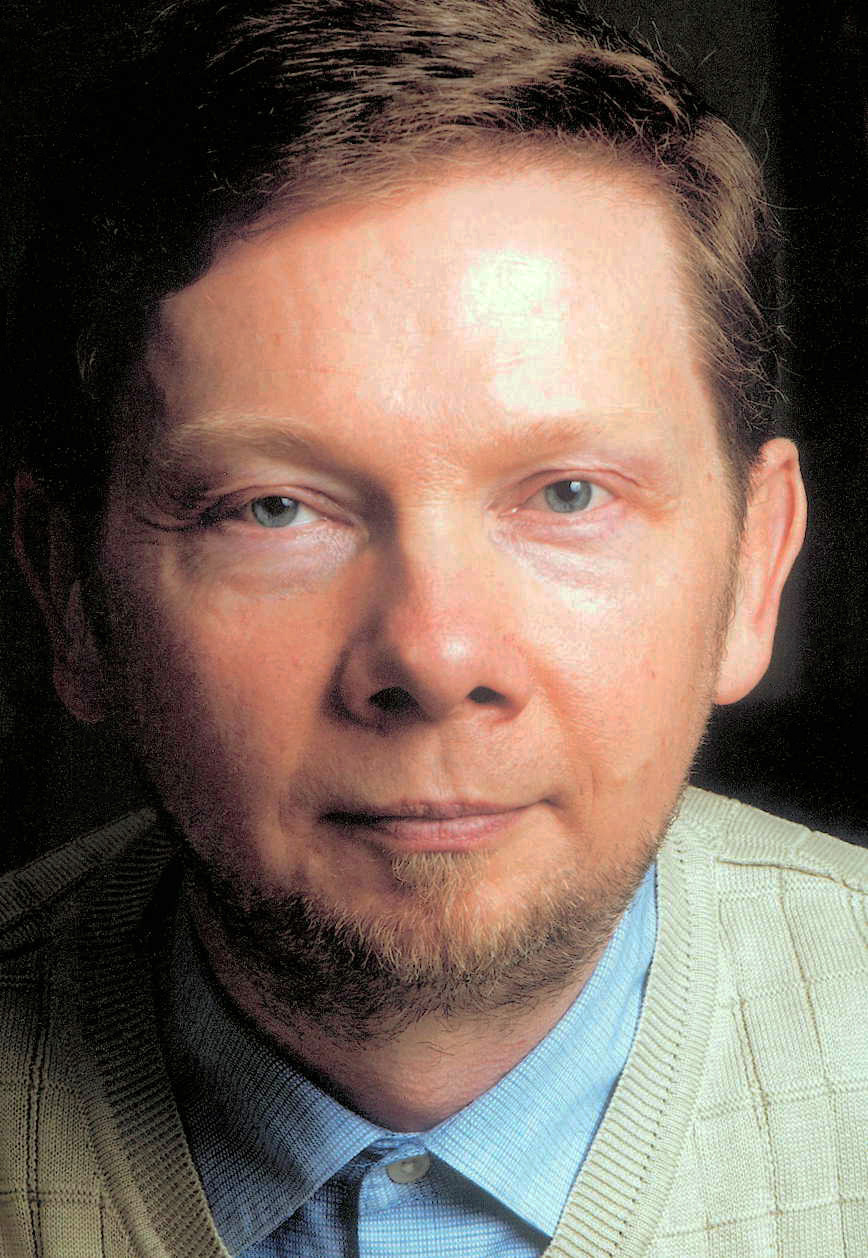
ArtistEckhart Tolle

German-born spiritual teacher whose 1997 book The Power of Now became one of the most widely read spiritual works of the 21st century. After a profound transformation at 29 — movin…

Vedi il profiloSito web
Esplora i temi
Unhappiness-presenceSpiritual-awakeningConsciousnessEgo-mindPresent-moment

Hai domande?

Domande frequenti

Unhappiness isn't a sign of spiritual failure—it's how consciousness naturally works. Awakening is cyclical: you lose presence, feel unhappiness as an alarm, and wake up again. This back-and-forth pattern continues because the conditioned mind habitually pulls you out of the present moment. Each cycle is an opportunity to practice returning to presence.
Presence is characterized by a sense of ease, aliveness, and connection to what's actually happening right now rather than mental narratives about past or future. When you're truly present, your attention is in your body, your senses, and the direct experience of this moment. Unhappiness typically signals that presence has been lost.
Yes. Once you understand unhappiness as an alarm clock, you can use it deliberately. When you feel dissatisfaction, pause and recognize it as a signal to return to presence. This transforms unhappiness from something to escape into a practice cue that points you back toward consciousness.
Losing presence means your consciousness has drifted from the current moment into thoughts about the past or future. You're identified with mental narratives rather than directly experiencing what's actually happening. The body is always present, but the mind has fragmented into abstraction, creating a disconnect that manifests as unhappiness.
Awakening isn't a final destination you reach and stay at forever. It's a rhythm of moving in and out of presence throughout your day. Instead of seeking permanent bliss, the practice is becoming skilled at recognizing when you've lost presence and quickly returning to it—cycling through the pattern again and again with increasing awareness.
The speed of return depends on how quickly you recognize the alarm and respond. The more you practice noticing unhappiness and consciously returning your attention to the present moment, the faster the cycle becomes. Over time, the periods of unconsciousness naturally shorten.

Continua a leggere

More from Eckhart

Vedi Tutto
Dark Night of the Soul: The Awareness Practice That Begins in Despair
Inspire

Dark Night of the Soul: The Awareness Practice That Begins in Despair

Most wisdom about the dark night comes from those who've emerged. This teaching is for being caught in it: a practice of witnessing that beg…

1 min read
The Mental Burden Behind Every Problem You Carry
Inspire

The Mental Burden Behind Every Problem You Carry

Where do your problems actually live? Eckhart Tolle reveals how the mind creates a superstructure of suffering separate from the situations …

1 min read
Govinda Jaya: How Sacred Sound Awakens the Heart
Inspire

Govinda Jaya: How Sacred Sound Awakens the Heart

Radhika Das channels the liberating power of mantra through a luminous kirtan performance at Medicine Festival, invoking divine names to pur…

1 min read
Om Namah Shivaya Chant: Ecstatic Trance Meditation
Inspire

Om Namah Shivaya Chant: Ecstatic Trance Meditation

Jai Uttal guides listeners into an ecstatic chant trance with Om Namah Shivaya, the Sanskrit invocation of Shiva consciousness. A 91-second …

1 min read

Continua a esplorare

Continua il tuo viaggio

Altra saggezza e altri incontri da tutta la directory BrightStar.

Altri articoli

Sfoglia l’intera raccolta di insegnamenti, interviste e guide.

Torna a tutti gli articoli →

Insegnanti e artisti

Esplora i lignaggi, i musicisti e le guide del mondo consapevole.

Esplora gli artisti →

Trova un evento

Kirtan, ritiri, sound bath, breathwork, festival: in arrivo presto.

Sfoglia gli eventi →