BrightStar

Sfoglia tutti i Events

Scopri incontri consapevoli

events

Yoga
Meditation
Breathwork
Qigong
Tai Chi
Sacred Music
World Music
Medicine Music
Sound Healing
Ecstatic Dance
Destinazioni popolari
BaliSedonaLos AngelesCosta RicaNew YorkSan FranciscoAustinMiamiJoshua TreeTulum
Vedi tutte le categorieVedi tutte le destinazioni

Esplora tutte le funzionalità

Strumenti potenti per far crescere i tuoi eventi

Funzionalità della piattaforma

Prezzi dinamici intelligenti
Categorie di biglietti
Posti assegnati
Recupero carrelli abbandonati
Recupero visitatori
Donazioni e prezzi variabili
Sistema affiliati
Scanner biglietti
Codici sconto
Domande personalizzate
Condivisione biglietti
Upsell e componenti aggiuntivi
Analisi e report
Sequenze email
Lista d'attesa / Notifica / Promemoria
Persone e Luoghi
Artists & TeachersEvent OrganizersVenues & StudiosKnowledge BaseGlossaryInspiration
Vedi tutte le funzionalitàChi siamo
PrezziBlog
Language
Saved events
Sfoglia tutti gli eventi

events

YogaMeditationBreathworkQigongTai ChiSacred MusicWorld MusicMedicine Music

Destinazioni popolari

BaliSedonaLos AngelesCosta RicaNew YorkSan Francisco

Persone e Luoghi

Artists & TeachersEvent OrganizersVenues & StudiosKnowledge BaseGlossaryInspiration

Funzionalità della piattaforma

Prezzi dinamici intelligentiCategorie di bigliettiPosti assegnatiRecupero carrelli abbandonatiRecupero visitatoriDonazioni e prezzi variabiliSistema affiliatiScanner bigliettiCodici scontoDomande personalizzateCondivisione bigliettiUpsell e componenti aggiuntiviAnalisi e reportSequenze emailLista d'attesa / Notifica / Promemoria
Vedi tutte le funzionalitàChi siamo
PrezziBlog
AccediRicercatoriCreatori
  • Sfoglia tutti i Eventi
  • Per i ricercatori
  • Yoga
  • Meditazione
  • Breathwork
  • Qigong
  • Tai chi
  • Musica sacra
  • Ritiri
  • Workshop
  • Tutte le categorie →
  • Bali
  • Sedona
  • Los Angeles
  • Costa Rica
  • Tulum
  • Byron Bay
  • San Francisco
  • Austin
  • Tutte le città →
  • Per i creatori
  • Per team
  • Per gli scrittori
  • Per gli insegnanti
  • Per gli artisti kirtan
  • Per gli studi
  • Per i festival
  • Per i centri ritiro
  • Per le no-profit
  • Ambasciatore del brand
  • Case study
  • Biglietteria gratuita
  • Elevate
  • Amplify
  • Rete di 500K+ acquirenti
  • Recupero carrelli abbandonati
  • Prezzi dinamici intelligenti
  • Categorie di biglietti
  • Eventi ricorrenti
  • Posti assegnati
  • Sistema affiliati
  • Lista d'attesa / Notifica
  • Scanner biglietti
  • Widget incorporabile
  • Distribuzione eventi
  • Centro messaggi
  • Integrazioni
  • Report
  • Tutte le funzionalità →
  • Chi siamo
  • L’ecosistema
  • Blog
  • Glossario
  • Ispirazione
  • Centro assistenza
  • Contatti
  • Documentazione API
  • Risorse del brand
  • Carriere
  • Stampa
  • Termini di servizio
  • Informativa sulla privacy

Eventi

  • Sfoglia tutti i Eventi
  • Per i ricercatori
  • Yoga
  • Meditazione
  • Breathwork
  • Qigong
  • Tai chi
  • Musica sacra
  • Ritiri
  • Workshop
  • Tutte le categorie →

Destinazioni

  • Bali
  • Sedona
  • Los Angeles
  • Costa Rica
  • Tulum
  • Byron Bay
  • San Francisco
  • Austin
  • Tutte le città →

Per i creatori

  • Per i creatori
  • Per team
  • Per gli scrittori
  • Per gli insegnanti
  • Per gli artisti kirtan
  • Per gli studi
  • Per i festival
  • Per i centri ritiro
  • Per le no-profit
  • Ambasciatore del brand
  • Case study
  • Biglietteria gratuita
  • Elevate
  • Amplify

Funzionalità

  • Rete di 500K+ acquirenti
  • Recupero carrelli abbandonati
  • Prezzi dinamici intelligenti
  • Categorie di biglietti
  • Eventi ricorrenti
  • Posti assegnati
  • Sistema affiliati
  • Lista d'attesa / Notifica
  • Scanner biglietti
  • Widget incorporabile
  • Distribuzione eventi
  • Centro messaggi
  • Integrazioni
  • Report
  • Tutte le funzionalità →

Azienda

  • Chi siamo
  • L’ecosistema
  • Blog
  • Glossario
  • Ispirazione
  • Centro assistenza
  • Contatti
  • Documentazione API
  • Risorse del brand
  • Carriere
  • Stampa
  • Termini di servizio
  • Informativa sulla privacy
BrightStar
© 2026 BrightStar. Tutti i diritti riservati.
Inspiration

The External World IsYour Body Extended

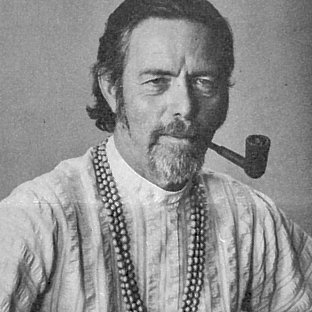
Alan Watts
Alan Watts
Sep 5, 2026
6 min di lettura
Guarda · 4

Alan Watts was standing at his window looking out at a landscape he owned but did not control. Across the water from his ferry boat home lay hills—elegant, contoured by millennia of geological patience—and he was watching them disappear. Not into shadow or weather, but under the blade of a developer's ambition: scraped flat, terraced, subdivided into suburban lots, the kind you'd find on Texas plains imposed upon California ridges like a cookie-cutter pressed into flesh. Within a generation, the houses would slide down the ruined slopes. The payments, though, would have long since cleared.

This was not a complaint about developers. It was a window into madness—and the cure for it.

The problem, Watts explained, was not that the builder lacked skill or even taste. It was that the builder did not feel the hill as part of himself. He approached the land as a material to be conquered, a problem to be solved on *his* terms, according to a preconceived blueprint. He had a prejudice about what a house should be, and the hill had to submit. "An intelligent architect," Watts said, "goes up to the hill and says, 'Good afternoon. I very much want to live here and I would want to like to know what kind of house you would like to have built on you.'" The architect listens. He lets the hill speak through contour and exposure and the grain of the stone. He builds *with* the land, not *against* it.

The difference between these two approaches hinges on a single perceptual shift, one that Watts called foundational to sanity itself: the external world is your own body extended.

Lettura · 4 sezioni

What Do We Mean by "Body"?

In the modern West, we've learned to think of the body as a bag of skin—a bounded, portable thing that ends where air begins. Your body is you. Everything outside it is "the environment," a separate realm to be observed, managed, exploited, or protected (depending on your politics). This boundary feels obvious, natural, given. We stake our entire sense of individual identity on it.

But Watts was suggesting something older and more radical: that this boundary is not metaphysically real, only a convention of attention. Your body is not a thing contained by skin. Your body is the entire field in which you arise—the food chain you eat and that eats you, the air you breathe and that breathes through you, the light you see by and that requires your eye to manifest. The body, in this view, is not your possession. You are its local expression.

When you eat an apple, the apple becomes you. When you exhale, you become the atmosphere. The cycling never stops. Over seven years, nearly every atom in your physical body is replaced. Over longer still, every element in your skeleton has been part of stars, mountains, soil. The skin is real but not final. It is a membrane, not a wall. And a membrane is precisely where a system meets its environment and finds itself *in* that meeting.

Why Do We Build As If the World Is Alien?

If the hills are your body, why do we treat them like obstacles? Watts's diagnosis was clear: we don't *feel* them as ourselves. We have been educated into a fragmented consciousness that experiences a gap between self and world. This is not inevitable. It is a learned disability.

The developer scraping California hills flat does so with the same assumptions that have shaped industrial civilization: maximize efficiency, impose order, extract value, move on. The hill is not a neighbor to be consulted. It is not a relative. It is not sacred. It is material—dead stuff waiting to be reorganized according to human preference. And the result, inevitably, is that the houses fall down, the ecology collapses, and the landscape is left scarred in ways that will take centuries to heal, if they heal at all.

But notice something crucial: the builder is not succeeding even by his own materialist calculus. The houses *fall*. The ecology he disrupted was holding the hill together. He was not being irrational in a practical sense; he was being irrational in a cosmic sense. He had severed himself from the intelligence that made the hill possible in the first place. And separated from that intelligence, he could not build anything that would last.

"He's absolutely out of his mind," Watts said. "And he's out of his mind because he doesn't realize that the external world is his body. When he realizes that, he'll get his mind back."

What Changes When You Shift This Perception?

The move from seeing the world as separate to seeing it as your body is not sentimental. It is neurological. It rewires how you perceive possibility and constraint. When you realize the hills are your body, you stop asking, "How can I use this?" and start asking, "What does this want?" The questions are not the same, and they lead to radically different actions.

An intelligent architect doesn't impose a predetermined form on the landscape. He reads it. He listens to it. He understands that a house built *with* the contour of a hill, rather than against it, will be more beautiful, more durable, and more likely to endure. Not because he is being noble or spiritual, but because he is working with the grain of reality instead of against it. He has aligned himself with the intelligence that sculpted the terrain.

This is not mysticism. This is physics. The hill has been shaped by water, wind, gravity, and geology over epochs. To ignore that is to ignore information. A architect who takes that information seriously will build better houses. A person who recognizes the world as their own body will live less destructively, less frantically, less at war with the very matrix that sustains them. They will, as Watts said, "get their mind back."

Where to Go from Here

Watts never advocated for a return to an imagined past or a rejection of technology. The point was not nostalgia. It was a call to recover a consciousness we have fractured through centuries of subject-object dualism—a consciousness in which the thinker and the world are recognized as one continuous field. Once that recognition dawns, you cannot unsee it. And once you cannot unsee it, you cannot build, consume, or move through the world in the old unconscious way.

Start by noticing what happens when you genuinely listen to a place—when you ask a hill or a forest or even a room what it wants, rather than dictating what you will impose upon it. Notice what emerges when you slow down enough to let the intelligence of your surroundings speak back. Notice, in other words, that the world is not dead material awaiting your direction. It is alive, responsive, and—when you finally realize it—it is you.
Transcript

[0:00] Where I live, I bought a ferry boat,

[0:03] that is opposite us across the water, or

[0:06] was opposite to us some lovely hills.

[0:10] They are going to put houses there.

[0:13] But they are going to try and put

[0:15] the sort of houses you would find in the

[0:16] suburban tract lot on a hill of all

[0:19] things.

[0:21] Because a good architect can make a

[0:24] house fit the hill. He doesn't have to

[0:26] destroy the hill to put a house on it.

[0:29] And if you want to live on a hill,

[0:30] obviously you want to live on a hill.

[0:33] And you don't want to destroy the hill

[0:34] by virtue of living on it.

[0:36] But that's what they do. Especially in

[0:38] California. As Texas kind of flat and

[0:42] uh they don't have to do that kind of

[0:43] thing, but

[0:45] in California where we got lots of

[0:46] hills,

[0:47] they always scrape the tops off them

[0:50] till they're perfectly flat.

[0:52] Then they put houses on and then they

[0:53] scrape them off in terraces all the way

[0:55] down.

[0:57] They upset the ecology of the hill and

[1:00] eventually all the houses fall down.

[1:03] And uh

[1:06] So what? But by that time the payments

[1:07] have been made.

[1:11] But that's because

[1:13] the builder

[1:16] doesn't feel

[1:18] that the external world is his own body.

[1:20] It is. The external world is your own

[1:23] body extended. So he instead of going up

[1:26] to the hill and saying, "Good afternoon.

[1:28] Um I very much want to live here and I

[1:31] would want to like to know what kind of

[1:32] house you would like to have built on

[1:34] you."

[1:35] An intelligent architect always does

[1:36] that.

[1:37] Instead of that,

[1:39] he

[1:40] has a prejudice about what kind of a

[1:42] house is a house.

[1:44] And he has to make the hill submit to

[1:46] this prejudice. So he has to ruin the

[1:48] hill and get rid of it

[1:50] pretty much and put the house on it.

[1:53] He's absolutely out of his mind.

[1:55] And he's out of his mind because he

[1:57] doesn't realize that the external world

[1:59] is his body.

[2:00] When he realizes that, he'll get his

[2:02] mind back.

Alan Watts
ArtistAlan Watts

British philosopher who became one of the most influential interpreters of Eastern wisdom for Western audiences in the 20th century. Through dozens of books and hundreds of lecture…

Vedi il profiloSito web
Esplora i temi
ConsciousnessEcologyNature-spiritualityPerceptionAlan-watts

Hai domande?

Domande frequenti

In this view, your body is not a closed system bounded by skin but an open process that continuously exchanges matter and energy with everything around you. You eat the world and the world eats you—the boundary between self and environment is a membrane, not a wall. When you recognize this physically real interdependence, it fundamentally changes how you relate to the land and all living things.
Because they operate from a learned fragmentation—a sense of separation between self and world. They impose a preconceived blueprint on the land rather than listening to it. This approach fails even on its own terms: houses built against the grain of a hill eventually collapse, and disrupted ecosystems undermine the stability developers sought. Recognizing the world as your body aligns you with the intelligence that created the landscape, making your building endure.
Neither, primarily. It's about perception and practical intelligence. An architect who reads the contours of a hill and builds with them (rather than against them) creates better, more durable structures—not because they're being noble, but because they're working with reality instead of against it. The shift from seeing the world as alien to recognizing it as yourself is neurological, not ideological.
It shifts your fundamental question from 'How can I use this?' to 'What does this want?' Instead of imposing your will, you begin to listen. You notice that places, ecosystems, and materials have their own intelligence. Working with that intelligence—rather than ignoring it—produces outcomes that last longer, adapt better, and cause less suffering. You recover what Watts calls your 'mind' by aligning with the mind of nature.
No. He's not advocating a return to the past or rejection of technology. The point is to recover a consciousness in which the builder recognizes their work as an extension of themselves and therefore cares for it as they would their own body. Development guided by that awareness will be radically different from development guided by separation and extraction.
Start by genuinely listening to places—whether a landscape, forest, or room. Ask what it wants rather than dictating what you'll impose on it. Slow down enough to let the intelligence of your surroundings speak back. Over time, this receptive attention can shift your fundamental sense of where you end and the world begins.

Continua a leggere

More from Alan

Vedi Tutto
Radhe Govinda: The Sacred Sound That Awakens the Heart
Inspire

Radhe Govinda: The Sacred Sound That Awakens the Heart

A live kirtan performance channeling transcendental sound to awaken spiritual nature. Radhika Das leads a full ensemble through the transfor…

1 min read
The Observer Beyond the Mind: Finding Freedom From Vasanas
Inspire

The Observer Beyond the Mind: Finding Freedom From Vasanas

A sincere seeker struggles with six years of mind storms after a brief taste of peace. Mooji traces the real work: moving from personal perc…

1 min read
Love in a Million Colors: Motherhood Rewires a Folk Soul
Inspire

Love in a Million Colors: Motherhood Rewires a Folk Soul

Rising Appalachia harnesses motherhood's transformative love as the engine of a jubilant dance-floor anthem that calls listeners to let devo…

1 min read
How Sitting Still Proves You're Already Awakening
Inspire

How Sitting Still Proves You're Already Awakening

Most people can't sit quietly without discomfort, but if you can, you're already further along spiritually than you realize. Eckhart Tolle e…

1 min read

Continua a esplorare

Continua il tuo viaggio

Altra saggezza e altri incontri da tutta la directory BrightStar.

Altri articoli

Sfoglia l’intera raccolta di insegnamenti, interviste e guide.

Torna a tutti gli articoli →

Insegnanti e artisti

Esplora i lignaggi, i musicisti e le guide del mondo consapevole.

Esplora gli artisti →

Trova un evento

Kirtan, ritiri, sound bath, breathwork, festival: in arrivo presto.

Sfoglia gli eventi →