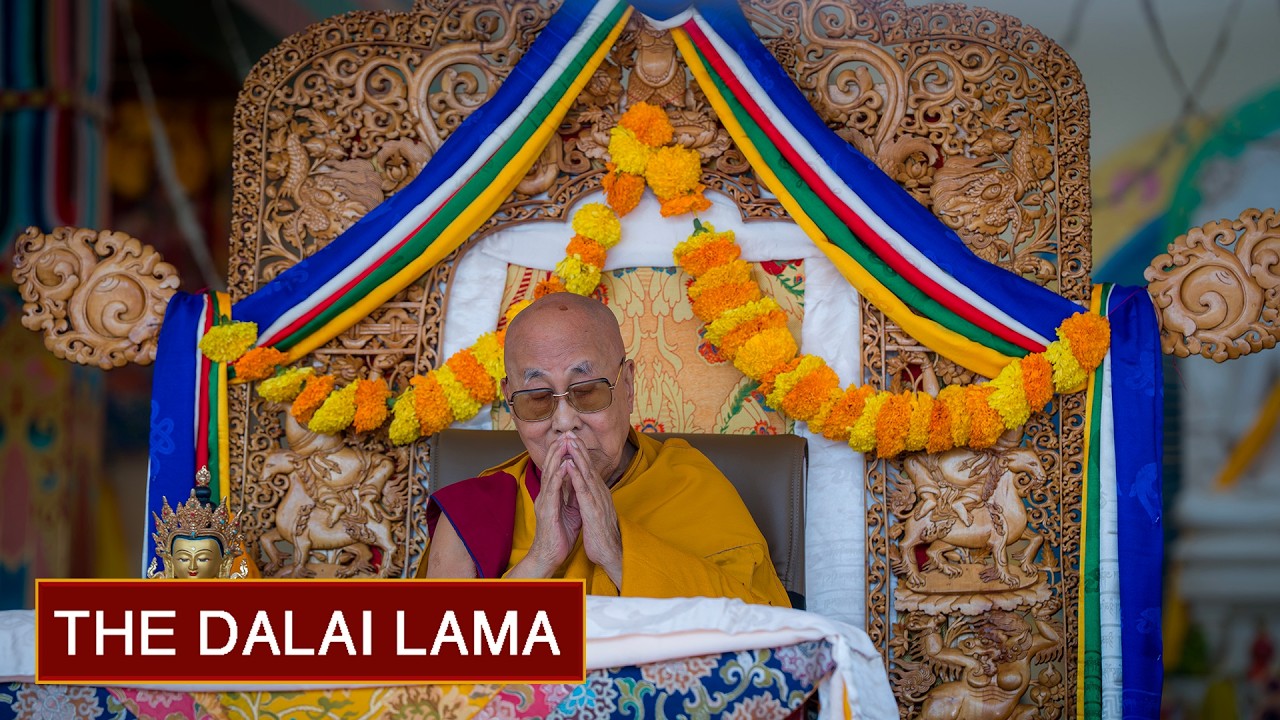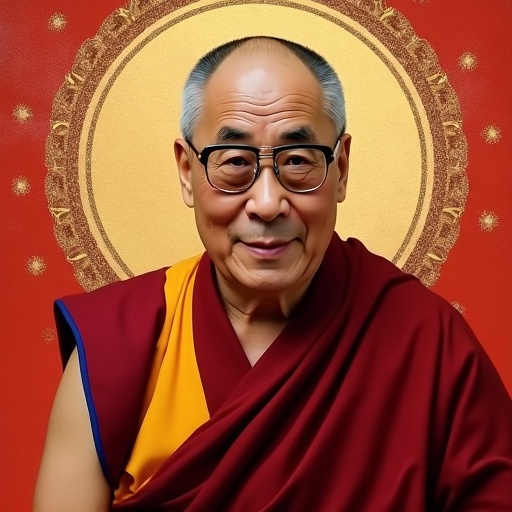
The Dalai Lama sits and smiles. He is, he says, a monk with no family. And so, quite good—quite fortunate, he means, in a way that lands not as boast but as honest relief. It is the opening move in a joke about freedom, but also about something deeper: what we inherit, what we owe, and where suffering actually lives in the texture of ordinary human life.
Why Monastic Simplicity Becomes a Teaching Tool
In a video recorded in March 2019, the Dalai Lama works a particular humor—wry, gentle, almost conspiratorial—to make a point about the householder's path. He describes telling Western monks, when they feel a little bit lonely in their vows, to look at the family lives around them: the marriages that crumble, the children caught in the wreckage of those unions. He recalls visiting America and meeting a friend with one wife and two young children. A few years later, the same friend had remarried. Then again. By the third wife, the principle is established.
The Dalai Lama speaks as someone who has studied human suffering across decades and cultures. His point is not cruelty but clarity. Monastic life strips away one entire category of worldly entanglement—the domestic one. No spouse, no children, no inheritance dispute, no loyalty torn between competing family claims. It is not that monks do not suffer; the Buddha never promised that. But they suffer in ways they have chosen and can study with focus. They have named the source.
For householders, the sources multiply and overlap. Marriage itself is not wrong, nor is parenthood. But the Dalai Lama's observation—delivered with enough humor that the room laughs—is that these commitments carry a hidden weight that simple living does not. To be a parent is to inherit worry. To be a spouse, across the years, is to encounter loss and change you cannot control. He tells the monks that simple monastic life becomes, oddly, a source of encouragement precisely because it has acknowledged and set down burdens that most people never recognize they are carrying.
This is not a call to renounce the world. The Dalai Lama himself has lived in dialogue with the world, teaching across continents. Rather, it is an invitation to see clearly what we have chosen—and, by extension, what we might choose differently. A parent cannot unparent. A spouse cannot unsay their vows. But awareness itself is freedom. Knowing what you are carrying is the first step toward understanding whether you need to keep carrying it.
Where to go from here
For a fuller exploration of the Dalai Lama's teachings on suffering, compassion, and the monastic path, visit his official website or explore his published works on Buddhist philosophy and practice.