BrightStar

Sfoglia tutti i Events

Scopri incontri consapevoli

events

Yoga
Meditation
Breathwork
Qigong
Tai Chi
Sacred Music
World Music
Medicine Music
Sound Healing
Ecstatic Dance
Destinazioni popolari
BaliSedonaLos AngelesCosta RicaNew YorkSan FranciscoAustinMiamiJoshua TreeTulum
Vedi tutte le categorieVedi tutte le destinazioni

Esplora tutte le funzionalità

Strumenti potenti per far crescere i tuoi eventi

Funzionalità della piattaforma

Prezzi dinamici intelligenti
Categorie di biglietti
Posti assegnati
Recupero carrelli abbandonati
Recupero visitatori
Donazioni e prezzi variabili
Sistema affiliati
Scanner biglietti
Codici sconto
Domande personalizzate
Condivisione biglietti
Upsell e componenti aggiuntivi
Analisi e report
Sequenze email
Lista d'attesa / Notifica / Promemoria
Persone e Luoghi
Artists & TeachersEvent OrganizersVenues & StudiosKnowledge BaseGlossaryInspiration
Vedi tutte le funzionalitàChi siamo
PrezziBlog
Language
Saved events
Sfoglia tutti gli eventi

events

YogaMeditationBreathworkQigongTai ChiSacred MusicWorld MusicMedicine Music

Destinazioni popolari

BaliSedonaLos AngelesCosta RicaNew YorkSan Francisco

Persone e Luoghi

Artists & TeachersEvent OrganizersVenues & StudiosKnowledge BaseGlossaryInspiration

Funzionalità della piattaforma

Prezzi dinamici intelligentiCategorie di bigliettiPosti assegnatiRecupero carrelli abbandonatiRecupero visitatoriDonazioni e prezzi variabiliSistema affiliatiScanner bigliettiCodici scontoDomande personalizzateCondivisione bigliettiUpsell e componenti aggiuntiviAnalisi e reportSequenze emailLista d'attesa / Notifica / Promemoria
Vedi tutte le funzionalitàChi siamo
PrezziBlog
AccediRicercatoriCreatori
  • Sfoglia tutti i Eventi
  • Per i ricercatori
  • Yoga
  • Meditazione
  • Breathwork
  • Qigong
  • Tai chi
  • Musica sacra
  • World music
  • Musica medicina
  • Sound healing
  • Danza estatica
  • Ritiri
  • Workshop
  • Tutte le categorie →
  • Bali
  • Sedona
  • Los Angeles
  • Costa Rica
  • Tulum
  • Byron Bay
  • San Francisco
  • Austin
  • New York
  • San Diego
  • Denver
  • Seattle
  • Portland
  • Miami
  • Tutte le città →
  • Join the Movement
  • Why we list
  • Sell Globally
  • Per i creatori
  • Per team
  • Per gli scrittori
  • Per gli insegnanti
  • Per gli artisti kirtan
  • Per gli studi
  • Per i festival
  • Per i centri ritiro
  • Per le no-profit
  • Ambasciatore del brand
  • Biglietteria gratuita
  • Elevate
  • Amplify
  • Rete di 500K+ acquirenti
  • Recupero carrelli abbandonati
  • Prezzi dinamici intelligenti
  • Categorie di biglietti
  • Eventi ricorrenti
  • Posti assegnati
  • Sistema affiliati
  • Lista d'attesa / Notifica
  • Scanner biglietti
  • Widget incorporabile
  • Distribuzione eventi
  • Centro messaggi
  • Integrazioni
  • Report
  • Tutte le funzionalità →
  • Chi siamo
  • L’ecosistema
  • Blog
  • Glossario
  • Ispirazione
  • Centro assistenza
  • Contatti
  • Documentazione API
  • Risorse del brand
  • Carriere
  • Stampa
  • Termini di servizio
  • Informativa sulla privacy

Eventi

  • Sfoglia tutti i Eventi
  • Per i ricercatori
  • Yoga
  • Meditazione
  • Breathwork
  • Qigong
  • Tai chi
  • Musica sacra
  • World music
  • Musica medicina
  • Sound healing
  • Danza estatica
  • Ritiri
  • Workshop
  • Tutte le categorie →

Destinazioni

  • Bali
  • Sedona
  • Los Angeles
  • Costa Rica
  • Tulum
  • Byron Bay
  • San Francisco
  • Austin
  • New York
  • San Diego
  • Denver
  • Seattle
  • Portland
  • Miami
  • Tutte le città →

Per i creatori

  • Join the Movement
  • Why we list
  • Sell Globally
  • Per i creatori
  • Per team
  • Per gli scrittori
  • Per gli insegnanti
  • Per gli artisti kirtan
  • Per gli studi
  • Per i festival
  • Per i centri ritiro
  • Per le no-profit
  • Ambasciatore del brand
  • Biglietteria gratuita
  • Elevate
  • Amplify

Funzionalità

  • Rete di 500K+ acquirenti
  • Recupero carrelli abbandonati
  • Prezzi dinamici intelligenti
  • Categorie di biglietti
  • Eventi ricorrenti
  • Posti assegnati
  • Sistema affiliati
  • Lista d'attesa / Notifica
  • Scanner biglietti
  • Widget incorporabile
  • Distribuzione eventi
  • Centro messaggi
  • Integrazioni
  • Report
  • Tutte le funzionalità →

Azienda

  • Chi siamo
  • L’ecosistema
  • Blog
  • Glossario
  • Ispirazione
  • Centro assistenza
  • Contatti
  • Documentazione API
  • Risorse del brand
  • Carriere
  • Stampa
  • Termini di servizio
  • Informativa sulla privacy
BrightStar
Scarica l'app
Scarica suApp StoreDisponibile suGoogle Play
© 2026 BrightStar. Tutti i diritti riservati.
Inspiration

Shiva Shambho Kirtan: Inside the Mahadeva Call-and-Response

David Newman
David Newman
Aug 4, 2007
5 min di lettura

Da David Newman

Guarda · 6

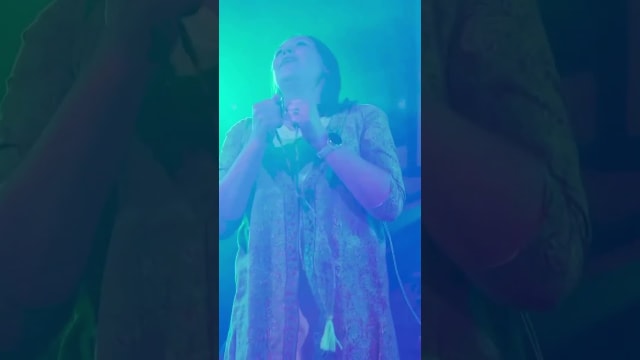
The first thing you hear is not a melody so much as a room. Before any clear word lands, a single voice starts pushing out "shiv shiv shiv," and the phrase keeps folding back on itself, shortening, stretching, slipping into "ambo" and then "mahadeva," until the syllables are close to a pulse. Applause breaks in at intervals, not as a finale but as a kind of punctuation, the audience acknowledging a phrase and then falling back into the chant. This is a five-minute excerpt of kirtan from the DVD Into the Bliss, recorded by David Newman, who performs under the name Durga Das. The video went up on YouTube in August 2007 and has since drawn well over 135,000 views. What follows is an attempt to explain what is actually happening in those five minutes, because the form rewards close listening.

Lettura · 6 sezioni

What are the names being chanted in Shiva Shambho?

The text is built almost entirely from names and invocations of one deity. The phrases that surface again and again in the transcript are "Shiva," "Shambho," "Mahadeva," and "Hara Hara." Around 59 seconds the chant settles on "mahad mahadev," and by 64 seconds "shambo mahadev" has become the main line. Later, from about 265 seconds, the phrasing shifts toward "Bam Bam" and "Hara Hara," and the chant gets louder and more insistent. Each of these is a name, and that matters. In a form like this, the words are not carrying a story or an argument. They are repeated invocations, and the repetition is the content.

Why does repetition do the work in kirtan?

Kirtan is a participatory chant, and its power comes from being sung over and over rather than from being sung once well. Listen to how a single name is returned to: a phrase like "shambo mahadev" is sung, dropped, picked up again, and changed slightly each time. That is the mechanism. The first pass gets the words in your mouth; by the fifth or sixth, you are no longer parsing them. The attention moves from the meaning of the syllables to the sound of the group producing them. This is why the chant can feel slow and fast at once. The words are the same, but the room has moved.

How does the call-and-response structure shape the listening?

Notice the gaps. The track alternates between sung phrases, instrumental stretches marked as [Music] in the transcript, and moments of applause. In traditional kirtan practice the leader sings a line and the group answers it, and that exchange is what keeps a chant from becoming a performance on a stage. You can hear the shape of that exchange here: a lead voice threads a name, the response comes back, and the room closes the gap. The applause is worth paying attention to. It signals that the group is not a passive audience but a participant that has just finished a phrase and is ready for the next one.

What should a listener focus on in a recording like this?

Three things reward a second or third listen. First, track the entry points. The chant does not begin cleanly; it arrives as a fragment and gathers itself, which is typical of recorded kirtan that is meant to feel like a gathering already in progress. Second, follow the pulse rather than the lyric. The words in the transcript are fragmentary because the recording itself is a moving mix of voices, and trying to transcribe each syllable misses the point. Third, notice the endings. Around 296 seconds the chant gathers toward "haroo nam," and the way a phrase is released tells you how the group feels about the one before it. You do not need to know the theology to hear that release.

How can you chant along with a form like this?

The most useful approach is simple: choose one name, such as "Shambho" or "Mahadeva," and repeat it with the recording. Do not reach for the whole line at once. Let the phrase shorten and lengthen the way the group does, and allow yourself to be a little behind the lead voice rather than racing it. When the applause comes, that is a cue to breathe and reset, not to stop. The form works because it asks for steady repetition more than skill. A beginner with a clear, patient voice can take part as fully as a seasoned singer.

Where to go from here

If this excerpt has pulled you in, the full Into the Bliss DVD is where the piece sits in its original context, with the longer arcs of the chant that a five-minute clip can only hint at. Listen to the track twice: once for the names, and once for the room. The names tell you what is being called; the room tells you what the chant is for.

Comments

Loading the conversation…

Transcript

[0:01] [Music]

[0:12] shiv shiv shiv

[0:17] ambo mahadeva ambu shiv shiv

[0:21] shiv

[0:29] amb

[0:32] [Music]

[0:38] sive

[0:40] mahambo

[0:43] shiva shiv shiva

[0:48] amb

[0:54] m

[0:59] mahad mahadev

[1:04] shambo mahadev

[1:09] ambo

[1:11] [Applause]

[1:14] mahad

[1:16] mahadev

[1:20] ambo mahadev

[1:24] [Music]

[1:26] shambo

[1:29] chamb sive sive

[1:43] [Music]

[1:59] mamb

[2:04] [Music]

[2:15] [Applause]

[2:18] [Music]

[2:23] mahoo

[2:26] [Music]

[2:29] mah

[2:33] [Music]

[2:38] deo

[2:43] mahadeva mahadeva

[2:48] [Music]

[2:50] shambo la

[2:53] [Music]

[2:59] shambo shiva shiva

[3:05] shambo mah

[3:14] [Applause]

[3:15] [Music]

[3:25] shambo

[3:29] m

[3:32] [Music]

[3:36] amb mad

[3:40] [Music]

[3:41] shambo mah

[3:46] shambo mahadev

[3:49] [Music]

[3:52] amb

[3:59] mahadev

[4:04] maha

[4:08] shambo mahadev

[4:10] [Music]

[4:13] shambo mahadev

[4:18] ambo

[4:25] Mambo Bam Bam harar

[4:29] harar

[4:31] [Music]

[4:34] [Applause]

[4:37] B hara hara

[4:43] mahaa

[4:47] mam har

[4:52] har

[4:55] [Applause]

[4:57] [Music]

[4:59] haroo nam

David Newman
ArtistDavid Newman

Sacred mantra artist and singer-songwriter whose music and teachings carry a message of peace and universal love, blending original songs with ancient healing mantras.

Vedi il profiloSito web
Esplora i temi
KirtanShiva-shambhoMahadeva-chantCall-and-responseMantra-chanting

Hai domande?

Domande frequenti

In this excerpt the chant is built from names of Shiva, including Shambho, Mahadeva, and Hara Hara, sung in repetition. The recording itself does not walk through a translation, so the most direct way to engage with the words is by repeating them and listening to how the phrases change. The repetition is the core of the practice.
David Newman performs kirtan under the name Durga Das, and this track comes from his DVD Into the Bliss. The YouTube upload describes him as a chant artist, and this excerpt is a five-minute sample of his live devotional singing.
Pick one name from the chant, such as Shambho or Mahadeva, and repeat it with the group rather than trying to sing the full line. Let the phrase speed up and slow down with the lead voice, and treat the applause as a moment to breathe. Patience with repetition matters more than vocal skill.
Call-and-response is the exchange where a lead singer sings a phrase and the group answers it, which keeps a kirtan participatory rather than a performance. In this recording the alternation shows up between sung phrases, instrumental stretches, and applause. The audience's response is part of the form.
Repeating a name over and over moves attention from the meaning of individual words to the sound and pulse of the group. The same phrase can feel different on its fifth or sixth return than on its first, because the room has shifted. That shift is what the practice is designed to produce.
Yes, the form is built around steady repetition of a few names, which makes it accessible without prior training. A clear, patient voice can take part fully. Starting with a single repeated name is a good entry point.

Continua a leggere

More from David Newman

Vedi Tutto
Jai Ganesha Kirtan: How a Call-and-Response Chant Works
Inspire

Jai Ganesha Kirtan: How a Call-and-Response Chant Works

A short kirtan performance of "Jai Ganesha" from the DVD Into the Bliss, with the call-and-response form that makes the chant work. What the…

5 min read
Cacao Prayer: The Chant That Travels From Circle to Circle
Inspire

Cacao Prayer: The Chant That Travels From Circle to Circle

A close listen to Cacao Prayer, the chant that has moved from circle to circle with Bruna Bortolato and Mose. Here is how its few lines repe…

5 min read
Jaya Radhe Govinda: The Meaning Behind a Devotional Refrain
Inspire

Jaya Radhe Govinda: The Meaning Behind a Devotional Refrain

A 59-second clip from Radhika Das titled "Jaya Radhe Govinda." This piece unpacks the refrain's meaning and its place in bhakti and kirtan p…

2 min read
Friday Night Mantra Gathering: Harmonium, Voice, Loops
Inspire

Friday Night Mantra Gathering: Harmonium, Voice, Loops

A Friday night devotional mantra session the evening before Halloween, with harmonium, voice and loops. What the hour-long recording holds, …

7 min read

Continua a esplorare

Continua il tuo viaggio

Altra saggezza e altri incontri da tutta la directory BrightStar.

Altri articoli

Sfoglia l’intera raccolta di insegnamenti, interviste e guide.

Torna a tutti gli articoli →

Insegnanti e artisti

Esplora i lignaggi, i musicisti e le guide del mondo consapevole.

Esplora gli artisti →

Trova un evento

Kirtan, ritiri, sound bath, breathwork, festival: in arrivo presto.

Sfoglia gli eventi →