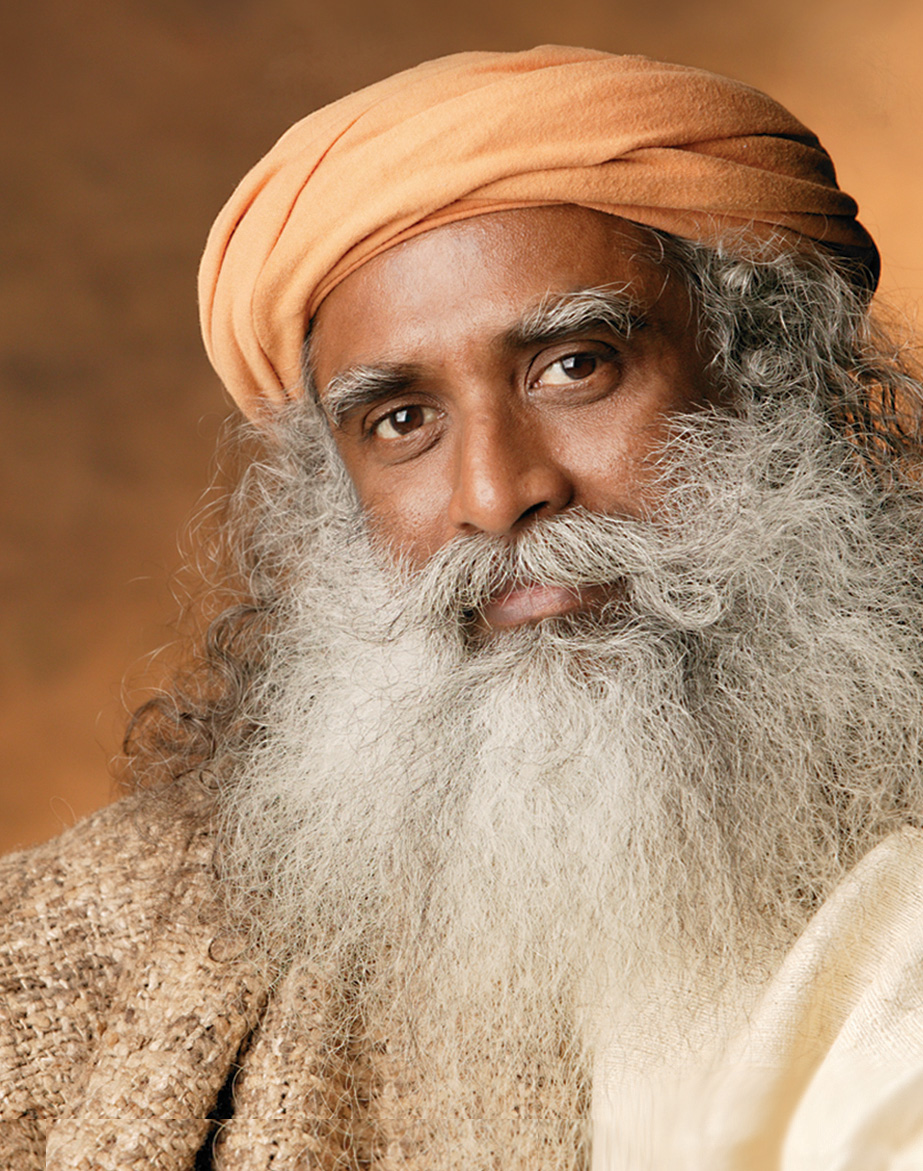
Rather than viewing the path of Buddha and the way of Shiva as distinct spiritual traditions, they are better understood as different explorations of the same underlying reality. Sadhguru clarifies that Buddha did not invent a new spiritual system but rather focused on one particular aspect of the spiritual technology that Shiva systematized. The backbone of this spiritual transmission traces through figures like Agastya Muni, who spread Shiva's teachings across geography and culture, and Buddha, who emphasized specific elements of that system. Understanding this relationship dissolves false dichotomies between Buddhism and Hindu spirituality.
A common spiritual question assumes that Buddhism and Shiva-centered spirituality represent fundamentally different paths toward liberation. Sadhguru's response reframes this entirely: the distinction is not one of difference, but rather one of focus. Buddha did not create an alternative system; instead, he took up a particular thread within the larger tapestry of knowledge that Shiva had woven. The spiritual process Shiva articulated contains many dimensions and approaches. Buddha's contribution was to explore one of these dimensions deeply and systematically, making it accessible and clear for those who resonated with that particular approach.
This is an important distinction for spiritual seekers. It means that rather than choosing between "the way of Buddha" or "the way of Shiva" as though they were opposites, one can recognize them as complementary expressions of a single underlying spiritual science. Shiva, in the yogic tradition, represents the first and supreme yogi—the originator of yoga itself. The teachings attributed to Shiva in Hindu spiritual texts constitute a complete system addressing every dimension of human consciousness and experience. When Buddha emerged centuries later, he was working within the framework that Shiva's teachings had already established, though he emphasized particular aspects suited to the times and minds he was addressing.
The transmission of Shiva's spiritual technology across vast geographical distances and into different cultural contexts was not accidental. Sadhguru points to the figure of Agastya Muni as central to this process. Agastya was not merely a mythological figure but a representative of the active dissemination of spiritual knowledge—a teacher whose work ensured that the fundamental principles of the spiritual process were distributed widely rather than remaining concentrated in one location or lineage.
This historical spreading of Shiva's teachings created the conditions for different masters and traditions to emphasize different elements according to the needs of their time and audience. The spiritual core remained consistent—the fundamental truths about consciousness, the nature of the mind, the body, and the path to liberation—but the expression and emphasis varied. This flexibility allowed the teachings to remain living and relevant rather than calcified into dogma. Agastya's role exemplifies how spiritual knowledge systems are transmitted not through passive inheritance but through active, conscious effort to make the teachings accessible to diverse populations.
Buddha represented another phase in this transmission. He took the existing spiritual framework and articulated it in ways that were particularly clear and direct for the populations he encountered. His emphasis on direct experience over cosmological complexity, and his systematization of practices for mental discipline and liberation, represented a streamlining of certain aspects of Shiva's teachings for maximum clarity and accessibility.
While Sadhguru does not specify which single aspect Buddha focused on in his brief statement, the implication is significant: Buddha highlighted the path of awareness, direct investigation into the nature of suffering and its cessation, and the systematic cultivation of mental discipline. These elements exist within Shiva's comprehensive teaching, which encompasses yoga, tantra, music, ritual, devotion, and countless other dimensions. Buddha's genius was in isolating and perfecting one strand of this larger weaving.
This is why many practices considered "Buddhist"—meditation, mindfulness, the investigation of mental patterns—are entirely consonant with the yogic traditions attributed to Shiva. They are not borrowings or competing approaches; they are expressions of the same underlying understanding of how consciousness works. The eight-fold path of Buddhism maps onto principles that yogic traditions have long taught. The emphasis on non-attachment, on seeing through the illusions created by mind and conditioning, on direct experience—these are Shiva teachings examined through Buddha's particular lens.
Buddha's approach also suited a particular historical moment. He taught in a time when there was resistance to ritualistic spirituality and excessive metaphysics. His refusal to engage in speculative philosophy about cosmic origins and divine beings was not a rejection of Shiva's teachings but a methodological choice—he stripped away what he saw as inessential to focus on the direct path to liberation available to anyone willing to undertake the practices. This pragmatic approach made Buddhism revolutionary in its accessibility and directness.
The way Sadhguru frames this question suggests that yes, there is a unified spiritual tradition or science extending back through history, with Shiva as its originating source and various masters—Agastya, Buddha, and others—as its carriers and adapters. This is not to say that all spiritual systems are identical or that distinctions don't matter. Rather, it is to suggest that the deepest spiritual insights about the nature of consciousness, liberation, and the human potential arise from a single source of understanding that has been transmitted, refined, and adapted across cultures and centuries.
From this perspective, studying both Shiva's teachings and Buddha's teachings need not involve choosing one over the other. A serious spiritual seeker might study Shiva's expansive system—which includes subtle body anatomy, energy work, devotional approaches, and the philosophical foundations of yoga—while also practicing the focused meditation and mindfulness techniques that Buddha systematized. The two approaches complement rather than contradict each other.
This unified view also dissolves certain historical debates about whether Buddhism is atheistic or whether it represents a rejection of Hindu concepts. Rather, Buddhism represents a particular approach within the larger Hindu or yogic framework, an approach that does not require belief in various deities or cosmological narratives but focuses instead on the direct investigation of consciousness through practice. Shiva, understood not as a deity demanding belief but as the symbol of supreme consciousness and the originator of yoga, remains central even to Buddhist practice, though the Buddhist tradition may not explicitly reference this genealogy.
For a spiritual seeker, understanding that Buddha and Shiva are not in competition but rather represent different facets of a unified tradition changes how one approaches practice and study. It removes a false hierarchy or sense that one must choose a side. It also clarifies the purpose of spiritual diversity: different approaches serve different temperaments, circumstances, and stages of development. Someone with an intellectual temperament might resonate with Buddha's direct investigation of suffering and its causes. Someone drawn to devotion and the numinous might find more entry through Shiva's vision of consciousness as both transcendent and immanent. Yet both are authentic expressions of the same underlying science.
It also suggests that the history of spiritual transmission is not one of separate, competing religions but of a living tradition adapting itself to serve different peoples and epochs. Agastya, in spreading these teachings, was not founding Buddhism or Hinduism as opposed systems; he was disseminating a practical science of consciousness. When Buddha later refined and emphasized certain aspects, he was continuing this work of transmission and adaptation.
For contemporary practitioners, this view suggests that the dichotomy between "Buddhist" and "Hindu" spirituality is largely a historical and cultural overlay on a deeper unity. A person practicing Zen meditation is engaging practices whose roots extend back through Buddha to Shiva's systematization of yoga. Someone practicing Tantric Shaivism is exploring dimensions of the same consciousness that Buddha investigated through Vipassana. The names and frameworks differ, but the fundamental object of investigation and the basic principles of the path show deep continuity.
If this perspective resonates, the next step is to deepen your understanding of both traditions on their own terms rather than through comparative frameworks. Study what Shiva's teachings actually say about consciousness, the body, meditation, and liberation. Then engage with Buddha's teachings not as an alternative but as a focused exploration of one dimension of that larger landscape. Notice where they align, where they emphasize differently, and how they might complement your own practice.
Consider exploring yogic practices attributed to Shiva's system—not merely the physical postures but the energy work, breathing techniques, and meditation methods—alongside Buddhist mindfulness and insight practices. The combination is not eclectic mixing but rather drawing on different threads of a single unified tradition. If you are drawn to one tradition over the other, that is valuable information about your temperament and current needs; but understanding the deeper unity can prevent that preference from becoming a false separation.
Finally, this understanding invites a broader question: if Shiva's teachings spread through Agastya and Buddha to different populations and times, how are they transmitting in your own age? What modern expressions of this ancient spiritual science are alive in the present? Sadhguru himself represents a contemporary carrier of these teachings, articulating them for contemporary minds and circumstances. The tradition is not historical; it is living.


