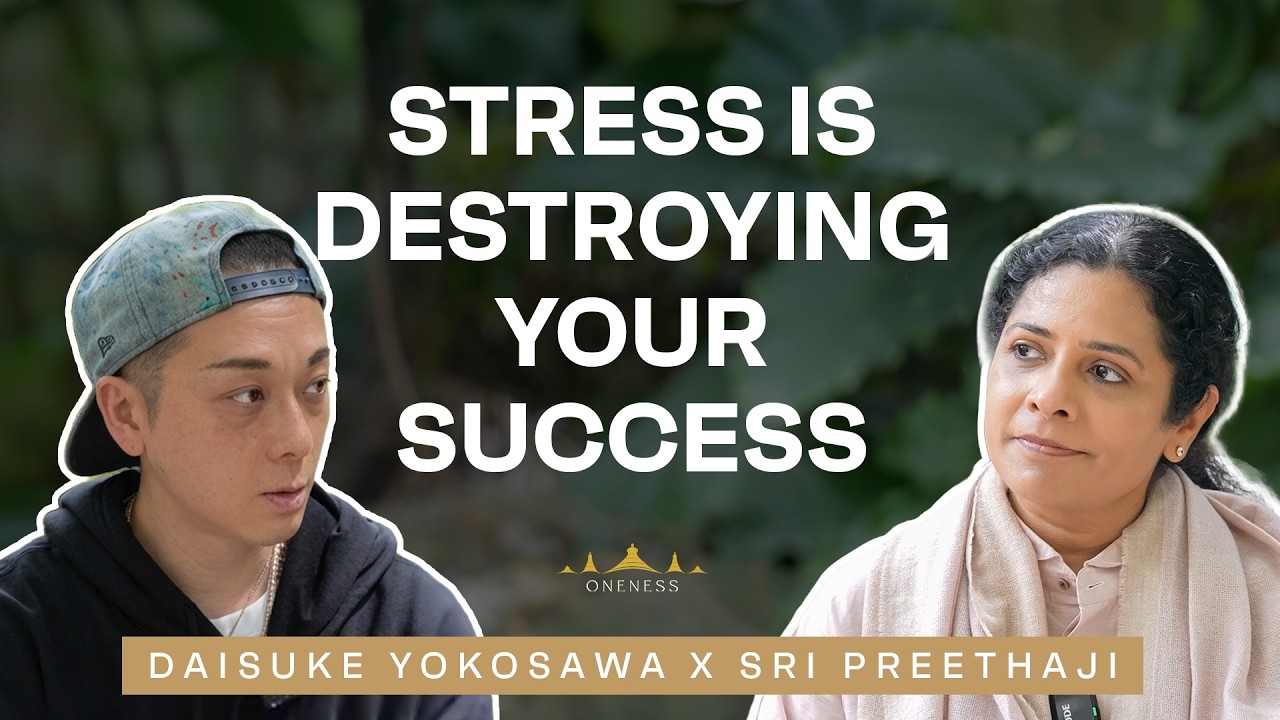
Feelings of inadequacy arise from constant comparison—a mental habit that disconnects you from your actual worth and purpose. Rather than chasing external validation or measuring yourself against others, this teaching points toward an inner knowing of value that exists independent of performance, achievement, or social proof. By recognizing the comparison mechanism itself and redirecting attention toward your unique contribution to the world, you can access a more stable, authentic sense of adequacy rooted in being rather than doing.
What Creates the "Not Good Enough" Feeling?
The feeling of inadequacy doesn't arise spontaneously—it is constructed through a specific mental pattern: constant comparison. When the mind habitually measures itself against external standards—other people's achievements, cultural benchmarks, idealized versions of success—it creates a perpetual state of shortfall. You are never simply looking at yourself; you are looking at yourself in relation to an imagined ideal or to what others appear to have achieved.
This comparison mechanism operates largely outside conscious awareness. It becomes so automatic that you may not notice you're doing it. A friend mentions a promotion; immediately your mind calculates where you stand relative to that achievement. You scroll through social media and absorb implicit rankings: who has the better body, the better career, the better life. Over time, this creates a background sense that you're always falling short—that something about you is missing or deficient.
The teaching from Oneness Movement suggests that this inadequacy is not about your actual capacity or worth. It's about the lens through which you've learned to perceive yourself. The lens is comparison. Remove the lens, and the feeling begins to dissolve.
Why Comparison Is a Shadow Rather Than Reality
Comparison operates in what the Oneness teachings call "the shadows"—the realm of mental constructs rather than direct experience. When you compare yourself to others, you are not comparing your true self to their true self. You are comparing your internal experience (which includes all your doubts and insecurities) to an external image of them (which shows only what they choose to display or what you imagine from limited information).
This asymmetry makes comparison inherently distorting. You know your own flaws intimately because they live inside your mind. You experience your fears, mistakes, and moments of weakness directly. But you see others primarily through their presentation—their accomplishments, their confidence in public moments, their carefully curated self-image. You then measure your authentic, unfiltered inner reality against their filtered external appearance. Naturally, you feel inadequate.
The Oneness teaching points out that freeing yourself from this pattern requires recognizing it as a shadow—a distortion created by the mind—rather than as truth. Your worth is not determined by how you stack up against others. It never was.
How Does Purpose Anchor You Beyond Comparison?
The inverse of the comparison trap is discovering your authentic purpose. Purpose here does not mean a grand mission or a career you've optimized for approval. Rather, it refers to the unique way you are naturally inclined to contribute—the gifts you have that want to be expressed, the problems you are drawn to solve, the people you are meant to serve.
When you are anchored in purpose, the question "Am I good enough?" transforms. Instead of being a yes-or-no judgment against an external standard, it becomes: "Am I aligned with what I'm here to do?" This is a different inquiry entirely. It's not comparative. It's generative.
If your purpose is to be a teacher, you don't measure your worth by comparing your teaching to another teacher's teaching. You measure alignment by whether you are present, whether you are learning, whether students are being served. If your purpose is to be a parent, a creator, a healer, a builder—whatever it is—that purpose creates its own internal reference point. You can notice whether you're living it or avoiding it. You can sense when you're in flow with it or resistant to it. But you're no longer playing the comparison game.
The Oneness teaching suggests that everyone has a purpose—not because life is designed with a cosmic plan, but because you exist with particular capacities and inclinations. Those capacities want to be lived. When you are living them, the feeling of "not being good enough" has less grip on you because you're not trying to be someone else. You're simply being yourself in action.
What Does It Mean to Free Yourself From Shadows?
Freeing yourself from the shadows of comparison is not about becoming indifferent to growth or feedback. It's about shifting the ground on which you stand. Instead of standing on the quicksand of how you compare to others—a measurement that constantly shifts and that you can never fully control—you stand on the solid ground of your own purpose and authentic worth.
This shift involves several movements:
- Recognizing the comparison as a habit: Notice when your mind automatically reaches for comparison. Don't judge it. Simply observe: "Here is the comparison pattern again." Awareness itself weakens the grip.
- Questioning the standard: When you notice comparison arising, pause and ask: Is this standard relevant to my life? Did I choose it, or did I absorb it from culture, family, or peers? Many of the metrics we use to measure ourselves were installed without our consent.
- Returning to direct experience: Rather than thinking about your worth, notice the direct experience of your being. What can you do? What do you care about? What makes you feel alive? These are more reliable measures than any external comparison.
- Connecting to purpose: Spend time asking: What am I naturally drawn toward? What problems or people call to me? What would I do even if no one praised me for it? The answers point toward your purpose, which in turn anchors your sense of adequacy.
How to Discover Your Authentic Purpose
Purpose is not something you invent through force of will. It's something you discover by paying attention. The Oneness teaching suggests looking in several directions:
Look toward what you love: Not what you think you should love, but what actually engages you. What subjects could you read about for hours? What conversations pull your attention? What activities make you lose track of time? Love is a compass pointing toward purpose.
Look toward what you're naturally good at: You don't have to be the best in the world at something for it to be part of your purpose. But you likely have domains where learning feels fluid, where you improve quickly, where others have said "you're a natural at that." These point toward your capacities.
Look toward what the world needs: Purpose is not purely internal or self-focused. It emerges at the intersection of what you love, what you're capable of, and what would be useful. Where do you see a gap that you could help fill? Where could your particular gifts make a difference?
Look toward what you can't not do: Some people feel called to create, to heal, to build, to teach, to serve justice, to understand. These callings have a quality of necessity. They're not optional for you—they're who you are at the core.
As you clarify these threads, a sense of purpose begins to cohere. You don't suddenly know your entire life trajectory. But you develop a direction. And with direction comes a different relationship to the question of adequacy. You're no longer measuring yourself against an arbitrary external standard. You're walking a path that is actually yours.
What Changes When You Stop Comparing?
The Oneness teaching points to several shifts that unfold when you genuinely step outside the comparison trap:
You become more resilient to criticism: If your worth is anchored in purpose and inner knowing rather than in how others rank you, external criticism loses its sting. It becomes information rather than verdict. Someone's disapproval no longer feels like proof that you're not good enough.
You develop genuine confidence: Confidence built on comparison is fragile—it evaporates when someone outperforms you. But confidence built on alignment with purpose is durable. You know what you're doing and why. That knowing survives external fluctuations.
You become more generous: When you're not constantly measuring yourself against others, you're not in a scarcity mindset. You don't see others' success as a threat to your worth. You can genuinely celebrate others. You can collaborate rather than compete. Your relationships shift from comparative to connective.
You access more creativity: The comparison mind is always calculating, always defensive. The purposeful mind is free to explore, to experiment, to take risks. Creativity flows more naturally when you're not constantly policing yourself against external judgment.
You experience more peace: The comparison mind is inherently restless. There's always someone ahead of you, always a gap to close. When you step off that treadmill, there's a natural settling. You can appreciate where you are and what you have. You can rest in your own becoming.
Where to Go From Here
The teaching from Oneness Movement offers a direction rather than a destination. Start by noticing. For the next week, observe when the comparison pattern arises. Don't try to eliminate it—just watch it. Notice how it feels in your body. Notice what happens to your mood, your energy, your sense of self when you engage the comparison.
Then, begin the inquiry into purpose. Set aside time to journal or reflect on the questions above: What do you love? What are you good at? What does the world need from you? What can't you not do? You don't need to have definitive answers. You're simply opening the conversation with yourself.
Finally, practice one small act of alignment with purpose this week. If your purpose involves creation, create something. If it involves service, serve someone. If it involves learning, learn something. Take one step that says yes to your actual life rather than a no to someone else's life. Notice how that feels. That feeling—of being in alignment—is what you're returning to when you feel the pull toward adequacy.