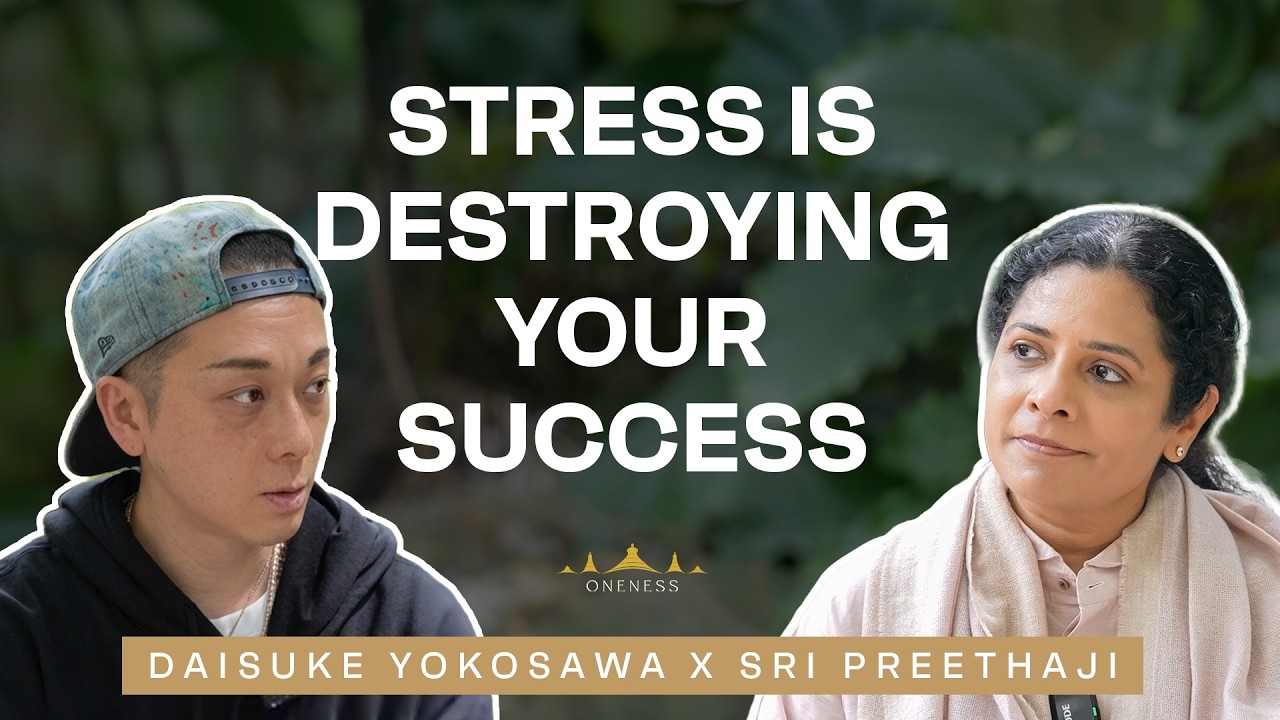
The Stress-Success Myth
Many high achievers operate under an unexamined assumption: stress is the fuel for success. The narrative runs deep—that pressure creates diamonds, that anxiety sharpens focus, that suffering is the price of accomplishment. This belief system keeps millions trapped in cycles of burnout, where rest feels like laziness and presence feels like lost opportunity.
The story presented here follows someone who held this exact belief. James believed stress was not just inevitable but essential, a necessary ingredient in the recipe for success. This conviction shaped his approach to work, relationships, and self-care. He ran on adrenaline, measured his worth by output, and saw relaxation as a threat to his ambitions.
The cost of this mindset operates subtly at first, then becomes undeniable. Relationships grow shallow because presence is rationed. Work loses creative depth because reactive urgency replaces strategic thinking. The body accumulates tension as a default state. Even achievements lose their luster because the nervous system never registers arrival—only the next deadline.
What Is Oneness Consciousness?
Oneness consciousness, as taught by the Oneness Movement and figures like Sri Preethaji and Sri Krishnaji, is not a belief system to adopt intellectually. It is a shift in perception—a direct recognition of interconnection between self and others, between individual awareness and the unified field underlying all existence. This is not metaphorical unity; practitioners report experiential states where the boundaries of the separate self become permeable or dissolve altogether.
From this vantage point, several things become apparent: the individual's anxieties are not uniquely theirs but reflect patterns of consciousness itself. The drive to accumulate, control, and prove oneself arises from a false assumption of separation and scarcity. And the nervous system's chronic activation—what we call stress—is revealed as a byproduct of living from division rather than wholeness.
Oneness practices are designed to induce direct experience of this unified consciousness. These may include meditation, specific breathing techniques, or initiations that shift brain wave patterns and nervous system tone. The goal is not relaxation (though that often follows), but rather a fundamental reorganization of how the nervous system relates to reality.
How Does Stress Dissolve in Oneness?
When someone begins to experience genuine oneness—not as an idea, but as a lived state—the entire stress response system recalibrates. This happens in several ways:
- The threat response quiets. Much of stress originates in the perception that the self is isolated, lacking, and under threat. Oneness consciousness dissolves that perception directly. When the individual no longer experiences themselves as fundamentally separate or insufficient, the nervous system's alarm state has no ground to stand on.
- Presence becomes accessible. In the stress-driven state, attention is locked onto future outcomes and potential failures. Oneness shifts awareness into the present moment, where most threats actually do not exist. Work becomes less about anxious planning and more about responsive action.
- Agency is liberated. Paradoxically, the release of personal control (the attempt to manage and guarantee outcomes through sheer willpower) often produces better results. Actions emerge from clarity rather than desperation. This feels like ease, not passivity.
- The nervous system recalibrates its baseline. Chronic stress literally resets the thermostat of the autonomic nervous system. Oneness practices can restore the parasympathetic (rest-and-digest) state as the default, with the sympathetic (fight-or-flight) response available when genuinely needed—not constantly activated.
From Anxiety-Driven Productivity to Effortless Flow
The shift from stress-based productivity to flow is not a step down in achievement—it is a reorientation of the entire system. In the stress model, work is something to be forced through. Energy is depleted because it is constantly fighting internal resistance. Motivation requires external pressure (deadlines, competition, fear of failure).
In the oneness model, work becomes an expression of engagement rather than a burden to be powered through. Because the nervous system is no longer in chronic defense mode, more cognitive resources are available for creativity, strategic thinking, and interpersonal skill. Paradoxically, this often results in higher-quality output with less total effort.
James's experience reflects this shift. His work and life began flowing with ease and meaning. This does not mean nothing challenging arose—it means challenges were met from a place of resilience rather than fragility. The ability to stay present during difficulty, to access creative problem-solving, and to maintain perspective all emerged naturally from the nervous system's more stable baseline.
Deepening Presence in Relationships
Stress erodes relationships silently. When the nervous system is in chronic activation, the capacity for genuine attention and empathy narrows. The stressed person is partly always elsewhere—in the future outcome, in the worried thought, in the protected self-image. Others feel this divided attention. They sense they are not fully received.
Oneness consciousness restores the possibility of true presence with others. This is not sentimentality or constant niceness; it is the ability to meet another person with full attention, to sense their experience without collapsing it into one's own anxieties, to respond rather than react. Deep relationships become possible because presence becomes possible.
James reported enjoying deep, present relationships as a direct result of this shift. This is not because he became a different personality, but because his nervous system was no longer hijacking his attention. He could actually be with people rather than performing for them or worrying about their judgment.
What Does Abundance Beyond Money Mean?
The phrase "abundance that goes beyond money" does not dismiss material security. Rather, it points to something the stress-driven person often discovers too late: that financial success achieved through chronic anxiety often feels hollow. The nervous system never settles into the experience of having enough. The goalpost moves. More accumulation is demanded.
True abundance, as understood in oneness teaching, is a felt sense of sufficiency and flow. It includes material provision, but more fundamentally, it is the experience of life providing what is needed in the moment. It is the absence of the constant low-grade scarcity anxiety that haunts even wealthy stressed individuals. It is meaningful work, genuine relationships, health, and the inner freedom to enjoy these things.
When the nervous system is no longer in protection mode, it can actually register abundance that is already present. The same income may feel abundant when received from a state of presence rather than perpetual lack. More importantly, life begins to move in alignment with the person's actual values and gifts, which often generates both material and non-material prosperity simultaneously.
The Role of Practice and Initiation
While the shift from stress to oneness consciousness sounds instantaneous in a testimonial, the actual process involves practice. Oneness-based approaches typically include meditation, specific practices designed to induce unified states, and sometimes formal initiations that are said to accelerate the nervous system's reorganization.
The Oneness Movement offers entry points through various practices and the Oneness Global Summit, events designed to introduce or deepen direct experience of unified consciousness. These are not belief conversion exercises; they are experiences meant to shift perception directly.
The promise is that once the nervous system tastes genuine oneness—the direct experience of being part of a unified whole—the stress response loses its grip. The person does not have to convince themselves that stress is unnecessary through willpower. They know it from experience.
Where to Go From Here
If the stress-success narrative has shaped your own life, the question worth asking is not "How do I become more disciplined about stress reduction?" but rather "What if stress were not necessary at all?" This question invites a different inquiry: What would my work feel like if I approached it from presence rather than anxiety? How might my relationships deepen if my attention were truly available? What if abundance were not something I had to force but something I could access by shifting my state of consciousness?
Exploring oneness-based practices—whether through meditation, formal training, or participation in events like the Oneness Global Summit—offers a pathway to test this possibility directly. The evidence is not in concepts but in nervous system experience. When the nervous system genuinely reorganizes around wholeness rather than separation, the proof is immediate and undeniable.
]]>