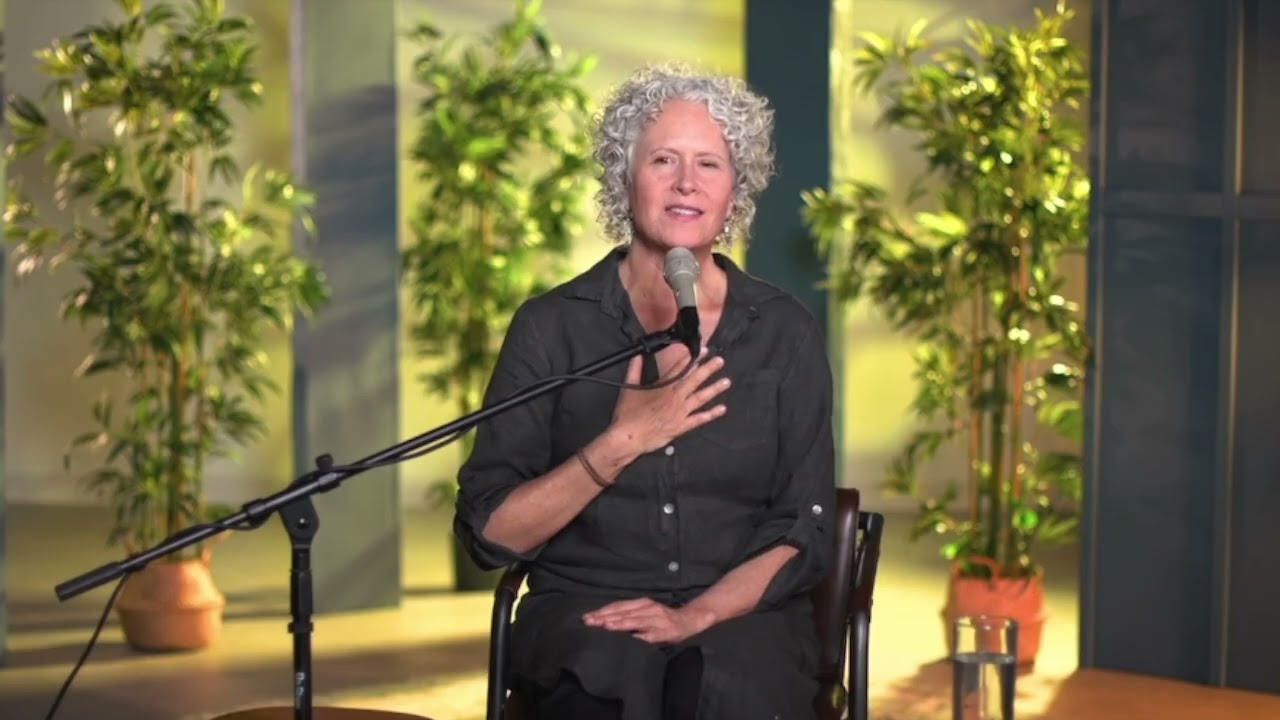
In a secluded cabin nestled in the Finnish forests, where summer nights never fully surrender to darkness, a question took form. Listening to the quiet wind moving through leaves—that sound which reaches into something primal in all of us—Mirabai Ceiba's Angelika Baumbach found herself asking about the invisible conversation between wind and world. From that inquiry came "Night Wind," a song born not from concept but from presence, from the marriage of listening and longing.
At the heart of "Night Wind" lies a deceptively simple observation: the wind sings through everything it encounters, and everything it touches sings back. The song frames this as a mutual relationship—neither wind nor world could create their songs alone. In the white nights of Finland, where the sun barely dips below the horizon and the boundary between day and dream blurs, this truth becomes visceral. The wind doesn't impose a song; it awakens one that already lives in the leaves, the trees, the creeks.
This principle extends far beyond Nordic geography. The song suggests that we, too, are touched by life in this way. We are like the leaves, the water, the grasses mentioned in the lyrics—responsive beings shaped by forces larger than ourselves. "You come from the land of nowhere," the lyrics tell us. "Touch the tree, touch the creek." The act of touching, of being touched, of moving through the world is what makes us part of it. As we pass through, "these songs become flying birds in the white light"—transformed, released, alive.
But "Night Wind" is not merely philosophical musing set to music. Baumbach and her collaborator Markus Sieber—who handled guitars, bass, synthesizer, and production—crafted this piece as an explicit balm: a song dedicated to wounded hearts, to those moving through difficult times. The recurring refrain, "I am the wind to my longing spirit," shifts the frame from external observation to internal recognition. We are not passive recipients of wind's touch; we are ourselves the wind, we are ourselves the longing. That collapse of distance between observer and observed, between healer and healed, is where the song's medicine resides.
The architecture of the piece supports this dual function. Baumbach's vocals—intimate and unflinching—carry the emotional weight, while her harp and harmonium provide a foundation that feels both ancient and immediate. The harmonium, that portable organ born in Indian devotional music, anchors the piece in sacred tradition; the harp, with its open strings and resonance, speaks to something more ethereal. This combination isn't accidental. The harp's sustain and the harmonium's warm, breathing drone create a space where grief and comfort can coexist, where a wounded heart doesn't have to choose between feeling its pain and beginning to heal.
Lyrically, "Night Wind" builds through accumulation and revelation. Early in the song, we hear the foundational image: "the wind plays a gentle song of leaves all night long." This is observation. Then the perspective shifts inward: "I am the wind to my longing spirit." Then outward again, into a catalogue of songs—"Songs of water, songs of thieves, songs of grasses, songs of clouds." This is the genius of the lyric: it refuses to separate the sacred from the ordinary. Water and thieves, clouds and grasses, all are singing. All deserve witness.
But there's a deeper movement. Before we hear the songs of nature, we encounter the forgotten ones: "Forgotten love, forgotten places, forgotten dreams, forgotten secrets." Here the song turns toward grief directly, naming what has been lost, abandoned, or buried. Only after naming what is forgotten does the song invite us to listen for the songs still being sung. It's a sequence of acknowledgment and remembrance before hope can take root.
The video's setting—filmed by Alina Sieber during those surreal weeks when night never truly arrives—functions as more than backdrop. The white nights of the far north are a kind of natural mystery, a disruption of the ordinary rhythm. They become metaphor for that liminal space where healing happens, where consciousness can shift without the barrier of darkness to tell us it's over. In perpetual twilight, there's permission to stay awake to what aches in us, to listen longer, to let the wind speak through longer nights.
"Night Wind" invites practice as much as listening. The question at its origin—this mysterious relationship between wind and world, between what touches us and how we respond—can become a contemplative inquiry. Sit near moving air, near trees or water. Notice what sounds emerge. Notice how your own longing stirs in response. The song is an introduction to that listening, an accompaniment to the question. Baumbach and Sieber have given us an instrument for turning inward and outward simultaneously, for recognizing that the wind moving through the world and the wind of our own becoming are not separate songs.