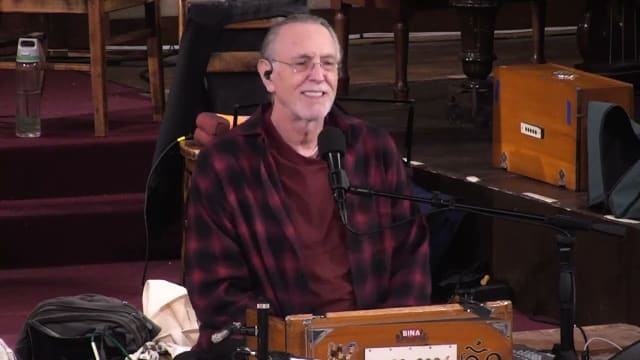
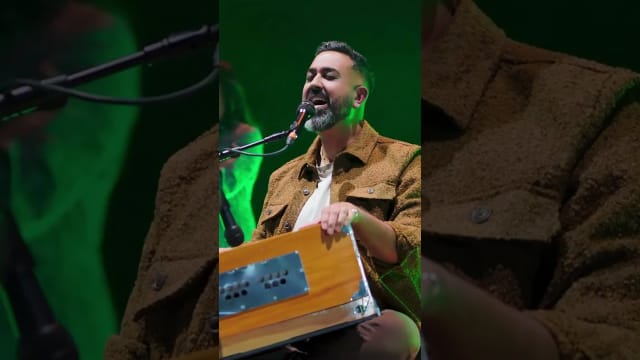
In a 2011 performance at Exhale in Venice, Masood Ali Khan and a collective of musicians, singers, and sound practitioners delivered Earth Prayer—a devotional work that weaves together forgiveness, gratitude, and invocation in a form that feels simultaneously ancient and urgent. The performance opens with foundational affirmation: "We feel it all / we come from the light / and to it we shall return / we are the one." What follows is not a sermon or a performance in the conventional sense, but a ritual space where the boundary between singer and listener dissolves, and the act of singing becomes an act of prayer.
The core refrain of Earth Prayer is deceptively simple: "I'm sorry, forgive me / for this healing / I love you and thank you." Repeated across the performance with increasing intensity, this phrase operates as a mantric invocation—a clearing of emotional and spiritual blockages. The structure mirrors the traditional ho'oponopono practice from Hawaiian tradition, which centers on the belief that taking responsibility for one's role in suffering, and expressing forgiveness and gratitude, can heal not only personal relationships but collective wounds.
What distinguishes this approach is its integration of what Khan calls "a choice to walk in a good way / make decisions / pray for grace within us all." The forgiveness offered here is not passive or resigned; it is active, volitional, and grounded in the possibility of transformation. The repeated cycle of apology, forgiveness, love, and gratitude functions as a sonic purification—each iteration loosening the grip of shame, blame, and disconnection that the performance posits as obstacles to awakening.
The middle section of Earth Prayer pivots to a four-directions invocation, addressing "the great spirit, creator of all things / of the West and the Thunder of the East / and the sun in the north / the Shining Ones in the south." This structure draws on Indigenous North American ceremonial forms—a deliberate move to honor lineages of earth-based spirituality and to situate contemporary listeners within a longer genealogy of human relationship to land and cosmos.
The invocation continues: "To the mother's womb / to those above and below us / to the seen and unseen / to those who walk before and after / we ask your assistance to live simply." Here, the prayer acknowledges both the visible world and the subtle realms—ancestors, future generations, and non-human spirits. The request is not for abundance or power, but for simplicity—a deliberate return to what is essential.
Early in the performance, Khan offers a statement that organizes the entire work: "Together we rise / face wind / we awaken when we listen to words / we have songs to sing / these ancient sounds / they build the house of glory." The ensemble does not perform Earth Prayer as a virtuosic display or as entertainment. Rather, it functions as a deliberate sonic container—harmonium drones, vocal harmonies, and rhythmic support create a field that invites individual listeners to step into collective consciousness.
This is crucial: the performance's power lies not in the perfection of execution but in the intentionality of the gathering. The applause that breaks through at the 1:52 mark is not an interruption but an acknowledgment—the audience recognizing that something real has been transmitted, and that they have been invited to participate in its creation.
The text "please forgive us for we know not what we do" appears near the performance's ceremonial peak. This phrase carries profound theological weight—it echoes the language of Christ's crucifixion while simultaneously invoking a more universal acknowledgment of human limitation and ignorance. The performance suggests that awakening is not about moral perfectionism, but about honest recognition of complicity, coupled with a sincere commitment to do better.
Repeated across the final minutes of the performance, the invocation "I'm sorry / forgive me / and open heart / I am / I love you and thank you all" suggests that self-love, self-forgiveness, and gratitude are not self-indulgent but prerequisites for authentic service to the earth and to one another. The mantra dissolves the boundary between personal and collective healing: each person's willingness to open the heart and offer forgiveness becomes an offering to the whole.
In the performance's final movement, the refrain shifts to address "Mother Earth" directly. "I'm sorry, forgive me / I love you and thank you"—the same mantric formula now directed toward the living planet. This move is significant: it does not treat the Earth as a metaphor for consciousness or as a symbol of the feminine principle, but as a sentient being worthy of direct apology, gratitude, and love.
This reframes the entire work. Earth Prayer is not ultimately about the listeners' personal healing—though that may occur. It is a ritual acknowledgment that the Earth itself has been wounded, that humanity has participated in that wounding, and that genuine awakening requires not just personal transformation but a reorientation of our relationship to the living world. The gratitude expressed ("I love you and thank you") acknowledges the Earth's gift of existence and sustenance, while the apology marks a willingness to take responsibility for the damage done.
Those moved by the practice of forgiveness and gratitude as spiritual work might explore the Hawaiin tradition of ho'oponopono more deeply, or investigate other mantric traditions that use repetitive sound to access states of healing and clarity. The integration of earth-based Indigenous ceremonial forms with contemporary devotional music points to an emerging lineage of artists working to restore spiritual ecology—treating the Earth not as backdrop but as sacred participant. Listeners interested in the ensemble's ongoing work can explore www.enavie.com.