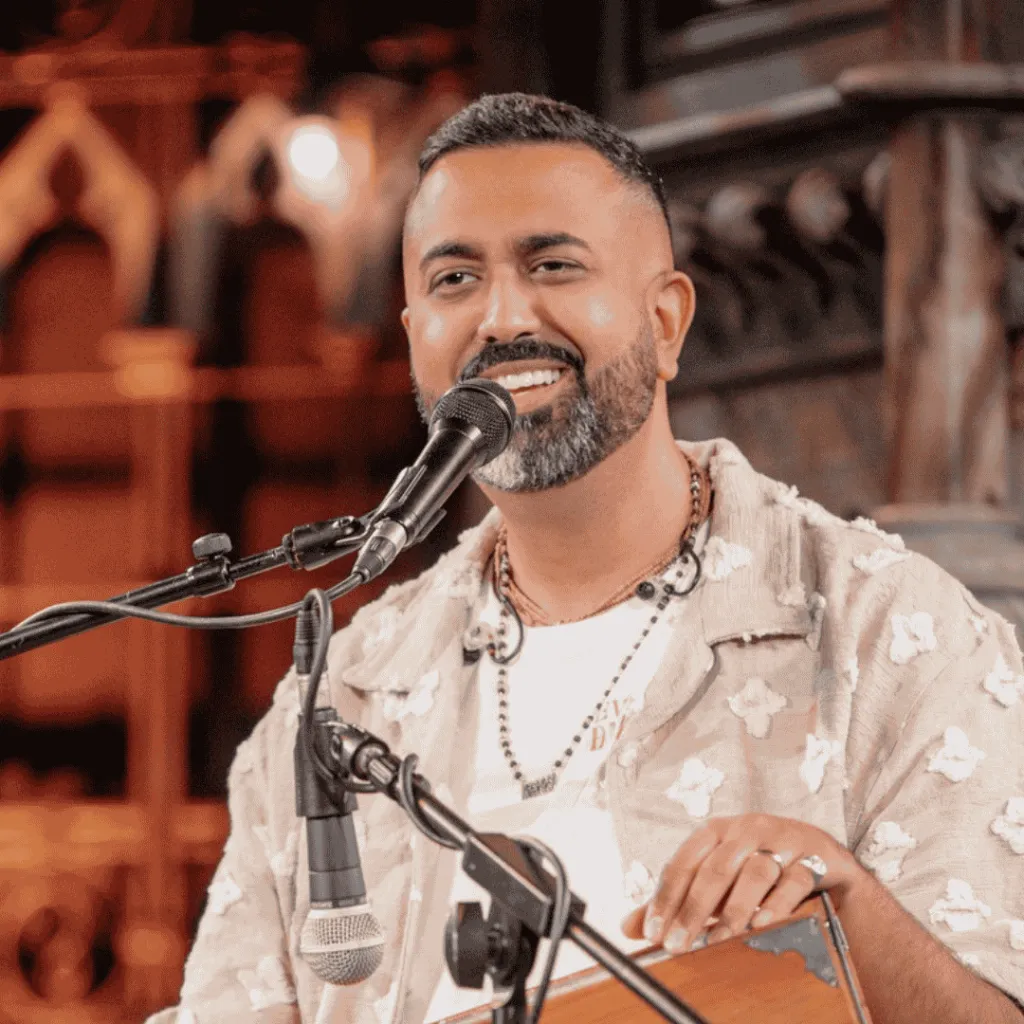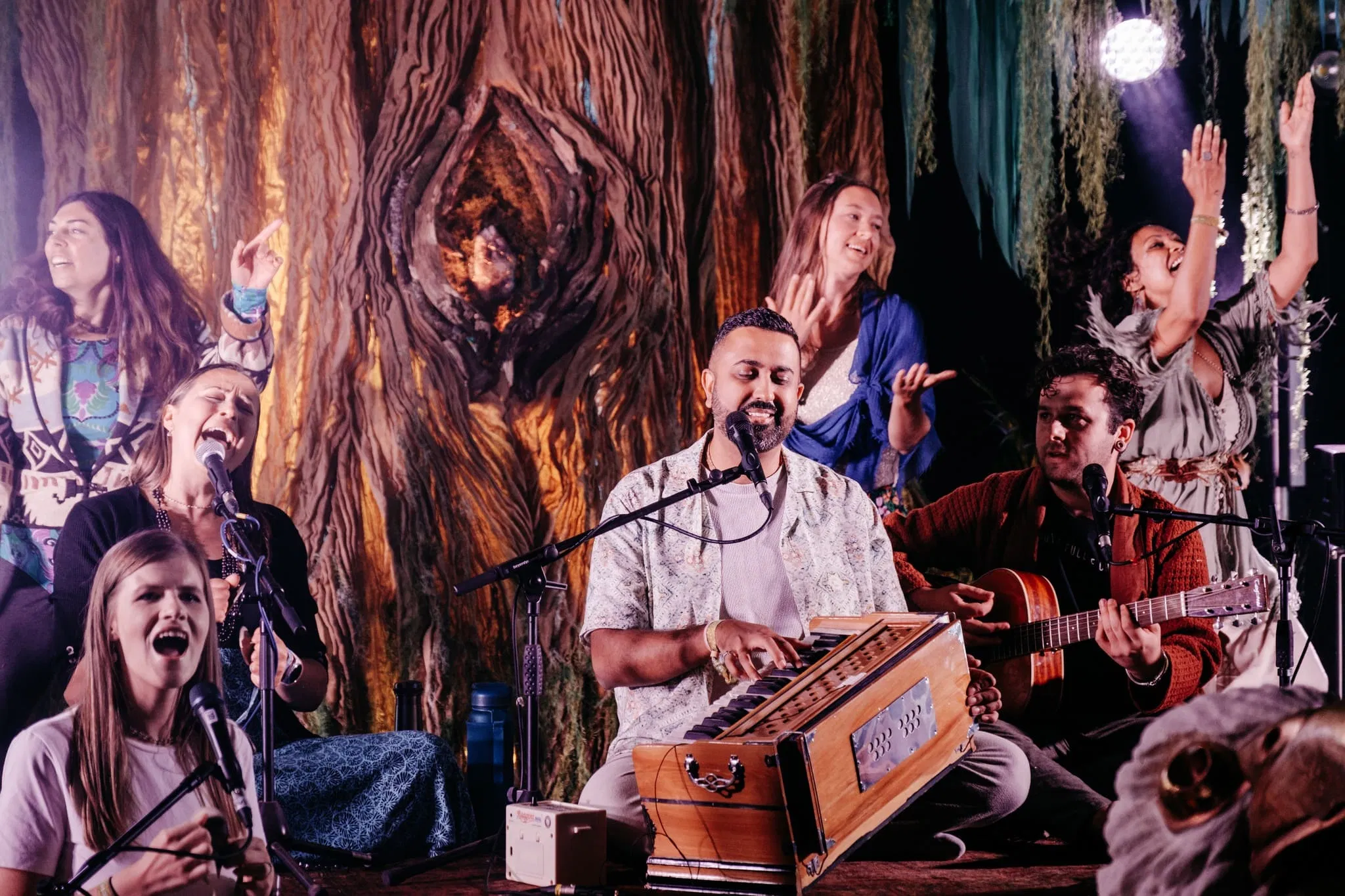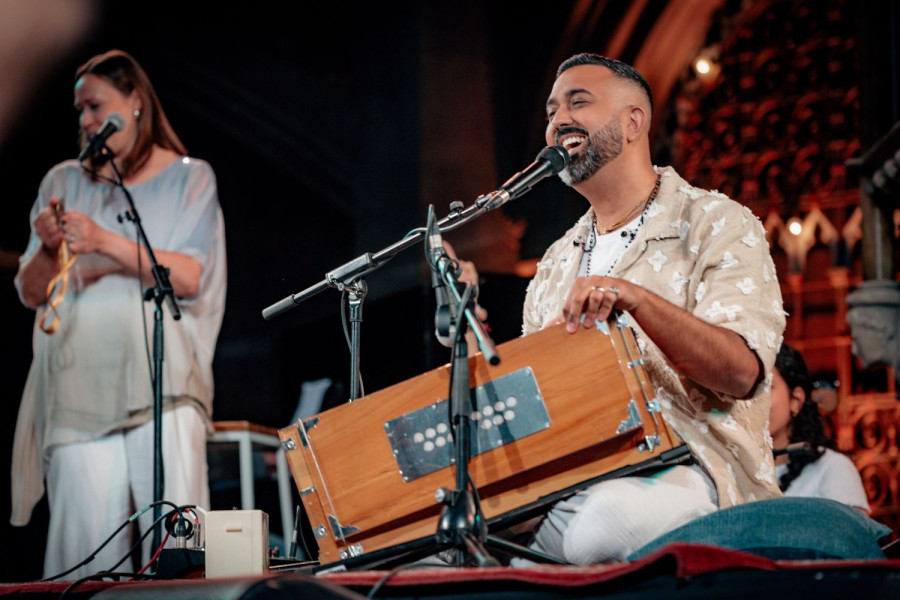
Lightfall arrives as a singular statement—a five-track single released in April 2026—marking a crystallization moment in Radhika Das's artistic journey. After years of building a global kirtan practice that has gathered millions into collective chanting across London, New York, Mumbai and beyond, Das steps into the studio with newfound clarity. This is not the expansive, communal energy of a live kirtan night, where hundreds move together in synchronized breath and song. Instead, Lightfall is intimate, sculpted, deliberately paced. It represents Das deepening his work—taking the devotional urgency that has always animated his practice and distilling it into recorded form. The album sits at a threshold: a musician confident enough in his tradition to experiment within it, aware that sacred sound need not always be loud to be transformative.
What strikes immediately about Lightfall is its spaciousness. This is music unafraid of silence—of the gaps between breath and note. Das's voice moves through these tracks with the quality of someone who has spent over a decade in meditation, in chanting practice, in the disciplined listening that kirtan demands. There is no rush here.
The instrumentation is minimal and intentional. Where traditional kirtan often swells with harmonium, tabla, and collective voices in call-and-response, Lightfall strips back to essentials. The production creates an almost ambient quality—textures that float rather than drive, that suggest rather than assert. Yet this restraint never becomes cold. Instead, it mirrors the practice of bhakti itself: the idea that devotion lives not in spectacle but in sincerity, in the tremor of a single voice calling across darkness.
Das's voice is the album's anchor. It carries warmth—the particular warmth of someone who has sung these mantras thousands of times and has learned that repetition is not monotony but deepening. His phrasing suggests both precision and surrender, the technical mastery of someone trained in sacred vocal traditions paired with the vulnerability of someone genuinely moved by what he is singing.
Within this five-track sequence, certain moments crystallize the album's purpose. Each track appears positioned to deepen the listener's descent into the album's world—a careful architecture of mood and intention.
The album's arc suggests a journey inward. Early tracks establish presence and clarity, inviting the listener to arrive. Mid-sequence moments likely intensify the emotional or spiritual pull, drawing deeper into the mantric substance. By the album's close, there is a sense of arrival—not conclusion, but rather a settling into a truth that was always present.
What makes Lightfall distinctive is how Das has resisted the urge to "arrange" devotion. There are no string swells, no attempt to manufacture transcendence. The music instead creates a container—spare, attentive, almost monastic—within which the ancient practice of kirtan and mantra becomes audible in its essence.
Lightfall belongs to the lineage of bhakti yoga—the path of the heart, where devotion to the divine is expressed through sound, movement, and surrender. But it also sits in conversation with contemporary devotional music and ambient practice. The album honors kirtan's ancient roots (call-and-response, repetition, the use of sacred Sanskrit names and syllables as a technology of consciousness) while acknowledging that modern listeners often encounter practice alone, in headphones, in the interstices of urban life.
This is kirtan for the solitary practitioner, the person for whom a crowded room full of chanters might feel overwhelming but for whom a single voice, spacious and true, becomes a doorway.
Lightfall speaks most directly to listeners already familiar with devotional practice—those who have sat in kirtan circles, who understand mantra as more than sound, who hunger for the sacred. But it also reaches the curious, the spiritually searching, those in transition or grief. This is music for insomniacs, for people sitting with loss, for anyone who has felt the pull of something larger than themselves but hasn't had language for it.
It lands hardest for those willing to sit still. Not music for the commute or the gym, but for the hour when you've put your phone down and simply want to remember something true.
Find an evening, preferably dim light. Headphones are essential—this album was mixed for intimacy, for the direct address between Das's voice and your ear. Listen whole, without distraction, the way you might sit for a meditation. Let the space between the notes become part of the experience. Consider listening as a small ritual: light a candle, sit upright, breathe. This is music that meets you where you are willing to be met.