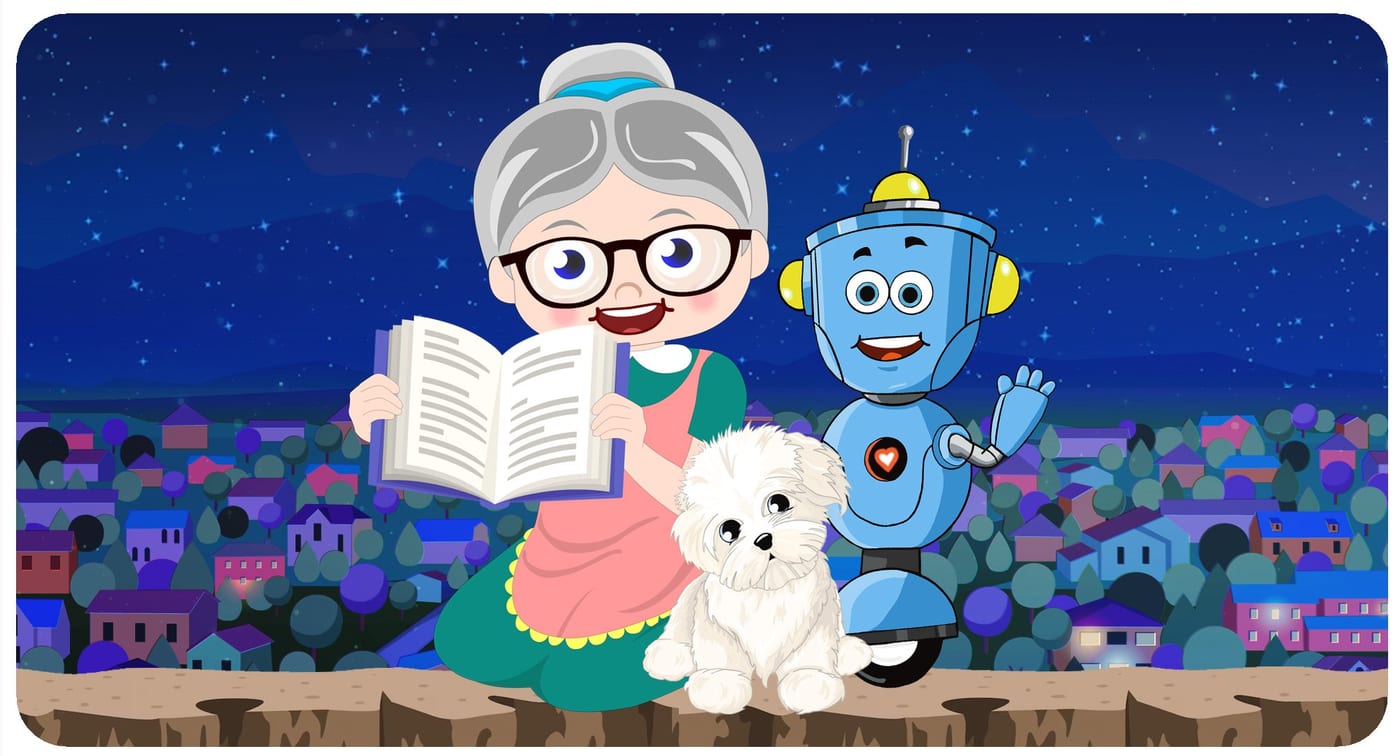

Mrs. Honeybee is a schoolteacher and a mother of two, and the work that has made her known begins with a very ordinary problem: getting people to rest. She knows how important a good night's sleep is for just about everyone, and her stated aim is simple and unglamorous. She wants to make bedtime easier.
BrightStar lists her as both a Storyteller and a Meditation Teacher, and both labels fit, though neither tells the whole story. She writes and tells bedtime stories inspired by movies she loves, and she folds mindfulness techniques into the plots. Her own phrase for it is a "special little trick": weaving mindfulness into every adventure instead of attaching it afterward.
The documented record of her early life is thin. No hometown is listed, and there are no dates or biographical anecdotes to draw on, so this profile does not invent any. What the record does establish is the setting where the work took shape: her classroom.
For years she has told stories and practiced mindfulness with her students. The bedtime stories grew out of that daily practice. That sequence matters. The techniques were tested on real children, in the unpredictable conditions of a school day, before they ever reached a podcast feed. It gives the work a practical, lived-in quality that is hard to manufacture.
There is no single dramatic moment in the record, no retreat epiphany or crisis, and it would be false to supply one. The turning point is better described as a transition: a teacher who had been telling stories and teaching mindfulness in person began writing and telling stories meant for the end of the day, aimed at the hour when children and the adults who put them to bed most need help settling down. The classroom practice became a bedtime one.
Mrs. Honeybee's central contribution is the integration of mindfulness and narrative. Many sleep recordings depend on ambient sound and a soft voice. Hers build a story with characters and a plot, and let the techniques arrive through the telling.
The recurring themes are deep breathing, identifying emotions, self love and gratitude. Deep breathing tends to be the first and most physical cue, giving a listener something to do with the body before sleep. Characters name feelings as they move through their adventures. Self love and gratitude frame the evening as something to appreciate rather than something to get through.
The structure is also distinctive: the listener is the star of every story. The lessons are addressed to the person in bed, not delivered to a child at a distance.
The stories take place in The Honeybee Neighborhood, a magical, adventurous place where she lives with Mr. Honeybee, her best friend Melodybee and her fluffy pup Harold. Friends such as Roger Robot, Captain EJ and Princess Paua join in with adventures of their own.
Because the cast and setting recur, each episode feels like part of a continuing series rather than a standalone track. The adventures vary: sneaking into one of Harold's dreams, spending an easy breezy day at the beach, exploring canyons and the mysteries of the wilderness. The movie inspiration gives the plots a shape adults recognize and children can follow.
The stories are distributed as an audio show on Spotify, with a YouTube channel serving as the video companion. Her website, honeybeeandfriends.com, links to both. The record lists no albums, books, retreats, or touring appearances, so the body of work is the ongoing run of recorded stories itself. Episode titles are not listed in the available data, so newcomers are best served by choosing a story by its premise.
The work continues as recorded storytelling. Her Spotify show has about 7,435 followers, a modest number that suggests a loyal niche rather than mass reach. No upcoming events, live appearances, or release schedules are documented, and no awards or major press coverage are on record. Anyone wanting current news should look to her own site and channels rather than rely on outside dates.
It is worth being clear about what the work is not. No formal lineage, teacher line, or contemplative tradition is named behind it, and attaching one would be inventing history. The most defensible reading places her at the meeting point of two familiar traditions: the oral bedtime story, and secular mindfulness adapted for children in schools. Her vocabulary of breathing, naming emotions, self love and gratitude matches the common language of school-based social and emotional learning more than any single contemplative school.
Listeners expecting Sanskrit mantras, devotional framing, or retreat-style transmission will find something quite different. The tone is playful and character-driven, closer to a storyteller's craft than to the quieter style of a meditation app.
Mrs. Honeybee reaches parents, caregivers, and young children, people for whom bedtime can be the hardest part of the day. Parents tend to value the low-pressure format: the story itself does the work of settling a child, and the lessons arrive without a lecture. No prior meditation experience is needed, and the techniques are explained through the characters.
The work is honest about its limits. It is not for listeners who want pure ambient sound with no voice or plot, nor for adults seeking dense, philosophically rigorous instruction. Older children who have outgrown bedtime stories may drift away. Newcomers are best advised to treat the stories first as a bedtime routine tool and only second as a meditation practice.
Her significance lies in that modesty of purpose. She takes the emotional vocabulary children are taught at school and returns it, gently, to the place where it may matter most: the quiet minutes before sleep, with the lights low and a story underway in which the listener is the star.