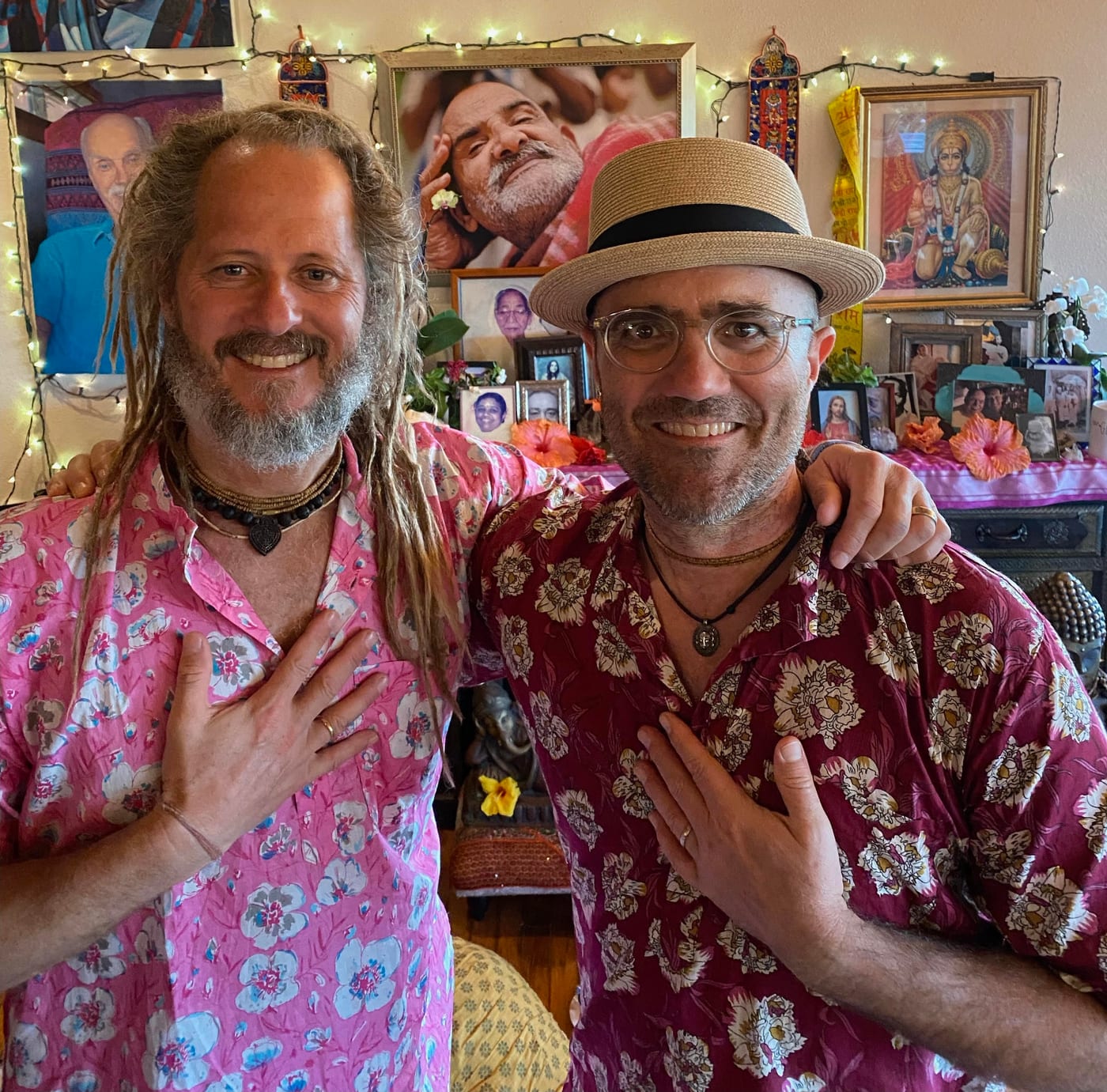

Govind Das is a musician, kirtan leader and spiritual teacher from Pacific Palisades, California. Beyond that hometown, the public record says little about his childhood, family or early training, and it would be a disservice to fill the gaps with guesswork. What can be said with confidence is how his path took shape once it came into focus: through a long relationship with India, a two-decade devotion to the harmonium, and the founding of a community built around the yoga of love.
If there is a hinge in Govind Das's story, it is India. He has been traveling there since 1999, and he speaks of it in reverent terms, as a holy land and "the Mother" from which the great yoga practices and wisdom were born. The documented record does not name a single dramatic moment of conversion, and this profile will not invent one. What it shows instead is steady, repeated return. A few years after his first trip, in 2005, he began leading spiritual retreats there, turning personal pilgrimage into a shared offering.
That sequence matters. His teaching did not begin as a brand and then look for a spiritual source; the source came first, and the teaching grew out of years of showing up. The harmonium, which he has played for more than twenty years, belongs to the same arc. It is the instrument that carries the chants he learned in the Bhakti tradition, and it remains the center of his sound.
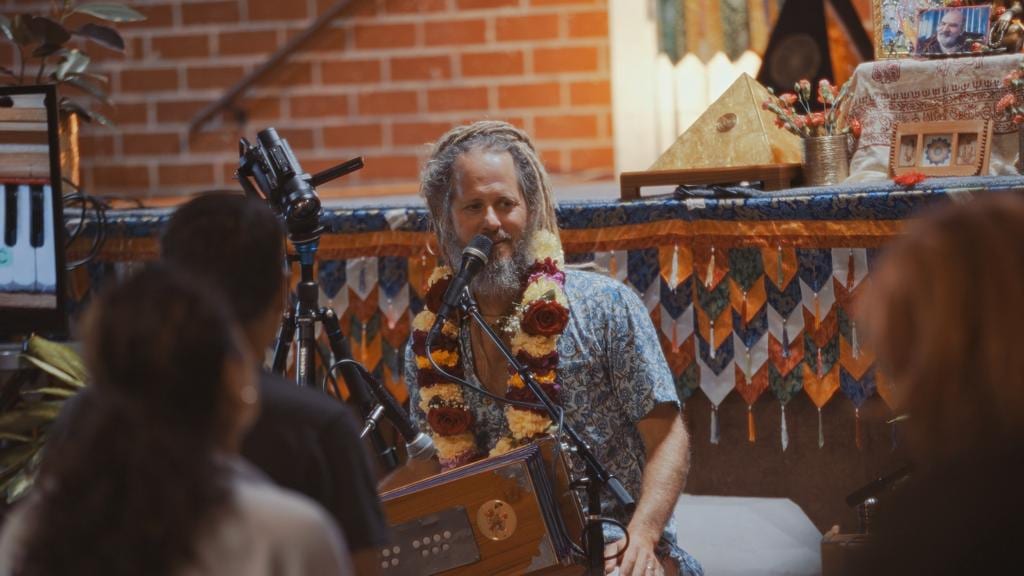
Govind Das is the director of Bhakti Yoga Shala, a community organized around Bhakti Yoga, the yoga of love, gratitude and devotion. He leads kirtan, the ancient practice of devotional mantra chanting, in which a leader sings a phrase and the room answers. In many Western yoga studios kirtan is treated as a pleasant warm-up or a closing ritual. In his hands it is the main event, a practice with its own philosophy and discipline.
That philosophy is part of what he teaches. Alongside the chants, he offers instruction in kirtan leading, including the study of the thinking behind Bhakti Yoga. Students learn songs on the harmonium and also why those songs matter, which separates a teacher from a performer. His work asks people to open the heart and develop a personal, intimate connection with Source, and it asks them to do so by singing rather than by merely listening.
The Shala follows the teachings of Neem Karoli Baba, who celebrated all Gods as one and welcomed anyone. That open-door spirit shapes the community's tone. Govind Das signs the Shala's messages to its community together with Radha, a detail that says something about how the place understands itself: as a shared household rather than a single teacher's stage.
Govind Das's body of work is best understood as a set of living practices rather than a shelf of albums. The profile lists no full discography, and his recordings can be found on Spotify and YouTube, but the center of gravity is elsewhere.
Bhakti Yoga Shala. The Shala offers yoga, kirtan, yin and restorative classes, breathwork, trance dance and sound healing. It also runs an online studio called Portal to the Path of Devotion, which extends the community beyond those who can attend in person.
The India retreats. Since 2005 he has led groups through places such as Rishikesh, Kainchi Dham and Vrindavan. The days pair early-morning meditation and kirtan with Bhakti Vinyasa yoga, temple visits, vegetarian food and satsang, the gathering of people in spiritual company. Movement is treated as devotion rather than as a separate fitness regime. He has also taught alongside Saul David Raye, a friend of more than 25 years.
Kirtan leading instruction. For those who want to lead rather than only join, he teaches chants from the Bhakti tradition on the harmonium, along with the philosophy behind them.
The Love Everyone Podcast. With Rama Chandra Das, he hosts a conversation about Bhakti Yoga, kirtan, Hanuman, Neem Karoli Baba and walking the path of devotion. Each episode takes a single line of the Hanuman Chalisa, a slow, line-by-line approach that suits a text meant to be lived with rather than consumed.
At present, Govind Das's work is anchored in the Shala and its rhythms: classes, kirtan gatherings, the online studio and the continuing podcast. The India retreats remain a defining thread, nearly two decades after they began. No upcoming tour dates are listed on his profile, so those interested in current schedules are best served by checking the Shala's website, bhaktiyogashala.com.
The podcast is a quietly significant part of this chapter. Working through the Hanuman Chalisa one line at a time is an act of patience, and it gives students a way to study independently between live sessions. The profile lists no books or formal written courses, so the podcast and the recordings on his YouTube channel are the main materials for self-guided learning.
Govind Das does not have a mass audience, and he does not seem to be seeking one. His Spotify following is modest, at roughly 12,300 followers, and his reputation rests on in-person kirtan and the strength of the Shala's community rather than streaming numbers. That is worth stating plainly, because it frames who he reaches: practitioners who want a teacher with long experience on the harmonium and direct ties to India, rather than a performer built for scale.
His significance lies in the kind of bridge he builds. Bhakti Yoga Shala offers yin, restorative classes, breathwork and trance dance alongside traditional devotional chanting, which makes the door wide for newcomers. Some people who come from more traditional temple satsang may find that a looser container. Others, especially those who find Western yoga thin on its devotional roots, may find it exactly right. The Hindu framing, the Hanuman Chalisa and the lineage of Neem Karoli Baba are stated openly rather than hidden, so students seeking a purely secular practice may find it a poor fit.
For those who do resonate, the appeal is the combination: more than twenty years of harmonium, a quarter century of friendships in the field, a path anchored in India since 1999, and a community that treats yoga and song as one thing. In a landscape where kirtan is sometimes packaged as atmosphere, Govind Das offers it as practice. Newcomers are best advised to begin in the room, with a single kirtan or a gentle class, and let the call-and-response do its work.