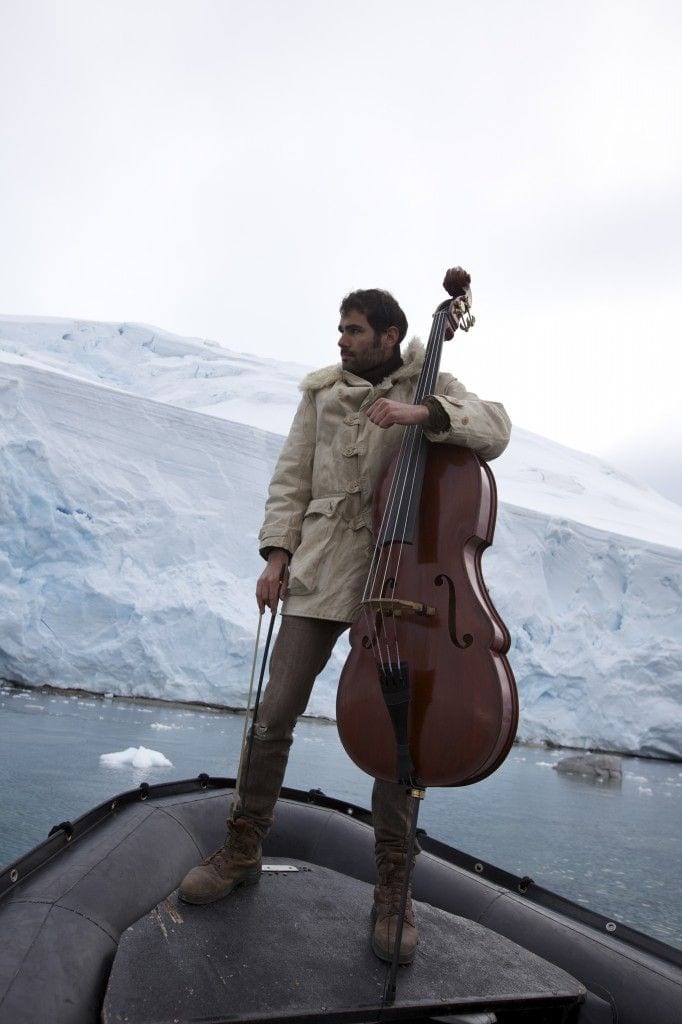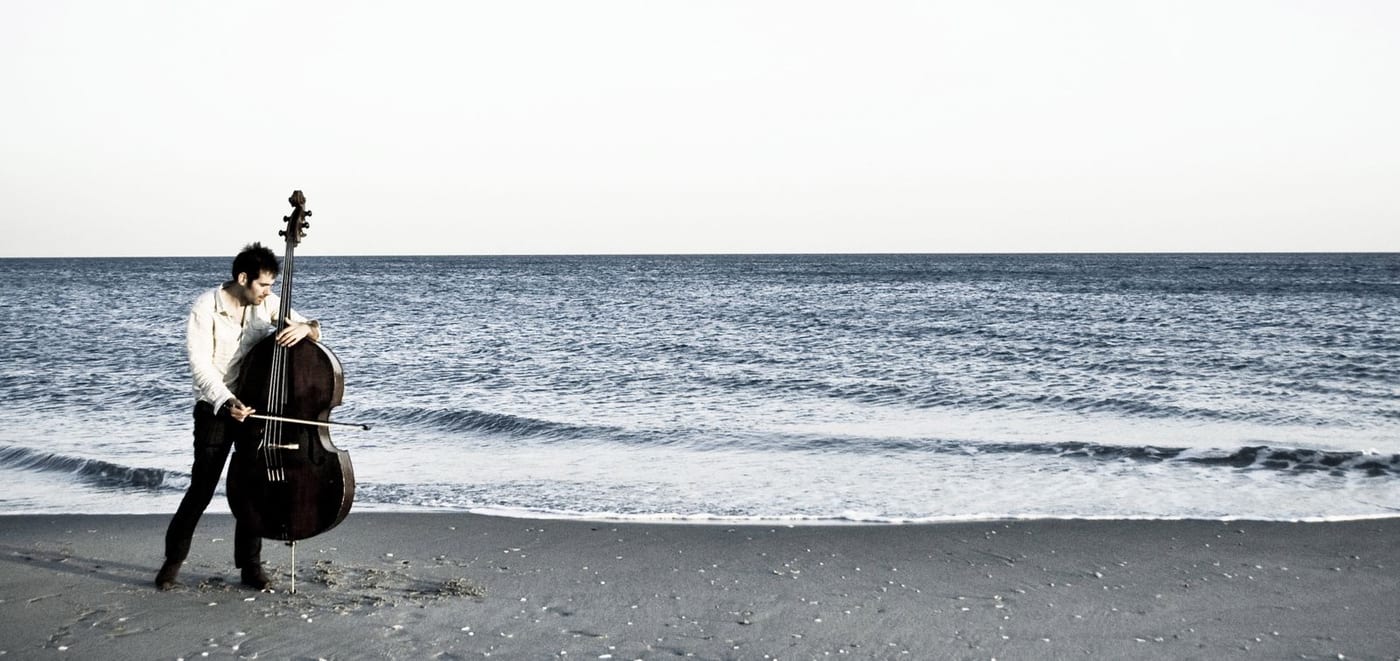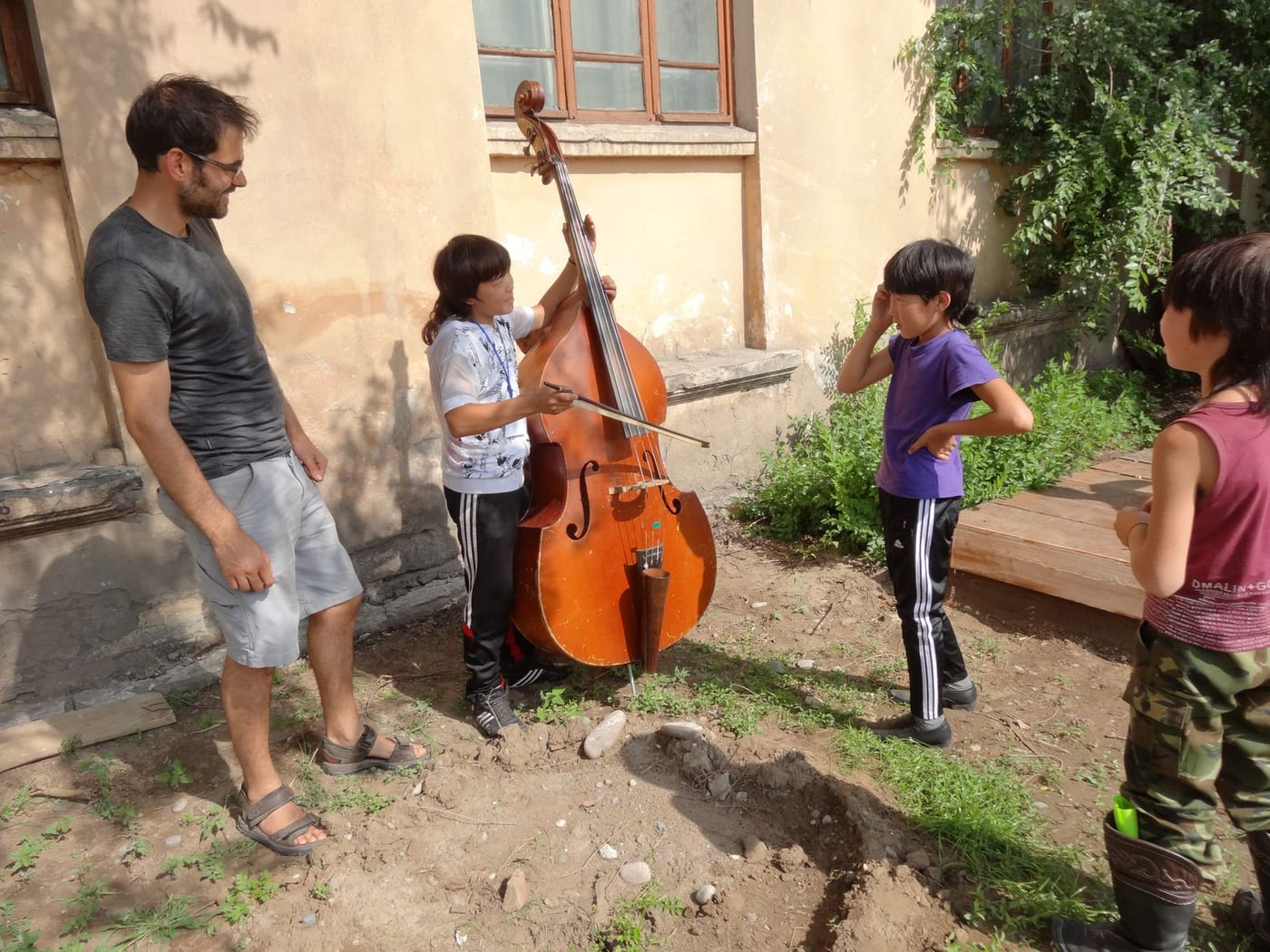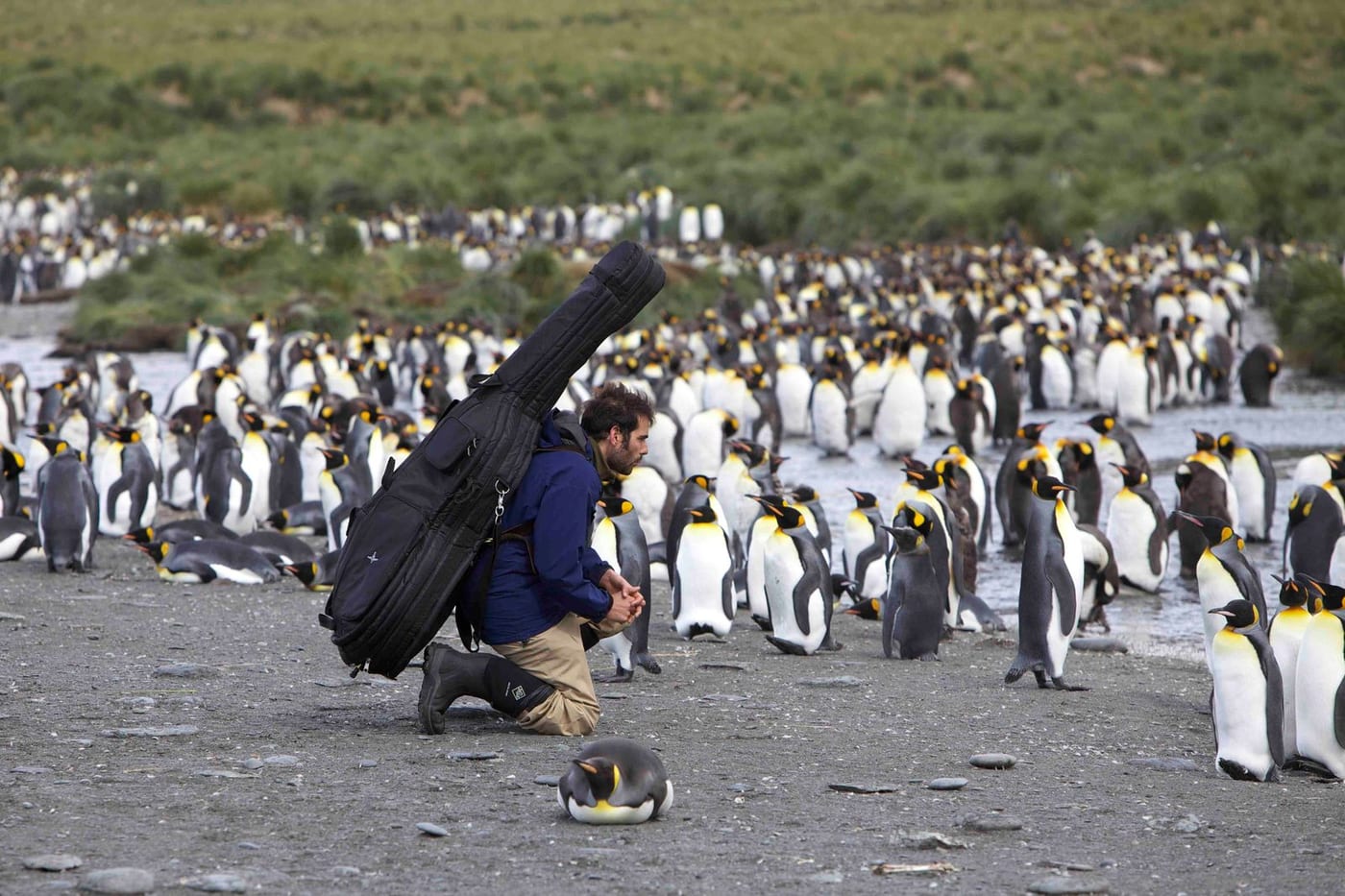
Garth Stevenson's core catalogue is built on a single, stubborn idea: carry a double bass into a remote place, play unaccompanied, and let the site do the rest. Alpine (2007), Flying (2011) and Voyage (2016) are the clearest statements of that method. The U.S. and the Holocaust (2022) is a different kind of record. It is an 18-track compilation of soundtrack music for the Ken Burns, Lynn Novick and Sarah Botstein documentary, released on 23 September 2022, and it is the most recent release in his listed discography.
This is not the place to begin with him. Voyage is the more straightforward entry point, and this album is best approached as an extension: what happens when the textural restraint of the location recordings is asked to serve a story rather than a landscape. That story is among the heaviest a filmmaker can take on, and the question the album raises is how much a patient bass can hold without overstating anything.
Stevenson's recorded sound centers on unaccompanied double bass with minimal processing. The instrument's woody attack, bowed sustain and plucked textures sit close to how they sound in a room. Pacing is slow and the arrangements are sparse. A phrase can hold for a long stretch before the next arrives, and the silence between phrases carries weight.
No sung voice or lyrics are credited in the material available, so the music is wordless. In a documentary context, that matters. The bass leaves room for narration, archival material and the viewer's own thoughts, and it does not instruct the listener how to feel. Mood across his work leans contemplative and low-lit, closer to a field notebook kept in sound than to a produced ambient record.
I can't tell you how much of this album's material was recorded outdoors versus in a controlled setting, since the available facts don't specify. What the bio does establish is his general approach: performing in place and letting acoustics shape the result. Listeners familiar with his solo work will recognize the temperament even where the setting is unknown.
I can't name individual tracks for this album. The available data gives a track count of 18 but no titles, durations or sequencing, and inventing them would do you a disservice. What I can offer is a way of listening in their absence.
Treat the first few pieces as the key to the album's register. They establish how low the bass sits, how long a held note is allowed to last, and how much space surrounds it. Then listen for the moments when the sparseness tightens, where a single sustained tone or a slow plucked line seems to do the work of an entire orchestral cue. Those are the places where restraint lands hardest. Check the Spotify listing (open.spotify.com/album/1Cu0eTTIS9uYZxpcIi0aii) for the actual track order and titles, and let your own ear pick the three or four that stay with you.
Stevenson's work is not documented as belonging to bhakti, kirtan or any named devotional lineage, and no teacher or school is attached to him in the available material. The closest honest frame is contemplative listening, sitting between mindfulness practice and nature observation. His training is in music performance, and his backcountry hiking and environmental observation are the stated roots of the work.
That makes this album an interesting case. Soundtrack music for a Holocaust documentary is not a meditation record, and nothing in the data frames it as one. But the habits Stevenson brings from his meditation teaching, patience, attention and a willingness to leave silences unfilled, are exactly what make restrained film scoring effective. It belongs to the tradition of minimalist, sparse screen music, with a contemplative sensibility underneath.
This album will matter most to listeners who have already seen the documentary, or who plan to, and want to sit with its emotional register away from the images. It also suits existing Stevenson listeners curious about how his method translates to screen work.
It is a poor fit for anyone wanting rhythm, melodic hooks or conventional song structure. The pacing is slow and the bass is unaccompanied, so the music can feel formless at first. It is also not background music for a busy room, and it won't suit a party or a workout.
The life moment that fits best is a reflective one: after reading or watching something serious, when you want quiet that doesn't feel empty.
Listen alone, with headphones, in the evening, at low to moderate volume. Headphones bring out the low register and the room sound most clearly, and this music rewards that closeness. Laptop speakers will make it feel thin.
Play it front to back rather than shuffled, since a documentary score gains meaning from sequence. Put your phone elsewhere. Let the long notes finish before you decide what you think of them. If you've seen the film, consider listening before bed on a different night than your viewing, so the music can stand on its own rather than as a memory aid. If you haven't, the album works as a quiet, serious listen without the images, though it is best understood as part of a larger work.