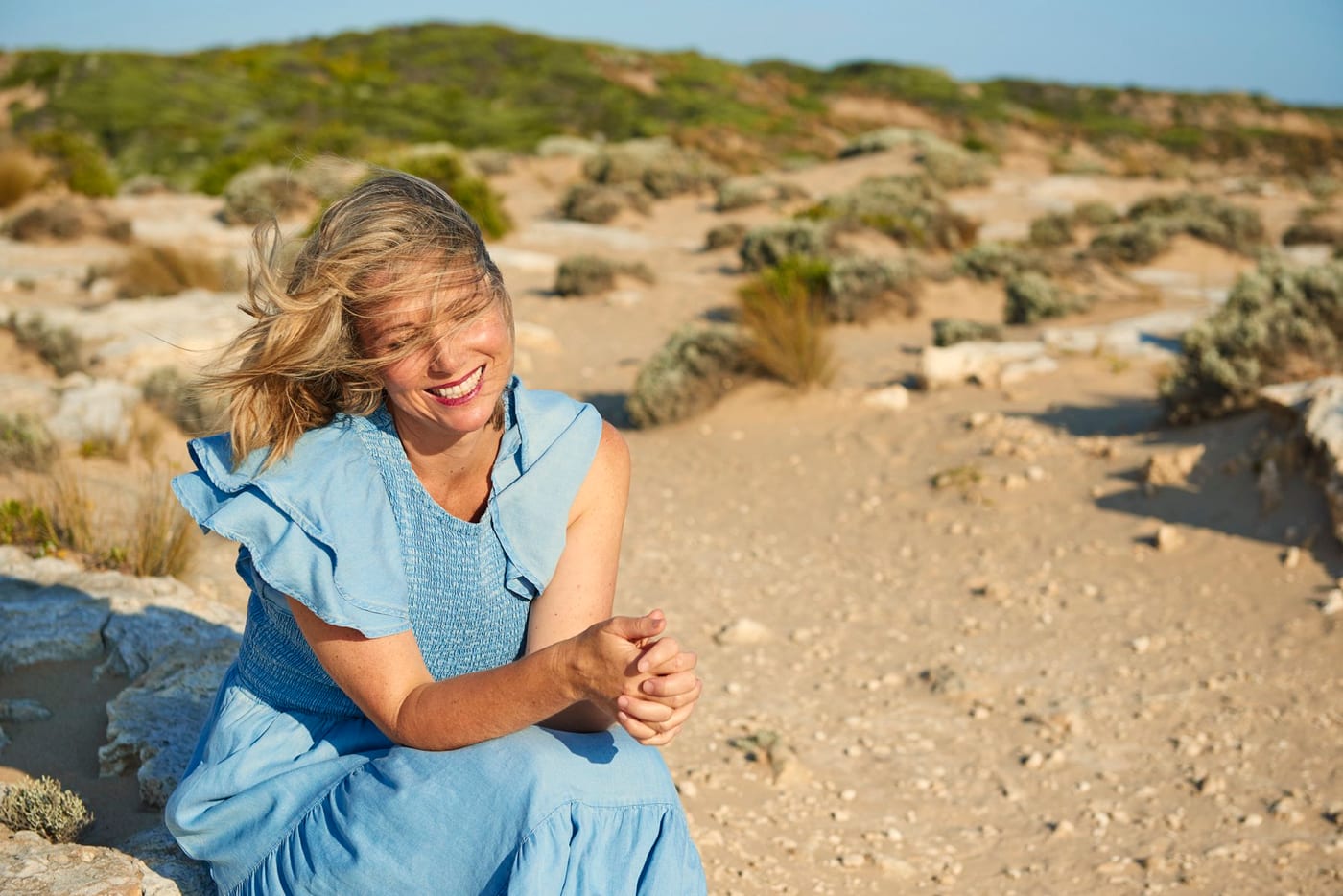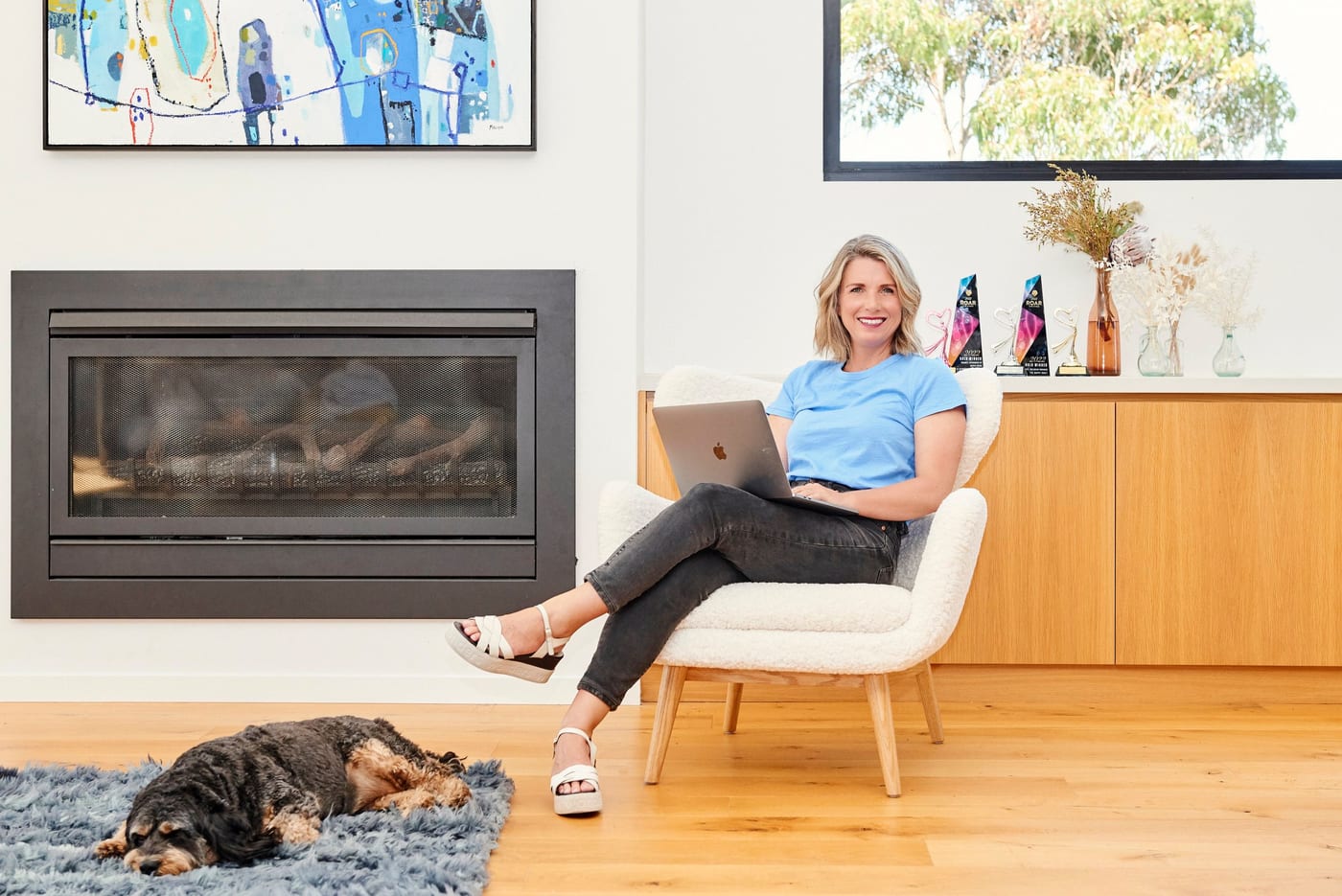

Fleur Chambers is a meditation teacher, bestselling author, and mother of three teenage boys, based in Melbourne, Australia. Her public profile is built less on credentials than on experience. The available record does not describe her childhood, schooling, or early career, and nothing here pretends otherwise. What it does describe, clearly and consistently, is the period that shaped everything she now teaches: a decade of living with chronic pain.
That omission is part of the story. Many meditation teachers establish their standing through a named teacher or a lineage. Chambers does not. No formal tradition or guru is attached to her work, and she doesn't borrow the vocabulary of one. Her authority comes from what she lived through and from what she found useful in the middle of it.
Ten years of chronic pain taught Chambers something she says most wellness spaces avoid saying aloud: happiness is not a life free from discomfort. It is the ability to stay connected to yourself inside it.
It is a quiet idea, but it cuts against much of the wellness industry, which tends to promise relief, transcendence, or a better version of yourself. Chambers describes the best kind of growth as the kind that doesn't make you shinier. It makes you softer, more honest, and more human. Her own long experience of pain seems to have closed off the option of promising escape. What remained was a practice of staying present, with breath and body, and trusting yourself enough to feel what is actually there.
Chambers is the creator of The Happy Habit, a collection of online offerings that includes a meditation app and illustrated self-help books. Together these have been downloaded and enjoyed more than four million times across 45 countries.
The approach is deliberately practical. Her meditations are made for busy minds, without incense, perfect posture, or performance. The Happy Habit is organized around qualities rather than techniques: acceptance, awareness, compassion, gratitude, calm, connection, and purpose. Her teaching leans on breath and body-based awareness, and on nervous system care as something to use in ordinary moments such as a rushed morning, a difficult conversation, or insomnia at 3 a.m.
Just as telling is what her work leaves out. There are no silent retreats and no "high vibes only" positivity. Her teaching does not promise mystical states or a life rising above circumstance. "You don't need to be more to feel better," she says. "You just need to meet yourself where you are." Her practice is secular and body-based, closer to contemporary mindfulness and somatic awareness than to devotional or ritual forms of meditation.
The Happy Habit app. This is the center of her work and the largest body of her recorded teaching. Its short practices, typically three to five minutes, are designed for the moments people actually need them. It also includes walking meditations, ADHD-specific practices, and sleep programs, treated as central offerings rather than add-ons.
Online courses. Alongside the app, The Happy Habit offers courses that extend the teaching beyond audio practices.
Books. Chambers has written two books, Ten Pathways and Wholehearted Confidence, both described as bestselling. They pair practice with explanation for readers who want to understand the nervous system thinking behind her approach. Her Happy Habit books are illustrated self-help titles, in keeping with a style that prizes approachability over solemnity.
YouTube. Her channel offers free talks that show her conversational teaching voice, grounded in the body rather than in visualization or mantra.
In 2022, The Happy Habit became a social enterprise, committing 50 percent of its profits to clean water, climate, and education projects. Its tagline is "Good for you. Great for humanity." Insight Timer credits her work with providing 65,000 people with access to clean water.
The structure matters because it shapes how her teaching can be understood. Nervous system care, in her framing, isn't only personal. Regulating yourself so you can stay present to what is real is, in her words and design, linked to contributing to change beyond yourself. The model suggests wellness and philanthropy can run together without one serving as a marketing layer for the other.
She is described as multi-award-winning, though the specific awards are not detailed in the material available here. For current offerings, releases, and any live events, her website, thehappyhabit.com.au, is the primary source; no upcoming events are documented.
Chambers reaches people who often feel left out of meditation culture: the skeptical, the restless, parents, people with ADHD, people who sleep badly, and people whose work involves caring for others until it costs them. For many of them, the standard picture of meditation (long silent sits, a still mind, a retreat centre they can't afford or schedule) has functioned as a gate. Her work takes it down.
Her significance lies in that refusal to gatekeep depth. She offers presence inside constraint rather than transcendence, and she doesn't suggest that meditation alone solves structural problems. That honesty is rarer than it should be in a field that so readily sells improvement. It also makes her teaching a poor fit for some. Those seeking devotional lineage, mystical experience, residential immersion, or hours-long daily practice will find other teachers better suited to them. She says as much by omission.
What remains is a modest, durable proposition: that feeling it all, even the hard stuff, is survivable, and that self-trust can be built in three minutes at a time. Millions of downloads across dozens of countries suggest the proposition is landing. For a teacher whose own authority was earned through a decade of pain rather than inherited, that may be the most fitting measure of her legacy so far: a practice made for real life, offered by someone who has had to live inside it.