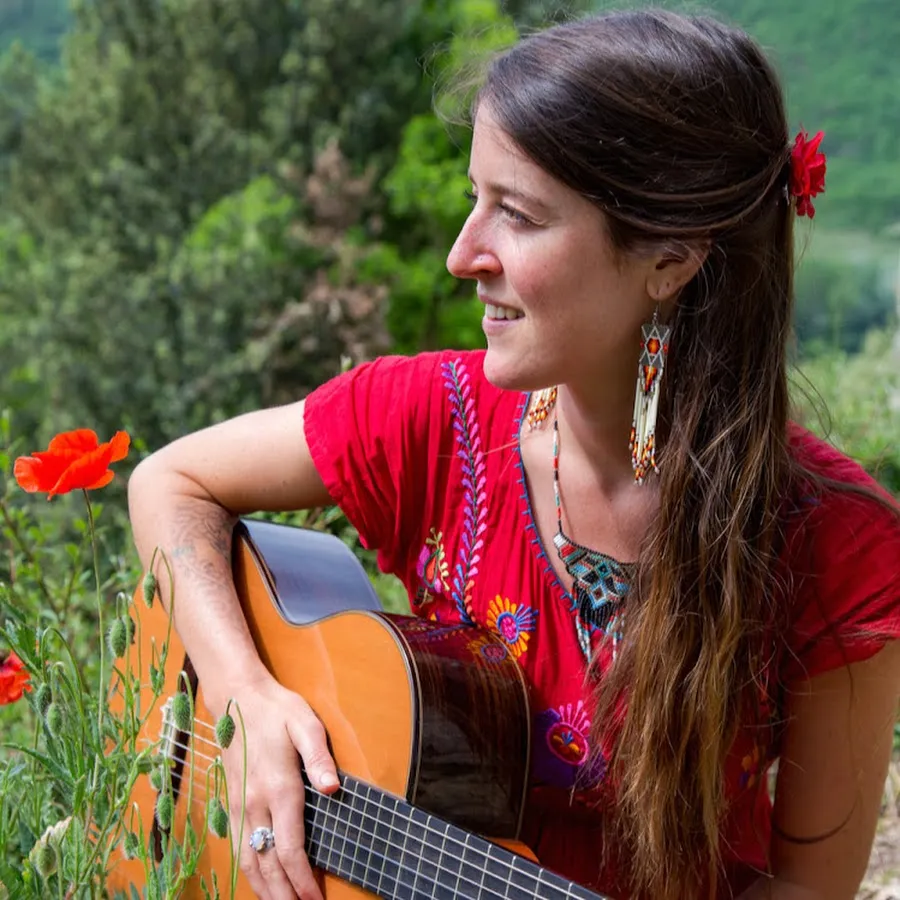

Ayla Schafer is a multilingual "world folk" singer-songwriter and ceremonial musician who lives on Dartmoor. Her songs, sung in Spanish, English and Proto-Celtic, the reconstructed Bronze Age ancestral language, carry what her bio calls memory, remembrance and power. She is a mother of two, and she has been described as a "Voice of the Earth."
The single best entry point
Start with the album Mâtîrja (Ancestral Mothers), released April 17, 2026. It is her most complete recent statement, nine tracks long, and the title alone tells you where her attention sits: lineage, the feminine, the ground beneath you. Play it front to back, in order, without skipping. Albums like this are built to be heard as one arc, and that is the fastest way to understand what she is doing.
Where to go next
After the album, move through the singles she released in 2026, in this order:
1. Women of the Waters (May 29, 2026). It sits close to Mâtîrja in feeling and spirit, so it extends the album rather than contradicting it. 2. Red River (March 27, 2026). Listen to it as a companion piece to Women of the Waters. Water and blood imagery recur in her titles, and hearing them side by side shows how consistent her themes are. 3. Ishka (February 20, 2026). It is the earliest of this run and shows where the recent writing began.
If you want more, Within you (March 6, 2026) is worth a listen, and Viento de Atacama (Nirvan Remix) (July 17, 2026) is a reworking best saved until you know her original voice.
What to expect on a first encounter
Expect songs that ask for attention rather than demand it. Her work weaves world folk with what she calls medicinal song, meaning music meant to do something for the listener, not just entertain. The bio describes the material as holding "the beauty, shadow and rawness of human experience," so it is not designed to be pleasant wallpaper. You will also move between languages. You do not need to understand every word on the first pass. Let the voice and the feeling arrive first, then look up lyrics and meanings if you want to go deeper.
Common beginner misunderstandings
"It's background music for relaxing." The material includes shadow and rawness, and it rewards focused listening.
"It belongs to one named tradition." Her bio describes learning from various indigenous traditions about the healing power of song during years of travel through South America, beginning in 2010. It does not name a single teacher or lineage, so don't file her under one.
"I need to speak all the languages." You don't. Spanish and English make up part of the repertoire, and Proto-Celtic is a reconstructed language, so even specialists work from reconstruction. Treat it as texture and intention first.
"It's a new project." Her roots are long. She began performing at sixteen, worked the UK festival scene, collaborated with Brit Award winner Ben Howard, and was part of the folk-soul duo Susie Ro and Ayla. Folk Radio highlighted the strength and clarity of her songs. The 2026 releases come from years of work.
When this work tends to land hardest
Her stated aim is to invite listeners to reconnect with themselves, the earth and the quiet power of presence. That suggests the music will land hardest when you are in a season of reckoning or transition, such as grief, a move, becoming a parent, or a stretch of feeling disconnected from your roots or your body. A hectic week with no room to sit still is a poor time for a first listen. A quiet evening, a walk outdoors, or a long solo drive will serve you far better.
A one-week starter plan
Day 1. Listen to Mâtîrja (Ancestral Mothers) once, start to finish, ideally with headphones and no other task. Write down one line about how it felt.
Day 2. Listen to the album again. Notice which track you keep returning to, and which language it is in.
Day 3. Listen to Women of the Waters, preferably outdoors on a walk.
Day 4. Listen to Red River. Compare its mood with the previous day's song.
Day 5. Listen to Ishka, then Within you. Note how her writing shifts across these months of 2026.
Day 6. Listen to Viento de Atacama (Nirvan Remix). Then look up the Atacama, the South American desert region, and consider how her years of travel there might have shaped the song.
Day 7. Return to Mâtîrja one last time, and listen to the track that moved you most on Day 2 first. Decide whether this work belongs in your regular rotation.
By the end of the week you will know whether her music is for you, and you will have heard the best of what she has released this year.
Note: the supplied FAQs describe a New York–based Hindustani vocalist, which conflicts with the bio and discography, so this guide relies on the bio and discography only.