BrightStar

Sfoglia tutti i Events

Discover conscious gatherings

events

Yoga
Meditation
Breathwork
Qigong
Tai Chi
Sacred Music
World Music
Medicine Music
Sound Healing
Ecstatic Dance
Destinazioni popolari
BaliSedonaLos AngelesCosta RicaNew YorkSan FranciscoAustinMiamiJoshua TreeTulum
Vedi tutte le categorieVedi tutte le destinazioni

Esplora tutte le funzionalità

Strumenti potenti per far crescere i tuoi eventi

Funzionalità della piattaforma

Prezzi dinamici intelligenti
Categorie di biglietti
Posti assegnati
Recupero carrelli abbandonati
Recupero visitatori
Donazioni e prezzi variabili
Sistema affiliati
Scanner biglietti
Codici sconto
Domande personalizzate
Condivisione biglietti
Upsell e componenti aggiuntivi
Analisi e report
Sequenze email
Lista d'attesa / Notifica / Promemoria
Persone e Luoghi
Artists & TeachersEvent OrganizersVenues & StudiosKnowledge BaseGlossaryInspiration
Vedi tutte le funzionalitàChi siamo
PrezziBlog
Sfoglia tutti gli eventi

events

YogaMeditationBreathworkQigongTai ChiSacred MusicWorld MusicMedicine Music

Destinazioni popolari

BaliSedonaLos AngelesCosta RicaNew YorkSan Francisco

Persone e Luoghi

Artists & TeachersEvent OrganizersVenues & StudiosKnowledge BaseGlossaryInspiration

Funzionalità della piattaforma

Prezzi dinamici intelligentiCategorie di bigliettiPosti assegnatiRecupero carrelli abbandonatiRecupero visitatoriDonazioni e prezzi variabiliSistema affiliatiScanner bigliettiCodici scontoDomande personalizzateCondivisione bigliettiUpsell e componenti aggiuntiviAnalisi e reportSequenze emailLista d'attesa / Notifica / Promemoria
Vedi tutte le funzionalitàChi siamo
PrezziBlog
AccediRicercatoriCreatori
Tibetan BuddhistOm Mani Padme Hum · Om Mani Padme Hum · Om Mani Padme Hum · Om Mani Padme Hum · Om Mani Padme Hum ·
  • Sfoglia tutti i Events
  • Per i ricercatori
  • Yoga
  • Meditation
  • Breathwork
  • Qigong
  • Tai Chi
  • Sacred Music
  • Ritiri
  • Workshop
  • Tutte le categorie →
  • Bali
  • Sedona
  • Los Angeles
  • Costa Rica
  • Tulum
  • Byron Bay
  • San Francisco
  • Austin
  • Tutte le città →
  • Per i creatori
  • For Teams
  • Per gli scrittori
  • Per gli insegnanti
  • Per gli artisti kirtan
  • Per gli studi
  • Per i festival
  • Per i centri ritiro
  • Per le no-profit
  • Ambasciatore del brand
  • Case study
  • Seva
  • Elevate
  • Amplify
  • Rete di 350K+ acquirenti
  • Recupero carrelli abbandonati
  • Prezzi dinamici intelligenti
  • Categorie di biglietti
  • Eventi ricorrenti
  • Posti assegnati
  • Sistema affiliati
  • Lista d'attesa / Notifica
  • Scanner biglietti
  • Widget incorporabile
  • Event Syndication
  • Message Center
  • Integrations
  • Reports
  • Tutte le funzionalità →
  • Chi siamo
  • The Ecosystem
  • Blog
  • Glossario
  • Inspiration
  • Centro assistenza
  • Contatti
  • Documentazione API
  • Risorse del brand
  • Carriere
  • Stampa
  • Termini di servizio
  • Informativa sulla privacy

Events

  • Sfoglia tutti i Events
  • Per i ricercatori
  • Yoga
  • Meditation
  • Breathwork
  • Qigong
  • Tai Chi
  • Sacred Music
  • Ritiri
  • Workshop
  • Tutte le categorie →

Destinazioni

  • Bali
  • Sedona
  • Los Angeles
  • Costa Rica
  • Tulum
  • Byron Bay
  • San Francisco
  • Austin
  • Tutte le città →

Per i creatori

  • Per i creatori
  • For Teams
  • Per gli scrittori
  • Per gli insegnanti
  • Per gli artisti kirtan
  • Per gli studi
  • Per i festival
  • Per i centri ritiro
  • Per le no-profit
  • Ambasciatore del brand
  • Case study
  • Seva
  • Elevate
  • Amplify

Funzionalità

  • Rete di 350K+ acquirenti
  • Recupero carrelli abbandonati
  • Prezzi dinamici intelligenti
  • Categorie di biglietti
  • Eventi ricorrenti
  • Posti assegnati
  • Sistema affiliati
  • Lista d'attesa / Notifica
  • Scanner biglietti
  • Widget incorporabile
  • Event Syndication
  • Message Center
  • Integrations
  • Reports
  • Tutte le funzionalità →

Azienda

  • Chi siamo
  • The Ecosystem
  • Blog
  • Glossario
  • Inspiration
  • Centro assistenza
  • Contatti
  • Documentazione API
  • Risorse del brand
  • Carriere
  • Stampa
  • Termini di servizio
  • Informativa sulla privacy
BrightStar
© 2026 BrightStar. Tutti i diritti riservati.
Back to Ani Choying Drolma
The Music of Ani Choying Drolma: Sound, Sacred Texture, and Lineage
Music

The Music of Ani Choying Drolma: Sound, Sacred Texture, and Lineage

Ani Choying Drolma's voice enters the sonic field like a single thread of saffron silk pulled taut across silence. Her recordings—rooted in Tibetan Vajrayana chant—resist the ambient wash that often characterizes "spiritual music" in Western markets.

Ani Choying Drolma
Ani Choying Drolma
Jul 18, 2026
4 min read
Read · 6 sections

The Music of Ani Choying Drolma: Sound, Sacred Texture, and Lineage

Ani Choying Drolma's voice enters the sonic field like a single thread of saffron silk pulled taut across silence. Her recordings—rooted in Tibetan Vajrayana chant—resist the ambient wash that often characterizes "spiritual music" in Western markets. Instead, they preserve the austere architecture of liturgical practice: a soprano voice trained through decades of daily recitation, accompanied by the bronze hum of singing bowls, the rattle of damaru drums, and occasionally the resonant thump of monastery gongs. There is no tabla groove here, no harmonium drone borrowed from kirtan, no gospel swell. This is the sound of a practice meant for temple courtyards at dawn, not concert halls—though it has found its way into both.

Voice and Instrumentation: The Aesthetics of Restraint

Her voice is distinctive for its clarity rather than power, its precision rather than vibrato-laden emotion. Trained in the recitation protocols of Himalayan monasticism, Ani Choying approaches mantra as formula: each syllable carries weight, each pause has function. The melodic contours she follows come directly from the Tibetan Buddhist canon, particularly devotional chants to Tara, the female bodhisattva embodying compassionate action. Unlike the elaborated ragas of Indian classical music or the call-and-response structure of bhakti kirtan, these melodies are relatively fixed, their ornamentation minimal.

The instrumental palette remains equally spare. Tibetan singing bowls—those bronze hemispheres that emit layered overtones when struck or circled with a mallet—provide harmonic texture without creating chord progressions. The damaru, a two-headed hand drum associated with tantric ritual, punctuates phrases with sharp, dry clicks. Occasionally, a dranyen (Tibetan lute) adds melodic counterpoint, but the arrangements generally favor space over density. Silence functions as an instrument itself, giving each vocal phrase room to settle before the next begins.

Lineage and Tradition: Vajrayana's Sonic Protocols

Ani Choying sings within the Vajrayana tradition of Tibetan Buddhism, specifically drawing from Gelug and Kagyu lineages where mantra recitation serves as both devotional offering and meditative technology. The texts she performs—often in Sanskrit and Tibetan—include the Praises to the Twenty-One Taras, Om Mani Padme Hum, and other liturgical standards that monastics recite daily. This is not interpretive sacred music; it is functional liturgy recorded.

Where bhakti kirtan encourages ecstatic participation and Sufi qawwali builds toward states of mystical intoxication, Vajrayana chant cultivates focused attention. The repetition is not trance-inducing in the shamanic sense but concentration-deepening, each cycle of mantra intended to stabilize mind rather than overwhelm it. Ani Choying's recordings maintain this quality even when removed from ritual context, creating what might be called "portable liturgy"—chant that retains its meditative function outside the monastery.

Signature Contribution: Preservation Without Popularization

Her primary contribution lies in her refusal to adapt. While many artists bridge traditional sacred music and contemporary production—adding synthesizers to kirtan, gospel choirs to mantras, or ambient soundscapes to Quranic recitation—Ani Choying has largely maintained the sonic protocols of her tradition. This is liturgy, not fusion. Her 1997 collaboration with American guitarist Steve Tibbetts on Cho introduced Western listeners to these chants, but Tibbetts' guitar work remains restrained, offering textural shimmer rather than melodic reinterpretation.

This preservation carries pedagogical intent. Proceeds from her recordings fund the Arya Tara School in Kathmandu, where she educates young Nepali girls, many from marginalized communities. The music itself becomes a vehicle for social work—a distinctly Buddhist approach where right livelihood and compassionate action intertwine.

First Encounter: What to Expect

New listeners expecting the participatory warmth of Krishna Das or the rhythmic drive of Snatam Kaur may find Ani Choying's recordings austere. There is no invitation to sing along, no building crescendo, no emotional catharsis. Tempos remain deliberate, often matching the breathing pace of seated meditation. The voice does not soar so much as sustain, holding each syllable with the same attention a calligrapher gives to brushstrokes.

What may surprise: the intimacy. These recordings often feel like eavesdropping on private practice rather than attending a performance. The singing bowls' overtones create a sense of enclosed space—stone walls, wooden floors, thin mountain air. This is contemplative music in the literal sense, designed to accompany inward attention rather than collective celebration.

Landscape and Context

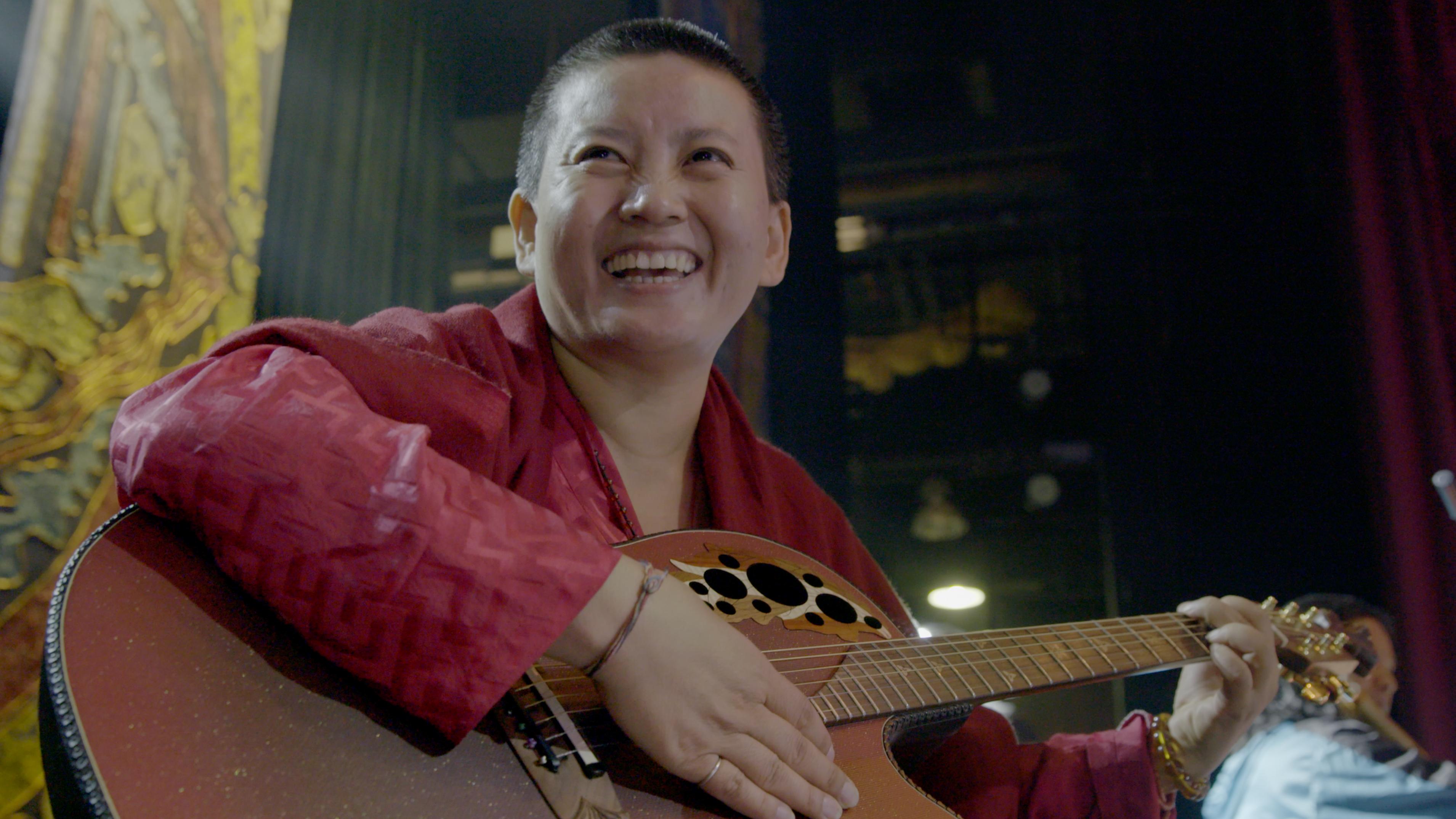
Within the conscious-music landscape, Ani Choying occupies a distinct position: neither the devotional populism of Western kirtan nor the concert-hall formality of Tibetan monks' overtone singing. Her work shares more DNA with the unaccompanied Gregorian chant recordings of Cistercian monks—sacred music preserved as practice rather than reimagined as product. For listeners exploring the Himalayan thread of contemplative sound, her recordings offer an entry point less theatrical than monastery ensemble performances, more traditional than New Age adaptations. The music sounds like what it is: a nun singing her daily office, microphone present but unintrusive.
Ani Choying Drolma
AboutAni Choying Drolma

Ani Choying Drolma is a Nepalese Buddhist nun whose recordings of Tibetan sacred chants have reached audiences across five continents. She combines monastic life at Nagi Gompa with…

View profile

Continue Reading

More about Ani Choying Drolma

View All
Where to Start with Ani Choying Drolma: A Beginner's Guide
Article

Where to Start with Ani Choying Drolma: A Beginner's Guide

Who Is Ani Choying Drolma? Life, Work, and Legacy
Article

Who Is Ani Choying Drolma? Life, Work, and Legacy

Essential Ani Choying Drolma Albums: A Listening Guide
Article

Essential Ani Choying Drolma Albums: A Listening Guide

Keep exploring

Continue your journey

More wisdom and gatherings from across the BrightStar directory.

More Articles

Browse the full library of teachings, interviews, and guides.

Back to all articles →

Teachers & Artists

Explore the lineages, musicians, and guides of the conscious world.

Explore artists →

Find an Event

Kirtan, retreats, sound baths, breathwork, festivals — happening soon.

Browse events →